Ad Blocker Detected
Our website is made possible by displaying online advertisements to our visitors. Please consider supporting us by disabling your ad blocker.
When setting up a workshop air compressor, careful planning around location, sizing, and safety protocols is essential to optimize performance and longevity. Properly configuring the system impacts airflow efficiency, noise levels, and overall workspace safety. As we consider these technical aspects, it becomes clear that a strategic approach can prevent common issues and enhance productivity. Let’s explore the key ideas that can help you establish a reliable, efficient compressor setup tailored to your specific needs.
Key Takeaways
- Choose a stable, well-ventilated location near power sources, away from dust and high-traffic areas.
- Match compressor size and capacity to peak airflow needs for efficiency and continuous operation.
- Install corrosion-resistant piping with minimal bends for optimal airflow and easy maintenance.
- Incorporate soundproofing, vibration isolators, and ventilation upgrades to reduce noise and improve air quality.
- Regularly maintain filters, pressure relief valves, and check for leaks to ensure safe, reliable compressor performance.
Choosing the Best Location for Your Workshop Air Compressor
Where is the most suitable spot to position your workshop air compressor? Ideal placement hinges on garage organization and electrical wiring considerations. Position the compressor near a dedicated electrical outlet with sufficient capacity to handle startup surges, minimizing extension cord use that can cause voltage drops. Placing it on a stable, level surface reduces vibration and noise transmission, which benefits overall garage organization. Avoid tight corners or confined spaces to guarantee proper airflow and cooling, preventing overheating. Additionally, locate the compressor close to your work zones to improve efficiency, but avoid high-traffic or dusty areas that can compromise operation. Careful planning of electrical wiring routes not only enhances safety but also simplifies future maintenance, making this initial placement critical for performance and longevity.
Selecting the Right Size and Capacity for Your Needs
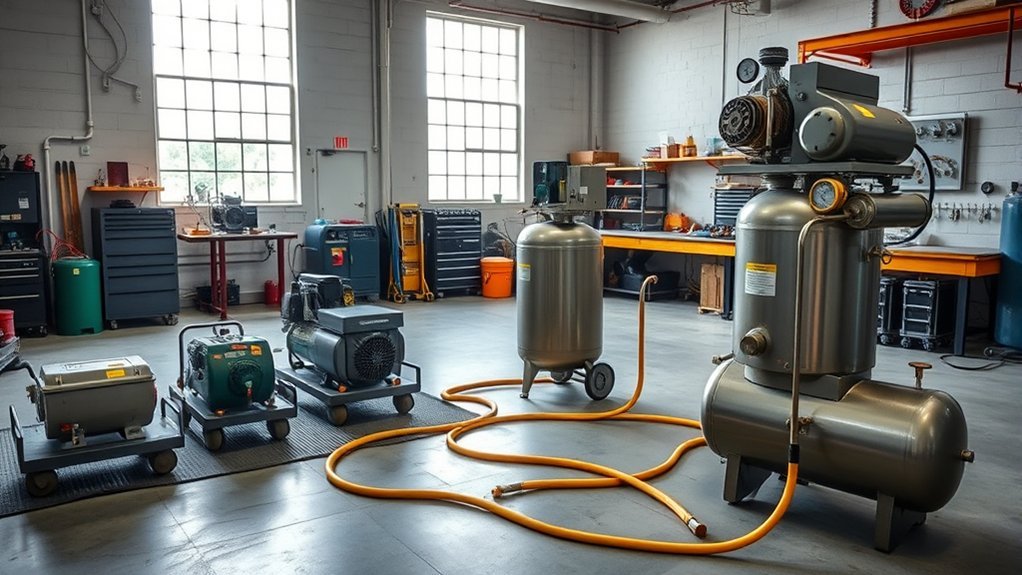
To select the appropriate compressor size, we need to accurately assess our air demand based on peak and continuous usage. Matching compressor specifications—such as flow rate and pressure capacity—to these demands guarantees efficient operation. Proper alignment minimizes energy waste and prolongs equipment lifespan.
Assess Your Air Demand
How do we determine the appropriate size and capacity for an air compressor to meet our specific needs? First, we analyze peak air demand by calculating the total airflow required for all tools and processes, ensuring the compressor can sustain continuous operation without excessive cycling. We also consider air quality standards, as contaminants can impact tool performance and safety. Power consumption is a critical factor; selecting a compressor with appropriate capacity minimizes energy waste and operational costs. Overestimating capacity leads to unnecessary energy use, while underestimating results in inadequate airflow and compromised productivity. By evaluating both the cumulative airflow demands and desired air quality, we can identify a compressor size that optimizes efficiency, maintains consistent air quality, and controls power consumption effectively.
Match Compressor Specifications
Selecting the appropriate compressor specifications involves carefully matching the unit’s capacity and features to the calculated air demand. This process requires evaluating compressor lubrication needs to guarantee reliable operation and minimize maintenance, especially during continuous use. Additionally, power supply considerations are critical; we must verify that the electrical infrastructure can support the compressor’s voltage, phase, and current requirements. Oversized units can lead to inefficiencies and unnecessary energy consumption, while undersized models may struggle to meet demand, causing pressure drops and system stress. By analyzing airflow requirements, compressor lubrication systems, and electrical compatibility, we can identify a unit that balances capacity with operational efficiency. Precise matching ensures peak performance, longevity, and safety for the workshop’s compressed air system.
Installing Proper Air Lines and Piping to Ensure Safety and Efficiency
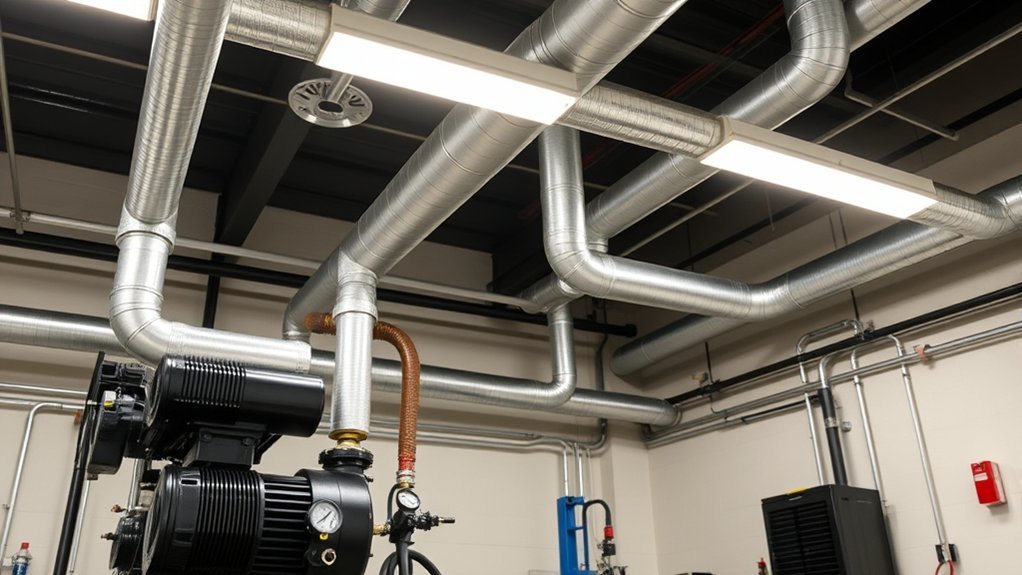
Selecting the appropriate pipe materials and designing an efficient system layout are critical for maintaining safety and ideal airflow. We must consider factors like pressure ratings and material durability to prevent leaks and failures. Proper planning ensures minimal pressure loss and easy maintenance, enhancing overall system performance.
Selecting Appropriate Pipe Materials
Why is choosing the right pipe material critical for an air compressor setup? Proper selection impacts safety, efficiency, and lifespan. Using durable materials minimizes issues like pipe corrosion, which can lead to pressure drops and system failure. Material durability ensures long-term performance under fluctuating pressures and environmental conditions.
Key factors include:
- Corrosion resistance—materials like stainless steel or galvanized steel resist rust and degradation.
- Strength and flexibility—rigid pipes prevent leaks, while flexible options ease installation.
- Thermal stability—materials that withstand temperature variations maintain system integrity.
Choosing the appropriate pipe material reduces maintenance needs and prevents costly downtime, ensuring consistent, efficient airflow throughout your workshop.
Proper System Layout Design
To guarantee ideal safety and efficiency in your workshop’s air compressor system, careful planning of the pipe layout is essential. Proper system layout minimizes pressure drops, optimizes air flow, and ensures safe compressor placement. Strategic routing reduces unnecessary bends and length, preventing flow restrictions. Positioning the compressor centrally allows even distribution and easier maintenance. Using appropriately rated materials prevents leaks and failures.
| Key Considerations | Practical Application |
|---|---|
| Air Flow Optimization | Minimize bends; keep pipes straight where possible |
| Compressor Placement | Central, accessible location for balanced flow |
| Pipe Material Choice | Use durable, corrosion-resistant piping |
Picking the Essential Accessories and Attachments for Versatile Use
Choosing the right accessories and attachments is essential for maximizing the versatility of your air compressor, as these components directly impact its functionality across various tasks. Ensuring accessory compatibility and attachment versatility allows seamless adaptation to different applications. Key accessories include:
Selecting compatible accessories and versatile attachments maximizes your air compressor’s efficiency across diverse tasks.
- Quick-connect fittings for efficient attachment swapping, enhancing workflow efficiency.
- Different spray guns and nozzles to accommodate painting, coating, or cleaning tasks.
- Air tool kits such as wrenches, drills, or sanders, which expand operational capabilities.
Selecting compatible accessories ensures optimal performance and safety, while versatile attachments enable your compressor to handle multiple functions without requiring additional equipment. This strategic approach minimizes downtime and maximizes productivity, making your setup more efficient and adaptable to evolving workshop needs.
Setting Up Maintenance and Safety Protocols to Extend Compressor Life
Establishing thorough maintenance and safety protocols is essential for guaranteeing the longevity and dependable performance of your air compressor. Regular lubrication routines are crucial to minimize wear on moving parts and prevent costly breakdowns. We recommend establishing a schedule for checking and replenishing lubricant levels, using manufacturer-approved oils to maintain ideal viscosity and reduce friction. Filter maintenance is equally critical; regularly inspecting and replacing air intake filters prevents contaminants from entering the system, reducing internal corrosion and damage. Incorporating these routines into your maintenance plan ensures consistent operation and extends compressor life. Additionally, safety protocols—such as verifying pressure relief valves and ensuring proper ventilation—protect users and equipment. These measures create a reliable, efficient setup that maximizes compressor lifespan.
Optimizing Noise Levels and Ventilation in Your Workshop
Effective noise management and proper ventilation are critical for maintaining a safe and comfortable workshop environment. To achieve this, we focus on three key strategies:
- Implement soundproofing techniques such as acoustic panels and insulated enclosures around the compressor to reduce noise transmission.
- Upgrade ventilation systems with high-efficiency exhaust fans and ducting to improve air circulation and remove heat, moisture, and airborne contaminants.
- Use vibration isolators and mounting pads to minimize transmission of mechanical noise through floors and walls.
These measures not only diminish sound levels but also enhance airflow, ensuring a healthier workspace. Careful application of soundproofing techniques and ventilation upgrades results in a safer, more efficient workshop while protecting operators from noise-induced fatigue and respiratory issues.
Troubleshooting Common Setup Issues and When to Seek Professional Help
Despite careful planning, setup issues with air compressors are common and can substantially affect performance and safety. Faulty pressure gauges can mislead operators, causing over-pressurization or insufficient airflow, risking equipment damage or injury. Leaking valves compromise system integrity, leading to pressure drops and inefficient operation. When troubleshooting, check for calibration errors in pressure gauges and inspect valves for signs of wear or damage. Persistent issues often indicate underlying mechanical problems requiring professional assessment. If leaks persist after tightening fittings or replacing seals, or if pressure readings remain inconsistent, it’s crucial to seek expert assistance. Proper diagnosis ensures reliable operation, reduces downtime, and maintains safety standards. Recognizing these signs early prevents costly repairs and guarantees your setup functions at its best.
Frequently Asked Questions
How Often Should I Perform Maintenance on My Air Compressor?
We recommend a regular maintenance schedule, including weekly checks and monthly inspections, to guarantee peak performance and safety precautions. Consistent maintenance prevents breakdowns, extends compressor lifespan, and guarantees safe operation for all users.
What Are the Most Common Safety Hazards During Setup?
We identify common hazards like electrical shock, which we mitigate through proper grounding, and mechanical injury, minimized by installing safety shields. Ensuring thorough setup procedures and safety measures helps prevent accidents and promotes a secure workshop environment.
Can I Upgrade My Compressor’s Capacity Later?
Yes, you can upgrade your compressor’s capacity later by exploring upgrade options like larger tanks, higher horsepower motors, or modular systems. It’s crucial to evaluate compatibility and potential system adjustments to guarantee ideal performance and safety.
How Do I Prevent Moisture Buildup in the System?
A stitch in time saves nine; we prioritize moisture control by installing desiccant dryers, which effectively remove humidity, preventing moisture buildup in the system. Regular maintenance and proper drainage further guarantee ideal compressor performance and longevity.
What Are the Best Practices for Compressor Energy Efficiency?
We optimize compressor energy efficiency through energy-saving tips like maintaining proper airflow and insulation, implementing variable speed drives, and reducing noise levels—these strategies improve performance, cut costs, and guarantee system longevity in our workshop setup.
Conclusion
In summary, a well-optimized workshop air compressor setup considerably enhances efficiency and safety. Studies show that proper installation can increase compressor lifespan by up to 30% and reduce energy consumption by 15%. By carefully selecting the right location, capacity, and accessories, and adhering to maintenance protocols, we can maximize performance and minimize downtime. Investing in a thoughtful setup isn’t just practical — it’s essential for long-term productivity and safety in any professional or DIY workspace.