Ad Blocker Detected
Our website is made possible by displaying online advertisements to our visitors. Please consider supporting us by disabling your ad blocker.
Understanding the PSI requirements for industrial air compressors involves evaluating performance, safety, and efficiency, and understanding how these factors interrelate. We need to evaluate the specific application, operational demands, and safety standards to determine the most suitable PSI range. Failing to match compressor PSI with operational needs can lead to inefficiencies or hazards. Exploring how to accurately assess and adjust PSI is essential for reliable, safe, and cost-effective system operation.
Key Takeaways
- Typical industrial compressor PSI ranges from 80 to 150, depending on application needs.
- Selecting the correct PSI involves analyzing equipment specifications and process requirements.
- Proper PSI ensures optimal performance, safety, and energy efficiency of the compressor system.
- Regular monitoring and calibration of pressure regulators maintain accurate and safe PSI levels.
- Higher PSI levels increase safety risks and noise, requiring strict adherence to safety standards and protocols.
Understanding PSI and Why It Matters for Industrial Compressors
Understanding PSI is fundamental when selecting and operating industrial air compressors because it directly relates to the pressure exerted by the compressed air. Proper PSI levels influence air quality, ensuring contaminants are minimized for sensitive applications, while also affecting noise levels during operation. Higher PSI can increase noise, impacting environmental conditions and worker safety, so balancing pressure and noise is critical. Additionally, maintaining ideal PSI helps control moisture and particulate levels, which directly affect air quality. Inadequate pressure settings may compromise process efficiency or product quality, whereas excessive PSI can cause equipment strain and increased noise pollution. Consequently, a precise understanding of PSI’s role allows us to maximize compressor performance, ensuring consistent air quality and controlled noise levels essential for safe and efficient industrial operations.
How to Determine the Right PSI for Your Specific Application
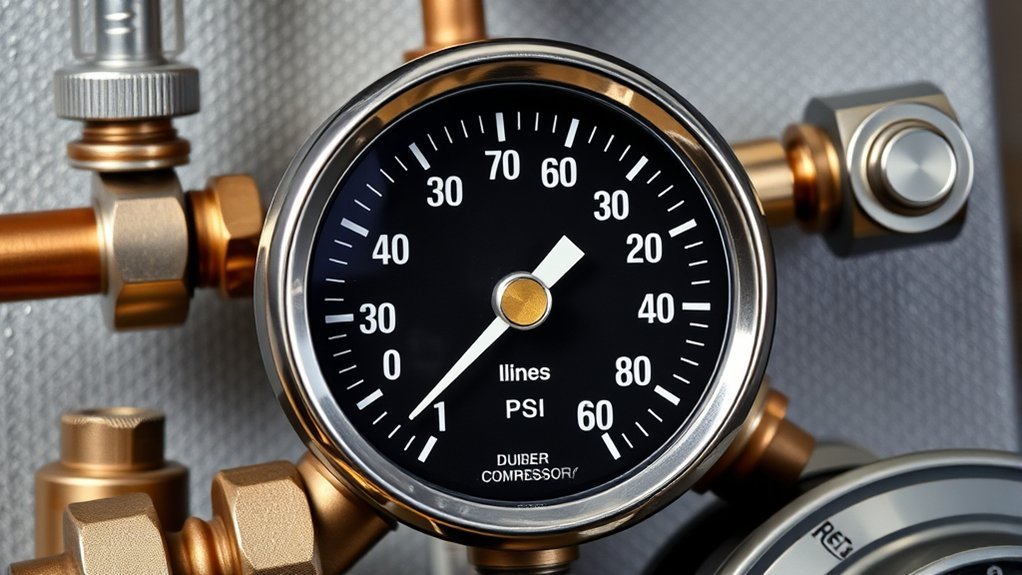
Determining the appropriate PSI for your specific application requires a thorough analysis of your equipment’s operational requirements and process parameters. We must evaluate the necessary air quality standards, guaranteeing the PSI setting maintains contaminant removal and moisture control. Additionally, understanding the impact of pressure on noise reduction is essential; lower PSI levels often result in quieter operation, which can be critical in noise-sensitive environments. Precise PSI calibration ensures maximum performance without over-pressurizing, which can compromise air quality or increase energy consumption. By analyzing the equipment specifications alongside environmental considerations, we can identify the ideal pressure level that balances efficiency, air quality, and noise mitigation, guaranteeing your system operates effectively and safely within its designed parameters.
Common PSI Ranges Used in Industrial Air Compression
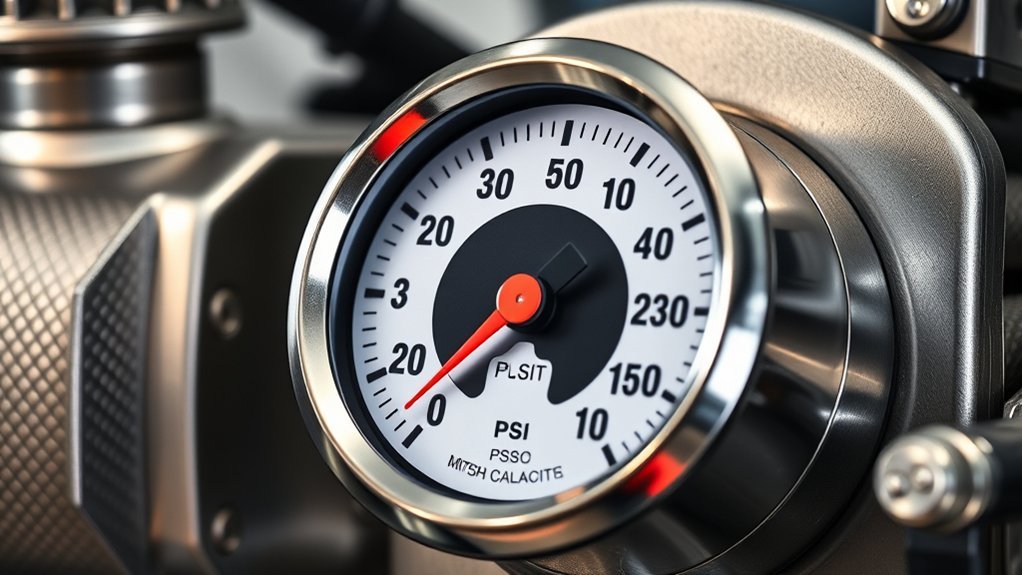
Industrial air compressors typically operate within specific PSI ranges that align with the demands of various applications, ensuring ideal performance and efficiency. Most systems function within a range of 80 to 150 PSI, providing a balance between air quality and operational noise levels. Lower PSI ranges, around 80-100 PSI, are suitable for applications requiring less compressed air, often yielding quieter operation and reduced noise levels. Conversely, higher ranges, up to 150 PSI, are necessary for heavy-duty tasks, but they may increase noise and impact air quality due to higher compression ratios. Understanding these common PSI ranges helps optimize air quality and minimize noise levels, ensuring equipment operates within its intended parameters. This balance is essential for maintaining system longevity and meeting application-specific performance standards.
Safety Considerations When Operating at Different PSI Levels
Operating at different PSI levels introduces specific safety considerations that must be carefully managed to prevent accidents and equipment damage. Historically, industry standards have evolved based on safety data and technological advances, emphasizing appropriate pressure limits. Exceeding recommended PSI can lead to catastrophic failures, such as ruptured hoses or tank explosions, underscoring the importance of monitoring and control systems. Maintaining compliance with established industry standards helps guarantee safe operation, especially at higher PSI levels where risks are amplified. Proper safety protocols, like pressure relief valves and regular maintenance, are essential to mitigate these hazards. Understanding these historical trends and adhering to current standards allow operators to optimize safety without compromising system performance at various PSI levels.
How PSI Affects Compressor Performance and Efficiency
Adjusting to ideal pressure levels is vital for maximizing compressor performance while minimizing energy use. Operating above or below these levels can lead to inefficient energy consumption and increased operational costs. Understanding the relationship between PSI and efficiency helps us refine system settings for reliable and cost-effective operation.
Optimal Pressure Levels
How does the pressure level impact compressor performance and efficiency? Maintaining ideal PSI is vital for maximizing output while guaranteeing industrial safety. Operating below the recommended pressure can cause underperformance, leading to insufficient airflow and increased cycle times. Conversely, excessive pressure strains the system, risking component failure and compromising safety. Precise compressor calibration ensures the pressure remains within the acceptable range, preventing over-pressurization that could endanger personnel or damage equipment. Proper calibration also promotes consistent performance, reducing downtime and maintenance costs. Understanding the relationship between PSI and efficiency allows us to fine-tune the system, achieving a balance that supports industrial safety protocols while enhancing compressor performance. This careful management is essential for reliable, safe operation.
Energy Consumption Impact
Maintaining the appropriate PSI directly influences a compressor’s energy consumption, as pressure levels determine the workload on the motor and associated components. Higher PSI settings increase energy demand due to greater motor effort and more frequent cycling, impacting energy storage efficiency. Conversely, operating at ideal pressure minimizes unnecessary power use. Additionally, proper PSI regulation can reduce noise levels, aiding noise reduction strategies without compromising performance. Key considerations include:
- Energy Storage Efficiency: Maintaining correct PSI reduces energy waste during compression cycles, optimizing storage capacity.
- Motor Load Management: Proper pressure settings prevent motor overexertion, conserving energy and prolonging equipment lifespan.
- Noise Reduction: Stable PSI levels minimize pressure fluctuations, decreasing operational noise and improving work environment conditions.
Selecting the Correct Pressure Regulator and Controls
Selecting the appropriate pressure regulator and controls is essential for guaranteeing that an industrial air compressor operates efficiently and safely within its specified PSI range. Proper regulation maintains ideal pressure, reducing wear on components and preventing over-pressurization, which can impact air compressor lubricants and system longevity. Controls should facilitate precise adjustments, noise reduction, and system monitoring. The table below illustrates critical control features:
| Feature | Benefit |
|---|---|
| Adjustable regulators | Fine-tune pressure for specific tasks |
| Pressure gauges | Accurate system pressure monitoring |
| Automated controls | Consistent operation and safety |
| Noise dampening controls | Reduce operational noise |
| Safety shut-offs | Protect against over-pressurization |
Choosing the right controls ensures efficiency, safety, and noise reduction while maintaining system integrity.
Troubleshooting Pressure Issues in Industrial Air Systems
When pressure irregularities occur in an industrial air system, identifying the root causes becomes a priority to prevent equipment damage and maintain operational efficiency. Common issues include fluctuations in air quality, excess noise, and inconsistent pressure levels. To troubleshoot effectively:
- Inspect air filters and dryers for clogging or contamination, which can cause pressure drops and affect air quality.
- Check for leaks in hoses, fittings, or valves, as leaks reduce pressure stability and increase noise levels.
- Verify regulator calibration and control settings to ensure consistent pressure output and noise reduction.
Addressing these factors helps optimize pressure regulation, improves air quality, and minimizes noise, ensuring smoother operation and extending equipment lifespan.
The Impact of PSI on Equipment Longevity and Maintenance
The pressure setting, or PSI, directly influences the lifespan and maintenance needs of industrial air compressor equipment. Operating at ideal PSI levels helps maintain air quality by reducing contaminants and moisture buildup, which can cause corrosion and component wear. Excessively high PSI accelerates equipment fatigue, increasing the risk of breakdowns and costly repairs. Additionally, elevated pressure settings often lead to higher noise levels, contributing to operational hazards and the need for enhanced soundproofing or maintenance. Conversely, running below recommended PSI can cause inconsistent air quality and inefficient system performance. Properly calibrated PSI not only extends equipment durability but also minimizes maintenance frequency, ensuring stable operation and reducing downtime. Precision in pressure regulation is essential for balancing air quality, noise control, and long-term equipment health.
Tips for Monitoring and Adjusting PSI During Operation
Consistent pressure gauge checks are essential for maintaining ideal PSI levels and preventing equipment stress. Adjusting regulator settings allows us to fine-tune pressure in response to operational demands, ensuring system stability. By monitoring these parameters actively, we can maximize performance and extend the lifespan of the compressor.
Regular Pressure Gauge Checks
Regular pressure gauge checks are essential for maintaining ideal compressor performance and safety. Accurate readings depend on proper pressure calibration and gauge reliability. To ensure gauge accuracy, we recommend:
- Regularly inspecting gauges for physical damage or corrosion that could impair readings.
- Performing calibration checks against a known pressure standard annually or after any impact incident.
- Replacing or recalibrating gauges showing inconsistent or drifting readings to prevent false pressure assessments.
Consistent monitoring helps identify potential issues before they compromise safety or efficiency. Accurate gauges enable us to make informed decisions, while neglecting calibration can lead to incorrect PSI readings, risking equipment damage or safety hazards. Regular pressure gauge checks are a critical component of effective compressor management.
Adjusting Regulator Settings
Monitoring and adjusting regulator settings during operation is essential to maintaining ideal compressor performance and safety. Precise PSI control directly influences air quality, guaranteeing contaminants are minimized and equipment functions effectively. Regularly checking the regulator allows us to identify deviations that could compromise air purity or cause pressure fluctuations. When adjusting, we should consider noise levels, as incorrect settings may increase operational noise, impacting both safety and environmental compliance. Fine-tuning involves balancing compressor output with system demand, preventing over-pressurization that could affect downstream tools or generate excessive noise. By systematically monitoring these parameters, we guarantee consistent air quality and maintain excellent noise levels, which ultimately prolong equipment lifespan and uphold safety standards.
When to Upgrade or Modify Your Compressor’s PSI Capabilities
Determining the appropriate time to upgrade or modify your compressor’s PSI capabilities hinges on evaluating operational demands and system performance. If you notice declining industrial air quality or increased compressor noise, these may signal insufficient PSI levels or system strain. Consider these indicators:
- Consistent pressure drops below operational requirements, affecting process quality.
- Frequent compressor cycling or overheating, indicating overload conditions.
- Inability to meet peak demand, compromising productivity and system efficiency.
Modifying PSI settings or upgrading components can optimize airflow, improve air quality, and reduce noise levels. It’s essential to assess whether current PSI levels support your specific industrial applications or if system modifications are necessary to maintain performance and safety standards.
Frequently Asked Questions
How Does Altitude Affect PSI Requirements for Industrial Air Compressors?
Altitude impacts PSI requirements due to decreased atmospheric pressure, necessitating altitude adjustments in compressors. As elevation rises, atmospheric pressure drops, so we must modify PSI settings to maintain ideal performance and guarantee safety standards are met effectively.
Can Incorrect PSI Settings Lead to Equipment Damage?
Incorrect psi settings can cause equipment damage by disrupting pressure regulation, leading to overpressure or underpressure situations. We emphasize adhering to safety precautions to prevent mechanical failures, ensuring the best compressor performance and longevity through precise pressure management.
What Are the Energy Implications of Operating at Higher PSI Levels?
Operating at higher PSI levels increases power consumption by up to 20%, reducing efficiency. We emphasize that optimizing PSI settings is essential for energy savings, as even small adjustments can considerably impact operational costs and system performance.
Are There Industry-Specific PSI Standards for Different Sectors?
We find industry-specific PSI standards vary, requiring precise compressor maintenance and PSI calibration to meet sector demands. Adhering to these standards guarantees operational efficiency, safety, and compliance across sectors like manufacturing, healthcare, and automotive industries.
How Does Temperature Influence PSI Performance in Compressors?
Temperature effects directly influence compressor efficiency by causing air density fluctuations; higher temperatures reduce air density, lowering PSI performance, while cooler conditions enhance pressure stability, emphasizing the need for temperature control to optimize compressor operation and reliability.
Conclusion
In understanding PSI requirements, we grasp the importance of accuracy, safety, and efficiency. We recognize the need to assess application demands, monitor performance, and implement proper maintenance. We acknowledge that ideal PSI management enhances equipment longevity, reduces downtime, and guarantees safety. We emphasize that continuous evaluation and timely upgrades are essential. Ultimately, maintaining the correct PSI is crucial for achieving operational excellence, maximizing productivity, and safeguarding both personnel and machinery.