Ad Blocker Detected
Our website is made possible by displaying online advertisements to our visitors. Please consider supporting us by disabling your ad blocker.
Installing a stationary air compressor in a workshop requires careful planning and precise execution to guarantee safety and efficiency. We need to evaluate the best location, proper foundation, electrical connections, and air line routing, among other factors. Each step involves technical details that can greatly influence performance and longevity. Understanding these aspects thoroughly is essential before beginning the installation process, as overlooking any element could lead to operational issues or safety hazards.
Key Takeaways
- Select a level, stable location with adequate ventilation and proximity to power sources for easy wiring and operation.
- Verify electrical capacity, install a dedicated circuit, and ensure proper grounding to support compressor requirements.
- Prepare a reinforced foundation, like a concrete pad, to minimize vibration and noise during operation.
- Route air lines straight, secure connections, and install moisture separators and regulators for optimal air quality.
- Perform leak tests, check air quality, and implement safety measures such as noise reduction and protective gear before starting.
How to Prepare Your Workshop for Compressor Installation
Before installing a stationary air compressor, we must guarantee the workshop is adequately prepared to support its operation. Proper preparation involves evaluating electrical capacity, ensuring sufficient ventilation, and establishing stable foundation support. To optimize performance, implement maintenance tips like regular inspection of hoses and fittings to prevent leaks. Noise reduction is essential; consider installing soundproof panels or enclosures to minimize operational noise and protect worker comfort. Clear, accessible space around the compressor facilitates maintenance and reduces vibration transfer. Verify that drainage systems are in place to handle moisture, preventing corrosion. By addressing these technical considerations, we ensure efficient operation, extend equipment lifespan, and maintain a safe, productive workspace. Proper preparation is critical for reliable, low-noise compressor performance.
Choosing the Right Location for Your Stationary Air Compressor
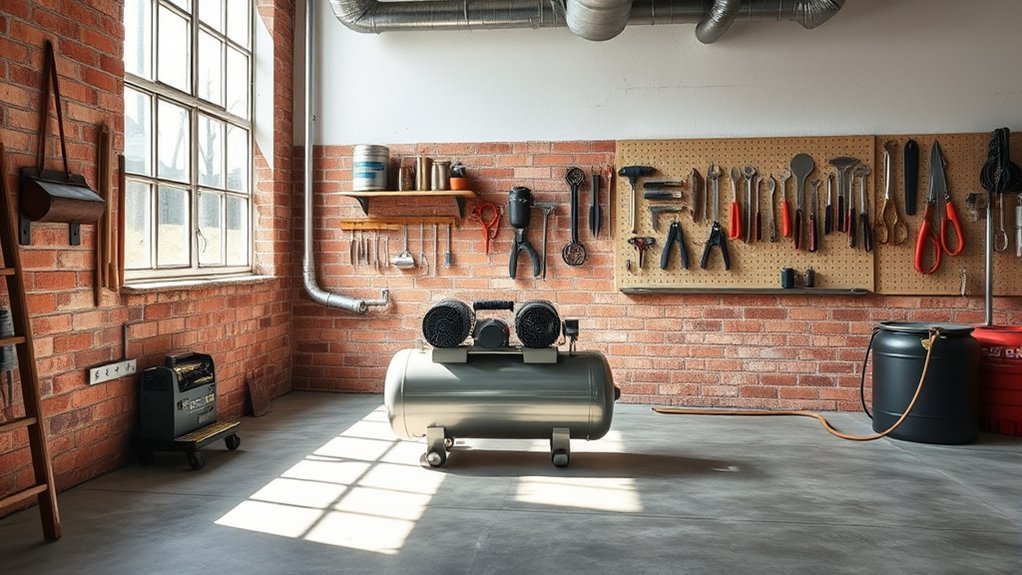
Selecting the most suitable location for your stationary air compressor involves ensuring adequate ventilation, a stable surface, and proximity to the power supply. Proper ventilation prevents heat buildup and moisture issues, while a stable surface minimizes vibration and noise transfer. Positioning the unit near a power source simplifies wiring and reduces energy loss.
Adequate Ventilation Space
Have you considered how essential proper ventilation is when choosing a location for your stationary air compressor? Adequate ventilation ensures ideal air quality by dispersing heat and moisture generated during operation, preventing overheating and corrosion. Proper airflow also helps remove airborne contaminants that could compromise equipment efficiency. Additionally, ventilation plays a fundamental role in noise reduction by dissipating sound waves and reducing acoustic pressure in the workspace. Selecting a space with ample airflow minimizes the need for additional soundproofing measures and creates a safer environment. Making sure sufficient ventilation space isn’t just about comfort; it’s critical for maintaining compressor performance, prolonging lifespan, and safeguarding worker health through improved air quality and noise control.
Stable Surface Placement
Ensuring the compressor is placed on a stable, level surface is critical for ideal operation and safety. An uneven foundation can cause excessive vibration, increasing compressor noise and risking equipment damage. A solid, flat surface—such as a concrete pad or reinforced flooring—minimizes movement and maintains alignment of internal components. Proper placement also enhances aesthetic integration within the workshop, preventing the unit from appearing out of place or cluttered. Additionally, a stable surface reduces wear and tear, extending the compressor’s lifespan. When selecting a location, consider the weight distribution and structural integrity of the surface to avoid settling or shifting over time. This precise placement ensures efficient operation, reduces noise levels, and maintains a clean, professional workshop appearance.
Proximity to Power Supply
Why is proximity to the power supply essential when choosing a location for your stationary air compressor? Guaranteeing a reliable connection minimizes voltage drops and reduces electrical hazards. Proper placement involves considering:
- Access to a dedicated power outlet that matches the compressor’s voltage and amperage requirements.
- Proximity to the circuit breaker to prevent overloads and facilitate easy power shutoff during maintenance.
- Adequate cord length to avoid stretching or creating tripping hazards.
- Avoidance of extension cords, which can cause voltage drops and increase fire risk.
Placing the compressor near a suitable power source ensures safe operation, maximum performance, and simplifies wiring. Proper electrical placement is critical for both safety and efficiency in your workshop setup.
Setting Up Electrical Connections Safely and Efficiently
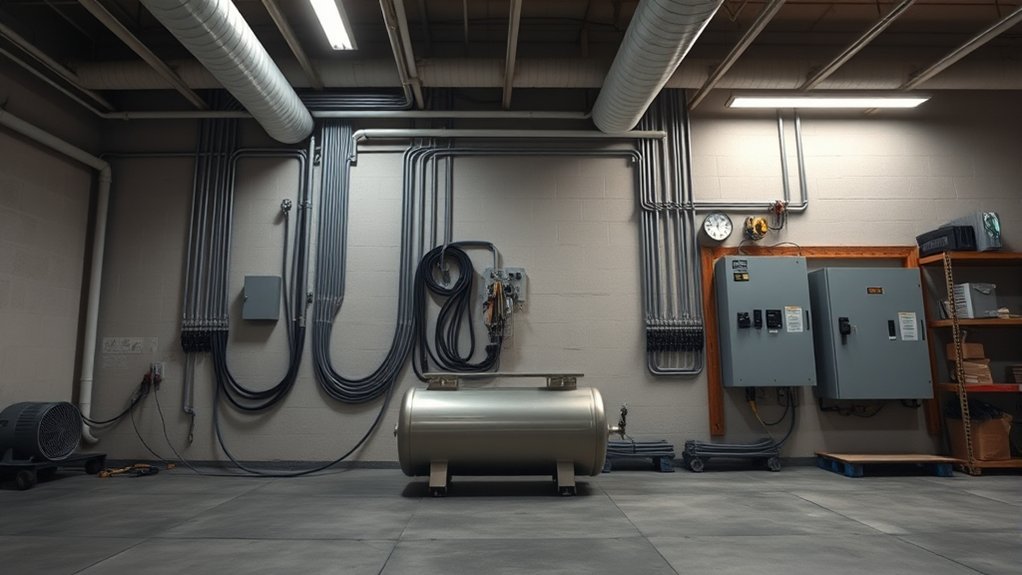
Before connecting the compressor to your workshop’s electrical system, it’s essential to verify that the power supply meets the compressor’s voltage and amperage requirements. Ensuring correct circuit requirements is vital to prevent electrical safety hazards and equipment damage. We recommend installing a dedicated circuit with appropriate circuit breakers rated for the compressor’s load. Use high-quality wiring and connectors rated for the expected current to minimize resistance and overheating risks. Before plugging in, confirm that grounding is properly established to reduce shock hazards. Avoid sharing circuits with high-demand tools, which can cause voltage drops. Regularly inspect connections for signs of wear or corrosion. Following these precise steps guarantees safe, reliable operation while adhering to electrical safety standards.
Connecting Air Lines and Ensuring Proper Air Flow
Proper air line routing is crucial to minimize pressure loss and prevent kinks or obstructions. We must verify all connections are secure and free of leaks to maintain consistent airflow. Addressing these factors guarantees ideal compressor performance and safety.
Proper Air Line Routing
How can we guarantee efficient airflow when routing air lines from the compressor to various tools? Proper air line routing maximizes air quality and minimizes noise interference. First, keep lines as straight as possible to reduce pressure loss. Second, install drops at appropriate distances to maintain consistent airflow. Third, use high-quality, corrosion-resistant piping to ensure air purity. Fourth, incorporate noise control measures like silencers or flexible hoses near the compressor. Additionally, mounting lines securely prevents vibration-induced noise and damage. Proper insulation also prevents condensation buildup, preserving air quality. These steps help maintain ideal pressure, reduce noise, and ensure clean, reliable airflow across your workshop. Careful planning in air line routing directly impacts compressor efficiency and tool performance.
Check for Leaks
Have we thoroughly checked for leaks in the air lines to guarantee ideal airflow? Detecting leaks is essential to maintaining optimal compressor performance and minimizing air compressor noise. We inspect connections and fittings for hissing sounds or pressure drops, ensuring compressor oil levels are adequate for smooth operation. Using soapy water along joints reveals small leaks, preventing efficiency loss. Proper sealing reduces unnecessary strain, noise, and energy consumption.
| Issue | Impact |
|---|---|
| Air leaks in lines | Decreased pressure, inefficiency |
| Inadequate compressor oil | Increased wear, noise, malfunction |
| Loose fittings | Air loss, vibration, noise |
| Poor airflow | Reduced tool performance |
Installing Support Equipment and Accessories
What are the key considerations when installing support equipment and accessories for a stationary air compressor? Confirming proper integration of components like the air filter and lubrication system is essential for peak performance. First, verify that the air filter is correctly positioned to prevent debris from entering the system, maintaining air purity. Second, confirm the lubrication system is adequately connected and accessible for maintenance, reducing wear and extending compressor life. Third, consider the placement of pressure regulators and moisture separators to enhance air quality. Fourth, ensure all fittings and hoses are rated for the required pressure and are properly secured. Proper installation of these accessories minimizes downtime, boosts efficiency, and protects critical components, ultimately guaranteeing the compressor operates reliably within its designated parameters.
Testing the System and Checking for Leaks
Before operating the system, it’s critical to thoroughly test the compressor and verify that there are no leaks that could compromise performance or safety. We begin by pressurizing the system gradually and listening for audible leaks, which can indicate faulty connections. Using soapy water on all fittings helps identify small leaks through bubbling. Monitoring air quality during testing ensures contaminants aren’t entering the system, maintaining *ideal* output. It’s also essential to assess noise levels, as excessive noise may indicate improper installation or the need for noise reduction measures. Confirm that all pressure gauges stabilize at expected levels. Proper leak detection and air quality verification prevent efficiency loss and safety hazards, ensuring the compressor functions reliably and quietly within the workspace.
Implementing Safety Measures and Ventilation
To guarantee safe operation of the stationary air compressor, we must implement thorough safety measures and effective ventilation strategies. Proper safety protocols include:
- Installing noise reduction enclosures to minimize sound levels and protect operators.
- Mandating the use of safety gear such as ear protection, eye safety glasses, and gloves during operation.
- Ensuring adequate ventilation to disperse heat, moisture, and potentially hazardous fumes.
- Incorporating airflow systems that maintain consistent air exchange, reducing the risk of compressor overheating and improving air quality.
These measures not only enhance safety but also optimize compressor performance. Effective noise reduction and ventilation are critical for maintaining a safe, compliant workshop environment while protecting personnel from exposure to noise and airborne contaminants.
Maintaining Your Air Compressor Post-Installation
Regular maintenance is essential to guarantee your stationary air compressor operates efficiently and reliably over time. Consistent air compressor maintenance involves regular inspection of filters, belts, and connections to prevent system failures. Compressor lubrication is critical; ensure you use the manufacturer-recommended lubricants and maintain proper levels to minimize wear and extend component life. Check oil levels daily, and perform oil changes at specified intervals to prevent contamination and overheating. Keep the cooling system clean and free of debris to maintain ideal operating temperature. Regularly drain moisture from the tanks to prevent corrosion and maintain air quality. Adhering to these maintenance protocols preserves performance, reduces downtime, and prolongs your compressor’s lifespan. Accurate documentation of maintenance activities also aids in early detection of potential issues.
Troubleshooting Common Installation Issues
Installing a stationary air compressor can present several common issues that may hinder ideal operation if not addressed promptly. These problems often relate to proper setup and compressor maintenance. To troubleshoot effectively:
- Incorrect placement: Confirm the compressor is on a stable, level surface to prevent vibration and noise issues.
- Poor ventilation: Adequate airflow reduces heat buildup, which can cause overheating and noise.
- Inadequate piping: Use properly sized, secure piping to prevent pressure drops and leaks.
- Electrical connections: Verify wiring matches the manufacturer’s specifications to avoid operational failures or noise disturbances.
Addressing these issues enhances compressor performance, minimizes noise, and ensures smooth operation. Regular compressor maintenance is essential for early detection of installation flaws, prolonging lifespan, and optimizing efficiency.
Frequently Asked Questions
How Often Should I Service My Stationary Air Compressor?
We recommend servicing your stationary air compressor monthly, following a detailed maintenance checklist. Regular maintenance prolongs the compressor’s lifespan, prevents unexpected breakdowns, and guarantees peak performance, making it essential for efficient workshop operations.
What Are the Signs of an Inefficient Air Compressor?
Like a car showing warning lights, an inefficient compressor signals issues such as reduced airflow, increased noise, or overheating. Regular maintenance tips help identify these signs early, extending compressor lifespan and ensuring peak performance.
Can I Install a Compressor Myself Without Professional Help?
We can undertake DIY installation of a stationary air compressor, but we must prioritize safety precautions, confirm proper electrical and plumbing connections, and follow manufacturer instructions meticulously to prevent hazards and guarantee ideal performance.
What Is the Ideal Noise Level for a Workshop Compressor?
We aim for a noise level below 85 decibels, utilizing noise reduction techniques and soundproof enclosures, ensuring a safer, quieter workshop environment. These measures help minimize sound pollution and improve operator comfort during compressor operation.
How Do I Upgrade My Compressor System Later?
Wondering how to upgrade your compressor system later? We recommend following a strict maintenance schedule and exploring upgrade options like higher capacity units or advanced controls, ensuring peak performance and longevity for your workshop compressor.
Conclusion
Once we’ve completed the installation, our workshop’s air system becomes a finely tuned engine, ready to power our tools with precision and reliability. Proper setup guarantees smooth operation, like a well-orchestrated symphony, minimizing downtime and maintenance. By adhering to these technical steps, we transform a complex task into a seamless process, securing a safe, efficient workspace. Fundamentally, a meticulously installed compressor is the heartbeat of our workshop’s productivity, pulsating with unwavering strength.