Ad Blocker Detected
Our website is made possible by displaying online advertisements to our visitors. Please consider supporting us by disabling your ad blocker.
When installing an industrial air compressor, we recognize that proper space, ventilation, and structural stability are critical to system performance and safety. Each component, from electrical wiring to piping layout, must meet precise technical standards to guarantee reliability and compliance. Understanding these foundational requirements is essential, but the complexities involved often demand a detailed, systematic approach that highlights key considerations and potential challenges ahead.
Key Takeaways
- Ensure adequate space and proper ventilation to maintain airflow, temperature control, and noise reduction during operation.
- Verify electrical safety, sufficient power capacity, and correct wiring to prevent malfunctions and ensure compliance.
- Establish a stable, level foundation with vibration isolators to minimize vibrations and prevent misalignment.
- Design piping layouts to reduce pressure drops, moisture buildup, and noise, enhancing system efficiency and longevity.
- Implement safety measures like clear pathways, accessible controls, warning signage, and adequate lighting for safe maintenance.
What Are the Key Space and Ventilation Requirements for Installing an Industrial Air Compressor?
To guarantee peak performance and safety, understanding the space and ventilation requirements for installing an industrial air compressor is essential. Adequate space ensures proper airflow and accessibility for maintenance, reducing overheating risks. Ventilation is critical for dissipating heat generated during operation and controlling environmental conditions, which directly impacts compressor longevity. Implementing noise reduction strategies, such as soundproof enclosures or barriers, minimizes noise pollution and complies with safety regulations. Environmental controls, including temperature and humidity regulation, help maintain ideal operating conditions and prevent equipment degradation. Properly designed ventilation systems also aid in controlling airborne contaminants, ensuring cleaner air quality within the installation area. These measures collectively support efficient, safe, and compliant compressor operation.
How Do Electrical and Power Supply Specifications Impact Compressor Installation?
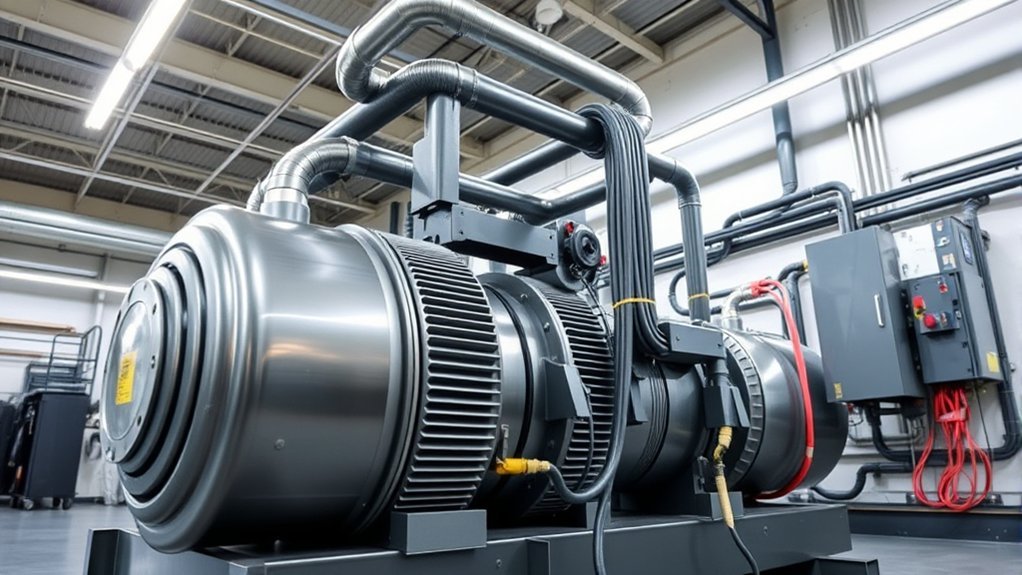
Electrical and power supply specifications are critical factors that directly influence the safe and efficient installation of an industrial air compressor. Proper electrical safety protocols must be established, including grounding and protection devices, to prevent electrical hazards. The power capacity must align with the compressor’s requirements to guarantee reliable operation without overloading circuits. Insufficient power capacity can lead to voltage drops, equipment malfunctions, and increased wear. Precise electrical wiring and circuit design are essential to maintain stable operation and prevent electrical failures. Additionally, compatibility with local electrical standards ensures compliance and safety. Overall, understanding and adhering to these specifications minimizes operational risks and supports ideal compressor performance, making electrical and power supply considerations foundational to a successful installation process.
What Foundation and Mounting Considerations Ensure Stability and Longevity?
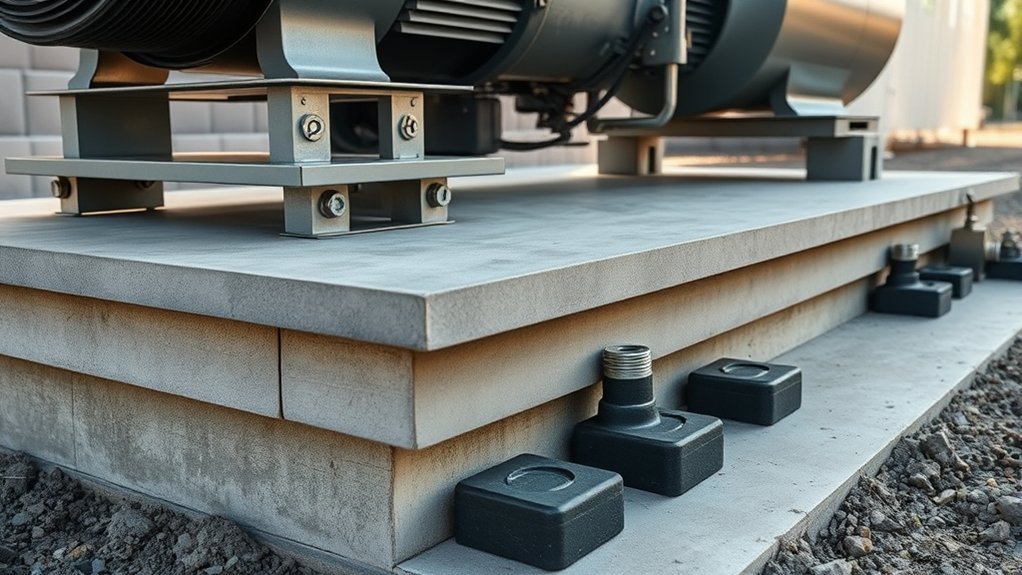
Ensuring the stability and longevity of an industrial air compressor begins with selecting an appropriate foundation and mounting system, as these elements directly influence operational performance and equipment lifespan. Proper foundation stability minimizes vibrations and prevents misalignment, which can cause premature wear. Effective mounting techniques involve securing the compressor on a level, rigid surface that absorbs operational shocks.
| Foundation Type | Mounting Technique |
|---|---|
| Reinforced concrete | Anchor bolts for secure fit |
| Steel skid foundation | Vibration isolators |
| Poured concrete slab | Base plates with shims |
| Compacted gravel bed | Bolted or welded mounts |
| Structural steel frame | Adjustable mounts |
Choosing suitable foundation stability and mounting techniques ensures excellent operation and reduces maintenance costs.
Why Is Proper Piping and Air Distribution Planning Essential?
Proper piping and air distribution planning are critical components of an efficient compressed air system because they directly impact pressure stability, energy efficiency, and system reliability. Effective layout minimizes pressure drops, ensuring consistent air delivery. It also plays a crucial role in maintaining air quality by reducing contaminants and moisture buildup within the piping network. Additionally, thoughtful planning can considerably improve noise control, reducing sound transmission throughout the facility. Properly designed piping minimizes turbulence and vibration, which not only enhances system longevity but also reduces maintenance costs. By optimizing airflow paths and using appropriate materials, we can achieve more reliable operation and higher energy efficiency. Overall, meticulous piping and distribution planning are essential to ensuring a stable, clean, and quiet compressed air system that meets operational demands.
What Safety and Accessibility Measures Should Be Implemented During Installation?
Implementing thorough safety and accessibility measures during the installation of industrial air compressors is vital to safeguard personnel and guarantee smooth operation. We prioritize establishing clear pathways and accessible control panels to facilitate maintenance protocols and emergency access. Proper noise reduction strategies, such as soundproof enclosures and vibration dampening, are essential to minimize impact on workers and nearby equipment. Ensuring compliance with safety standards involves installing guardrails, warning signage, and adequate lighting to prevent accidents. Additionally, we conduct risk assessments to identify potential hazards, integrating safety features accordingly. Accessibility for routine maintenance and inspections is optimized by positioning compressors on stable foundations with sufficient space. These measures collectively enhance operational safety, facilitate maintenance, and promote compliance with industry regulations.
Frequently Asked Questions
What Are the Environmental Regulations Affecting Industrial Air Compressor Installation?
We guarantee compliance with environmental regulations impacting air compressor installations by adhering to air quality standards and emission regulations, which limit pollutants, control noise, and promote sustainable practices, ultimately safeguarding community health and regulatory adherence during setup and operation.
How Does Ambient Temperature Influence Compressor Performance and Placement?
Ambient temperature can dramatically impact compressor efficiency, like a heatwave melting a glacier. Higher temperatures reduce performance, so we carefully select placement to maintain ideal ambient conditions, ensuring reliable operation and preventing overheating.
What Maintenance Access Requirements Are Necessary Post-Installation?
We prioritize maintenance accessibility by ensuring service points are strategically positioned for easy reach, facilitating routine inspections and repairs. Proper planning of service point positioning minimizes downtime and promotes safe, efficient maintenance post-installation.
Are There Specific Noise Control Standards to Consider During Installation?
Like a shield guarding a fortress, we prioritize noise mitigation by applying soundproofing measures aligned with standards like OSHA and EPA. We analyze installation locations carefully, ensuring compliance with noise control standards to minimize environmental impact and worker disturbance.
How Should Future Expansion or Upgrades Be Accommodated in the Initial Setup?
We incorporate future scalability and clear upgrade pathways into initial setup, designing modular systems with adaptable infrastructure, ensuring seamless capacity expansion and technology upgrades, which minimizes downtime and maximizes operational efficiency over the compressor’s lifespan.
Conclusion
In summary, proper installation of an industrial air compressor is like constructing a well-oiled machine—every component must work in harmony. Ensuring adequate space, ventilation, stability, and safety measures not only optimizes performance but also extends the system’s lifespan. By meticulously planning electrical, foundation, and piping requirements, we create a reliable backbone for efficient operation. Ultimately, a thoughtfully installed compressor becomes the heartbeat of your facility, driving productivity with precision and resilience.