Ad Blocker Detected
Our website is made possible by displaying online advertisements to our visitors. Please consider supporting us by disabling your ad blocker.
It’s a coincidence that choosing the right size stationary air compressor often hinges on understanding the specific demands of your workshop, as mismatched capacity can lead to inefficiencies or equipment failures. To optimize performance, we need to analyze tool requirements, airflow needs, and space constraints carefully. By considering these factors, you can make an informed decision that balances power, size, and future growth potential—an essential step before making your investment.
Key Takeaways
- Determine the total CFM and PSI requirements of all air tools used simultaneously in the workshop.
- Choose a compressor with adequate tank capacity for continuous operation and minimal cycling.
- Consider noise levels to ensure the compressor suits the workspace environment.
- Select a size that balances power, energy efficiency, and future expansion needs.
- Position the compressor with proper ventilation and easy access for maintenance and safety.
How to Assess Your Workshop’s Air Tool Needs
To accurately determine the appropriate air compressor size for your workshop, we must first analyze the specific air tools you plan to use and their operational demands. Critical factors include air quality requirements, as some tools demand clean, moisture-free air to prevent damage or contamination. We also need to take into account noise levels, especially in shared or enclosed spaces, to ensure compliance with workplace noise regulations and maintain a safe environment. By evaluating the airflow (CFM) and pressure (PSI) each tool needs during peak operation, we can identify the minimum compressor capacity required. This assessment helps prevent under-sizing, which hampers productivity, or over-sizing, which leads to unnecessary energy consumption. A precise understanding of these parameters guarantees ideal compressor performance aligned with your workshop’s specific air tool demands.
Understanding Compressor Size Ratings and Specifications
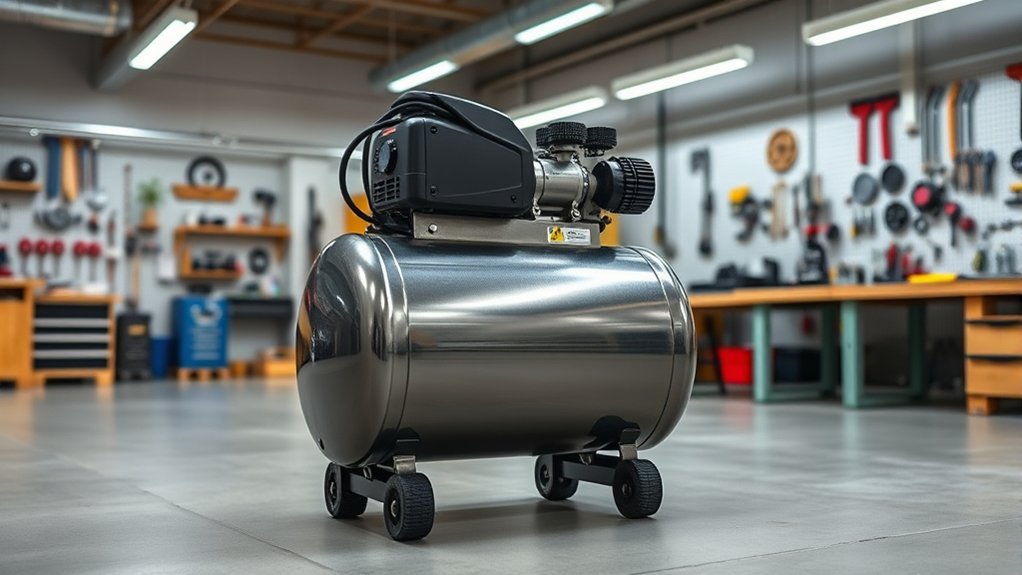
Understanding compressor size ratings and specifications is essential for selecting the right equipment for your workshop. These ratings, including horsepower (HP), tank capacity, and duty cycle, directly influence compressor performance and longevity. Properly sizing guarantees efficient compressor maintenance, reducing wear and potential downtime. Noise levels, often correlated with size and design, also factor into suitability, especially in noise-sensitive environments. Larger units with higher horsepower typically generate more noise, requiring sound-dampening measures or quieter models. Accurate interpretation of specifications helps prevent undersized or oversized selections, optimizing energy use and operational efficiency. Ultimately, understanding these technical parameters enables informed decisions that balance power, noise considerations, and maintenance needs, ensuring the compressor meets your workshop’s demands reliably and sustainably.
Choosing the Right CFM and PSI for Your Tasks
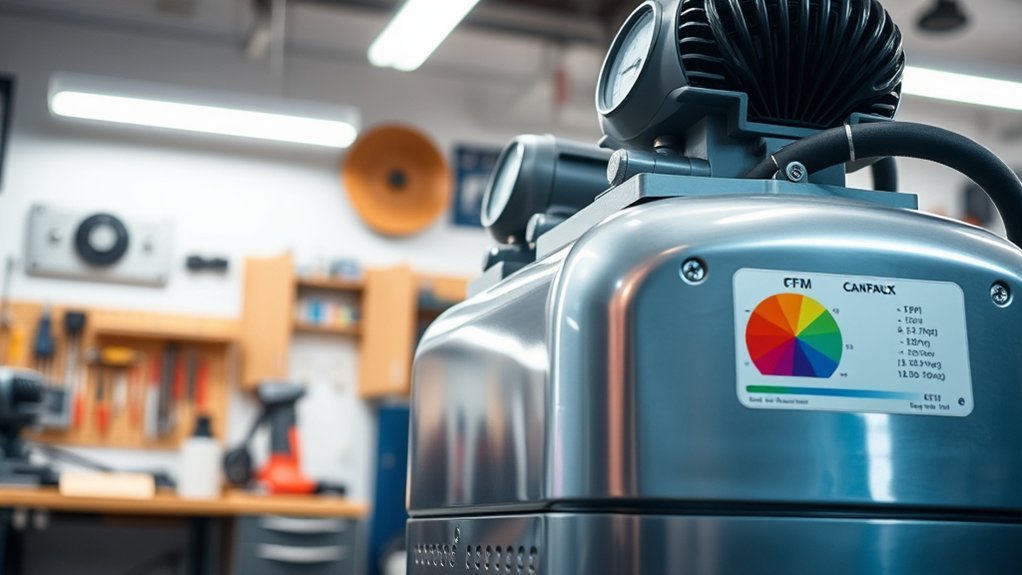
Choosing the appropriate CFM (cubic feet per minute) and PSI (pounds per square inch) ratings is critical to guaranteeing your compressor can handle specific workshop tasks efficiently. Accurate CFM is crucial for tools like sanders or grinders that require sustained airflow, while PSI must meet the demands of applications such as spray painting or pneumatic fastening. Underestimating these ratings can lead to inadequate performance, increased air compressor noise, and frequent strain on the system. Additionally, selecting the right specifications supports optimized maintenance schedules, reducing downtime caused by overloading or wear. Precise CFM and PSI matching also ensures smoother operation, prolongs compressor lifespan, and maintains consistent tool performance, which are essential for a well-functioning workshop environment.
Space Considerations and Compressor Placement
Proper placement and spatial planning are essential to ensuring your air compressor operates efficiently and safely within your workshop. We must consider noise levels, as compressors can generate significant sound, so positioning them away from workstations minimizes disruption and complies with safety standards. Additionally, proximity to reliable power sources is critical; ensuring access to appropriate electrical outlets prevents voltage drops that can impair performance or damage equipment. Adequate clearance around the compressor allows for proper ventilation, reducing heat buildup and prolonging lifespan. We should also evaluate the layout for ease of maintenance and potential expansion, ensuring placement doesn’t hinder future upgrades. Strategic positioning optimizes efficiency, reduces operational risks, and enhances overall workshop safety.
Tips for Future-Proofing Your Air Compressor Investment
To guarantee your air compressor remains a reliable asset over the long term, we must incorporate future-proofing strategies from the outset. Prioritizing regular air compressor maintenance ensures peak performance and minimizes downtime, extending equipment lifespan. Additionally, considering noise level considerations is vital; selecting models with sound attenuation features can prevent workplace disruption and meet regulatory standards. Investing in compressors with scalable capacity allows growth without frequent replacements, reducing long-term costs. Monitoring energy efficiency and incorporating smart controls enhance operational sustainability. By addressing maintenance routines, noise management, scalability, and efficiency early, we safeguard your investment against obsolescence and unforeseen challenges, guaranteeing consistent performance aligned with evolving workshop demands.
Frequently Asked Questions
How Loud Are Different Stationary Air Compressors During Operation?
Different stationary air compressors vary in noise levels, generally ranging from 60 to 90 decibels, influenced by sound insulation and design. We analyze these factors to determine suitable models for quieter workshop environments.
What Maintenance Is Required for Long-Term Compressor Performance?
Preventing performance decline involves adhering to precise lubrication schedules and timely filter replacements, ensuring ideal compressor efficiency. Regular inspections and maintenance checks help us sustain long-term reliability, minimizing unexpected downtimes and extending equipment lifespan effectively.
Are There Energy-Efficient Options for Stationary Air Compressors?
We find energy-efficient options, like compressors with advanced energy saving features and eco-friendly models, essential for reducing operational costs and environmental impact, making them a smart, sustainable choice for our workshop’s long-term performance.
How Do Compressor Warranties Vary Between Brands?
Did you know 70% of users prioritize warranty coverage when choosing compressors? We see brand reliability greatly influences warranty differences, with some brands offering extended coverage and all-encompassing support, ensuring long-term performance and minimizing downtime for workshop needs.
What Safety Precautions Should I Follow When Operating a Compressor?
When operating a compressor, we prioritize safety gear like goggles and ear protection, and strictly follow operating procedures. This minimizes risks, guarantees proper ventilation, and maintains equipment integrity, preventing accidents and ensuring safe, efficient workshop operations.
Conclusion
Just as a master craftsman selects the right tools to craft perfection, choosing the appropriate compressor size guarantees our workshop operates with precision and efficiency. By carefully analyzing our needs and future-proofing our setup, we avoid the pitfalls of underperformance or unnecessary expense. Like an architect designing a sturdy structure, we must balance capacity, space, and scalability—creating a workflow that’s not only effective today but resilient for tomorrow’s demands.