Ad Blocker Detected
Our website is made possible by displaying online advertisements to our visitors. Please consider supporting us by disabling your ad blocker.
Maintaining a two-stage air compressor requires a systematic approach that prioritizes component inspection, proper lubrication, and timely adjustments. Our focus is on ensuring peak efficiency and extending the equipment’s lifespan through precise procedures and routine checks. As we explore these essential maintenance practices, it’s important to understand how each element interacts within the system. Neglecting any aspect can lead to costly downtime, making it essential to follow a thorough guide to keep your compressor operating reliably.
Key Takeaways
- Regularly inspect and replace filters, oil, and worn belts to prevent clogging and ensure optimal compressor performance.
- Monitor pressure gauges and safety valves for accurate readings and proper system safety.
- Conduct routine checks for leaks, electrical connections, and component wear during scheduled maintenance.
- Keep the compressor in a dry, temperature-controlled environment and properly store it during periods of inactivity.
- Recognize signs like unusual noises or pressure drops and consult professionals for complex troubleshooting and repairs.
What Are the Key Components of a Two-Stage Air Compressor?
A two-stage air compressor is composed of several key components that work together to efficiently generate compressed air. Central to its design are the cylinders, pistons, and valves, which must exhibit high component durability to withstand continuous operation. The intercooler plays an essential role by cooling compressed air between stages, enhancing system efficiency by reducing energy losses caused by heat buildup. The crankshaft and connecting rods convert power from the motor into linear motion, demanding precision engineering to maximize durability. Additionally, the pressure relief valves and gauges guarantee safe operation, maintaining ideal system performance. Overall, the integration of durable components directly influences the compressor’s longevity and efficiency, making it critical to select high-quality parts to sustain reliable operation and minimize downtime.
How to Perform Routine Inspections on Your Compressor
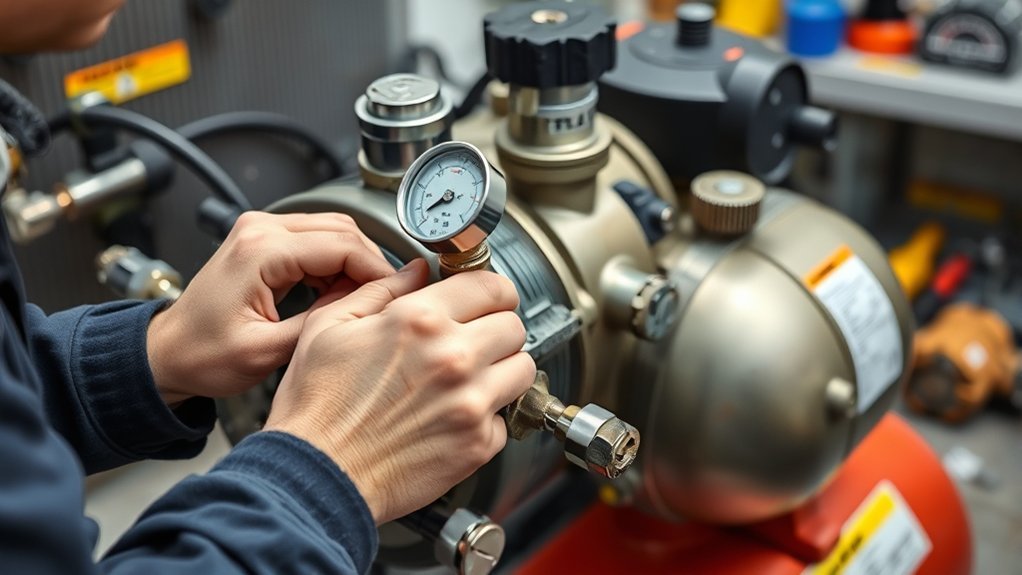
Regular inspections are essential to maintain the best performance and longevity of your compressor. Proper maintenance scheduling ensures timely detection of issues, minimizing downtime. During inspections, we focus on:
- Checking for leaks in hoses and fittings, which can compromise efficiency and safety.
- Inspecting belts and pulleys for wear or misalignment, preventing mechanical failure.
- Assessing pressure gauges and safety valves to verify accurate readings and proper operation.
- Examining electrical connections for corrosion or damage, reducing electrical hazards.
Adhering to safety precautions is critical—always disconnect power before inspection and wear appropriate protective gear. Routine inspections enable early problem identification, ensuring ideal operation and extending equipment lifespan.
Best Practices for Changing Air Filters and Oil
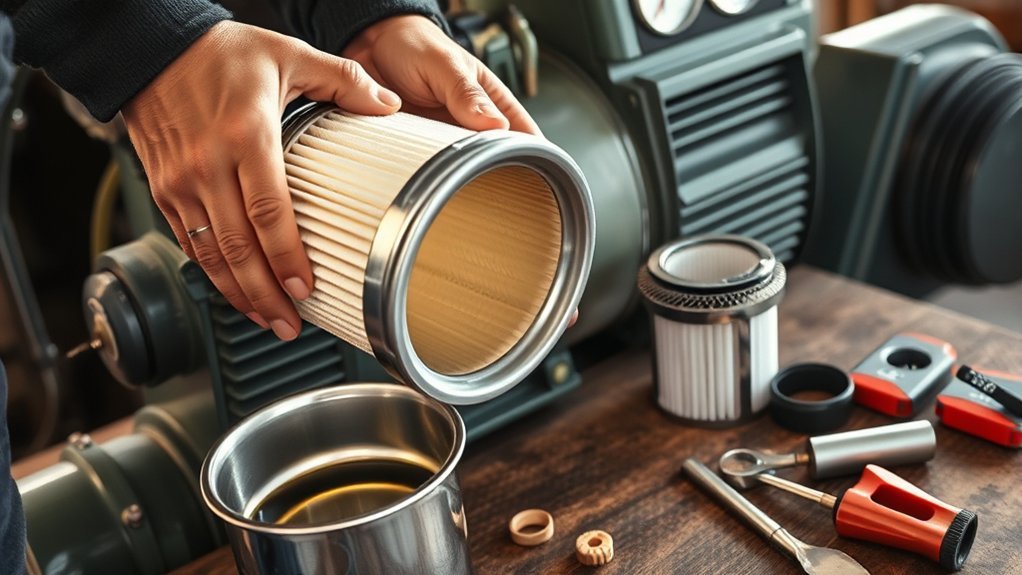
Effective filter replacement requires strict adherence to manufacturer guidelines to prevent contamination and guarantee ideal airflow. Regular oil change intervals, based on usage and operating conditions, maintain compressor efficiency and prolong equipment life. Implementing precise techniques for both tasks minimizes downtime and enhances overall system reliability.
Proper Filter Replacement Techniques
Proper filter replacement is vital for maintaining ideal compressor performance and preventing downtime. Effective replacement guarantees maximum removal of filter debris, preserving air purity and system efficiency. To achieve this, we follow a precise process:
- Turn off the compressor and depressurize the system to prevent injury.
- Carefully remove the used filter, inspecting for accumulated debris and damage.
- Clean the filter housing and surrounding components to prevent contamination.
- Install the new filter, ensuring it seats properly to maintain airflow and filtration integrity.
Oil Change Interval Tips
While the compressor operates under varying loads and conditions, adhering to recommended oil change intervals is vital for peak performance and longevity. Regular oil changes preserve oil quality, preventing contamination that accelerates wear. Using high-quality oil extends the interval, but monitoring oil condition remains critical. Additionally, maintaining ideal filter lifespan ensures contaminants are effectively removed, safeguarding internal components.
| Oil Change Interval | Key Considerations |
|---|---|
| Every 500-1000 hours | Oil type, operating environment |
| Monitor oil color | Darkening indicates need for change |
| Check filter lifespan | Regular inspection prevents clogging |
| Use manufacturer specs | Ensures compatibility and performance |
| Record maintenance | Tracks intervals for future reference |
How to Monitor and Maintain Compressor Pressure Settings
Regularly checking pressure gauges guarantees we can detect fluctuations that may indicate system issues. Accurate adjustment of pressure settings is critical to maintain ideal compressor performance and prevent excessive wear. Precise monitoring and timely adjustments are essential for sustaining efficiency and equipment longevity.
Checking Pressure Gauges Regularly
To guarantee peak performance and safety, we must monitor the pressure gauges on our air compressors consistently. Regular checks ensure accurate readings, which are crucial for ideal operation and safety compliance.
- Verify pressure gauge calibration periodically to detect inaccuracies that can lead to over-pressurization or system failure.
- Observe pressure readings during operation, confirming they stay within manufacturer-specified ranges.
- Inspect the safety valve for proper function, ensuring it releases pressure if gauges fail or exceed limits.
- Cross-reference gauge readings with manual or secondary gauges to identify discrepancies promptly.
Consistent monitoring prevents potential damage, maintains system efficiency, and ensures safety valve inspection and pressure gauge calibration are performed at recommended intervals.
Adjusting Pressure Settings Properly
Maintaining ideal compressor pressure settings requires careful monitoring and precise adjustments to guarantee system efficiency and safety. Accurate pressure calibration ensures the gauges reflect true operating conditions, preventing over-pressurization risks. When adjusting pressure settings, we systematically verify the compressor’s cut-in and cut-out points, ensuring they align with manufacturer specifications and system demands. Proper calibration minimizes false readings that could trigger unnecessary safety shutdowns or cause mechanical stress. We also evaluate safety shutdown thresholds regularly, adjusting them to balance operational flexibility with safety protocols. Consistent monitoring and calibration reduce the likelihood of pressure-related failures, optimize energy consumption, and extend equipment lifespan. Ultimately, precise control over pressure settings is essential for maintaining reliable, safe, and efficient compressor operation.
Troubleshooting Common Issues in Two-Stage Compressors
When two-stage compressors experience operational issues, identifying the root cause requires a systematic approach to troubleshooting. Common problems often relate to airflow, noise, or efficiency.
- Check the air filter—a clogged filter reduces airflow and causes strain, increasing noise and decreasing performance.
- Inspect for leaks—air leaks decrease pressure and efficiency; use soap solution to detect escaping air.
- Evaluate noise sources—excessive noise can indicate worn bearings or insufficient noise reduction measures, requiring targeted component inspection.
- Monitor temperature and pressure—abnormal readings suggest issues with intercoolers or valves, impacting overall system stability.
Addressing these issues analytically ensures peak operation and prolongs compressor lifespan, especially when focusing on maintaining clean air filters and effective noise reduction.
The Importance of Lubrication and How to Keep It Up-to-Date
Proper lubrication is essential to the reliable operation of two-stage air compressors, directly influencing component wear, efficiency, and lifespan. Selecting appropriate lubricant types—such as synthetic or mineral oils—depends on operating conditions and manufacturer specifications. Using the correct lubricant minimizes oil contamination risks, which can degrade performance, cause corrosion, and lead to premature failure. Regularly monitoring oil quality through visual inspections and testing helps identify contamination or degradation early. Maintaining proper oil levels and replacing lubricants at recommended intervals ensures consistent lubrication and prevents wear. By understanding lubricant types and vigilantly managing oil condition, we can optimize compressor performance, reduce downtime, and extend the equipment’s operational life.
Extending Your Compressor’s Lifespan With Proper Storage and Usage
To maximize your compressor’s lifespan, it’s essential to focus on proper storage and usage practices that prevent deterioration and operational issues. Correct storage safeguards components from environmental damage and corrosion, while careful handling minimizes mechanical stress.
Key strategies include:
- Ensuring Storage Safety by keeping the compressor in a dry, temperature-controlled environment to prevent rust and condensation.
- Using proper Transportation Tips to avoid jolts and vibrations that can damage internal parts.
- Draining moisture regularly before storage to prevent corrosion.
- Securing the unit during transportation to avoid accidental impacts and misalignment.
Implementing these practices preserves component integrity, reduces maintenance costs, and extends overall operational life. Proper storage and usage are critical for maintaining ideal compressor performance over time.
When to Call a Professional for Advanced Maintenance
While routine inspections and basic maintenance can keep a two-stage air compressor operating efficiently, there are critical signs indicating that advanced maintenance should be handled by a professional. Unusual noises, persistent pressure drops, or overheating often signal underlying issues that simple troubleshooting can’t resolve. If these problems persist, attempting emergency repairs without proper expertise can cause further damage, jeopardizing warranty coverage. Professionals possess the specialized tools and diagnostic skills necessary to accurately identify and address complex problems, guaranteeing the compressor operates within safe parameters. Delaying professional intervention risks voiding warranty terms and incurring higher repair costs. Recognizing these signs and consulting experts promptly helps maintain the compressor’s integrity, avoids costly downtime, and ensures compliance with manufacturer warranties.
Frequently Asked Questions
How Often Should I Schedule Professional Maintenance for My Two-Stage Air Compressor?
We recommend scheduling professional maintenance every 6 to 12 months, following a detailed maintenance checklist, to guarantee peak performance and extend your compressor’s lifespan. Regular expert inspections catch issues early, minimizing downtime and costly repairs.
What Are Signs That My Compressor Needs Urgent Repairs?
We notice urgent repairs are needed if your compressor produces unusual noise, like knocking or loud rattling, or if oil discoloration occurs, indicating contamination or breakdown. These signs suggest immediate inspection to prevent further damage.
Can I Perform Maintenance Tasks Myself Without Voiding the Warranty?
We believe that diligent DIY safety measures can enable maintenance without voiding warranty, provided you strictly follow manufacturer guidelines. Careful documentation, proper procedures, and avoiding unauthorized modifications are critical to protect your warranty while ensuring ideal compressor performance.
How Do Ambient Temperature and Humidity Affect Compressor Performance?
Ambient effects and humidity impact compressor performance considerably; high temperatures can cause overheating, while humidity increases moisture in the system, leading to corrosion and inefficiency. We analyze these factors to optimize maintenance and guarantee reliable, efficient operation.
What Safety Precautions Should I Follow During Maintenance Procedures?
Like a trusty steed, we prioritize safety gear and an emergency shutdown during maintenance. We guarantee proper lockout/tagout procedures, verify power isolation, and wear protective equipment to prevent accidents and ensure a safe, efficient process.
Conclusion
Regular maintenance is vital for maximizing your two-stage compressor’s efficiency and lifespan. For example, a factory that neglected routine oil changes faced costly repairs and unexpected downtime, highlighting the importance of adherence to maintenance schedules. By systematically inspecting components, monitoring system parameters, and addressing issues promptly, you can prevent failures and optimize performance. Consistent upkeep not only saves money but also guarantees reliable operation, underscoring the value of a disciplined, analytical approach to compressor management.