Ad Blocker Detected
Our website is made possible by displaying online advertisements to our visitors. Please consider supporting us by disabling your ad blocker.
Many operators overlook the fact that a well-structured maintenance schedule can greatly extend an air compressor’s lifespan and prevent costly downtime. While daily checks are common, detailed inspections of components like safety valves, belts, and lubricants require a systematic approach that’s often underestimated. Understanding the specific needs of your equipment and adhering to manufacturer guidelines is essential for peak performance. Let’s explore how a precise schedule can make all the difference in keeping your compressor reliable and efficient.
Key Takeaways
- Follow manufacturer guidelines for specific inspection and replacement intervals for filters, belts, and lubricants.
- Conduct daily checks of oil levels, air filters, and condensate drains to ensure optimal performance.
- Schedule weekly and monthly inspections of safety valves, electrical connections, belts, and system leaks.
- Perform seasonal maintenance such as comprehensive system inspections and long-term part replacements.
- Keep detailed records of maintenance activities, parts replaced, and inspection dates for future planning.
Understanding the Importance of a Maintenance Schedule for Air Compressors
Understanding the significance of a maintenance schedule for air compressors is vital to guaranteeing their reliable and efficient operation. Regular maintenance directly impacts energy efficiency by reducing unnecessary power consumption caused by worn or dirty components. When we stick to a strict schedule, we prevent issues that lead to increased energy use, saving costs over time. Additionally, systematic upkeep plays an essential role in noise reduction; properly lubricated and calibrated parts operate more smoothly, minimizing vibrations and sound levels. This not only improves the working environment but also extends the lifespan of the equipment. By adhering to a detailed maintenance plan, we affirm our air compressors operate at peak performance, conserving energy, reducing noise, and avoiding costly breakdowns.
Identifying Key Components That Require Regular Inspection
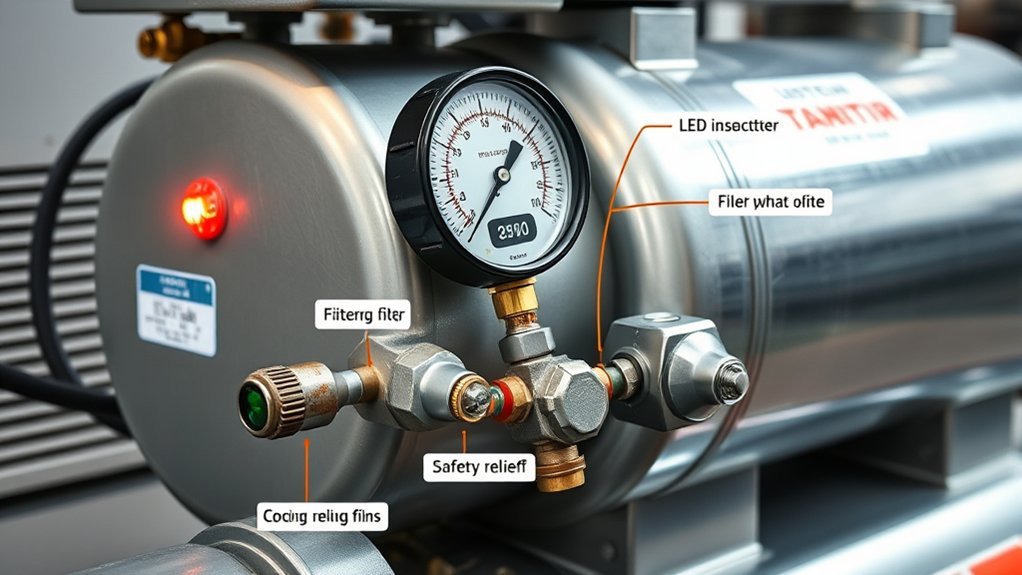
We need to systematically inspect critical components such as compressor oil levels, air filter condition, and drain valve function to guarantee ideal operation. Regular checks help identify potential issues before they escalate, maintaining efficiency and preventing costly downtime. Precise attention to these elements is essential for a reliable maintenance routine.
Compressor Oil Levels
How often should you check the compressor oil levels to guarantee peak performance? Regular inspection of compressor lubrication is essential for ideal operation. We recommend checking the oil level daily before starting the compressor, ensuring it stays within the manufacturer’s specified range. Use a clean, dry dipstick or sight glass for accuracy. If oil levels are low, top up with the recommended oil type immediately. During inspection, examine the oil’s clarity and consistency; dark or gritty oil indicates contamination, requiring prompt oil filter replacement. Consistent monitoring prevents excessive wear and overheating. Proper lubrication also involves scheduled oil changes per manufacturer guidelines. Maintaining correct oil levels and replacing oil filters as needed are critical in prolonging compressor life and ensuring reliable, efficient performance.
Air Filter Condition
Have you ever considered how critical the air filter is to your compressor’s performance? The air filter condition directly affects efficiency and equipment longevity. We need to monitor the air filter’s lifespan carefully, as a clogged or dirty filter restricts airflow, causes overheating, and increases energy consumption. Regular inspection involves visual checks for dirt, debris, or damage, and listening for abnormal noises during operation. Filter replacement intervals vary based on usage and environmental conditions, but typically, filters should be replaced every 3 to 6 months. Maintaining accurate records of inspection dates and replacement schedules guarantees peak performance. By adhering to these precise inspection and replacement protocols, we prevent costly downtime and extend the lifespan of your compressor.
Drain Valve Function
Are you aware of the critical components within the drain valve system that require regular inspection to guarantee proper operation? The drain valve itself is essential for releasing accumulated moisture and condensate from the compressor tank. Key components include the valve body, seat, and actuator. During maintenance, we focus on ensuring the valve opens and closes smoothly without leaks, as any sticking or damage can hinder moisture removal. The drain valve’s seal must be intact to prevent air leaks, which compromise efficiency. Regular inspection is crucial because neglecting this component can lead to corrosion, rust, or blockage, risking damage to the compressor. Proper drain valve function supports ideal operation and extends equipment lifespan, underscoring the maintenance importance of routine, detailed checks.
Daily Maintenance Tasks to Keep Your Air Compressor Running Smoothly
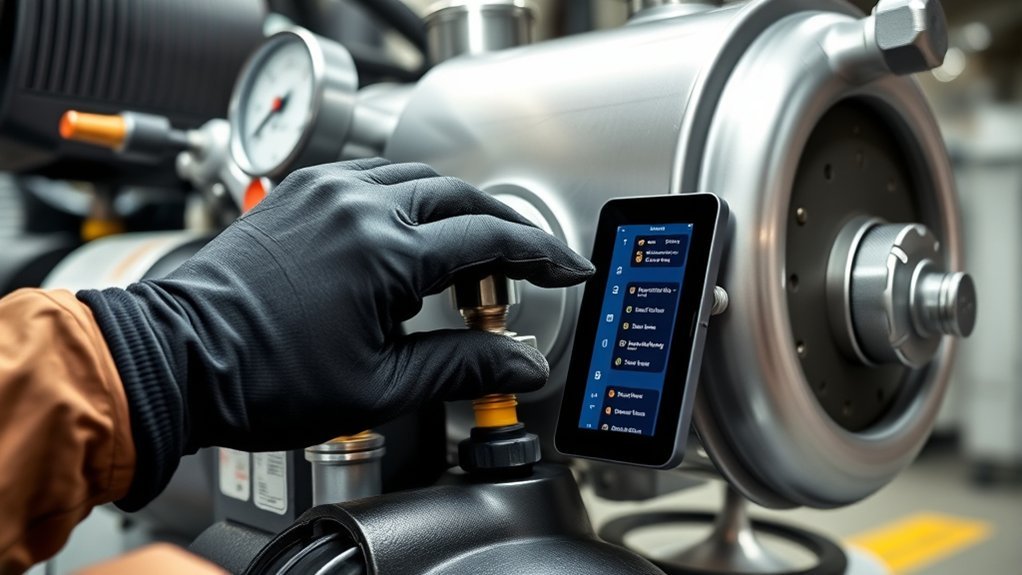
To guarantee peak performance, we begin each day by checking the oil levels to confirm proper lubrication. We then inspect the air filters for dirt or damage and replace them if necessary to maintain air quality. Additionally, we drain any condensate from the system to prevent moisture buildup that could impair compressor function.
Check Oil Levels
Why is it vital to check oil levels daily? Regularly monitoring oil levels guarantees proper lubrication, prevents equipment wear, and maintains ideal compressor performance. We start by inspecting the oil sight glass or dipstick, guaranteeing the oil is within the recommended range. Using the correct lubricant compatible with our compressor’s specifications is essential; incompatible oils can impair oil filtration and reduce efficiency. We also verify that the oil’s color and viscosity remain consistent, indicating no contamination or degradation. Consistent checks help us detect leaks early, and if needed, top off with the specified oil type. Maintaining proper oil levels supports effective oil filtration and prolongs the compressor’s lifespan, keeping it running smoothly and reliably.
Inspect Air Filters
Inspecting air filters daily is a critical step in maintaining ideal compressor performance. Regular visual checks allow us to assess the filter’s condition and prevent airflow restrictions. We look for excessive dirt, debris, or damage that could impair efficiency. Knowing the air filter lifespan helps us plan timely filter replacement intervals, avoiding unnecessary downtime or strain on the system.
Key points to consider:
- Check for visible dirt buildup or clogging
- Measure pressure drop across the filter
- Confirm no cracks or tears in the filter media
- Document the filter’s condition and date of inspection
- Replace filters proactively based on manufacturer’s recommended intervals
Consistent inspection ensures effective filtration, improves compressor longevity, and maintains peak operational efficiency.
Drain Condensate Regularly
Regularly draining condensate from the air compressor is a essential step in daily maintenance routines that helps prevent moisture buildup, which can cause corrosion, reduce efficiency, and damage internal components. We guarantee proper condensate disposal by opening the drain valve or using automatic drain systems after each use. This process is critical for moisture control, preventing water from accumulating in the tank or lines. We carefully monitor the condensate collection points, avoiding spills or leaks, and dispose of the condensate in accordance with environmental regulations. Consistent drainage keeps internal parts dry, preserves compressor longevity, and maintains maximum performance. By adhering to this routine, we minimize corrosion risks and guarantee the compressor operates smoothly and efficiently every day.
Weekly and Monthly Checks for Optimal Performance and Safety
To guarantee our air compressor operates safely and efficiently, we conduct systematic weekly and monthly checks that address key components and functions. Regular inspections help maintain air compressor longevity and ensure noise reduction techniques are effective. We verify that safety valves function correctly, check for air leaks, and inspect belts and pulleys for wear. Additionally, we clean or replace air filters to optimize airflow and prevent motor strain. Monitoring lubrication levels and oil quality is essential for smooth operation. These detailed checks reduce the risk of malfunctions and keep noise levels minimal.
- Test safety relief valves for proper operation
- Inspect and tighten electrical connections
- Examine belts and pulleys for wear or misalignment
- Clean or replace air filters
- Check lubrication levels and quality
Seasonal and Long-Term Maintenance: Preparing Your Compressor for the Year Ahead
As the seasons change, it’s vital to implement all-encompassing long-term maintenance strategies that prepare your air compressor for the year ahead. Regularly review industry standards and stay informed on air compressor innovations to enhance performance. Long-term tasks include inspecting hoses, replacing worn-out parts, and updating control systems. Proper storage during off-seasons prevents corrosion and moisture buildup, extending equipment lifespan. Additionally, scheduling professional calibration ensures accuracy in air delivery. Here’s a quick overview:
| Maintenance Task | Frequency | Purpose |
|---|---|---|
| Inspect and replace filters | Quarterly | Maintain air quality and efficiency |
| Check for corrosion | Seasonal | Prevent damage and leaks |
| Calibrate controls | Annually | Ensure peak performance |
| Lubricate moving parts | Biannually | Reduce wear and tear |
| Review industry standards | Annually | Comply with safety and efficiency |
Troubleshooting Common Issues During Routine Maintenance
When performing routine maintenance on an air compressor, identifying and resolving common issues promptly is essential to maintaining peak performance and avoiding costly downtime. Air compressor noise often indicates loose components or inadequate lubrication, requiring careful inspection. Incorrect compressor sizing can cause system strain, leading to frequent overheating or pressure fluctuations. Troubleshooting these issues involves systematic checks:
- Verify all mounting bolts and connections for tightness
- Listen for unusual air compressor noise to identify loose or damaged parts
- Inspect and replace worn or insufficient lubrication
- Confirm compressor sizing matches system demands
- Check for clogged air filters or vent blockages
Addressing these problems methodically helps maintain efficiency, prolongs equipment lifespan, and ensures smooth operation during routine maintenance.
How to Create a Customized Maintenance Schedule for Your Specific Compressor Model
Creating a maintenance schedule tailored to your specific compressor model begins with understanding its unique operational parameters and manufacturer guidelines. Start by reviewing the compressor’s manual for calibration intervals and recommended settings to guarantee peak performance. Regular compressor calibration maintains accuracy and efficiency, preventing unnecessary wear and tear. Incorporate routine checks for noise reduction, as unusual sounds can indicate misalignment or component issues that require calibration or replacement. Record calibration dates and any adjustments made to establish a precise maintenance timeline. Consider environmental factors and usage patterns to customize intervals further, ensuring parts like filters and lubricants are serviced accordingly. A methodical, data-driven approach guarantees your compressor operates smoothly, prolongs lifespan, and minimizes unexpected downtime.
Tools and Supplies Needed for Effective Air Compressor Maintenance
To perform effective air compressor maintenance, we need to gather the right tools and supplies to guarantee thorough and safe service. Proper tools ensure proper air compressor lubrication and adherence to safety precautions. Essential items include:
- Wrench set for adjusting and tightening fittings
- Clean, lint-free cloths for wiping components
- Replacement filters and oil for lubrication tasks
- Safety goggles and gloves to protect during maintenance
- Oil drain pans to safely collect used lubricant
Using these tools methodically minimizes risk and ensures proper maintenance. Precise application of air compressor lubrication depends on clean, well-maintained tools. Safety precautions are critical; always wear protective gear and follow manufacturer guidelines to prevent accidents. With the right supplies, maintenance becomes efficient, safe, and thorough.
Tips for Keeping Accurate Records of Maintenance Activities
Maintaining detailed records of all maintenance activities is essential for guaranteeing the longevity and peak performance of your air compressor. Accurate documentation helps identify patterns, track service intervals, and anticipate future maintenance needs. To implement effective documentation best practices, we recommend using a dedicated log or digital system that records date, type of service, parts replaced, and technician notes. Consistent updates immediately after each task prevent omissions and ensure completeness. Clear, standardized entries facilitate quick reviews and compliance audits. Regularly review maintenance records to verify adherence to schedules and identify recurring issues. Precise record-keeping minimizes downtime, extends equipment life, and improves operational efficiency. By prioritizing meticulous documentation, you create a reliable history that supports proactive maintenance and ideal compressor performance.
Frequently Asked Questions
What Are the Signs Indicating a Need for Professional Maintenance Assistance?
We notice signs like unusual vibrations, lubrication issues, or decreased performance, which indicate the need for professional maintenance. Vibration analysis helps pinpoint problems, ensuring precise diagnostics and preventing costly damage, so don’t delay calling experts when these signs appear.
How Does Ambient Temperature Affect Air Compressor Maintenance?
Ever wondered how temperature impact influences compressor upkeep? Environmental factors like ambient temperature affect lubrication, cooling, and overall efficiency; therefore, maintaining ideal conditions guarantees reliable operation, reducing wear and preventing premature failures through diligent, temperature-aware maintenance practices.
Are There Specific Maintenance Tips for Portable Versus Stationary Compressors?
We recommend inspecting portable compressor tips regularly for leaks and battery health, while stationary compressor tips should focus on coolant levels and filter cleanliness, ensuring precise maintenance tailored to each type’s operational environment.
What Safety Precautions Should Be Taken During Maintenance Procedures?
We prioritize safety by always wearing proper safety gear and strictly following lockout procedures, ensuring the compressor is fully de-energized. We double-check connections, verify no residual pressure, and maintain clear communication throughout maintenance for maximum safety.
How Can I Reduce Maintenance Costs Without Compromising Compressor Performance?
We can cut costs without sacrificing performance by using cost-effective lubricants and performing DIY filter replacements, ensuring regular inspections, and sticking to a detailed maintenance plan—keeping everything running smoothly without breaking the bank.
Conclusion
By adhering to a detailed maintenance schedule, we can guarantee our air compressors operate smoothly—like a well-oiled machine—preventing breakdowns and costly repairs. Skipping inspections is akin to neglecting a crucial sign, risking unexpected failures. Through meticulous record-keeping and routine checks, we create a reliable, efficient system that withstands seasonal changes and long-term wear. Together, disciplined maintenance transforms a complex machine into a dependable workhorse, safeguarding our operations and extending its lifespan.