Ad Blocker Detected
Our website is made possible by displaying online advertisements to our visitors. Please consider supporting us by disabling your ad blocker.
Some may assume that maintaining an electric stationary air compressor is overly complex or time-consuming, but with a systematic approach, it becomes manageable and indispensable for reliable operation. Proper maintenance guarantees peak performance, reduces downtime, and extends the equipment’s lifespan. Understanding key components and routine practices is essential, yet many overlook important safety and troubleshooting procedures. To truly maximize efficiency and safety, it’s important to follow a thorough guide—one that addresses every detail of the process.
Key Takeaways
- Regularly inspect and monitor components like belts, filters, and safety devices to prevent unexpected failures.
- Perform routine oil changes, filter cleaning, and condensate drainage to maintain compressor efficiency.
- Conduct vibration analysis and listen for unusual noises to identify mechanical issues early.
- Follow safety procedures, including PPE use and lockout/tagout protocols, during maintenance.
- Keep detailed records of inspections, repairs, and safety checks for optimal performance management.
Understanding the Basics of Your Stationary Air Compressor
Understanding the basics of your stationary air compressor is essential for effective maintenance and ideal performance. A thorough grasp of its components—such as the motor, compression chamber, and cooling system—helps maximize compressor efficiency. Properly calibrated systems reduce energy consumption and improve output stability. Additionally, understanding how noise reduction features work, like silencers and sound-dampening enclosures, minimizes operational noise levels. Compressor efficiency hinges on maintaining optimal pressure settings and ensuring minimal air leaks, which directly impacts energy use and performance longevity. Recognizing the significance of these core elements allows us to implement targeted adjustments, extend equipment lifespan, and create a safer, quieter working environment. Mastering these basics is the foundation for effective maintenance and reliable compressor operation.
Regular Inspection and Monitoring of Compressor Components
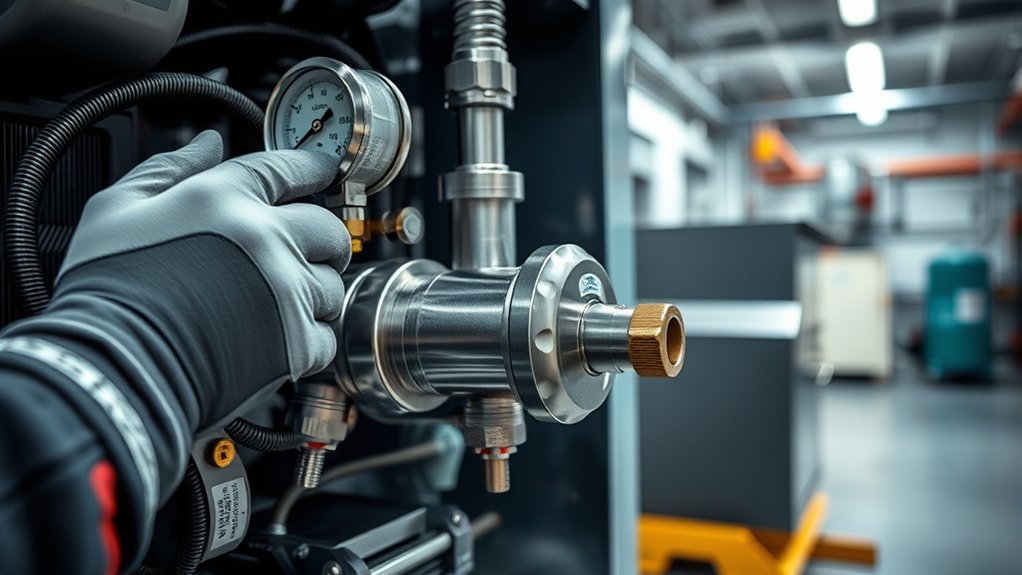
Regular inspection of compressor components is vital to identify early signs of wear and prevent unexpected failures. We should consistently monitor oil levels to guarantee proper lubrication and check safety devices for proper operation to maintain safe functioning. Addressing these points systematically helps sustain ideal compressor performance and longevity.
Check for Wear and Tear
To guarantee ideal performance and prevent unexpected failures, we must systematically inspect compressor components for signs of wear and tear. Wear assessment involves closely examining key parts such as pistons, cylinders, valves, and belts for any deformation, scoring, or corrosion. Tear detection requires identifying frayed or cracked belts, damaged seals, and compromised gaskets. During this process, we look for uneven wear patterns, which can indicate misalignment or inadequate lubrication. It’s essential to document any irregularities, as early detection of wear helps prevent more severe damage. Regularly scheduled inspections allow us to catch minor issues before they escalate into costly repairs or downtime. Precise wear assessment and tear detection are fundamental to maintaining peak compressor efficiency and extending component lifespan.
Monitor Oil Levels Regularly
How often should we check the oil levels in our stationary air compressor? We recommend daily fluid monitoring, especially before startup and after extended operation. Maintaining the correct oil level is critical for peak performance and component longevity. Use the dipstick or sight glass to verify the oil level, ensuring it’s within the manufacturer’s specified range. An inadequate oil level can lead to increased friction, overheating, and potential damage to bearings and pistons. Conversely, overfilling may cause foaming and improper lubrication. Consistent monitoring allows us to detect leaks or oil consumption issues early. Regular checks help maintain a stable oil level, ensuring that the compressor operates smoothly and efficiently, preventing costly repairs and downtime.
Inspect Safety Devices
Ensuring the safety devices on your stationary air compressor are functioning correctly requires systematic inspection and continuous monitoring of critical components. Safety device testing involves verifying that emergency shutoff mechanisms activate promptly when parameters exceed safe limits. Regularly inspect pressure relief valves, safety switches, and the emergency shutoff system for signs of wear, corrosion, or mechanical damage. Test the emergency shutoff by simulating fault conditions, ensuring it halts compressor operation immediately. Check control panels for alert signals or fault codes related to safety devices. Document all inspections and testing results to track device performance over time. Maintaining the integrity of these safety features is essential to prevent accidents and guarantee reliable operation under abnormal conditions.
How to Properly Change and Maintain Compressor Oil
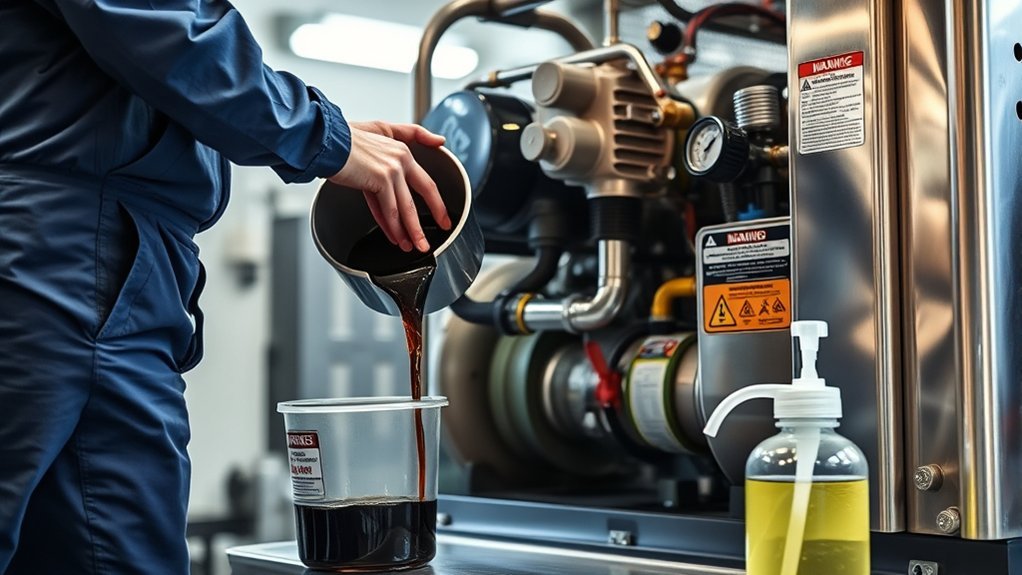
Have you ever considered the critical role that proper compressor oil maintenance plays in extending the lifespan and efficiency of your stationary air compressor? Regular oil changes guarantee ideal oil viscosity, which maintains proper lubrication, reduces wear, and prevents overheating. When changing oil, always verify the oil’s viscosity grade recommended by the manufacturer. Additionally, maintaining filter cleanliness is essential; dirty filters can contaminate the oil, impairing performance and causing premature wear. Use the following table as a quick reference:
| Step | Action | Key Focus |
|---|---|---|
| Drain Oil | Remove old oil through drain valve | Prevent contamination |
| Replace Filter | Install a clean, compatible filter | Ensure filter cleanliness |
| Refill Oil | Add recommended oil viscosity | Maintain lubrication quality |
| Check Levels | Confirm proper oil level | Avoid over/under-lubrication |
Consistent maintenance maximizes compressor efficiency and longevity.
Cleaning and Replacing Air Filters for Optimal Performance
Regularly inspecting and maintaining air filters is essential for sustaining ideal compressor performance. Different air filter types, such as dry panel, foam, or pleated filters, require specific cleaning and replacement protocols. The filter replacement frequency depends on operating conditions, air quality, and usage intensity; typically, filters should be replaced every 500 to 2,000 hours of operation or quarterly, whichever comes first. During cleaning, carefully remove the filter and inspect for dirt, dust, or damage. For washable filters, use compressed air or mild cleaning solutions to remove debris, ensuring they dry completely before reinstallation. Regular maintenance prevents dust ingress, reduces motor strain, and prolongs equipment lifespan. Adhering to manufacturer guidelines guarantees consistent airflow and ideal compressor performance.
Checking and Draining Condensate From the Air Receiver Tank
Since condensate accumulates naturally within the air receiver tank during compressor operation, it’s critical to monitor and remove this moisture regularly to prevent corrosion and water contamination downstream. Regular checking involves draining condensate before it reaches critical levels, minimizing the risk of tank corrosion and ensuring efficient operation. Proper condensate disposal is essential; accumulated water contains oil and debris that can harm downstream tools. To effectively manage this, we recommend:
Regularly drain condensate to prevent corrosion and ensure efficient, clean operation of your air compressor system.
- Using a drain valve equipped with a manual or automatic release
- Draining condensate at scheduled intervals, especially after long runs
- Inspecting the drain valve for blockages or leaks
- Ensuring proper disposal procedures in compliance with environmental regulations
- Recording drain activities for maintenance documentation
This process maintains the integrity of the tank and prevents costly repairs due to corrosion.
Inspecting Belts, Hoses, and Electrical Connections for Wear
To guarantee the reliable operation of your air compressor, it’s essential to thoroughly inspect belts, hoses, and electrical connections for signs of wear or damage. Check belt tension, ensuring it’s neither too loose nor too tight, which could cause slippage or premature wear. Worn or cracked belts can lead to inefficient power transfer and eventual failure. Examine hoses for cracks, bulges, or brittleness, as these indicators compromise hoses’ durability and may cause air leaks or bursts under pressure. Inspect electrical connections for corrosion, loose terminals, or damaged insulation, which pose safety risks and can disrupt operation. Maintaining proper belt tension, along with careful monitoring of hoses and electrical wiring, helps prevent unexpected breakdowns and extends the service life of your compressor.
Troubleshooting Common Compressor Issues Before They Escalate
Identifying and addressing compressor issues early can substantially reduce downtime and prevent costly repairs. Unusual compressor noise or excessive vibration often signal underlying problems such as misaligned components, worn bearings, or imbalance. Conduct regular vibration analysis to detect early signs of mechanical stress. Pay attention to irregular compressor noise, which may indicate motor issues or air leaks. Check for abnormal vibrations that could point to rotor imbalances or loose mounting. Troubleshooting these symptoms promptly minimizes wear and prevents escalation.
Early detection of compressor issues reduces downtime and costly repairs through vigilant noise and vibration monitoring.
- Excessive compressor noise during operation
- Unusual vibration patterns detected through analysis
- Sudden drops in pressure or airflow
- Overheating components or motor overheating
- Persistent fluctuations in vibration levels
Setting Up a Routine Maintenance Schedule for Longevity
Establishing a thorough routine maintenance schedule is essential for ensuring the long-term performance and reliability of your stationary air compressor. Regular inspections should focus on enhancing energy efficiency by monitoring motor load and compressor inlet conditions, which can prevent unnecessary power consumption. Scheduled filter replacements and lubrication help maintain ideal airflow and reduce system strain, directly improving energy efficiency. Additionally, routine checks on components such as valves and cooling systems can mitigate vibrations and noise, contributing to noise reduction. Consistent maintenance minimizes wear and tear, extending component lifespan and preventing costly breakdowns. By documenting maintenance activities, you ensure consistent execution and early detection of potential issues, ultimately maximizing compressor longevity and operational efficiency while maintaining a quieter, more efficient workplace environment.
Safety Tips and Best Practices During Compressor Maintenance
When performing compressor maintenance, we must prioritize safety by always wearing appropriate personal protective equipment, including gloves, eye protection, and hearing safeguards. Additionally, implementing strict lockout/tagout procedures guarantees the compressor is fully de-energized before service, preventing accidental startup. Adhering to these practices minimizes risk and maintains a safe working environment during maintenance tasks.
Personal Protective Equipment
Have you ever considered how vital proper personal protective equipment (PPE) is for ensuring safety during compressor maintenance? PPE gear shields us from potential hazards such as high-pressure leaks, moving parts, and electrical components. Using appropriate PPE minimizes injury risk and guarantees compliance with safety standards. Essential PPE includes:
- Safety goggles or face shields to protect eyes from debris and pressurized fluid sprays
- Cut-resistant gloves for handling sharp or rough components
- Ear protection in noisy environments
- Respirators when working in dust-laden or chemical environments
- Flame-resistant clothing when dealing with electrical components or potential sparks
Proper selection and use of PPE gear are critical for safe maintenance practices. Always inspect PPE for damage before use and ensure it fits correctly, creating a barrier against injury during compressor servicing.
Proper Lockout Procedures
Proper lockout procedures are essential to guarantee that compressors remain completely de-energized and safe to service during maintenance activities. Implementing strict lockout procedures ensures all energy sources—electrical, pneumatic, or hydraulic—are isolated effectively. We start by notifying all team members, then shutting down the compressor using the designated control switch. Next, we disconnect power sources and apply lockout devices to prevent accidental re-energization. Verifying zero energy state through testing confirms the compressor’s safety. Adhering to established safety protocols minimizes risks of injury or equipment damage. Consistent application of lockout procedures assures a controlled environment, protecting maintenance personnel and ensuring compliance with safety standards. Always document lockout actions and communicate clearly before beginning any maintenance task.
Frequently Asked Questions
How Can I Identify Early Signs of Compressor Failure?
We identify early compressor failure signs through vibration analysis and temperature monitoring, noticing unusual increases or irregular patterns that indicate bearing wear or overheating, enabling us to perform proactive maintenance and prevent costly breakdowns.
What Are the Environmental Impacts of Compressor Oil Leaks?
Like a careful sailor avoids leaks in the ship’s hull, we prevent oil spills to protect the environment, complying with oil spill prevention and environmental regulations, as compressor oil leaks can contaminate soil, water, and harm ecosystems.
Are There Specific Maintenance Tips for High-Altitude Installations?
We recommend performing altitude adjustments to compensate for reduced air density, which improves cooling efficiency and compressor performance. Regularly monitor temperature and pressure gauges, and adjust settings accordingly to optimize operation at high altitudes.
How Do I Select the Right Replacement Parts for My Compressor Model?
We guarantee component compatibility by referencing the manufacturer’s specifications and model number, sourcing parts from authorized suppliers, and verifying part numbers to guarantee proper fit and function, reducing downtime and maintaining compressor performance effectively.
What Are the Best Practices for Storing Spare Compressor Components?
We recommend maintaining a well-organized spare parts inventory, stored in a controlled environment with stable temperature and humidity, to prevent corrosion and degradation, ensuring components remain reliable and ready for rapid replacement during maintenance or emergencies.
Conclusion
By adhering to these detailed maintenance practices, we can keep our stationary air compressors running smoothly—like a finely tuned engine in a well-oiled machine. Regular inspections, timely oil changes, and vigilant safety measures form the backbone of reliable operation. When we treat our compressors with the care they deserve, we prevent costly downtime and extend their lifespan, ensuring they perform at peak efficiency. In this way, maintenance becomes our most powerful tool for long-term success.