Ad Blocker Detected
Our website is made possible by displaying online advertisements to our visitors. Please consider supporting us by disabling your ad blocker.
Ensuring safety when operating industrial air compressors is essential for protecting personnel and maintaining equipment integrity. We recognize that hazards such as high-pressure zones, noise, and potential equipment failures require strict adherence to safety protocols. Proper training, regular inspections, and effective emergency procedures are critical components. Understanding these guidelines helps prevent accidents and minimizes downtime, but implementing them effectively involves a detailed approach that warrants careful consideration of each safety measure involved.
Key Takeaways
- Ensure proper hazard communication, signage, and safety training for all personnel operating or working near compressors.
- Use appropriate PPE such as ear protection, eye safety gear, and protective clothing at all times.
- Conduct regular inspections, maintenance, and fault management to prevent equipment failures and safety hazards.
- Follow emergency procedures, including immediate shutdowns, incident reporting, and first aid as needed.
- Operate within manufacturer-specified pressure and temperature limits, avoiding safety control bypasses and ensuring safety device functionality.
Why Safety Is Critical When Operating Industrial Air Compressors
Because industrial air compressors operate under high pressure and involve moving parts, safety is vital to prevent accidents and equipment damage. Effective hazard communication guarantees all personnel are aware of potential dangers, reducing the risk of injury. Clear safety signage plays an essential role by providing immediate visual alerts about high-pressure zones, hot surfaces, and other hazards. Proper signage directs workers to use appropriate personal protective equipment and follow safety protocols. Regular training on hazard communication enhances awareness of compressor-specific risks, promoting proactive safety measures. Implementing precise safety signage and guaranteeing effective hazard communication creates a safer work environment, minimizing the likelihood of accidents caused by miscommunication or overlooked dangers. Our focus remains on maintaining rigorous safety standards to protect personnel and equipment.
Understanding Common Hazards and Risks of Air Compressors
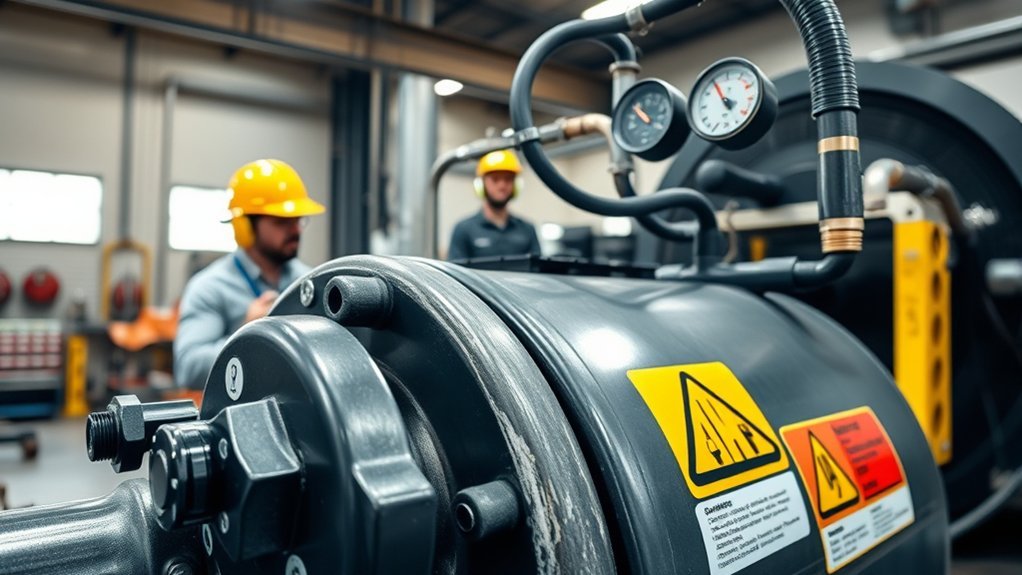
Understanding the common hazards and risks associated with air compressors is essential for ensuring a safe work environment. Compressor noise can reach levels that cause hearing damage over prolonged exposure, making noise control crucial. Pressure hazards pose significant risks, as compressed air operates under high pressure, risking sudden release or equipment failure that can cause injuries. Over-pressurization can lead to ruptured hoses or tank explosions, emphasizing the importance of pressure relief devices and regular maintenance. Additionally, improper handling or assembly of components can result in leaks or failures that escalate safety risks. Recognizing these hazards allows us to implement appropriate controls, such as sound dampening and pressure regulation, ensuring operator safety and preventing potentially catastrophic incidents.
Essential Personal Protective Equipment for Compressor Operators

Proper personal protective equipment is critical for compressor operators to minimize exposure to hazards. We must guarantee the use of effective ear protection, eye safety gear, and protective clothing to prevent injury. Addressing these essentials enhances safety and maintains operational integrity.
Ear Protection Necessities
Prolonged exposure to high noise levels generated by industrial air compressors can cause irreversible hearing damage, making effective ear protection essential for operator safety. Hearing protection devices, such as earplugs or earmuffs, are designed to provide superior noise reduction, minimizing sound exposure. Proper selection hinges on the noise spectrum and decibel levels produced by the compressor. High-quality hearing protection must meet industry standards for noise reduction ratings (NRR) to ensure maximum efficacy. Regular inspection and maintenance of these devices are critical to maintain their protective properties. Operators should always wear certified hearing protection when working near compressors, especially in environments with continuous or peak noise levels exceeding safe thresholds. This approach effectively safeguards hearing health and reduces the risk of noise-induced hearing loss.
Eye Safety Gear
Why is eye safety gear essential for compressor operators? In industrial settings, eye safety is critical because debris, oil splashes, or accidental contact with high-pressure air can cause severe eye injuries. Protective eyewear, such as safety goggles or face shields, provides a barrier against these hazards, preventing foreign particles from entering the eye. Proper protective eyewear must meet relevant safety standards and fit securely to guarantee maximum protection without compromising visibility or comfort. Consistent use of eye safety gear reduces the risk of injuries that could lead to temporary or permanent vision loss, downtime, or costly medical treatment. Making sure that all operators wear suitable protective eyewear is a fundamental component of thorough compressor safety protocols.
Protective Clothing Essentials
Protective clothing is an indispensable component of personal safety for compressor operators, as it directly shields against potential hazards such as high-pressure leaks, flying debris, and chemical exposure. Adhering to strict apparel standards guarantees maximum protection and durability in demanding environments. Proper protective clothing includes flame-resistant coveralls, impact-resistant gloves, and chemical-resistant boots. These items safeguard crucial areas and prevent injuries caused by unexpected equipment failures or spills. The clothing must meet industry-specific apparel standards for flame retardancy, chemical resistance, and mechanical protection. Ensuring correct fit and maintenance enhances safety and comfort during operation. Consistent use of protective clothing not only minimizes injury risk but also promotes a safety-conscious workplace culture, essential for managing the inherent hazards of industrial air compressor systems.
Proper Inspection and Maintenance Procedures to Prevent Accidents
Regular inspection protocols, scheduled maintenance checks, and immediate fault response are essential to maintaining compressor safety. These procedures help identify potential issues before they cause accidents or equipment failure. Implementing a disciplined maintenance routine guarantees operational reliability and personnel safety.
Regular Inspection Protocols
To guarantee the safety and peak performance of industrial air compressors, we must implement strict inspection and maintenance procedures. Regular inspection protocols involve monitoring lubricant levels and conducting lubricant checks to ensure proper viscosity and contamination control. Additionally, timely filter replacements are essential to prevent airflow restrictions and maintain efficiency. Visual inspections should include checking for leaks, abnormal vibrations, and corrosion. We also verify safety devices and pressure gauges for accurate readings. These measures prevent component failures and avoid operational hazards. By systematically following these inspection routines, we guarantee the compressor’s reliability and longevity. Key tasks include:
- Conducting lubricant checks for contamination or degradation
- Replacing filters to maintain ideal airflow
- Inspecting for leaks, corrosion, and abnormal wear
Scheduled Maintenance Checks
Scheduled maintenance checks are critical to ensuring the safe and reliable operation of industrial air compressors. Regular inspections should include verifying lubrication techniques to prevent component wear and overheating, ensuring oil levels and filters are appropriately maintained. Proper lubrication reduces friction and prolongs equipment life. Additionally, we focus on noise reduction methods during maintenance, such as tightening loose parts and replacing worn bearings, to minimize operational noise and identify early signs of mechanical issues. Routine checks also involve inspecting belts, valves, and electrical connections for signs of deterioration. Implementing a structured maintenance schedule helps detect potential faults before they escalate, reducing the risk of accidents and unplanned downtime. Precision in these procedures enhances overall safety and efficiency of compressor operation.
Immediate Fault Response
When an immediate fault occurs in an industrial air compressor, prompt and correct response is vital to prevent accidents and equipment damage. Fault diagnosis procedures must be initiated swiftly, utilizing alarm systems to identify the fault’s nature and severity. Accurate diagnosis allows for targeted interventions, reducing downtime and preventing escalation. Visual inspections should focus on critical components such as pressure gauges, valves, and electrical connections. Systematic checks include verifying alarm triggers, inspecting for leaks, and evaluating compressor temperature stability. Proper maintenance of alarm systems ensures reliable fault detection. Immediate actions include shutting down the compressor if necessary, isolating the fault, and initiating corrective measures. Clear communication and adherence to troubleshooting protocols are essential to restore safe operation efficiently.
Safe Operating Practices and Usage Guidelines
Ensuring safe operation of air compressors requires strict adherence to established practices and usage guidelines. Proper compressor lubrication is essential to minimize wear and prevent overheating, guaranteeing reliable performance and extending equipment lifespan. Regular checks of lubricant levels and quality are crucial, as degraded lubrication can cause component failure. Additionally, noise mitigation strategies should be implemented to protect operators and comply with workplace regulations. Installing sound enclosures or barriers, maintaining proper muffler function, and scheduling routine maintenance help reduce noise emissions. Always operate within manufacturer-specified pressure and temperature limits, and avoid bypassing safety controls. Adhering to these practices guarantees safe, efficient compressor operation, reduces the risk of equipment damage, and promotes a safer work environment.
Training and Certification Requirements for Safe Operation
Have you verified that operators possess the necessary training and certification before handling industrial air compressors? Ensuring compliance with certification standards and completing relevant training programs are essential for safety and efficiency. Proper training covers critical aspects such as pressure control, maintenance protocols, and hazard recognition. Certified operators demonstrate competence in managing equipment safely, reducing operational risks. To achieve this, organizations should establish clear guidelines aligned with industry standards, such as OSHA or ANSI. Training programs must include theoretical instruction and practical assessments, verifying operators’ ability to handle emergency situations and perform routine inspections. Regular refresher courses are also essential to maintain certification validity and stay updated on evolving safety practices. This approach guarantees a skilled workforce capable of maintaining a safe working environment.
Emergency Response Steps for Air Compressor-Related Incidents
In the event of an air compressor-related incident, prompt and systematic response is critical to minimize injury, damage, and downtime. Our immediate priority is executing an emergency shutdown to halt compressor operation swiftly, preventing further escalation. Once the system is safely shut down, incident reporting must be initiated without delay, documenting the incident’s specifics, location, and potential causes. Accurate reporting guarantees proper investigation, accountability, and implementation of corrective measures. During this process, it’s essential to assess personnel for injuries and provide first aid or medical assistance if necessary. Clear communication with safety teams and management helps coordinate response efforts. Following these steps ensures a controlled response, preserves safety, and supports ongoing compliance with industry standards.
Frequently Asked Questions
How Often Should Air Compressors Be Inspected for Safety?
We recommend inspections every three months, aligning with maintenance schedules and operator training protocols, to guarantee safety. Regular checks identify potential hazards early, maintaining ideal compressor performance and compliance with safety standards for all operators involved.
What Are the Signs of Imminent Compressor Failure?
Like a ticking clock, imminent compressor failure shows through abnormal vibration analysis and lubrication issues, alerting us to mechanical wear or misalignment. Early detection helps prevent catastrophic breakdowns, ensuring safe, reliable compressor operation.
Are There Specific Safety Standards for Different Compressor Types?
We recognize that compressor classifications demand specific safety standards and certifications, guaranteeing operational safety. Adhering to relevant safety certifications tailored to each compressor type helps prevent accidents and ensures compliance with industry regulations.
How Do Environmental Conditions Affect Compressor Safety?
Did you know that over 30% of compressor failures are linked to environmental hazards? Weather impacts, such as humidity and temperature fluctuations, critically influence compressor safety, causing potential malfunctions or hazards if not properly managed.
What Are the Long-Term Health Risks for Operators?
Chronic exposure to compressed air can pose occupational hazards, risking respiratory and musculoskeletal issues. Long-term operator health may decline without proper safety measures, emphasizing the importance of protective equipment, regular monitoring, and adherence to safety protocols to mitigate risks.
Conclusion
Just as the engineers of the past relied on precise calculations to prevent catastrophe, we must adhere to strict safety protocols to guarantee safe compressor operation. By recognizing hazards, wearing proper PPE, and following maintenance and emergency procedures, we uphold a tradition of safety and professionalism. Our vigilance safeguards lives and equipment, transforming potential risks into controlled, efficient processes—reminding us that safety is not an option but our fundamental responsibility.