Ad Blocker Detected
Our website is made possible by displaying online advertisements to our visitors. Please consider supporting us by disabling your ad blocker.
Maintaining a single-stage air compressor is essential for ensuring consistent performance and extending its service life. Proper upkeep involves detailed inspection routines, timely oil changes, and careful component monitoring. Neglecting these tasks can lead to costly breakdowns and safety risks. As we explore the key maintenance practices, you’ll gain a clearer understanding of how to keep your compressor operating efficiently and reliably, but there are specific steps and signs to watch for that warrant closer attention.
Key Takeaways
- Regularly inspect and clean filters, moisture separators, and cooling components to ensure efficient airflow and cooling.
- Monitor and change oil and filters as per manufacturer recommendations to reduce wear and maintain performance.
- Check safety devices, pressure gauges, and sensors for proper calibration and function regularly.
- Conduct routine visual inspections of belts, hoses, and connections for signs of wear or leaks.
- Manage workload and operate within recommended pressure and temperature ranges to prevent overheating and extend compressor life.
Why Regular Maintenance Matters for Single-Stage Air Compressors
Why does regular maintenance matter so much for single-stage air compressors? Consistent upkeep guarantees optimal performance and longevity. Proper compressor lubrication reduces friction between moving parts, preventing premature wear and mechanical failure. It also helps maintain stable operating temperatures, which is vital for reliability. Additionally, routine maintenance supports air quality control by checking filters and moisture separators, preventing contaminants from entering the system. Clean, well-lubricated components minimize energy consumption and reduce the risk of costly breakdowns. Neglecting these tasks can lead to increased wear, degraded air output, and reduced efficiency. Consequently, adhering to a regular maintenance schedule is essential to sustain the compressor’s functionality, ensure safety, and maximize operational lifespan.
How to Perform Routine Inspections and Checks
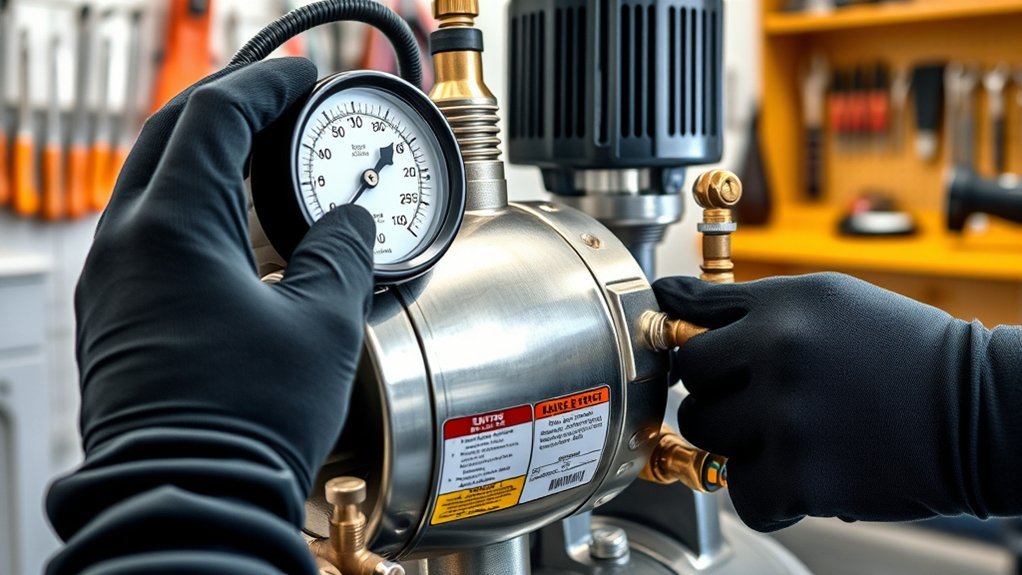
Routine inspections involve a systematic visual check of all compressor components for signs of wear, leaks, or damage. We also verify that safety devices are functioning correctly and monitor the operating pressure to guarantee it remains within specified limits. Conducting these checks consistently helps maintain peak performance and prevents potential failures.
Visual Inspection Procedures
To guarantee peak operation and prevent costly failures, we perform visual inspections of single-stage air compressors regularly. These inspections include detailed vibration analysis to detect abnormal oscillations or imbalances that could indicate component wear or misalignment. We also evaluate the lubricant condition, checking for discoloration, contamination, or degradation, which can compromise bearing and seal performance. During inspections, we examine belts, hoses, and connections for cracks, leaks, or looseness. Additionally, we look for signs of corrosion, unusual wear, or debris accumulation on components. This systematic approach ensures early detection of potential issues, allowing for timely maintenance. Consistent visual checks help maintain compressor reliability, optimize efficiency, and extend operational lifespan.
Check Safety Devices
Regularly inspecting safety devices on a single-stage air compressor is vital to guarantee safe operation and prevent accidents. Safety device testing should include verifying the functionality of pressure relief valves, safety switches, and emergency shutdown systems. We check these components for signs of wear, corrosion, or damage, making certain they activate reliably under fault conditions. Emergency shutdown mechanisms must respond promptly during safety testing, confirming their capacity to isolate the compressor during abnormal pressure or temperature readings. Calibration of safety devices is essential to maintain accurate operation, and any malfunction should be addressed immediately. Routine checks prevent system failure and safeguard personnel. Consistent inspection of safety devices ensures they function correctly when needed, reducing the risk of overpressure incidents or catastrophic failure.
Monitor Operating Pressure
Monitoring the operating pressure of a single-stage air compressor involves systematic inspections to guarantee pressure levels remain within safe and ideal ranges. We regularly verify pressure gauge accuracy to detect any discrepancies that could indicate calibration drift. Ensuring the pressure gauge is properly calibrated and functioning correctly is essential for accurate readings. Additionally, we inspect the pressure sensor calibration periodically, as faulty sensors can lead to inaccurate pressure assessments. During routine checks, we compare the gauge readings against a calibrated reference device, adjusting calibration settings if necessary. Consistent monitoring helps identify pressure fluctuations early, preventing potential system failures. Precise pressure control optimizes compressor performance, safety, and longevity, making sensor calibration and pressure gauge accuracy central to effective operating pressure management.
Tips for Changing Oil and Replacing Filters
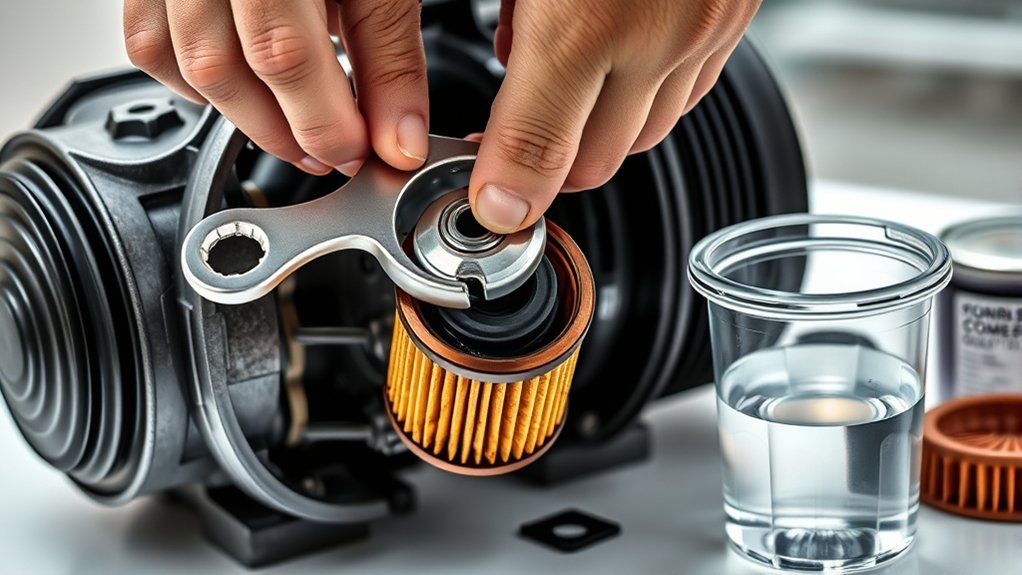
Changing the oil and replacing filters are critical tasks that directly impact the performance and longevity of a single-stage air compressor. When selecting lubricant types, it’s essential to use oils recommended by the manufacturer to guarantee proper viscosity and additive compatibility. Regular oil changes prevent wear and reduce internal friction, extending compressor life. Additionally, monitor filter lifespan closely; filters should be replaced once they reach their maximum capacity to maintain ideal airflow and prevent contaminants from entering the system. Proper timing for filter replacement depends on operating conditions, but a general rule is every 500 hours of use or as specified. Consistent maintenance of oil and filters ensures efficient operation, minimizes downtime, and preserves compressor reliability.
Troubleshooting Common Compressor Problems
We need to systematically identify common compressor issues such as unusual noises, pressure fluctuations, and overheating. Understanding the specific symptoms helps us determine the root cause and apply effective solutions. Accurate troubleshooting guarantees ideal compressor performance and longevity.
Identifying Unusual Noises
Unusual noises from a single-stage air compressor often indicate underlying mechanical issues that require prompt diagnosis. To identify these anomalies, we focus on vibration analysis and noise frequency patterns. Consistent high-frequency noises may suggest bearing wear or misalignment, while lower-frequency vibrations could point to piston or crankshaft imbalance. Listen for irregular squeals or knocking sounds, which often signal lubrication issues or damaged components.
- Use vibration analysis tools to detect abnormal amplitude or frequency shifts.
- Note changes in noise frequency, especially sudden or persistent variations.
- Identify rattling or banging sounds indicating loose parts or excessive wear.
- Correlate specific noise patterns with mechanical behavior to pinpoint faults efficiently. By analyzing vibration and noise frequency, we can accurately diagnose issues affecting compressor performance and prevent costly repairs.
Addressing Pressure Fluctuations
Why do pressure fluctuations occur in a single-stage air compressor, and how can they be effectively addressed? These fluctuations often result from inadequate pressure stabilization, caused by inconsistent valve operation or worn components. To mitigate this, precise valve adjustment guarantees consistent airflow and maintains steady pressure. Regular inspection of the pressure relief and check valves helps identify irregularities impacting system stability. Proper calibration of the pressure switch also plays a vital role. The following table summarizes key aspects:
| Issue | Cause | Solution |
|---|---|---|
| Fluctuating Pressure | Valve misalignment or wear | Perform valve adjustment and replace worn parts |
| Pressure Spikes | Poor pressure stabilization | Check and calibrate pressure switch |
| Inconsistent Output | Blockages or leaks | Inspect for leaks, clean filters |
Ensuring these steps promotes ideal pressure stabilization and reliable compressor performance.
Solving Overheating Issues
Overheating in a single-stage air compressor often stems from inadequate cooling or excessive workload, which can compromise system efficiency and cause damage. To address this, focus on maintaining the cooling system and airflow enhancement. Regularly inspect cooling components, such as fins and filters, for dirt or obstructions. Ensure fans are functioning properly and airflow pathways are clear. Adjust workload to prevent overtaxing the compressor, especially during peak operation. Additionally, consider these steps:
- Clean or replace cooling system filters regularly
- Improve ventilation around the compressor
- Check for proper alignment of cooling fans
- Monitor operating temperatures and adjust load accordingly
Implementing these measures helps maintain peak operating temperatures, extends equipment lifespan, and prevents overheating-related failures.
Best Practices for Maintaining Safety and Longevity
Maintaining safety and extending the lifespan of a single-stage air compressor requires adherence to established best practices that focus on regular inspection and proactive maintenance. Proper compressor lubrication reduces wear, prevents overheating, and ensures smooth operation. Regularly check lubricant levels and change oil according to manufacturer guidelines. Noise reduction techniques, such as installing vibration isolators and acoustic enclosures, minimize operational noise and improve safety. Consistent inspection of belts, hoses, and safety valves prevents failures. Additionally, keeping the compressor clean and free of dust prolongs its life and maintains efficiency.
| Practice | Benefit |
|---|---|
| Regular lubrication checks | Reduces wear and prevents overheating |
| Noise reduction measures | Ensures safer, quieter operation |
| Inspect safety valves | Prevents pressure-related failures |
| Keep components clean | Maintains efficiency and longevity |
| Monitor vibration levels | Detects early signs of malfunction |
When to Seek Professional Service or Replacement
Regularly monitoring your compressor’s performance and condition is essential to determine when professional service or replacement becomes necessary. Signs include persistent decrease in output efficiency, unusual noises, or frequent emergency shutdowns. If you notice these issues, it’s time to consult a professional to avoid further damage. Critical moments for service include compressor recalibration, which guarantees excellent operation, and addressing irregular pressure readings. Additionally, if components show excessive wear or corrosion, replacement may be required. Promptly addressing these issues prevents costly downtime. Do not delay seeking expert evaluation if repairs involve complex parts or if safety concerns arise. Proper maintenance and timely professional intervention extend your compressor’s lifespan and ensure safe, reliable operation.
Frequently Asked Questions
How Often Should I Calibrate the Compressor’s Pressure Settings?
We recommend calibration frequency every 6 to 12 months, depending on usage, to guarantee accurate pressure adjustment. Regular calibration prevents pressure drift, maintains safety, and optimizes compressor performance, especially in critical applications requiring precise pressure control.
What Are Signs of Internal Component Wear in a Single-Stage Compressor?
We observe internal wear signs like increased noise, reduced pressure output, and overheating; component symptoms include worn piston rings, leaking valves, and vibrating parts, indicating the need for detailed inspection and potential part replacement to maintain ideal compressor performance.
Can I Use Alternative Lubricants for Extended Periods?
Using alternative lubricants for extended lubrication intervals is risky; guarantee lubricant compatibility with compressor materials and specifications. We recommend consulting manufacturer guidelines to prevent damage, as improper lubrication can lead to internal component wear and operational failures.
How Does Ambient Temperature Affect Compressor Performance?
Ambient temperature fluctuations substantially impact compressor performance efficiency; higher temperatures can cause overheating and reduced output, while cooler conditions promote ideal operation. Monitoring and controlling temperature guarantees consistent performance and prolongs compressor lifespan.
What Are the Environmental Considerations for Compressor Disposal?
Imagine a factory recycling an old compressor through eco-friendly disposal, ensuring hazardous materials are safely managed. We emphasize proper recycling options, minimizing environmental impact, complying with regulations, and promoting sustainable practices in compressor disposal.
Conclusion
By adhering to regular inspection, timely maintenance, and proactive troubleshooting, we guarantee our single-stage air compressors operate efficiently, safely, and reliably. Consistent lubrication, component checks, and safety protocol adherence extend equipment lifespan, minimize downtime, and enhance performance. Embracing these best practices helps us prevent unexpected failures, maintain ideal pressure, and safeguard our investments. Ultimately, disciplined maintenance fosters operational excellence, preserves safety standards, and guarantees long-term productivity.