Ad Blocker Detected
Our website is made possible by displaying online advertisements to our visitors. Please consider supporting us by disabling your ad blocker.
Did you know that regular maintenance can extend the lifespan of your garage air compressor by up to 50%? Proper upkeep is vital for safe, efficient operation, yet many overlook essential tasks. Understanding the correct intervals for checks and replacements can prevent costly repairs and downtime. Stay with us as we explore practical tips to keep your compressor running reliably and safely, ensuring you get the most out of your investment.
Key Takeaways
- Perform regular checks of oil levels, filters, and hoses every 1 to 3 months for optimal performance.
- Drain moisture daily to prevent rust and corrosion inside the tank.
- Inspect and tighten hoses and fittings to prevent leaks and ensure safety.
- Monitor and adjust pressure regulators weekly to maintain proper tool operation.
- Keep cooling fans and ventilation systems clean to prevent overheating and prolong compressor lifespan.
How Often Should You Perform Garage Air Compressor Maintenance?
Regular maintenance intervals are essential to guarantee the peak performance and longevity of your garage air compressor. Based on manufacturer guidelines and operational conditions, routine checks should occur every 1 to 3 months. Proper garage organization facilitates safe and efficient maintenance, reducing risks associated with clutter or misplaced tools. Adhering to safety precautions, such as disconnecting power before servicing, prevents electrical hazards. Regular inspections include checking for leaks, inspecting hoses for wear, and ensuring all safety devices are functional. Precise maintenance intervals depend on usage intensity; heavy-duty applications may require more frequent attention. Maintaining a well-organized workspace not only enhances safety but also assures timely identification of potential issues, ultimately extending your compressor’s lifespan and maintaining ideal performance.
Checking and Replacing Compressor Oil for Optimal Performance
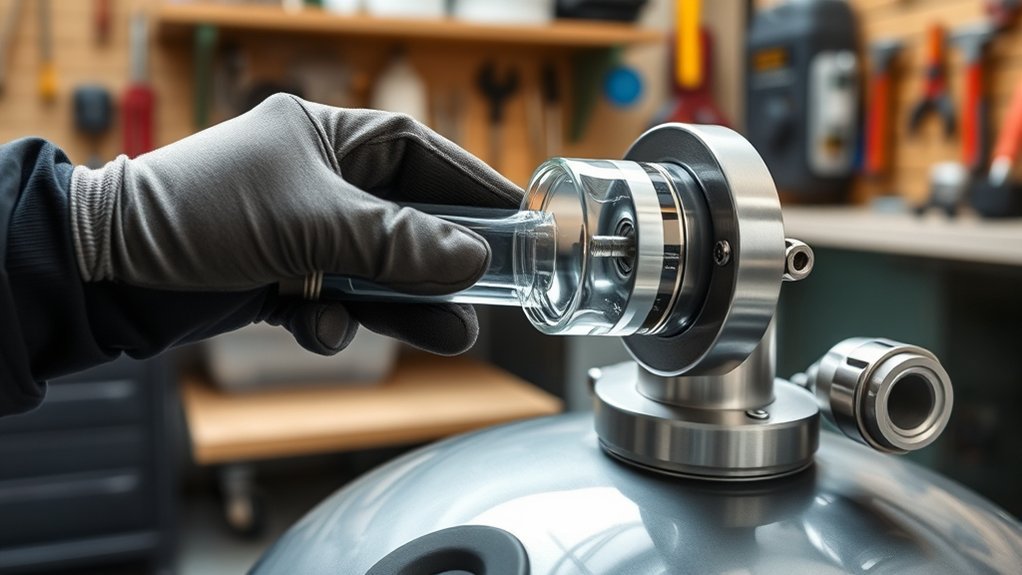
Maintaining proper oil levels is essential for ensuring the compressor operates smoothly and efficiently. We recommend regularly monitoring oil levels and topping up as needed, using the manufacturer’s specified oil type. Using the correct oil helps prevent wear and maintains peak performance over the compressor’s lifespan.
Monitoring Oil Levels
Monitoring oil levels is crucial for guaranteeing your garage air compressor operates efficiently and reliably. Consistently checking oil levels helps maintain proper oil viscosity, which is essential for peak lubrication and heat dissipation. Low oil levels can lead to increased friction, overheating, and potential equipment failure. Additionally, it’s important to inspect for oil contamination, as moisture, dirt, or debris can degrade oil quality and impair compressor performance. Contaminated oil can cause wear on internal components and reduce the lifespan of the compressor. Regularly monitoring oil levels and condition allows for early detection of issues, enabling timely refilling or oil changes. This proactive approach ensures the compressor maintains consistent pressure and prevents costly repairs caused by inadequate lubrication or contaminated oil.
Choosing Correct Oil Type
Choosing the correct oil type for your garage air compressor is vital to guarantee peak performance and longevity. Proper oil selection depends on factors like oil viscosity, which affects lubrication efficiency under different operating temperatures. Generally, lower viscosity oils flow more easily at cold start, while higher viscosity oils provide better film strength during high temperatures. When selecting between synthetic and mineral oils, consider synthetic oils for their superior thermal stability, longer service life, and better lubrication at extreme temperatures. Mineral oils are typically more affordable but may require more frequent changes and are less effective in high-heat conditions. Always consult your compressor’s manufacturer recommendations to confirm the selected oil meets the specified viscosity grade and type for ideal performance and durability.
How to Inspect and Clean Air Filters in Your Compressor
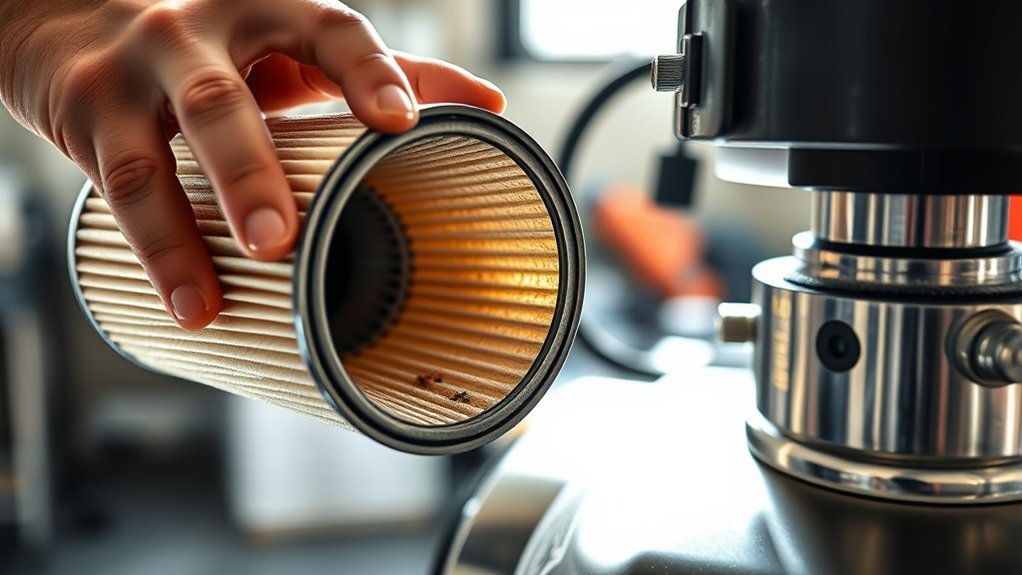
To properly inspect and clean your compressor’s air filter, first locate its placement within the unit. Next, remove the filter carefully and examine it for dirt, debris, or damage. Finally, clean the filter if reusable or replace it if it shows signs of excessive wear or clogging.
Locate Air Filter Placement
Locating the air filter in your compressor is essential for effective maintenance, as it allows for proper inspection and cleaning. The air filter’s placement location varies depending on the model, but it is typically situated near the intake port or within the compressor housing. To identify it, consult your compressor’s manual or examine the unit for a removable panel or cover. The air filter is usually a cylindrical or rectangular component made of foam, paper, or mesh. Precise identification of the air filter’s placement location ensures you can access it efficiently when inspecting or cleaning. Properly locating the filter minimizes downtime and guarantees that the airflow remains unobstructed, maintaining peak compressor performance and prolonging its lifespan.
Remove and Inspect Filter
Before inspecting the air filter, make sure the compressor is turned off and disconnected from the power source to prevent accidental operation. Carefully remove the filter housing, following the manufacturer’s instructions to avoid damage. During filter inspection, check for dirt, debris, or oil buildup that could impede airflow. If the filter appears excessively dirty or damaged, consider filter replacement to maintain peak compressor performance. Use a soft brush or compressed air to clean reusable filters, but avoid forceful cleaning that could compromise the filter’s integrity. Record the inspection results, noting whether the filter requires cleaning or replacement. Regular filter inspection helps prevent dust and debris from entering the compressor, ensuring efficiency and prolonging the unit’s lifespan.
Clean or Replace Filter
Regularly inspecting and maintaining your compressor’s air filter is vital for peak operation. When evaluating the filter, determine whether it requires filter cleaning or filter replacement, based on the level of dirt and debris accumulation. If the filter is reusable, carefully remove it and clean with compressed air or a mild detergent, ensuring all particles are thoroughly cleared. For disposable filters, replace them entirely once they appear clogged or damaged. Proper filter maintenance prevents contaminants from entering the compressor, reducing wear and maintaining ideal airflow. Always adhere to manufacturer specifications for filter replacement intervals and cleaning procedures. Consistent attention to your air filter ensures efficient operation, prolongs compressor lifespan, and maintains steady air quality.
Draining Moisture From the Tank to Prevent Rust and Corrosion
Moisture accumulation inside the air compressor tank can lead to rust and corrosion, compromising the unit’s longevity and performance. To prevent this, regular drainage of the tank is essential for effective rust prevention. We recommend releasing accumulated moisture daily or after each use, especially in humid environments. This process involves opening the drain valve at the tank’s lowest point to allow moisture to escape, preventing it from settling and causing corrosion. Ensuring the drain valve functions properly and is free of debris is critical for efficient operation. Consistent draining reduces internal moisture levels, mitigates rust formation, and extends the compressor’s lifespan. Proper moisture management not only safeguards the tank but also maintains ideal air quality and compressor efficiency.
How to Examine and Tighten Hoses and Fittings for Safety and Efficiency
Ensuring the integrity of hoses and fittings is essential for maintaining both safety and ideal compressor performance. We start by visually inspecting hoses for signs of wear, such as cracks, blistering, or soft spots, which compromise hose durability. Next, check fittings for corrosion, deformation, or leaks, ensuring fitting compatibility with the hose and compressor. Use a wrench to tighten fittings securely, but avoid over-tightening, which can damage threads or cause leaks. When examining hoses, verify that they are properly supported and not subject to kinks or excessive bending, as these issues reduce hose durability. Consistent inspections and precise tightening of hoses and fittings prevent air leaks, improve efficiency, and reduce safety hazards associated with loose or damaged connections.
Maintaining Proper Pressure Levels and Managing Regulators
Maintaining proper pressure levels requires consistent monitoring to guarantee ideal compressor performance. We need to regularly check the pressure gauge, adjust regulator settings accurately, and prevent fluctuations that could impact tool efficiency. Proper management of these parameters ensures safety, extends equipment lifespan, and maintains consistent operation.
Checking Pressure Regularly
How often should we check the pressure of our garage air compressor? At minimum, weekly inspections are essential to guarantee ideal operation. Use a reliable pressure gauge to verify the tank’s PSI against manufacturer specifications. Regular checks prevent over-pressurization, which can activate safety valves prematurely or cause damage.
| Measurement | Recommended Range | Critical Threshold |
|---|---|---|
| Tank Pressure | 90-120 PSI | 150 PSI |
| Regulator Output | 80-100 PSI | 120 PSI |
| Safety Valve | 135 PSI | 150 PSI |
| Compressor Duty Cycle | 70-80% | 100% |
| Maintenance Interval | Monthly | N/A |
Consistent pressure monitoring maintains safety and efficiency, minimizing risk of failure or hazards.
Adjusting Regulator Settings
Adjusting the regulator settings is essential for maintaining proper pressure levels and guaranteeing ideal compressor performance. Accurate regulator calibration ensures the pressure output aligns with manufacturer specifications, preventing over-pressurization or under-pressurization. To calibrate, we first verify the factory settings, then use a calibrated pressure gauge to adjust the regulator screw until the desired pressure is achieved. Proper adjustment promotes pressure stability, minimizing fluctuations that can compromise tool efficiency or safety. It’s critical to monitor pressure levels regularly and fine-tune the regulator as needed, especially after maintenance or if performance issues arise. Precise regulator calibration not only maintains consistent pressure but also extends the lifespan of the compressor, guaranteeing reliable operation and peak performance over time.
Preventing Pressure Fluctuations
To prevent pressure fluctuations that can compromise tool performance and safety, it’s essential to regularly monitor and manage the compressor’s pressure levels and regulator settings. Proper regulation ensures pressure stabilization and fluctuation prevention during operation. Consistent checks help identify irregularities early, maintaining ideal airflow and reducing wear on components. Adjusting regulator settings accurately based on tool requirements prevents over-pressurization and pressure drops. Implementing routine maintenance practices, including inspecting pressure gauges and regulators, supports stable operation.
| Action | Purpose | Result |
|---|---|---|
| Regular pressure checks | Detect fluctuations early | Consistent pressure levels |
| Adjust regulator settings | Maintain ideal pressure | Fluctuation prevention |
| Inspect pressure gauges | Ensure accuracy | Reliable pressure readings |
| Replace worn components | Prevent leaks | Stable pressure environment |
How to Recognize Signs of Wear and When to Replace Parts
Recognizing early signs of wear in your garage air compressor is essential for maintaining peak performance and preventing costly repairs. Pay close attention to wear indicators such as decreased airflow, irregular pressure cycles, or increased noise levels. Inspect the air filter regularly; a clogged or dirty filter reduces efficiency and strains components. Look for visible damage or cracks in hoses and fittings, which can compromise safety and performance. Additionally, monitor for signs of internal deterioration like piston or cylinder scoring, indicated by unusual vibrations or overheating. When in doubt, perform routine maintenance checks, including inspecting wear indicators on valves and gauges. Promptly replacing worn parts such as filters, seals, or valves ensures ideal operation and prolongs the lifespan of your compressor.
Keeping the Compressor Cool: Tips for Managing Heat and Ventilation
Proper heat management is essential for maintaining the efficiency and longevity of your garage air compressor. To optimize cooling, verify that cooling fans are operational and properly positioned to promote airflow around the unit. Regularly inspect and clean ventilation systems to prevent dust buildup, which can impede heat dissipation. Adequate ventilation prevents overheating by allowing hot air to escape and fresh air to circulate efficiently. Consider installing additional ventilation if your compressor operates continuously or in a confined space. Monitoring temperature levels with a digital thermometer can help identify overheating issues early. Consistent maintenance of cooling fans and ventilation systems ensures consistent airflow, reducing thermal stress on internal components and extending the lifespan of your compressor.
Troubleshooting Common Garage Air Compressor Issues Easily
When your garage air compressor isn’t performing as expected, identifying and addressing common issues promptly can save time and prevent costly repairs. Start by inspecting for air leaks, which can be caused by loose fittings or damaged hoses. Make certain the compressor’s pressure switch functions correctly, as failures can lead to inconsistent operation. Check the air filters for clogging, since debris restricts airflow and reduces efficiency. Proper garage organization and tool storage can prevent accidental damage to electrical components or hoses. To troubleshoot effectively:
Identify leaks, check the pressure switch, clean filters, and organize your workspace for reliable compressor performance.
- Inspect hoses and fittings for leaks or cracks
- Verify pressure switch operation
- Clean or replace clogged air filters
- Confirm power supply and circuit integrity
Maintaining an organized workspace minimizes the risk of accidental damage, ensuring your compressor operates reliably.
Creating a Maintenance Schedule to Keep Your Compressor Running Smoothly
Establishing a regular maintenance schedule guarantees your garage air compressor operates efficiently and reduces the likelihood of unexpected breakdowns. To guarantee consistency, integrate compressor checks into your overall garage decor and tool organization system. Schedule routine inspections for air filters, moisture traps, and belt tension, aligning these tasks with your existing maintenance routines. Document each service to track wear and identify patterns that could indicate future issues. Regularly cleaning and lubricating components prolongs lifespan, while maintaining an orderly workspace minimizes downtime. Incorporate dedicated storage for compressor accessories, aligning with your tool organization strategy. This systematic approach not only optimizes compressor performance but also assures accessible, well-maintained tools, contributing to a streamlined, efficient garage environment.
Frequently Asked Questions
What Safety Precautions Should I Take During Compressor Maintenance?
We always wear personal protective equipment, including gloves and eye protection, to guarantee safe handling during compressor maintenance. We also follow strict safety protocols, disconnect power sources, and depressurize systems to prevent accidents and ensure a secure working environment.
How Can I Improve Energy Efficiency of My Garage Air Compressor?
To improve energy efficiency, we recommend implementing energy-saving upgrades like installing compressor insulation and upgrading to high-efficiency components, which reduce heat loss and operational power consumption, ensuring peak performance and lower energy costs in your garage.
Are There Specific Brands or Models Easier to Maintain?
Did you know that 70% of users find certain brands easier to maintain? We recommend comparing brands like Honda and Quincy, following maintenance schedules diligently to guarantee peak performance and simplified upkeep, making maintenance more manageable and efficient.
What Are the Environmental Impacts of Compressor Oil Disposal?
We recognize that compressor oil disposal impacts the environment, so we prioritize eco-friendly disposal methods like oil recycling, which reduces pollution and conserves resources, ensuring responsible environmental stewardship and compliance with environmental regulations.
How Do I Troubleshoot Unusual Noises From My Compressor?
Think of your compressor as a symphony; unusual noises are discordant notes. We conduct noise diagnosis by checking vibration sources, inspecting belts, bearings, and connections, ensuring each component harmonizes to keep your compressor running smoothly.
Conclusion
Regular maintenance isn’t just a task; it’s the heartbeat of your compressor’s longevity. By staying vigilant and adhering to these tips, we guarantee our tools serve us reliably, avoiding costly downtime. Like tending a garden, consistent care nourishes growth and resilience. Remember, neglecting routine checks transforms a essential asset into a ticking time bomb. Let’s commit to proactive upkeep—because a well-maintained compressor isn’t just equipment; it’s the foundation of our craftsmanship.