Ad Blocker Detected
Our website is made possible by displaying online advertisements to our visitors. Please consider supporting us by disabling your ad blocker.
Maintaining an air compressor isn’t just about routine checks; it’s a critical component of ensuring consistent performance and safety. Proper upkeep requires a systematic approach to inspecting, replacing, and lubricating parts, often overlooked by operators. Understanding the nuances of maintenance schedules and procedures can considerably extend the lifespan of your equipment. To optimize efficiency and prevent costly failures, it’s essential to grasp the detailed steps involved—starting with the fundamentals that keep your compressor running smoothly.
Key Takeaways
- Perform regular inspections and maintenance of belts, hoses, filters, and accessories to ensure optimal performance.
- Check and replace air filters and drain moisture from the tank frequently to prevent corrosion and maintain airflow.
- Lubricate moving parts according to manufacturer guidelines to reduce wear and extend compressor lifespan.
- Troubleshoot issues like leaks, overheating, and pressure irregularities promptly to prevent major failures.
- Always follow safety protocols by disconnecting power and wearing protective gear during maintenance activities.
How Often Should You Perform Basic Air Compressor Maintenance?
The frequency of basic air compressor maintenance depends largely on usage intensity and operating conditions, but generally, we recommend performing routine checks at least once a month. Regular inspections help identify issues with air compressor accessories, such as valves, hoses, and gauges, before they cause operational failures. Maintaining detailed maintenance logs is essential for tracking service intervals, component wear, and performance trends. These logs enable proactive planning for parts replacement and system upgrades, ultimately reducing downtime. Consistent maintenance guarantees peak efficiency and extends the lifespan of the compressor. While monthly checks are a baseline, more frequent inspections may be necessary under heavy or demanding conditions. Accurate documentation and scheduled upkeep form the foundation of reliable, safe, and cost-effective compressor operation.
Checking and Replacing Air Filters for Optimal Performance
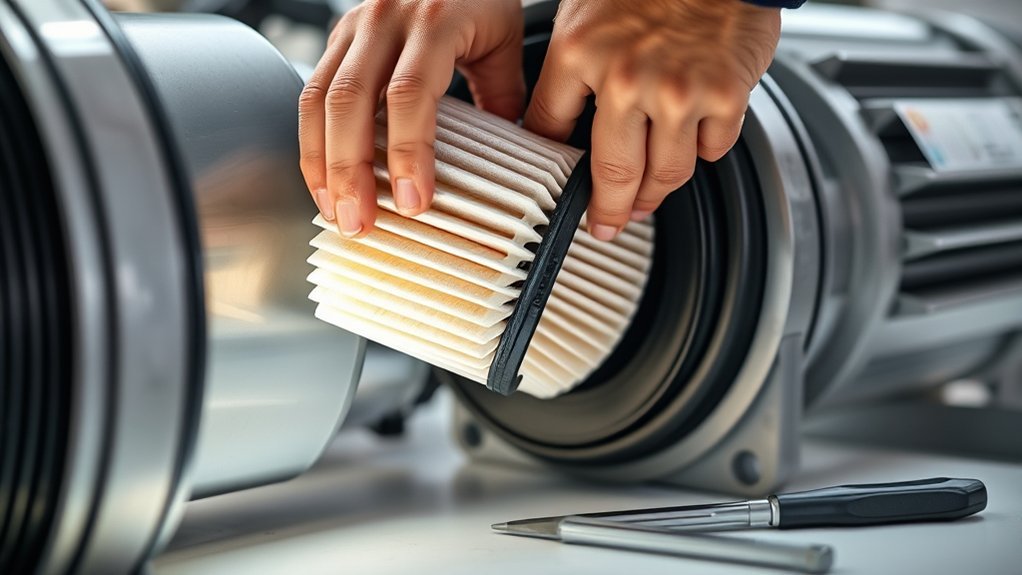
Regularly checking and replacing air filters is essential for maintaining ideal compressor performance, as clogged or dirty filters restrict airflow and increase operational strain. Effective air filter replacement begins with routine filter inspection, where we assess the buildup of debris, dust, or contaminants. A thorough inspection allows us to determine whether the filter has reached its service life or requires immediate replacement. Proper filter maintenance guarantees maximum airflow, preventing pressure drops and reducing strain on the compressor motor. We recommend adhering to manufacturer guidelines for filter replacement intervals, but visual cues like reduced airflow or increased noise also signal the need for immediate action. Consistent filter inspection and timely air filter replacement are critical for sustaining efficiency, prolonging equipment lifespan, and avoiding costly breakdowns.
Draining Condensation and Moisture From Your Compressor
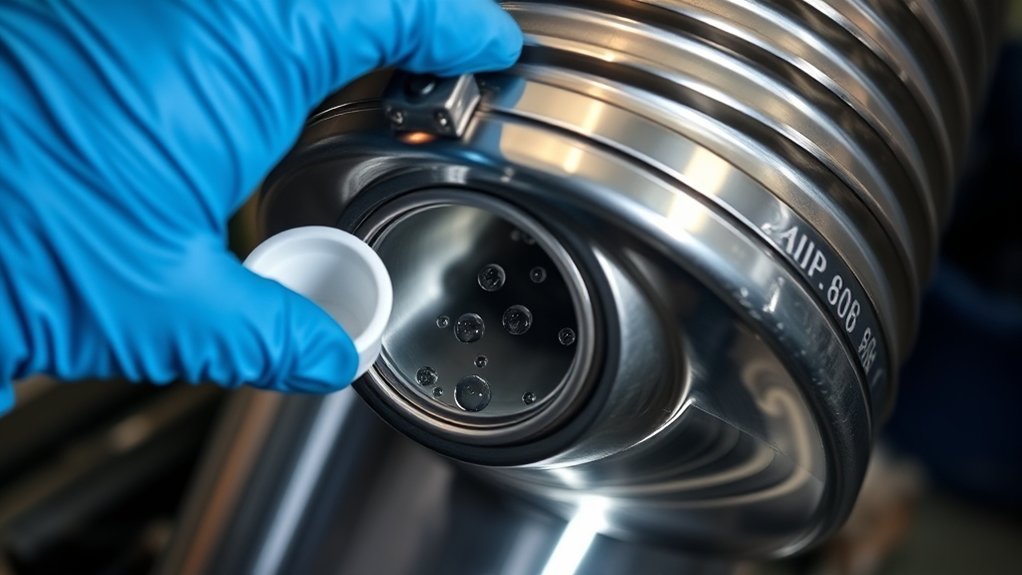
Moisture accumulation within an air compressor can considerably impair its performance and longevity. Effective condensation management is essential for ideal moisture removal. To prevent issues like corrosion and reduced efficiency, we recommend the following steps:
- Regularly drain the moisture from the compressor’s tank using the built-in drain valve, ensuring complete removal of accumulated condensation.
- Install an automatic drain system for continuous moisture removal, reducing manual maintenance and preventing water buildup.
- Incorporate desiccant filters or moisture separators downstream to further control moisture levels, especially in high-humidity environments.
Consistent condensation management minimizes the risk of internal corrosion and assures reliable compressor operation. By prioritizing moisture removal, we extend the equipment’s lifespan and maintain peak performance.
Inspecting and Tightening Belts and Hoses to Prevent Failures
Regularly checking belt tension guarantees ideal power transfer and prevents slippage, which can lead to system failure. We also need to inspect belts and hoses for signs of wear or damage, as compromised components increase the risk of unexpected breakdowns. Precise tightening and timely replacement are essential to maintaining compressor reliability and operational efficiency.
Check Belt Tension Regularly
Since loose or worn belts can lead to compressor failure or decreased efficiency, it’s essential to inspect belt tension frequently. Proper tension ensures ideal power transfer and prevents slippage. To maintain this, we focus on three key steps:
- Check belt tension by applying moderate pressure at the belt’s midpoint; it should deflect slightly without excessive slack.
- Adjust tension using the tension adjustment mechanism, ensuring the belt remains tight but not overly strained.
- Verify belt alignment to prevent uneven wear, which can compromise both belt longevity and system efficiency.
Regular monitoring allows us to detect early signs of slackness or misalignment, enabling timely tension adjustments. This proactive approach maintains compressor performance and reduces the risk of unexpected failure.
Inspect for Wear and Damage
Inspecting belts and hoses for wear and damage is essential in preventing sudden failures and maintaining ideal compressor performance. We focus on identifying wear patterns such as fraying, cracks, or glazing, which indicate material fatigue. Damage signs like cuts, bulges, or broken strands compromise the integrity of belts and hoses, risking sudden failure. Regular visual inspections help us detect these issues early, allowing timely replacements or adjustments. We also check for proper tension and alignment, as improper tension accelerates wear. Documenting wear patterns and damage signs enables us to establish maintenance schedules and avoid costly downtime. Ultimately, thorough inspection guarantees the longevity of critical components, maintains system efficiency, and prevents unexpected compressor failures.
Lubricating Moving Parts: When and How to Do It
Proper lubrication requires accurately identifying all critical moving parts and their designated lubrication points. Using the correct lubricant type and adhering to the manufacturer’s recommended schedule guarantees peak performance and longevity. Consistent, precise maintenance minimizes wear and reduces the risk of unexpected failures.
Identify Lubrication Points
To effectively lubricate moving parts of an air compressor, we must first identify all lubrication points, which typically include bearings, pistons, crankshafts, and other rotating components. Accurate identification ensures proper maintenance and prevents equipment failure. We should focus on three key steps:
- Inspect regularly to locate lubrication points based on manufacturer specifications.
- Establish lubrication frequency aligned with operational demands, considering workload and environment.
- Select appropriate oil for each component, ensuring compatibility and optimal viscosity.
Understanding these points helps us maintain proper lubrication, which influences the compressor’s efficiency and lifespan. Correct identification supports adherence to lubrication schedules and oil selection, ensuring consistent performance and reducing downtime.
Use Correct Lubricant Type
How do we guarantee ideal performance and longevity of an air compressor? By selecting the correct lubricant type, focusing on lubricant viscosity and composition. Proper viscosity ensures maximum film strength between moving parts, reducing wear and heat buildup. When choosing between synthetic and mineral lubricants, we consider the application’s demands. Synthetic lubricants typically offer superior stability, lower volatility, and a broader temperature range, making them suitable for high-performance or extreme conditions. Mineral oils, while more economical, may lack the stability and longevity needed for demanding environments. Using the appropriate lubricant type and viscosity prevents excessive friction, minimizes breakdowns, and extends equipment lifespan. Accurate selection based on operating conditions is critical for maintaining efficiency and reducing maintenance costs over time.
Follow Recommended Schedule
Adhering to the manufacturer’s recommended lubrication schedule guarantees moving parts remain properly protected and operate smoothly. Regular lubrication directly impacts air quality by preventing contamination buildup and reduces noise levels for quieter operation. To guarantee peak performance, we focus on three key steps:
- Check oil levels frequently—maintain proper levels to prevent increased wear and airborne particulates.
- Use the specified lubricant—using the correct oil type minimizes impurities that compromise air quality.
- Schedule timely oil changes—this prevents sludge formation, reduces noise, and sustains efficient operation.
Monitoring and Maintaining Proper Oil Levels
Maintaining proper oil levels is essential for ensuring the compressor’s efficient operation and longevity. Consistently monitoring oil levels helps prevent damage caused by insufficient lubrication, which can lead to increased wear and system failure. We emphasize checking oil quantity regularly, utilizing precise measurement tools to avoid overfilling or underfilling. Ensuring oil quality remains high is equally critical; degraded or contaminated oil impairs compressor calibration, reducing efficiency and risking component damage. Regularly replacing or filtering oil maintains ideal viscosity and contaminant removal. Accurate compressor calibration depends on stable oil conditions, so maintaining proper levels and quality forms the foundation for reliable operation and extends equipment lifespan. This disciplined approach minimizes downtime and maximizes performance.
Troubleshooting Common Air Compressor Issues and Fixes
Even when oil levels and quality are properly maintained, air compressors can still encounter operational issues that disrupt performance. Common problems often relate to air compressor accessories, environmental considerations, or internal components. To troubleshoot effectively:
- Check for leaks: Air leaks are prevalent causes of pressure drops. Inspect hoses, fittings, and seals, considering environmental factors like humidity and temperature that can affect seal integrity.
- Inspect for overheating: Excessive heat can signal cooling system malfunctions or overuse. Ensure cooling fans and vents are clean and unobstructed, aligning with environmental considerations for optimal airflow.
- Assess pressure switches and safety valves: Malfunctioning switches or valves can cause pressure irregularities. Regular testing and calibration prevent issues and optimize compressor efficiency, especially when considering the impact of air compressor accessories on system performance.
Extending Your Compressor’s Lifespan With Regular Tune-Ups
Regular tune-ups are essential for maximizing the lifespan of your air compressor, as they guarantee all components operate efficiently and reduce the risk of unexpected failures. Consistent maintenance guarantees ideal energy efficiency by preventing component wear that can increase power consumption. Well-maintained parts minimize unnecessary strain on the motor, resulting in lower energy costs over time. Additionally, routine adjustments and cleaning reduce operational noise, contributing to noise reduction and a safer work environment. By inspecting and replacing filters, lubricating moving parts, and checking pressure settings, we prevent build-up and wear that compromise performance. Ultimately, these tune-ups preserve the compressor’s integrity, extend its service life, and maintain peak operational efficiency, saving costs and improving overall reliability.
Safety Tips to Follow During Maintenance Procedures
To assure safety during maintenance procedures, it’s essential that we follow established protocols meticulously to prevent accidents and equipment damage. Proper safety gear, such as gloves, eye protection, and earplugs, is fundamental to minimize injury risks. Additionally, understanding and adhering to emergency procedures ensures swift response if an incident occurs.
Prioritize safety by following protocols, wearing gear, and knowing emergency procedures during maintenance.
We recommend:
- Always disconnect power and depressurize the system before starting work.
- Wear appropriate safety gear at all times to protect against hazards.
- Familiarize ourselves with emergency procedures, including shut-off protocols and first aid actions.
Frequently Asked Questions
What Are the Signs Indicating My Air Compressor Needs Maintenance?
We notice signs like decreased airflow, increased noise, or overheating, indicating your compressor needs maintenance. Regularly check lubrication schedules, monitor pressure drops, and replace filters promptly to guarantee peak performance and prevent costly repairs.
How Can I Improve the Energy Efficiency of My Air Compressor?
Like a wise old sage, we recommend energy-saving tips such as optimizing load cycles and upgrading your compressor. These steps enhance efficiency, reduce costs, and guarantee your system runs smoothly, making a compressor upgrade a smart, future-proof choice.
Are There Specific Cleaning Products Recommended for Compressor Parts?
We recommend using mild, non-corrosive cleaning agents and specialized maintenance tools for compressor parts. These guarantee effective cleaning without damage, maintaining ideal performance and extending the lifespan of your compressor components.
What Safety Precautions Should I Take During Maintenance?
Safety is paramount; we always wear personal protective equipment and follow emergency shutdown procedures to prevent accidents. Remember, adhering to these precautions is like a safety net—essential for protecting yourself and ensuring smooth, risk-free maintenance.
How Do I Identify Leaks in My Air Compressor System?
We identify leaks by listening for hissing sounds, inspecting connections, and applying soap solution to detect bubbles. Proper lubrication techniques and regular compressor calibration help maintain system integrity, preventing leaks and ensuring best performance.
Conclusion
Regular maintenance can extend your air compressor’s lifespan by up to 50%, saving you significant costs over time. By adhering to routine inspections, timely part replacements, and safety protocols, we guarantee peak performance and prevent costly breakdowns. Staying proactive with maintenance not only enhances efficiency but also reduces energy consumption and minimizes downtime. Implementing these practices is essential for maximizing your compressor’s reliability and longevity in demanding industrial environments.