Ad Blocker Detected
Our website is made possible by displaying online advertisements to our visitors. Please consider supporting us by disabling your ad blocker.
Studies show that improper installation can reduce a two-stage air compressor’s efficiency by up to 20%, leading to increased operational costs and downtime. As professionals, we recognize that meticulous setup is essential for peak performance and longevity. Ensuring precise alignment, adequate ventilation, and proper piping are fundamental steps that demand careful attention. Without a thorough approach, even the most advanced models risk underperforming. Let’s explore the critical considerations to achieve a reliable, efficient installation that stands the test of time.
Key Takeaways
- Ensure adequate space clearance for operation, maintenance, ventilation, and future expansion.
- Use proper tools and secure mounting components to minimize vibration and noise.
- Install effective intake filters, exhaust vents, and appropriately sized piping for optimal airflow.
- Calibrate control systems accurately and verify electrical connections for safe operation.
- Perform thorough testing, regular maintenance, and system checks to ensure longevity and efficiency.
Why Choose a Two-Stage Air Compressor Over a Single-Stage Model?
While single-stage air compressors are often sufficient for light-duty applications, two-stage models provide significant advantages regarding efficiency and performance. The key difference lies in their compression process; two-stage units use a two-step compression, resulting in higher pressure output with less energy consumption. Oil lubrication plays a vital role here, ensuring smoother operation, reducing wear, and extending the compressor’s lifespan. Additionally, two-stage models typically run more quietly due to their optimized design, which minimizes noise through better vibration control and improved cooling. This noise reduction not only benefits operator comfort but also decreases environmental impact. Overall, the combination of enhanced oil lubrication and noise management makes two-stage compressors a more reliable and cost-effective choice for demanding industrial and commercial applications.
Assessing Space and Location Requirements for Installation
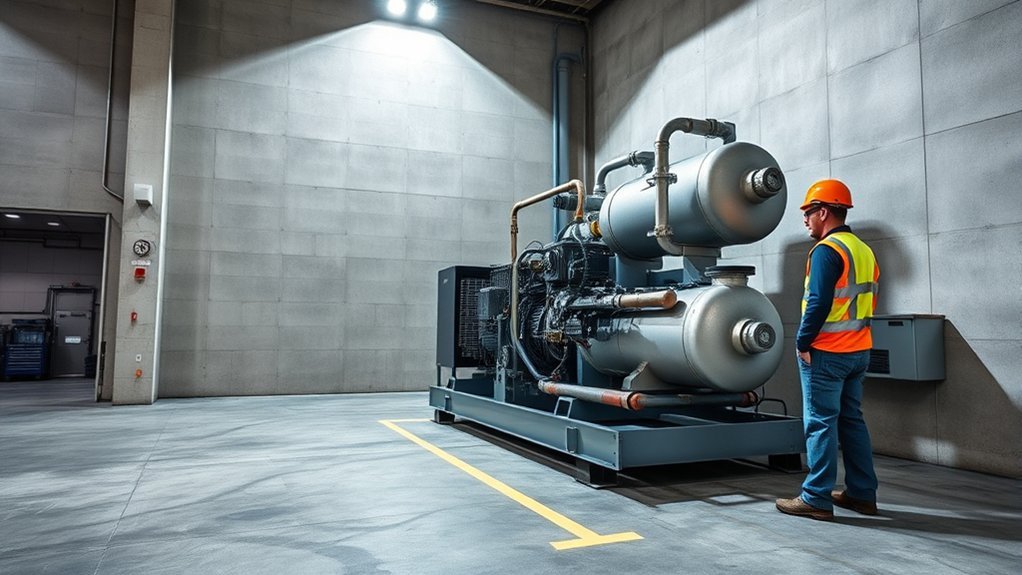
When evaluating installation sites, we must consider space clearance to guarantee proper operation and future expansion. Adequate ventilation and airflow are critical to prevent overheating and maintain efficiency, while accessibility for routine maintenance minimizes downtime. Analyzing these factors systematically helps optimize location choices for long-term reliability.
Space Clearance Needs
Evaluating space and location requirements is a critical first step in guaranteeing a successful two-stage air compressor installation. Adequate clearance impacts electrical wiring accessibility, noise reduction, and maintenance efficiency. When appraising space:
- Ensure sufficient room for electrical wiring access, minimizing voltage drops and facilitating safe connections.
- Allocate enough distance for noise reduction measures, such as acoustic enclosures or barriers, to prevent disturbance.
- Consider future expansion or replacement needs, maintaining clear pathways for maintenance and airflow, even if ventilation is addressed separately.
Proper space planning reduces installation complications, enhances operational safety, and optimizes noise control. Precise measurements and foresight are essential for integrating the compressor into existing infrastructure, ensuring both functional and regulatory compliance.
Ventilation and Airflow
Effective ventilation and airflow assessment are crucial for guaranteeing ideal compressor performance and longevity. Proper space and location selection optimize noise reduction and energy efficiency, preventing overheating and operational disruptions. We evaluate airflow patterns, considering intake and exhaust placement to minimize turbulence. Adequate ventilation reduces heat buildup, extending equipment lifespan. The table below highlights key spatial considerations:
| Parameter | Importance |
|---|---|
| Adequate Air Intake Space | Ensures consistent airflow, noise control |
| Exhaust Vent Placement | Facilitates heat dissipation, efficiency |
| Proximity to Heat Sources | Prevents overheating, boosts energy efficiency |
Accessibility for Maintenance
Ensuring accessible space around the compressor is essential for efficient maintenance and long-term operation. Proper placement allows for effective inspection, air filtration servicing, and noise reduction measures. When evaluating space and location, consider these key factors:
- Adequate clearance for routine maintenance, including air filtration system access and component replacement.
- Sufficient room for noise reduction solutions, such as soundproof enclosures or vibration isolators, to minimize operational impact.
- Ease of access to power sources and compressed air lines, reducing downtime during repairs or adjustments.
Optimizing these aspects ensures maintenance tasks are safe and efficient, reduces wear and tear, and prolongs equipment lifespan. Proper spacing also supports ventilation, preventing overheating and ensuring consistent performance.
Preparing the Necessary Tools and Equipment for Setup
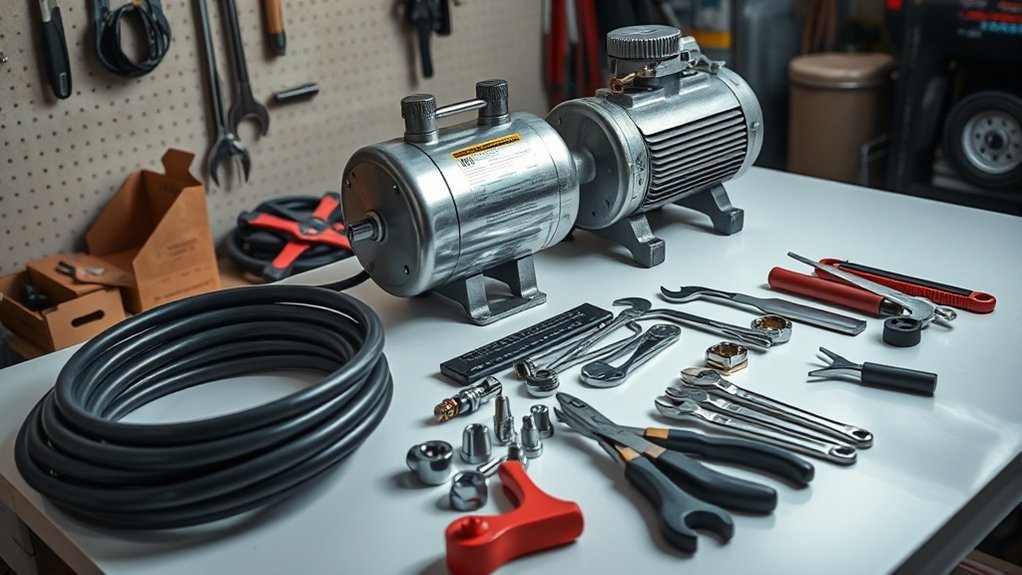
Before initiating the installation process, we must methodically gather all necessary tools and equipment to guarantee a smooth setup. Precision in selecting these items is critical to maintain excellent air quality and ensure noise reduction during operation. Essential tools include wrenches, screwdrivers, and a torque wrench for secure fittings, along with measurement devices like a spirit level and tape measure for accurate placement. Equipment such as vibration isolators, silencers, and air filtration components are crucial for minimizing noise and preserving air quality. Additionally, safety gear like gloves and eye protection should be prepared. Properly organized tools and equipment streamline the process, reduce installation errors, and promote a safer, more efficient setup aligned with technical standards.
Step-by-Step Guide to Installing the Compressor Base and Mounting
We begin by preparing the installation site to guarantee levelness and stability, which are critical for ideal compressor performance. Next, we assemble the compressor base according to manufacturer specifications to provide a solid foundation. Finally, we secure the mounting frame firmly to prevent vibrations and misalignment during operation.
Preparing the Installation Site
Have you confirmed that the installation site provides a stable, level surface capable of supporting the compressor’s weight and operational vibrations? Ensuring proper site preparation is critical for ideal performance and noise reduction. First, verify the ground’s integrity, avoiding soft or uneven surfaces that could cause instability. Second, assess space for proper airflow, allowing access for maintenance of components like the air filter, which influences efficiency. Third, incorporate vibration isolation pads or mounts to minimize noise transmission, enhancing soundproofing. Properly prepared sites reduce vibrations and noise, prolong equipment lifespan, and facilitate easier maintenance. By focusing on stability, airflow, and vibration control, we establish a solid foundation for the compressor that supports reliable operation and effective noise reduction.
Assembling the Compressor Base
To guarantee the compressor operates smoothly and remains stable during use, assembling the compressor base correctly is essential. We focus on proper alignment to ensure effective lubrication techniques, minimizing wear and friction. Leveling the base reduces vibrations, which directly impacts noise reduction, creating a quieter operation. We recommend securing the base to a solid, vibration-absorbing surface to prevent movement. Use precision tools to tighten bolts uniformly, avoiding distortions that could impair lubrication flow. Properly assembled, the base provides a stable foundation that supports ideal compressor performance. Attention to detail at this stage ensures minimal noise and efficient lubrication throughout operation, reducing maintenance needs and extending the compressor’s lifespan.
Securing the Mounting Frame
Securing the mounting frame is a critical step that guarantees the compressor remains stable during operation, preventing excessive vibrations that can lead to wear and noise. Proper attachment enhances mounting frame stability, directly contributing to vibration reduction. To ensure peak stability, we recommend:
- Tightening all bolts to manufacturer-specified torque values to eliminate looseness.
- Using vibration-dampening pads or isolators between the frame and foundation to absorb shock.
- Confirming the frame is level and properly aligned, avoiding undue stress on the structure.
These measures optimize vibration control, prolonging equipment life and maintaining efficient operation. Accurate securing of the mounting frame is essential for minimizing operational disruptions caused by excessive vibration and structural instability.
Connecting the Air Intake and Exhaust Systems Correctly
Properly connecting the air intake and exhaust systems is essential for ideal compressor performance and longevity. An effective air filter must be installed at the intake to prevent debris and contaminants from entering the system, ensuring consistent airflow and reducing wear on internal components. The intake must be sealed to avoid unfiltered air bypassing the filter. On the exhaust side, an appropriately sized exhaust vent is critical to facilitate efficient removal of hot air and moisture, preventing pressure buildup and potential overheating. The exhaust vent should be positioned to minimize recirculation of warm air and to prevent recirculation of exhaust gases into the intake. Proper sealing and secure connections in both systems help maintain *maximum* airflow dynamics, ensuring reliability and prolonging the compressor’s operational lifespan.
Setting Up the Piping and Plumbing for Optimal Air Flow
Achieving the best airflow in the piping and plumbing setup requires careful planning of pipe layout, sizing, and connections. Properly sized pipes minimize pressure drops, ensuring efficient compressor operation. Additionally, selecting suitable lubrication methods within the piping reduces friction and wear, extending system longevity. To optimize airflow and noise reduction, consider these key points:
- Use smooth, straight runs with minimal elbows to maintain consistent airflow and reduce turbulence.
- Incorporate vibration isolators and sound dampers to mitigate noise generated by airflow and mechanical vibrations.
- Guarantee proper pipe sizing, avoiding undersized lines that cause pressure drops, and include drainage points to prevent moisture buildup.
This systematic approach enhances efficiency, reduces noise, and promotes reliable operation of the two-stage compressor system.
Installing the Motor, Pressure Switch, and Control Components
We focus on precise motor mounting procedures to guarantee alignment and stability, which are critical for smooth operation. Setting up the pressure switch requires accurate calibration to maintain system safety and efficiency. Proper wiring of control components is essential for reliable system response and integration with overall control logic.
Motor Mounting Procedures
Installing the motor, pressure switch, and control components requires careful alignment and secure mounting to guarantee reliable operation. Proper mounting ensures optimal lubrication strategies, minimizing wear and extending component lifespan. It also plays an essential role in noise reduction techniques, reducing vibrations that can lead to operational issues.
We focus on three key steps:
- Verify motor alignment with mounting base, ensuring precision to prevent undue stress on bearings.
- Securely fasten the pressure switch and control components, maintaining proper clearance for maintenance.
- Check that vibration isolators are correctly positioned to dampen noise and vibrations, supporting quieter operation and effective lubrication flow.
This systematic approach enhances compressor efficiency, durability, and noise management.
Pressure Switch Setup
To guarantee reliable operation, proper setup of the pressure switch, motor, and control components is essential. Confirming correct pressure settings prevents system over-pressurization and maintains consistent airflow. Proper oil lubrication of moving parts minimizes wear and reduces noise, contributing to quieter operation. The pressure switch must be calibrated precisely to activate at designated cut-in and cut-out pressures, avoiding system cycling issues. Additionally, mounting the control components securely reduces vibrations, further noise, and potential misalignments.
| Component | Key Adjustment/Consideration |
|---|---|
| Pressure Switch | Calibrate for accurate pressure thresholds |
| Motor & Control | Ensure secure mounting and proper lubrication |
| Noise Reduction | Use vibration isolators and oil lubrication |
Control Component Wiring
Proper wiring of the control components is fundamental to ensuring reliable compressor operation. It involves connecting the motor, pressure switch, and control components securely within the control panel, emphasizing wiring safety and proper grounding. Incorrect wiring can cause malfunctions or electrical hazards, so careful attention is essential.
We approach this task by:
- Ensuring all power sources are disconnected before wiring to prevent shocks.
- Following the manufacturer’s wiring diagrams precisely to maintain control panel integrity.
- Verifying connections for secure contact and proper insulation to prevent shorts or faults.
This systematic process guarantees the control panel functions correctly, optimizing the compressor’s performance while minimizing safety risks. Accurate wiring is critical for operational stability and adherence to electrical safety standards.
Testing the System: Checking for Leaks and Proper Operation
Before operating the compressor, we must verify the integrity of the entire system by checking for leaks and making certain all components function correctly. We start by inspecting connections and fittings for any signs of air loss, which could indicate leaks. Proper air filter maintenance is essential at this stage; a clean filter guarantees optimal airflow and prevents contaminants from affecting system performance. Next, we run the compressor and observe pressure buildup, verifying that pressure gauges reach expected levels without fluctuations. Lubrication techniques are critical during this phase; we make sure that moving parts are adequately lubricated to prevent premature wear. Confirming proper operation and sealing the system guarantees efficiency and safety, setting a reliable foundation before proceeding to further testing or operational use.
Safety Tips and Best Practices During Installation
While installing a two-stage air compressor, adhering to safety tips and best practices is vital to prevent accidents and guarantee reliable operation. Proper safety measures protect personnel and ensure system longevity. First, make certain all electrical connections are secure and compliant with safety standards, reducing the risk of short circuits. Second, install decorative covers to shield moving parts, minimizing injury risks while also aiding noise reduction. Third, position the compressor in a well-ventilated area to prevent overheating and facilitate maintenance. Additionally, use appropriate lifting techniques or equipment to handle heavy components safely. Following these practices not only enhances safety but also optimizes noise control and overall system efficiency. Prioritizing safety during installation is essential for long-term operational stability.
Maintenance Tips to Keep Your Two-Stage Compressor Running Efficiently
Regular maintenance is key to guaranteeing your two-stage compressor operates at peak efficiency and has a long service life. Proper oil filtration prevents contaminants from degrading components, maintaining ideal lubrication and reducing wear. Additionally, routine inspection of filters and oil levels minimizes the risk of overheating and inefficiency. Noise reduction techniques, such as soundproof enclosures and vibration isolators, preserve operational stability and worker safety. Here’s a snapshot:
| Maintenance Activity | Purpose | Result |
|---|---|---|
| Oil filtration check | Remove impurities | Extended component lifespan |
| Vibration analysis | Detect imbalance | Reduced operational noise |
| Lubrication inspection | Ensure proper lubrication | Minimized wear and tear |
Consistent adherence to these practices keeps your compressor running smoothly and efficiently.
Frequently Asked Questions
What Are the Common Troubleshooting Issues After Installation?
We recommend reviewing the maintenance checklist and safety precautions when troubleshooting issues; common problems include pressure drops, overheating, or unusual noises. Regular checks help identify these issues early, ensuring ideal compressor performance and safety.
How Often Should the Compressor Be Serviced Post-Installation?
We suggest following a strict maintenance schedule, inspecting essential components regularly. Our service checklist guides routine checks, typically every 500-1000 hours of operation, ensuring efficiency and preventing costly breakdowns through proactive maintenance and detailed technical analysis.
Can the Compressor Be Installed Outdoors or Only Indoors?
We believe a two-stage air compressor can be installed outdoors if properly protected from elements like moisture and temperature fluctuations, but indoor installation is preferred for stability and longevity, ensuring ideal performance and easier maintenance in controlled environments.
What Are the Warranty Considerations During Installation?
During installation, we recommend promptly completing warranty registration to guarantee your compressor qualifies for extended coverage. Proper setup and adherence to manufacturer guidelines are vital for maintaining warranty validity and maximizing protection against potential future issues.
How Do I Optimize Energy Efficiency After Setup?
We optimize energy efficiency by implementing efficiency upgrades like advanced controls and variable speed drives, regularly maintaining the system for energy savings, and monitoring operational data to identify and address inefficiencies proactively, ensuring peak performance and reduced energy costs.
Conclusion
In summary, proper installation transforms a complex machine into a reliable powerhouse. Precise setup minimizes operational risks, while neglecting details can lead to inefficiency and costly downtime. We balance meticulous planning with practical execution to guarantee peak performance. Just as a finely tuned engine relies on quality components, our careful approach ensures longevity. Ultimately, the difference between a well-installed compressor and a failure lies in the attention to these critical details.