Ad Blocker Detected
Our website is made possible by displaying online advertisements to our visitors. Please consider supporting us by disabling your ad blocker.
Imagine a workshop where the steady hum of a stationary air compressor underpins every task, from powering pneumatic tools to precise spray painting. These machines are the backbone of efficient operations, offering reliable, consistent compressed air essential for productivity. But selecting the right model involves understanding complex features, maintenance needs, and application-specific demands. Exploring these aspects can profoundly impact your workflow—so, what should you consider when choosing a stationary air compressor for your workshop?
Key Takeaways
- Stationary air compressors provide continuous, reliable compressed air for workshop tools and manufacturing processes.
- Key features include effective filtration, noise reduction, and pressure stability for optimal performance.
- Proper selection considers workload, airflow requirements (CFM), space, and noise levels.
- Regular maintenance of filters, oil, and connections ensures longevity and efficient operation.
- They enhance workshop productivity, safety, and air quality while reducing operational costs through energy efficiency.
What Are Stationary Air Compressors and How Do They Work?
Stationary air compressors are fixed-installation devices designed to generate and supply compressed air for various workshop applications. They operate via a motor-driven piston or rotary screw mechanism that compresses atmospheric air, which is then stored in a tank for immediate use. Maintaining high air quality is essential, as contaminants like oil, moisture, and particulates can compromise tool performance and safety. Consequently, filtration and moisture separation are integral to their design. Noise levels are also a critical consideration; advanced models incorporate sound attenuation features to reduce operational noise, ensuring a safer and more comfortable work environment. Understanding how stationary air compressors work involves analyzing their compression process, air quality management, and noise control measures, all of which influence their efficiency and suitability for different workshop needs.
Key Features to Look for in a Stationary Air Compressor
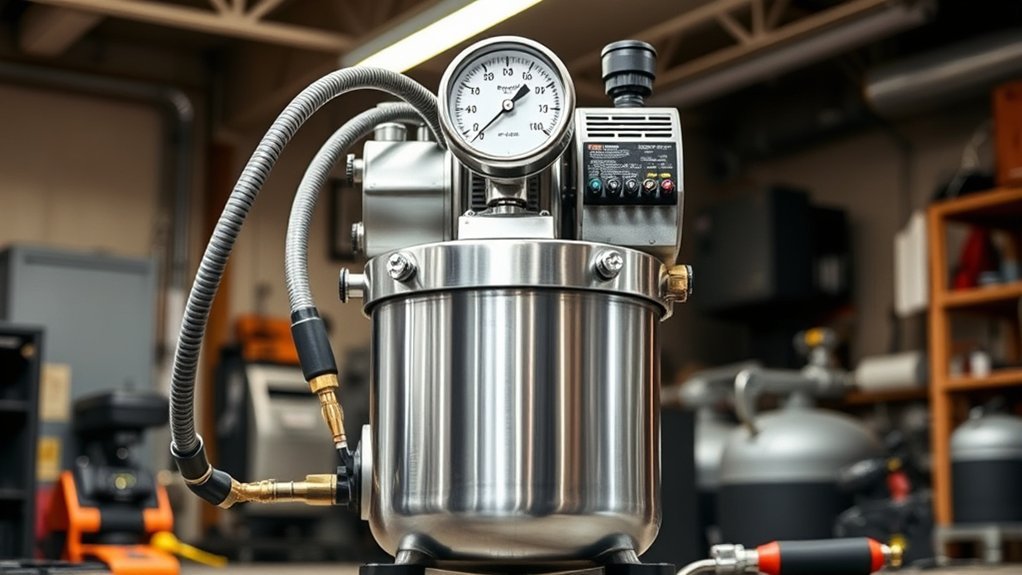
When selecting a stationary air compressor, evaluating specific features that directly impact performance, efficiency, and longevity is vital. Key considerations include air quality, as contaminants like moisture, oil, and particulates can compromise tool operation and maintenance cycles. Look for units with effective filtration and moisture separation systems to guarantee clean, dry air output. Noise levels also considerably affect workshop environment and operator comfort; choosing models with sound insulation or lower decibel ratings minimizes disruption and enhances safety. Additionally, inspect the compressor’s pressure stability, duty cycle, and energy efficiency. Reliable operation depends on balanced airflow, minimal fluctuations, and durable components. Prioritizing these features ensures the compressor delivers consistent performance, reduces downtime, and prolongs equipment lifespan in a demanding workshop setting.
Benefits of Using Stationary Compressors in Your Workshop
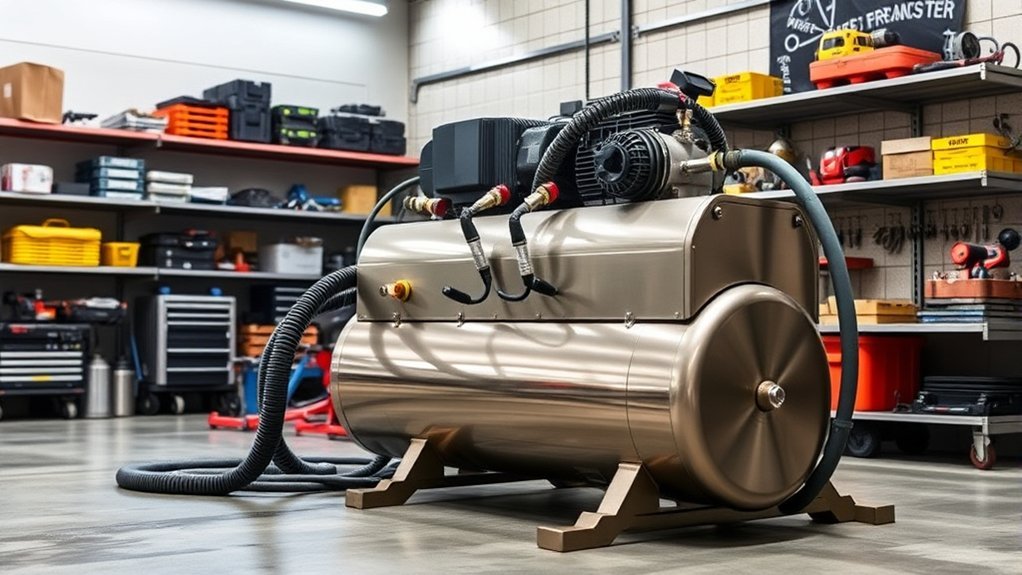
Using stationary compressors guarantees a consistent air supply, reducing interruptions caused by fluctuating pressure levels. This stability enhances overall workflow efficiency by enabling continuous operation of pneumatic tools and equipment. As a result, workshops can achieve higher productivity and maintain quality standards more reliably.
Consistent Air Supply
How essential is a reliable air supply for maintaining efficiency and safety in a workshop? A stationary air compressor provides consistent airflow, guaranteeing tools operate smoothly without interruptions. Stable pressure levels prevent fluctuations that can compromise work quality or cause equipment damage. Furthermore, high-quality air improves overall air quality by minimizing contaminants and moisture, which can negatively impact sensitive processes. Noise reduction is another critical benefit; stationary compressors are typically designed with soundproofing features that substantially lower operational noise, creating a safer and more comfortable environment. Reliable, consistent air supply reduces downtime, enhances precision, and supports the longevity of workshop tools. Ultimately, investing in stationary compressors ensures that airflow remains steady, safe, and of high quality, supporting ideal workshop performance.
Increased Workflow Efficiency
A stationary air compressor substantially enhances workflow efficiency by providing a reliable and continuous supply of compressed air, minimizing delays caused by equipment downtime. Consistent air flow reduces cycle times and improves tool performance, leading to higher productivity. However, the noise generated by the compressor can impact workspace comfort, necessitating soundproofing solutions. Additionally, the environmental impact of stationary compressors depends on energy consumption and emissions; choosing energy-efficient models reduces ecological footprint. Consider the following attributes:
| Attribute | Impact |
|---|---|
| Air compressor noise | Affects worker comfort and productivity |
| Environmental impact | Influences sustainability and operational costs |
| Continuous operation | Maximizes workflow continuity |
| Energy efficiency | Lowers operational costs and environmental footprint |
How to Choose the Right Stationary Air Compressor for Your Needs
Choosing the appropriate stationary air compressor requires precise assessment of power and capacity needs to guarantee it can handle your workshop’s workload efficiently. We also need to take into account space limitations and mobility requirements to optimize placement and operational convenience. By analyzing these factors, we can identify the most suitable compressor that balances performance with practical constraints.
Power and Capacity Needs
Determining the appropriate power and capacity for your stationary air compressor requires a careful assessment of your workshop’s specific demands. We need to evaluate the airflow requirements, measured in CFM (cubic feet per minute), verifying the compressor can sustain peak and average usage without fluctuation. Adequate power also influences air quality, as higher-capacity units typically feature advanced filtration systems to maintain consistent, clean air. Noise reduction is another critical factor; selecting a compressor with lower decibel output minimizes workplace disruption and enhances operator safety. Overestimating capacity can lead to unnecessary energy consumption, while underestimating causes operational inefficiencies. Precise calibration of power and capacity ensures reliable performance, ideal air quality, and effective noise control, aligning with your workshop’s productivity and environmental standards.
Space and Mobility Constraints
Evaluating space and mobility constraints is essential when selecting a stationary air compressor, as the physical footprint directly impacts installation options and workflow efficiency. We must consider:
- Size and layout: Larger units require ample space, influencing workshop design and potentially increasing environmental impact due to increased energy needs.
- Noise levels: Compressors with higher noise output can disrupt operations; choosing quieter models helps maintain a productive environment and reduces environmental noise pollution.
- Mobility options: Fixed installations limit flexibility, so appraising whether a more portable compressor is feasible can optimize workflow and minimize disruption.
Comparing Different Types of Stationary Air Compressors
When selecting a stationary air compressor for workshop use, understanding the differences between compressor types is essential for peak performance. Reciprocating compressors deliver high pressure with precise control but tend to generate higher noise levels and may produce oil contaminants, affecting air quality. Rotary screw compressors operate more quietly and offer continuous operation with stable air delivery, making them suitable for applications requiring consistent airflow. Centrifugal compressors excel at large-scale operations, providing high airflow rates with minimal noise, although their complexity and cost are significant considerations. When comparing these types, it’s imperative to evaluate air quality implications—oil-free models improve air purity—and noise levels, especially in noise-sensitive environments. Selecting the right compressor depends on balancing these factors against operational demands and budget constraints.
Installation and Maintenance Tips for Long-Lasting Performance
Proper installation and routine maintenance are critical to guaranteeing the longevity and reliable performance of stationary air compressors. Correct setup minimizes air compressor noise and maximizes efficiency. We recommend:
- Guaranteeing proper grounding and vibration isolation to reduce noise and mechanical stress.
- Regularly checking and replacing compressor oil types to maintain lubrication quality, prevent overheating, and reduce wear.
- Conducting periodic inspections of filters, hoses, and connections to prevent leaks and debris buildup, which can impair performance.
Maintaining ideal oil levels and selecting suitable compressor oil types enhances longevity. Proper installation reduces noise levels and vibration, contributing to quieter operation. Consistent upkeep ensures stable performance, minimizes downtime, and extends equipment lifespan.
Common Applications of Stationary Air Compressors in Workshops
Stationary air compressors are integral to various workshop applications, providing reliable power for multiple tasks. In automotive repair, they support pneumatic tools and tire inflation, while in manufacturing, they drive automated processes and assembly lines. Additionally, in woodworking and carpentry, they enable sanding, nailing, and finishing operations efficiently.
Automotive Repair Facilities
Have you considered how stationary air compressors streamline various tasks in automotive repair shops? They provide reliable power for critical operations such as tire inflation, pneumatic tools, and spray painting. Three key benefits include:
- Enhanced Air Quality: Modern compressors incorporate filtration systems that reduce oil and moisture, preventing contamination of sensitive components.
- Noise Reduction: Soundproof enclosures and vibration damping minimize operational noise, creating a safer, more comfortable environment for technicians.
- Operational Efficiency: Consistent air supply guarantees precision in tasks like brake servicing and engine repairs, minimizing downtime and improving workflow.
Manufacturing Line Operations
Manufacturing line operations rely heavily on stationary air compressors to guarantee continuous, high-pressure airflow necessary for various automated and manual tasks. Maintaining excellent air quality is essential, as contaminants can compromise product quality and equipment longevity. Advanced filtration systems integrated into compressors help ensure clean, dry air, reducing the risk of defects and system failures. Noise reduction is equally critical in these environments, as high noise levels can disrupt operations and pose health risks to workers. Modern compressors incorporate soundproofing and vibration dampening measures to minimize noise pollution, fostering safer and more efficient workspaces. Overall, these features enable manufacturing lines to operate smoothly, with reliable air supply and controlled environmental conditions, enhancing productivity and ensuring compliance with safety standards.
Woodworking and Carpentry
In woodworking and carpentry workshops, stationary air compressors play an essential role in powering a variety of tools and equipment. They enable precise execution of tasks such as finishing, detailing, and surface preparation. For example, during painting projects, compressors facilitate airbrush techniques that produce smooth, even coats, crucial for fine finishes. Additionally, they support pneumatic nailers and staplers, increasing efficiency and reducing manual effort. Ultimately, compressors are indispensable for cleaning dust and debris from intricate joints and delicate surfaces, maintaining precision. The consistent airflow and pressure regulation provided by stationary compressors ensure high-quality results across multiple applications. Their reliability and capacity make them indispensable for achieving professional standards in woodworking and carpentry tasks.
Troubleshooting Common Issues With Stationary Air Compressors
When diagnosing issues with stationary air compressors, it’s essential to systematically identify the root causes behind common malfunctions. Poor air quality often stems from contaminated or worn filters, which compromise performance and can damage downstream tools. Regular inspection and replacement of filters help maintain clean, dry air. Noise reduction is another critical aspect; excessive noise usually indicates loose components, unlubricated parts, or airflow restrictions. Tightening fittings and ensuring proper lubrication can considerably diminish operational noise. Additionally, irregularities in pressure output may signal leaks or pressure switch faults. By methodically analyzing these factors, we can troubleshoot efficiently, ensuring ideal compressor performance, improved air quality, and minimized noise levels—ultimately extending equipment lifespan and maintaining a safer, more productive workshop environment.
Cost Considerations: Budgeting for a Stationary Air Compressor
Understanding the costs associated with stationary air compressors is fundamental to effective budget planning and long-term operational efficiency. Key considerations include:
- Initial Investment: Higher-quality units guarantee air compressor safety and reliability, but come with increased upfront costs. Proper noise reduction features may also elevate initial expenses but improve workshop conditions.
- Operational Expenses: Energy consumption markedly impacts long-term costs. Selecting energy-efficient models reduces ongoing electricity bills, while maintenance costs for safety components influence total cost of ownership.
- Compliance and Safety: Investing in safety features and soundproofing measures, such as noise reduction systems, can prevent accidents and legal issues, ultimately saving costs related to downtime and liability.
A balanced budget accounts for these factors, guaranteeing safety, efficiency, and compliance over the compressor’s lifespan.
Enhancing Workshop Efficiency With the Right Air Compressor Setup
Selecting the appropriate air compressor setup is essential for maximizing workshop productivity and minimizing downtime. A well-designed system optimizes air quality by implementing filtration and moisture control, reducing equipment wear and guaranteeing consistent performance. Additionally, managing noise levels through sound insulation or quieter compressor models enhances the working environment, decreases operator fatigue, and complies with workplace regulations. Proper airflow management, including correct sizing and pipe layout, prevents pressure drops and assures efficient operation of tools. Integrating variable-speed drives can further improve energy efficiency and responsiveness. By focusing on these technical aspects—air quality, noise levels, and system configuration—we create a setup that boosts operational efficiency, prolongs equipment lifespan, and fosters a safer, more productive workshop environment.
Frequently Asked Questions
What Is the Average Lifespan of a Stationary Air Compressor?
We find that with proper maintenance schedules, stationary air compressors typically last 10-15 years, though cost considerations for repairs and replacements influence their lifespan, emphasizing the importance of regular upkeep to maximize efficiency and durability over time.
How Energy-Efficient Are Stationary Air Compressors?
Think of stationary air compressors as energy-efficient engines; their energy consumption varies, but efficiencies improve with modern technology. We analyze performance regularly, ensuring peak operation and identifying opportunities for efficiency improvements to minimize energy use and costs.
Are There Safety Precautions Specific to Stationary Models?
We prioritize safety by requiring proper safety gear and installing emergency shutdown systems on stationary air compressors. Regular maintenance and safety audits guarantee reliable operation, minimizing risks of pressure-related incidents and ensuring compliance with industry safety standards.
Can Stationary Compressors Be Used for Painting or Sandblasting?
Sure, stationary compressors can be used for painting and sandblasting, but only if they meet paint sprayer compatibility and sandblasting pressure requirements; otherwise, you’re just making art with a tool that’s clearly out of its depth.
What Are the Environmental Impacts of Operating Stationary Air Compressors?
We recognize that operating stationary air compressors causes noise pollution and potential oil leaks, which can harm nearby ecosystems and air quality. Managing these impacts involves proper maintenance, noise controls, and leak prevention strategies to minimize environmental risks.
Conclusion
Choosing the right stationary air compressor is like selecting the perfect engine for a race car—precision, reliability, and efficiency drive performance. By understanding your workshop’s specific needs and weighing key features, you guarantee smooth operation and long-term value. Just as a finely tuned engine maximizes speed and endurance, a well-chosen compressor optimizes workflow and productivity, transforming your workshop into a high-performance environment where every tool and process works seamlessly.