Ad Blocker Detected
Our website is made possible by displaying online advertisements to our visitors. Please consider supporting us by disabling your ad blocker.
Understanding the specific PSI requirements for your garage air compressor is vital for peak performance and safety. Different tools and tasks demand precise pressure levels, and improper regulation can lead to equipment damage or safety hazards. To guarantee your compressor operates efficiently and reliably, it’s important to know the appropriate PSI ranges and how to maintain them. Exploring these parameters can help you avoid common pitfalls and make informed choices for your projects.
Key Takeaways
- Different tools and tasks require specific PSI levels; refer to manufacturer guidelines for accurate settings.
- Typical PSI for car tires is 30-35, while pneumatic tools usually operate between 90-120 PSI.
- Proper PSI regulation ensures safety, tool longevity, and optimal air quality in the garage.
- Regular calibration and maintenance are essential to maintain correct PSI and prevent equipment damage.
- Upgrading the compressor may be necessary if current PSI capacity doesn’t meet your tool or task requirements.
Understanding PSI and Its Role in Garage Air Compressors
Understanding PSI is essential for selecting and operating a garage air compressor effectively. PSI, or pounds per square inch, measures the pressure exerted by compressed air. Proper PSI levels ensure ideal air quality, minimizing contamination that can compromise tool performance. Maintaining the correct pressure also influences noise levels; higher PSI settings often increase noise output, affecting workspace comfort and safety. Precise PSI control helps prevent over-pressurization, which can damage tools and reduce efficiency. Knowing the appropriate PSI for specific tasks ensures consistent results and prolongs equipment lifespan. By focusing on accurate PSI regulation, we can maximize air quality, reduce noise pollution, and achieve safer, more efficient garage operations.
How to Determine the Correct PSI for Inflating Tires and Small Tasks
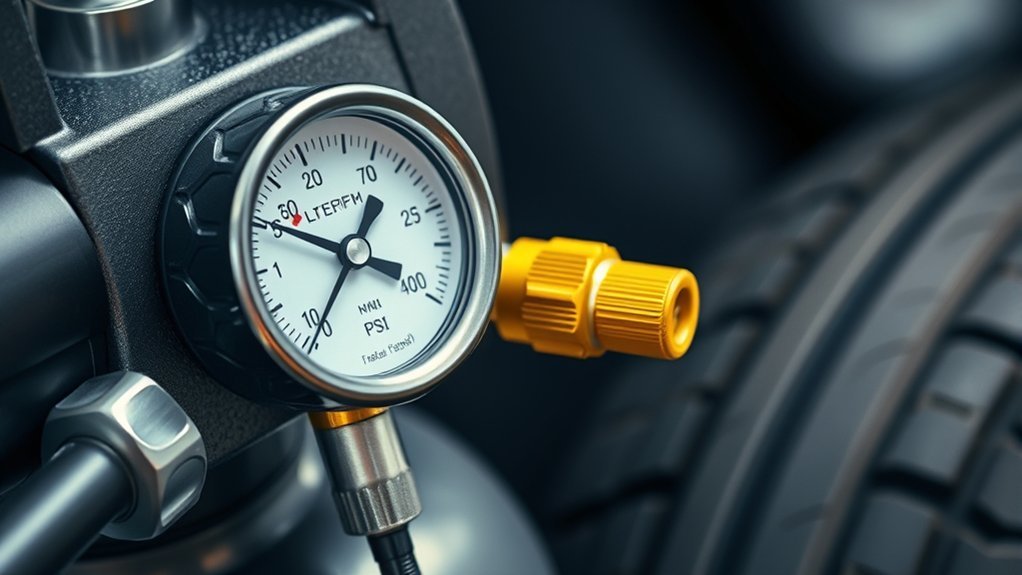
To guarantee proper inflation and task performance, we first identify the recommended PSI levels specified by manufacturers or industry standards. Next, we adjust the compressor output based on the specific task, whether inflating tires or powering small tools. Accurate PSI settings optimize efficiency and prevent damage to equipment or components.
Recommended PSI Levels
Determining the correct PSI for inflating tires and performing small tasks is essential for safety and efficiency. Accurate PSI levels ensure ideal performance and prevent air compressor safety hazards. To establish these levels, use precise PSI measurement techniques, such as a calibrated pressure gauge. For common tasks, reference manufacturer specifications; for example, vehicle tires typically require 30-35 PSI, while small pneumatic tools may operate at 90-100 PSI. The following table illustrates typical PSI recommendations:
| Task | Recommended PSI |
|---|---|
| Car tires | 30-35 PSI |
| Bicycle tires | 40-60 PSI |
| Small pneumatic tools | 90-100 PSI |
Adhering to these guidelines ensures safe, effective use of your air compressor.
Adjusting for Task Type
When selecting the appropriate PSI for a specific task, it’s essential to consult manufacturer guidelines and adjust based on the application’s requirements. For inflating tires, the recommended PSI varies by vehicle and tire type, guaranteeing ideal air quality and safety. Small tasks, such as powering pneumatic tools, often require precise PSI settings to avoid damaging components or producing excessive noise levels. Maintaining correct PSI ensures the air compressor operates efficiently, minimizing unnecessary air quality degradation and reducing noise emissions. Adjusting PSI according to task specifications enhances performance and prolongs equipment lifespan. Always verify the target PSI to prevent over- or under-inflation, which can compromise safety and efficiency while maintaining perfect noise levels and air quality during operation.
PSI Requirements for Powering Pneumatic Tools in Your Garage
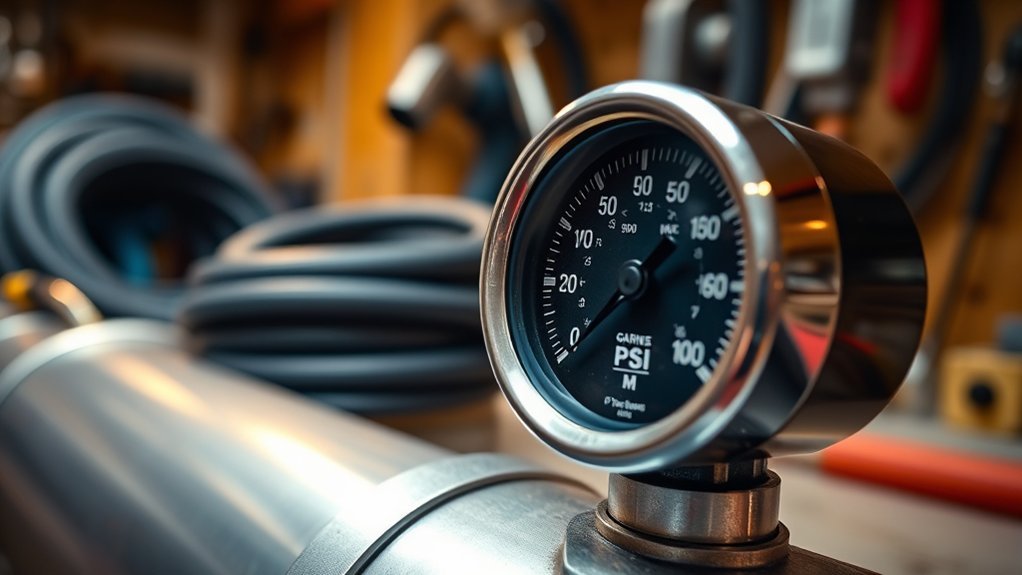
Understanding the PSI requirements for powering pneumatic tools in your garage is essential for selecting the appropriate air compressor. Most tools specify a recommended operating pressure, typically between 90 and 120 PSI, guaranteeing consistent performance. Maintaining ideal air quality is critical; contaminated or moist air can impair tool efficiency and cause damage. Consequently, incorporating moisture filters and dryers is advisable. Noise levels also factor into PSI management, as higher pressure output can increase noise, affecting your workspace environment. Selecting an air compressor that delivers steady, regulated pressure within the tool’s recommended PSI range while minimizing air quality issues and noise ensures safe, efficient operation. Properly matching PSI requirements prevents tool malfunctions and enhances overall safety in your garage workspace.
Selecting the Right Compressor PSI for DIY Projects and Heavy-Duty Tasks
Choosing the correct compressor PSI depends on the specific requirements of your projects and tasks. We must take into account the ideal PSI for different applications, including both light DIY work and heavy-duty operations. Properly adjusting compressor settings ensures efficiency and safety during use.
Optimal PSI for Projects
Selecting the appropriate PSI setting for your air compressor is vital to guarantee peak performance for both DIY projects and heavy-duty tasks. Proper PSI ensures tools operate efficiently without risking damage or inefficiency. For ideal results, understanding the specific PSI requirements of your tools is essential. Below is a reference table to help you determine the perfect PSI:
| Tool Type | Typical PSI Range | Recommended Settings |
|---|---|---|
| Finish Nailer | 70-90 | 80 |
| Airbrush | 15-30 | 20 |
| Impact Wrench | 90-120 | 100 |
| Spray Gun | 40-60 | 50 |
| Tire Inflator | 30-40 | 35 |
Maintaining proper garage organization and compressor maintenance guarantees consistent pressure delivery, maximizing tool longevity and performance.
PSI for Heavy Tasks
When tackling heavy-duty tasks, setting the correct PSI on your air compressor is crucial to guarantee ideal tool performance and safety. For demanding applications like framing, sanding, or large-scale projects, maintaining PSI levels between 90 and 120 ensures sufficient power while preventing equipment strain. Proper air compressor maintenance—such as regular pressure checks and filter cleaning—helps sustain consistent PSI output and prolongs compressor lifespan. Adhering to safety precautions is necessary; over-pressurizing can cause hose bursts or tool damage, risking injury. Always verify the tool’s recommended PSI and avoid exceeding manufacturer specifications. Precise PSI control optimizes efficiency and safety during heavy-duty operations, making it a key aspect of effective garage air compressor use.
Adjusting Compressor Settings
Adjusting the compressor settings to match the specific requirements of your projects guarantees ideal performance and safety. Precise PSI adjustments ensure that tools operate efficiently without overloading the compressor or risking damage. For DIY projects, setting the PSI within the recommended range minimizes compressor noise, reducing garage noise levels and promoting better garage safety. When tackling heavy-duty tasks, increasing PSI to match tool specifications ensures maximum power delivery while preventing pressure fluctuations. Always verify the compressor’s output with a reliable gauge before use. Properly calibrated settings help maintain consistent performance, avoid over-pressurization, and reduce the risk of accidents. Regularly adjusting and monitoring PSI levels is essential for safe, efficient operation—especially in confined garage environments where safety and noise control are critical.
How to Adjust and Set PSI on Your Air Compressor Safely
To safely set and adjust the PSI on your air compressor, understanding the controls and following proper procedures is essential to prevent injury and equipment damage. First, always wear appropriate safety gear, including eye protection and hearing protection, to mitigate risks from air compressor noise. Second, monitor the pressure gauge closely when adjusting the regulator to confirm it matches the recommended PSI for your task. Finally, use the compressor’s control knob or regulator valve carefully, avoiding sudden changes that could cause pressure swings. Verify the setting before use, and never exceed the manufacturer’s maximum PSI. Proper setup minimizes noise issues and helps maintain safe operation. Consistent adherence to these steps guarantees safe, efficient performance of your air compressor.
Common Mistakes When Using Incorrect PSI and How to Avoid Them
Using incorrect PSI settings on your air compressor can lead to serious issues, including equipment damage, safety hazards, and poor tool performance. Common mistakes include neglecting proper air compressor maintenance, which can cause inaccurate pressure readings. Failing to regularly check and calibrate PSI can result in over- or under-inflation, damaging tools or reducing efficiency. To avoid these problems, we recommend employing precise PSI calibration techniques, such as using a reliable pressure gauge and following manufacturer guidelines. Guaranteeing accurate PSI settings is essential for ideal operation and safety. Regular maintenance and calibration help maintain consistent pressure output, preventing costly repairs and unsafe conditions. By adhering to proper procedures, you can considerably extend your air compressor’s lifespan and ensure safe, effective use.
Tips for Maintaining Your Air Compressor’s PSI Accuracy Over Time
Regularly verifying and maintaining your air compressor’s PSI accuracy guarantees ideal tool performance and safety. To guarantee consistent pressure, perform routine motor maintenance, such as inspecting belts, lubricating components, and checking for leaks. Accurate PSI measurement depends on precise calibration, so regularly test with a reliable gauge and adjust as needed. Additionally, observe these safety precautions:
- Always disconnect power before servicing to prevent accidental startup.
- Use protective gear during maintenance to avoid injury from pressurized parts.
- Keep the compressor clean and free of debris to prevent overheating and ensure reliable readings.
When to Upgrade Your Compressor Based on PSI Needs and Usage
When evaluating whether to upgrade your air compressor, gauging if its PSI capacity aligns with your current and anticipated tool needs is essential. Proper PSI calibration guarantees the compressor delivers consistent and accurate pressure, critical for air compressor safety and peak tool performance. If your tools require higher PSI levels than your current compressor provides, or if you notice fluctuations that compromise operation, it’s time to consider an upgrade. An underpowered compressor can lead to inadequate airflow, risking equipment damage or safety hazards. Conversely, over-specifying may result in unnecessary energy consumption. Regularly reviewing your PSI requirements and usage patterns helps determine the appropriate compressor capacity, ensuring safe, efficient operation and preventing the risks associated with improper PSI levels.
Troubleshooting Low or Inconsistent PSI in Your Garage Compressor
Low or inconsistent PSI readings in your garage compressor often indicate underlying issues that require immediate attention. Such fluctuations can compromise tasks like paint spraying or air filtration, leading to uneven finishes or equipment strain. To troubleshoot, first check the air filtration system; clogged filters restrict airflow, reducing PSI stability. Next, inspect the compressor’s intake valves for leaks or damage, which can cause pressure drops. Finally, verify that the pressure switch is calibrated correctly, as misadjustments can cause inconsistent PSI outputs. Ensuring clean, unobstructed air filtration and secure connections helps maintain steady pressure. Regular maintenance, including filter replacement and component inspection, prevents PSI fluctuations, optimizing your compressor’s performance for precise paint spraying and air delivery.
Frequently Asked Questions
How Does Altitude Affect Garage Air Compressor PSI Requirements?
Altitude adjustments are vital because higher elevations decrease air pressure, requiring pressure regulation adjustments to maintain proper PSI. We recommend recalibrating your compressor’s pressure settings at altitude to ensure ideal performance and prevent over-pressurization issues.
Can Temperature Variations Impact Compressor PSI Performance?
Temperature variations can impact compressor PSI performance; studies show that a 10°F change can alter pressure output by up to 2%. Maintaining temperature stability is vital for accurate compressor calibration and consistent pressure regulation.
What Safety Precautions Are Necessary When Adjusting Compressor PSI?
When adjusting compressor PSI, we follow calibration procedures meticulously and wear appropriate safety gear, including gloves and eye protection, to prevent injury. Ensuring the compressor is off and depressurized adds an extra layer of safety.
How Do Different Compressor Tank Sizes Influence PSI Settings?
Think of compressor tanks as reservoirs; larger tanks provide better PSI consistency, while smaller tanks require more frequent adjustments. Tank capacity directly influences ideal PSI settings, ensuring reliable performance tailored to your specific air pressure needs.
Are There Specific PSI Guidelines for Eco-Friendly or Energy-Efficient Compressors?
Eco-friendly standards and energy-efficient guidelines recommend maintaining compressor PSI around 90-120, optimizing performance while conserving energy. We advise monitoring pressure levels regularly to guarantee compliance and maximize efficiency, reducing overall energy consumption and environmental impact.
Conclusion
Understanding and maintaining the correct PSI for your garage air compressor is essential for safety, efficiency, and tool longevity. Just like tuning a finely calibrated instrument, precise PSI settings ensure your projects run smoothly—be it inflating tires or powering pneumatic tools. Regular calibration and proper adjustments keep your compressor performing at its best, much like a well-oiled machine. When PSI is right, your garage operates seamlessly, turning potential issues into reliable, efficient performance.