Ad Blocker Detected
Our website is made possible by displaying online advertisements to our visitors. Please consider supporting us by disabling your ad blocker.
An oil-free air compressor is a device designed to produce compressed air without the use of lubricating oil within its compression chamber. This technology relies on advanced self-lubricating components or dry-running mechanisms, ensuring the output air remains free of oil contamination. Such compressors are critical in environments demanding high purity and minimal maintenance. Understanding how they operate and their advantages can help determine if they’re suitable for your specific needs. Let’s explore what makes these systems distinct and why they’re gaining widespread adoption.
Key Takeaways
- Produces compressed air without lubricating oil in the compression chamber.
- Uses advanced, self-lubricating or dry-running components to reduce friction.
- Eliminates oil contamination, ensuring high-purity, clean air output.
- Typically quieter and requires less maintenance than traditional oil-lubricated compressors.
- Suitable for sensitive industries demanding high cleanliness and minimal environmental impact.
What Is an Oil-Free Air Compressor and How Does It Work?
An oil-free air compressor is a type of compressor that produces compressed air without the use of lubricating oil in its compression chamber. This design relies on advanced lubrication technology, often employing self-lubricating elements or dry-running components to minimize friction and wear. The absence of oil reduces contamination risk and simplifies maintenance. Noise reduction is achieved through streamlined design and specialized components that dampen vibrations, making it suitable for sensitive environments. These compressors operate efficiently by maintaining consistent compression without oil-related interference, ensuring cleaner air output. The use of lubrication technology tailored for oil-free systems enhances durability and performance, while noise reduction features contribute to quieter operation, essential for applications requiring minimal sound disturbance.
Key Advantages of Oil-Free Compressors for Sensitive Industries
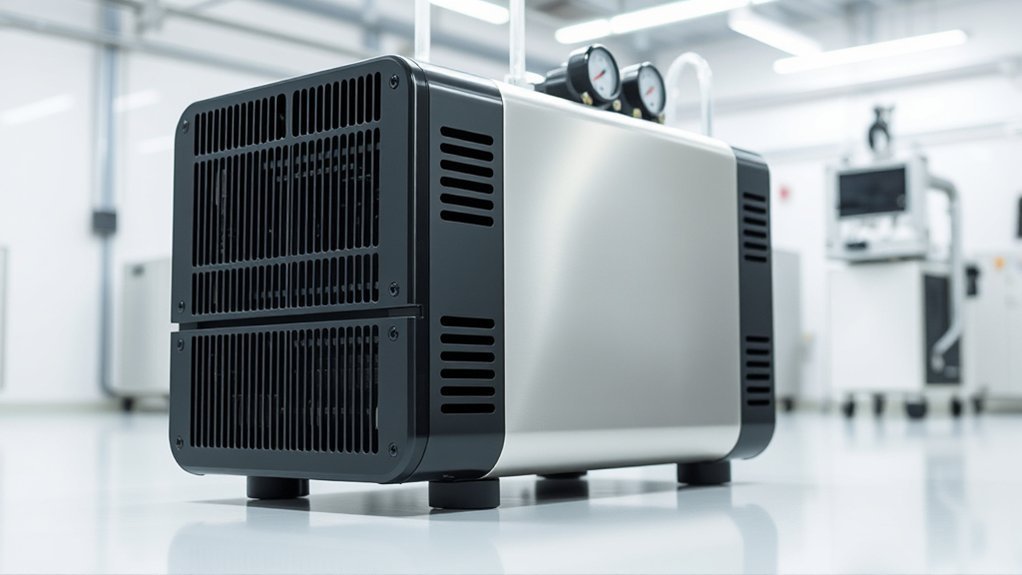
The absence of oil in these compressors offers distinct benefits for industries where air purity and equipment integrity are paramount. Oil-free compressors substantially reduce environmental impact by eliminating oil emissions, which minimizes pollution and disposal concerns. They also lower maintenance requirements, as there’s no need for oil changes or filter replacements associated with oil-lubricated systems. The following table highlights key advantages:
| Advantage | Impact | Industry Benefit |
|---|---|---|
| Environmental Impact | Reduced oil emissions and disposal needs | Eco-friendly operations |
| Maintenance Requirements | Fewer parts and less routine servicing | Lower operational costs |
| Air Purity | No oil contamination in compressed air | Higher product and process quality |
These factors make oil-free compressors ideal for sensitive sectors demanding high air quality and minimal environmental footprint.
Types of Oil-Free Air Compressors and Their Ideal Applications
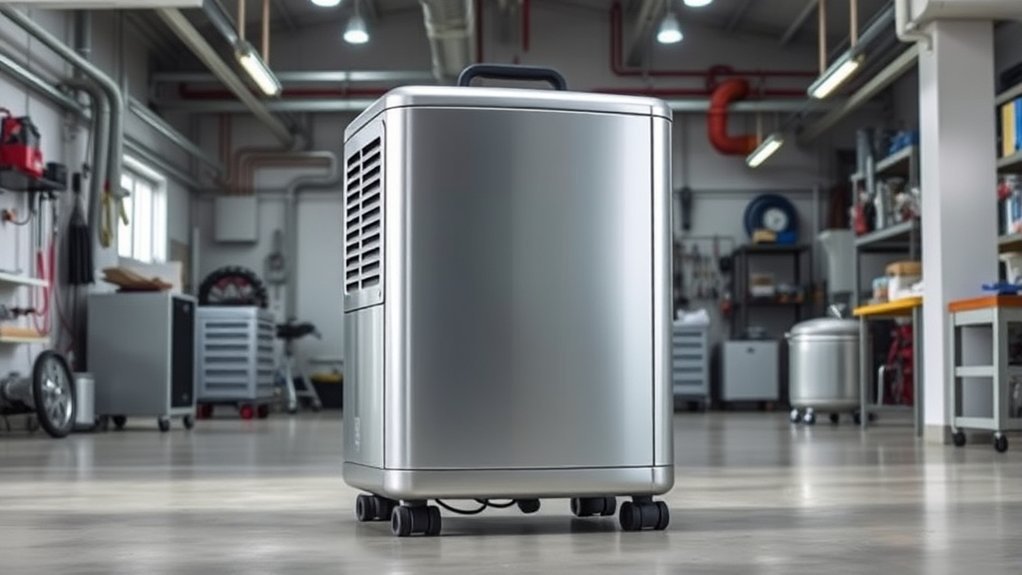
Different types of oil-free air compressors are designed to meet specific industrial needs, each offering unique advantages for various applications. For example, reciprocating oil-free compressors utilize piston-based mechanisms with non-lubricated cylinders, making them suitable for applications requiring low maintenance and high purity. Scroll compressors employ a rotating scroll mechanism with no lubrication points, providing quiet operation and minimal maintenance requirements. Rotary screw compressors, when oil-free, use special coating or dry-running screws, ideal for continuous, high-volume air supply. Lubrication methods in these compressors eliminate the need for oil, reducing contamination risks. Maintenance requirements vary but generally involve regular inspections of seals and filters rather than oil changes, ensuring consistent, reliable performance in sensitive environments.
Factors to Consider When Choosing an Oil-Free Air Compressor
Selecting the appropriate oil-free air compressor requires careful evaluation of several key factors to guarantee ideal performance and cost-efficiency. Critical considerations include compressor capacity, power requirements, noise levels, and duty cycle. Additionally, understanding maintenance tips ensures longevity and reduces downtime, directly impacting overall costs. Conducting a thorough cost analysis helps compare initial investment versus operational expenses, including energy consumption and maintenance.
| Factor | Description |
|---|---|
| Capacity | Match to airflow needs to prevent over/underperformance |
| Power requirements | Ensure compatibility with available electrical supply |
| Maintenance tips | Regular inspections prevent costly repairs |
| Noise levels | Consider environment-specific noise restrictions |
| Cost analysis | Balance upfront costs with ongoing operational expenses |
These factors enable informed decision-making, optimizing both performance and total cost of ownership.
Common Questions About Oil-Free Air Compressors
Are you wondering how oil-free air compressors differ from traditional oil-lubricated models? The primary distinction lies in their design, which eliminates the need for oil, reducing maintenance challenges related to oil changes and contamination. This design also impacts noise levels, often resulting in quieter operation due to fewer moving parts and absence of oil-related components. Common questions focus on durability and lifespan; oil-free compressors typically require careful consideration of heat dissipation to maintain performance. They are ideal for applications demanding high air purity and minimal downtime. However, some worry about increased wear without lubrication—though modern materials mitigate this. Overall, understanding these factors helps in selecting the right compressor, balancing maintenance, noise, and longevity considerations effectively.
Frequently Asked Questions
How Long Do Oil-Free Air Compressors Typically Last?
Oil-free air compressors typically last 10,000 to 20,000 hours, depending on usage. Their minimal lubrication needs reduce environmental impact, but regular maintenance is essential to maximize lifespan and guarantee consistent performance over time.
Are Oil-Free Compressors More Energy-Efficient Than Oil-Lubricated Ones?
Yes, oil-free compressors are more energy-efficient due to lower lubrication requirements, reducing friction. Although initial costs are higher, their long-term savings in maintenance and energy make them a cost-effective choice.
What Maintenance Is Required for Oil-Free Air Compressors?
We perform regular maintenance on oil-free air compressors by inspecting lubrication needs, ensuring proper lubrication without oil, and replacing filters periodically. This keeps the system efficient, prevents contamination, and extends the compressor’s operational lifespan.
Can Oil-Free Compressors Be Used Outdoors?
Yes, oil-free compressors can be used outdoors due to their enhanced outdoor durability and weather resistance, making them suitable for various environmental conditions. However, proper protection and maintenance are essential to guarantee excellent performance and longevity.
Are There Any Noise Level Differences Between Compressor Types?
We find that oil-free compressors typically produce lower noise levels, offering a quieter sound comparison, whereas oil-lubricated models tend to generate more noise due to lubrication mechanisms, making oil-free options preferable for noise-sensitive environments.
Conclusion
In brief, selecting an oil-free air compressor guarantees purity, reliability, and minimal upkeep—crucial for sensitive applications. As the saying goes, “A chain is only as strong as its weakest link,” and in our industry, that link is often the quality of your compressed air. By understanding the types and factors involved, you can choose the right unit for your needs, guaranteeing peak performance and peace of mind in demanding environments.