Ad Blocker Detected
Our website is made possible by displaying online advertisements to our visitors. Please consider supporting us by disabling your ad blocker.
Many people overlook that a two-stage air compressor’s PSI rating is not just a maximum number but a critical factor that guarantees safe, efficient operation under demanding conditions. Understanding how this rating influences performance can substantially impact your equipment’s longevity and suitability for specific tasks. By exploring what determines these PSI levels and their practical implications, you can optimize your system and avoid common pitfalls—something you’ll want to take into account carefully.
Key Takeaways
- The PSI rating indicates the maximum pressure a two-stage air compressor can reliably deliver during operation.
- Two-stage compressors achieve higher PSI through sequential compression and intercooling, improving efficiency and durability.
- Properly maintained systems ensure stable PSI levels, preventing over-pressurization and enhancing safety.
- Selecting the right PSI depends on specific application needs, such as automotive painting or pneumatic tools.
- Regular maintenance of filters, valves, and gauges sustains optimal PSI performance and prolongs compressor lifespan.
What Is the PSI Rating on a Two-Stage Air Compressor?
A two-stage air compressor’s PSI rating typically refers to the maximum pressure it can generate during operation, often specified as the “rated pressure.” This rating indicates the pressure level at which the compressor is designed to reliably deliver compressed air without risking damage or inefficiency. The PSI rating influences air quality, as higher pressures can increase moisture and contaminants if not managed properly, affecting downstream tools and processes. Additionally, noise levels tend to vary with PSI; higher pressures usually produce louder operation, impacting workplace acoustics. Understanding the rated pressure guarantees ideal compressor performance while maintaining air quality standards and managing noise exposure. Accurate PSI ratings allow users to select compressors suited for specific applications, balancing power, efficiency, and environmental considerations.
How Two-Stage Compressors Achieve Higher PSI Levels
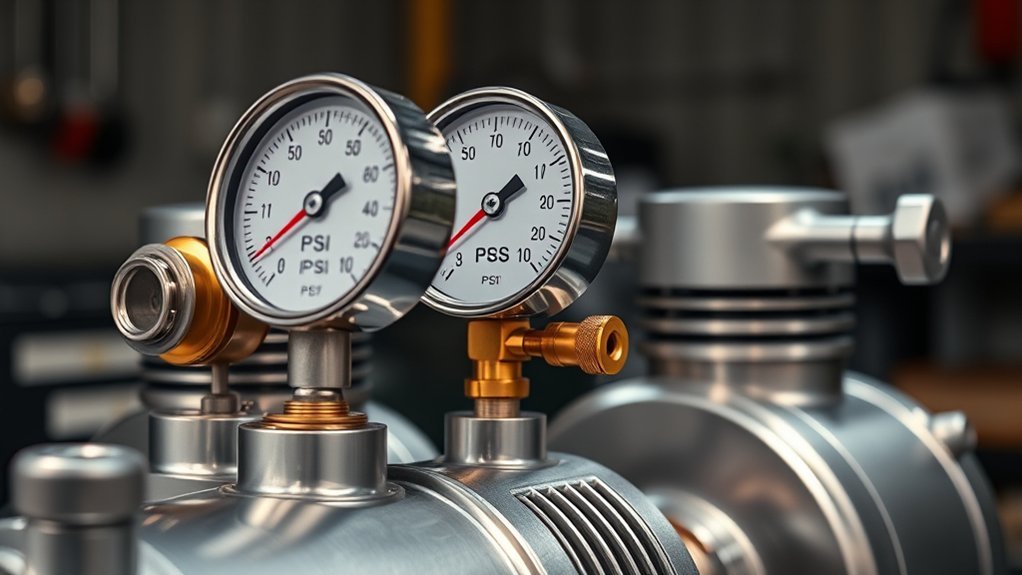
Two-stage compressors achieve higher PSI levels through a process of sequential compression, where the air is compressed in two distinct phases rather than one. This method enhances compressor durability by reducing the thermal and mechanical stress on each stage, thereby extending lifespan. Additionally, the second compression stage allows for more precise pressure control, resulting in consistent high PSI output.
Two-stage compressors provide higher PSI with greater durability through sequential compression and precise pressure control.
Key factors include:
- The intercooler between stages cools compressed air, decreasing heat buildup and reducing noise levels.
- The first stage compresses air to an intermediate pressure, easing the load on the second stage.
- The second stage then boosts pressure further, enabling higher PSI ratings without sacrificing durability or increasing noise.
This sequential process guarantees efficient, reliable operation at elevated PSI levels.
Why PSI Matters When Selecting a Two-Stage Air Compressor
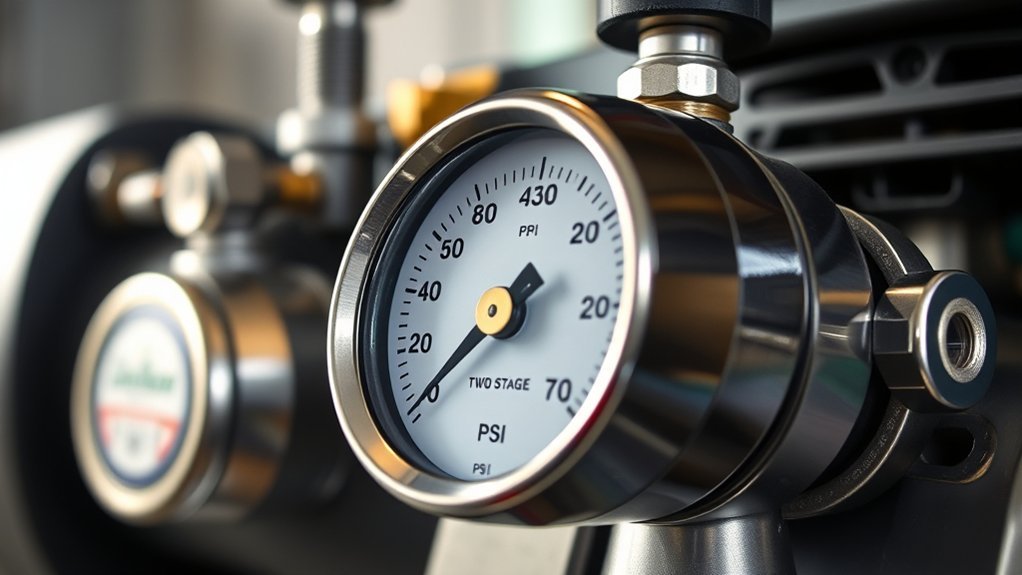
Understanding why PSI matters when selecting a two-stage air compressor helps guarantee that the equipment meets your specific operational requirements. Proper PSI rating guarantees ideal compressor safety by preventing over-pressurization, which can lead to equipment failure or hazards. It also influences noise levels, as operating at higher or lower pressures affects the compressor’s sound emissions, impacting work environment safety and comfort. Selecting the correct PSI ensures the compressor functions efficiently without risking damage or excessive noise, both critical factors in industrial settings. Accurate PSI settings help maintain system integrity, prolong equipment lifespan, and support safe, noise-controlled operation. Consequently, understanding the importance of PSI is essential for matching compressor capabilities with application demands while safeguarding operator safety.
How to Determine the Right PSI for Your Applications
To determine the appropriate PSI for your applications, we first evaluate the specific pressure requirements of each task. Then, we compare these needs with the compressor’s maximum and continuous pressure ratings to guarantee compatibility. Accurate matching of compressor specifications to application demands is essential for ideal performance and safety.
Understanding Application Requirements
Determining the appropriate PSI for your air compressor application is vital to guarantee peak performance and equipment longevity. Accurate PSI selection ensures ideal air quality, minimizes noise levels, and prevents over-pressurization. To assess your needs, consider these factors:
- Type of tools or machinery: Different equipment requires specific PSI; for example, precision tools need lower PSI, while heavy-duty machinery demands higher pressure.
- Air quality requirements: Higher PSI can increase moisture and contaminants, so selecting the correct pressure helps maintain air purity.
- Operational environment: Noise levels can escalate with higher PSI; understanding your workspace’s noise sensitivity is essential for appropriate compressor settings.
Matching Compressor Specifications
Choosing the correct PSI setting for your air compressor involves carefully matching its specifications to your specific application requirements. To guarantee ideal performance and safety, assess the required PSI for your tools and processes. Refer to manufacturer guidelines and consider your maintenance schedules to maintain consistent output. Safety precautions should always be prioritized, preventing over-pressurization that could cause equipment failure or injury. Use the following table to match compressor specifications with your needs:
| Application Type | Recommended PSI | Key Considerations |
|---|---|---|
| General Use | 90-100 PSI | Regular maintenance required |
| Precision Tasks | 60-80 PSI | Lower pressure for accuracy |
| Heavy Duty | 100-120 PSI | Monitor for safety hazards |
Common Applications That Require Specific PSI Levels
Understanding the specific PSI requirements for various applications is essential to guarantee peak performance and safety. Different tasks demand precise pressure levels to maximize efficiency and minimize risks associated with air compressor safety and noise reduction.
For example:
- Automotive spray painting typically requires 60-70 PSI to ensure a smooth finish without overspray.
- Pneumatic tools, such as impact wrenches, operate best at 90-120 PSI for maximum torque.
- Industrial blow-off applications often need 100-150 PSI to effectively remove debris while maintaining safety standards.
Matching the correct PSI level prevents equipment damage and reduces noise, facilitating safer operation. Properly calibrated pressure settings contribute to noise reduction and ensure the compressor’s longevity, aligning with safety protocols.
Understanding PSI Ratings Vs. CFM and Other Specifications
Understanding the relationship between PSI and CFM is essential for selecting the right compressor, as PSI measures pressure while CFM indicates airflow volume. Both specifications, along with others like duty cycle and tank size, influence compressor performance and suitability for specific tasks. Recognizing how these parameters interact ensures accurate assessment and ideal operation.
Comparing PSI and CFM
How do PSI and CFM ratings differ in defining an air compressor’s performance? PSI measures the pressure level the compressor can generate, impacting air quality and the ability to power tools efficiently. CFM indicates the volume of air delivered per minute, essential for applications requiring sustained airflow.
Consider these points:
- PSI affects the operating pressure that influences air quality and tool performance.
- CFM determines the airflow volume, impacting how long tools can operate before pressure drops.
- Noise levels are indirectly affected, as higher PSI and CFM often correlate with increased noise during operation.
Understanding this distinction helps select a compressor suited to specific tasks, balancing pressure needs with airflow demands, all while considering noise levels for a quieter workspace.
Importance of Other Specs
While PSI and CFM are key indicators of an air compressor’s performance, other specifications play a vital role in guaranteeing the unit meets specific operational requirements. Air quality is essential, as certain applications demand oil-free or contaminants-free output to prevent product contamination or equipment damage. Noise levels are equally significant, especially in environments requiring low sound emissions for safety or comfort. Additionally, factors such as duty cycle, power source, and thermal management influence the compressor’s efficiency and longevity. These specifications impact not only operational effectiveness but also maintenance schedules and overall system integration. Understanding these parameters ensures the selected compressor aligns with application demands, providing peak performance while maintaining air quality standards and minimizing noise pollution.
Tips for Maintaining Optimal PSI Performance in Your Compressor
Maintaining peak PSI performance in your compressor requires consistent attention to key operational parameters. Proper maintenance guarantees air compressor safety and maximum efficiency. Here are essential tips:
- Regularly check and replace air filters to prevent clogging, which can cause pressure drops.
- Monitor and top off lubricants to reduce wear and maintain consistent pressure output.
- Inspect safety valves and pressure gauges routinely to ensure accurate readings and prevent over-pressurization.
Adhering to these maintenance tips safeguards your equipment, prolongs its lifespan, and guarantees stable PSI levels. Consistent monitoring and prompt adjustments are critical for achieving reliable performance and ensuring safety standards. By maintaining maximum PSI, you optimize productivity while minimizing risk and downtime.
Frequently Asked Questions
How Does Altitude Affect a Two-Stage Compressor’s PSI?
Altitude decreases atmospheric pressure, requiring altitude adjustment and compressor calibration to maintain PSI. We recommend recalibrating the two-stage compressor at higher altitudes to guarantee peak performance and consistent pressure output, accounting for reduced ambient air density.
Can PSI Ratings Vary Between Different Brands of Compressors?
Yes, PSI ratings can vary between brands due to differences in design, materials, and manufacturing tolerances, impacting compressor noise levels and power consumption. We recommend checking specifications carefully to guarantee peak performance and efficiency for your application.
What Safety Precautions Should Be Taken When Operating High-Psi Compressors?
We recommend rigorous safety routines: wear proper safety gear, regularly check pressure relief valves, and guarantee all connections are secure before operating high-psi compressors; these precautions prevent potential pressure-related problems and promote safe, sound operation.
How Does Temperature Impact PSI Performance in Two-Stage Compressors?
Temperature effects can cause fluctuations in PSI performance, as higher temperatures reduce air density, impacting compressor calibration accuracy. We recommend monitoring temperature closely and recalibrating your compressor regularly to maintain ideal PSI levels and prevent performance inconsistencies.
Are There Specific Maintenance Routines to Sustain PSI Accuracy Over Time?
We maintain PSI accuracy by adhering to strict lubrication schedules, ensuring components stay well-lubricated, and replacing filters regularly to prevent pressure drops, which keeps the compressor operating at peak performance over time.
Conclusion
In the end, understanding PSI ratings isn’t just about avoiding safety hazards—it’s about optimizing performance and extending your compressor’s life. Ironically, the more we focus on precise PSI levels, the less we worry about unexpected breakdowns or inefficiencies. So, while it might seem technical and detailed, mastering PSI guarantees your compressor runs smoothly, safely, and efficiently—making those complex calculations worth every bit of effort. After all, precision pays off in the long run.