Ad Blocker Detected
Our website is made possible by displaying online advertisements to our visitors. Please consider supporting us by disabling your ad blocker.
Understanding the CFM rating of a single-stage air compressor is vital for selecting the right model for your needs, as it directly impacts airflow capacity at a given pressure. Precise knowledge of how CFM interacts with other specifications guarantees ideal performance without undersupplying or overloading the system. To make informed decisions, it’s essential to analyze the factors influencing CFM and how to interpret these ratings accurately—key considerations that can considerably affect your compressor’s efficiency and longevity.
Key Takeaways
- Single-stage compressors typically have CFM ratings ranging from 4 to 20+, depending on size and capacity.
- CFM rating indicates the volume of air the compressor can deliver at a specific pressure, crucial for performance.
- Match the CFM rating to your tool’s airflow requirements for optimal efficiency and prevent under- or over-sizing.
- Higher CFM ratings are suitable for continuous, demanding tasks, while lower ratings work for light, intermittent use.
- Proper selection of CFM ensures consistent airflow, reduces energy use, and minimizes operational noise.
What Does CFM Mean for Single-Stage Air Compressors?
When evaluating single-stage air compressors, understanding what CFM signifies is essential. CFM, or cubic feet per minute, measures the volume of air the compressor can deliver at a specified pressure. This metric directly impacts air quality, as higher CFM ratings guarantee consistent airflow, reducing fluctuations that can compromise tool performance. Additionally, CFM influences noise levels; compressors with higher CFM outputs often operate more efficiently, minimizing unnecessary noise due to reduced cycling. Accurate CFM ratings help us select units that meet specific application demands, guaranteeing optimal air quality and manageable noise levels. Recognizing this relationship allows for precise matching of the compressor’s capabilities with our operational needs, ultimately enhancing productivity and safety.
How CFM Ratings Affect Compressor Performance

CFM ratings directly influence the airflow rate a compressor can sustain, affecting overall tool performance. Higher ratings guarantee compatibility with demanding tools and improve operational efficiency, while lower ratings may cause performance issues. Understanding these relationships helps optimize compressor selection for specific applications.
Impact on Airflow Rate
Have you ever wondered how the CFM rating directly influences compressor performance? The airflow rate, dictated by CFM, determines the volume of air delivered per minute, impacting overall efficiency. Higher CFM ratings support sustained operation under demanding conditions, maintaining consistent air quality and reducing pressure fluctuations that can compromise tool performance. Additionally, increased airflow can lead to elevated noise levels, which are essential to take into account in noise-sensitive environments. Precise CFM ratings guarantee ideal airflow without overtaxing the compressor, preserving air quality and system longevity. Understanding this relationship helps select a compressor that balances airflow needs with noise considerations, ensuring reliable operation tailored to specific applications.
Compatibility With Tools
The compatibility between a compressor’s CFM rating and power tools is essential for peak performance. A CFM that matches or exceeds tool requirements guarantees consistent airflow, preventing performance dips. Proper air quality management maintains compressed air purity, reducing contamination risks for sensitive tools. Additionally, noise levels are influenced by CFM, with higher ratings often generating more noise, which can impact workspace comfort. When selecting a compressor, consider:
- Adequate airflow delivery for continuous operation
- Preservation of air quality standards
- Minimization of excessive noise levels
- Compatibility with the tool’s CFM demands
- Ensuring sustained performance without pressure drops
Achieving the right balance ensures maximum tool efficiency, reduces wear, and maintains a safe, comfortable environment. Proper matching of CFM ratings enhances overall productivity and equipment longevity.
Efficiency in Operation
Efficient operation of an air compressor hinges on accurately matching its CFM rating to the demands of the connected tools and application workload. Proper alignment minimizes energy consumption, reducing operational costs and environmental impact. It also influences noise levels; a compressor operating at or near its rated CFM ensures smoother, quieter performance. Overestimating CFM leads to unnecessary energy use and increased noise, while underestimating causes pressure drops and inefficiency.
| CFM Rating | Energy Consumption | Noise Level |
|---|---|---|
| Matched | Optimized | Minimal |
| Overrated | Increased | Higher |
| Underrated | Inefficient | Potentially louder |
Comparing CFM Ratings: Which Is Suitable for Your Tasks?
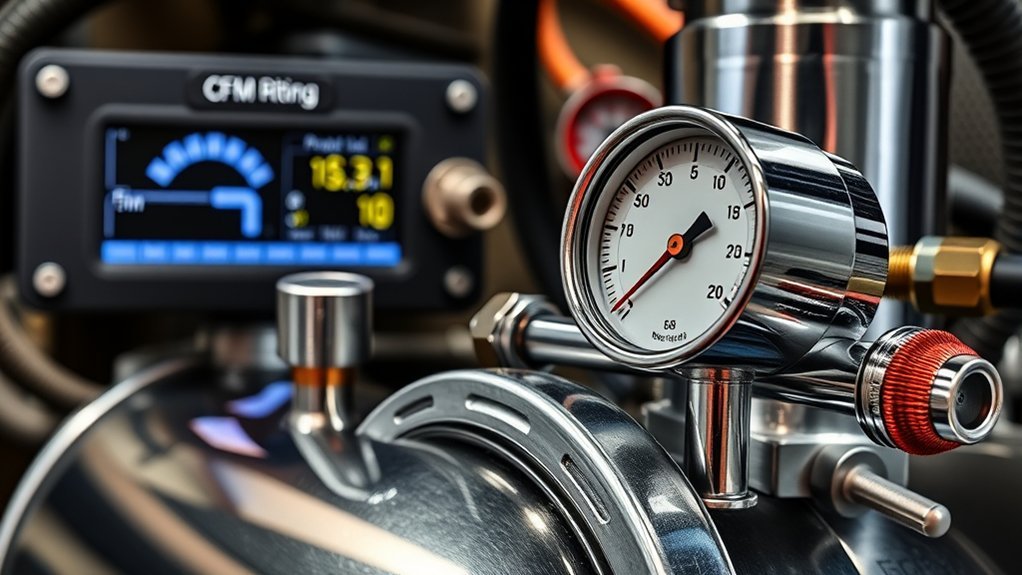
Determining the appropriate CFM rating for your air compressor hinges on understanding the specific demands of your tasks. To match CFM ratings effectively, consider the air compressor materials and the noise reduction features necessary for your environment. Higher CFM ratings are suitable for continuous, demanding operations like spray painting or pneumatic tools, while lower ratings suffice for light tasks such as inflating tires or small tools. When comparing CFM ratings, evaluate:
- The airflow requirements of your tools and equipment
- The volume and frequency of use
- The importance of noise reduction in your workspace
- The compatibility with air compressor materials for durability
- The need for scalability in your setup
Matching these factors ensures optimal performance and efficiency, avoiding over- or under-specifying your compressor for the task at hand.
Factors That Influence the CFM of a Single-Stage Compressor
The CFM of a single-stage compressor is directly affected by its size and design, which determine airflow capacity and efficiency. Operating conditions, such as pressure and temperature, also play a vital role by influencing the compressor’s workload. Additionally, the load placed on the system impacts CFM performance, as higher demands can alter airflow rates.
Compressor Size and Design
How does the size and design of a single-stage air compressor directly impact its CFM rating? Larger compressors typically feature bigger cylinders and more efficient airflow pathways, increasing volume output. Design elements such as cylinder bore, stroke length, and valve configuration directly influence airflow capacity. Additionally, compressor size affects air compressor noise, with larger units often producing more sound due to increased mechanical activity. Lubricant selection also impacts performance, ensuring optimal operation and reducing wear, which maintains consistent CFM output. Key factors include:
- Cylinder bore and stroke dimensions
- Intake valve design and placement
- Compression chamber volume
- Airflow pathways and ducting
- Mechanical components’ robustness and noise control
These elements collectively determine the compressor’s ability to generate higher CFM ratings efficiently.
Operating Conditions and Load
Operating conditions and load considerably influence the CFM output of a single-stage air compressor, as they directly affect the compressor’s efficiency and capacity. Variations in air quality, such as dust and moisture levels, can impair compressor performance, reducing effective CFM. Poor air quality may cause clogging or corrosion, leading to fluctuations in airflow. Additionally, load demands impact the compressor’s operating cycle; higher loads require increased airflow, which can strain the system and alter CFM ratings. Noise levels are also affected by operating conditions, with increased noise indicating potential inefficiencies or mechanical stress. Maintaining ideal operating conditions—clean air intake, stable load management, and controlled environment—ensures consistent CFM output and minimizes operational variability.
How to Read and Interpret CFM Specifications
Understanding CFM specifications can be challenging, but grasping how to read these ratings is essential for selecting the right compressor. CFM ratings indicate the volume of air a compressor delivers per minute, directly affecting air quality and noise levels. To interpret these specifications accurately:
- Ensure the CFM rating matches your tool’s demand at a given pressure.
- Check if the rating is stated at specific operating conditions, like PSI.
- Confirm whether the CFM is free air delivery or at the compressor outlet.
- Consider the compressor’s noise levels, as higher CFM units often generate more noise.
- Evaluate the rated CFM in relation to continuous versus intermittent use.
This understanding helps optimize performance, maintain air quality, and manage noise levels effectively.
When to Choose Higher vs. Lower CFM Compressors
Choosing between higher and lower CFM compressors depends on the application’s size and operational scope, as larger or more complex systems typically require greater airflow capacity. We must also consider air demand fluctuations, as equipment with variable usage may benefit from a compressor that can accommodate peak requirements. Understanding these factors guarantees ideal compressor selection for precise efficiency and performance.
Application Size and Scope
Selecting the appropriate CFM rating for an air compressor depends primarily on the size and scope of the intended application. For larger operations, higher CFM compressors guarantee sufficient airflow, maintaining air quality and reducing compressor cycling. Conversely, smaller tasks benefit from lower CFM units, which are more energy-efficient and generate less noise. Consider these factors:
- Volume of tools or equipment needing continuous airflow
- Frequency and duration of operation sessions
- Required air quality standards for precision tasks
- Space constraints influencing noise level tolerances
- Future expansion plans increasing air demand
Choosing the right CFM impacts both operational efficiency and workplace environment, particularly regarding noise levels and air quality. Correct sizing prevents underperformance and minimizes unnecessary energy consumption, ensuring ideal application performance.
Air Demand Fluctuations
When considering air demand fluctuations, it’s important to recognize that operational patterns can vary considerably over time, influencing the ideal CFM rating. Higher CFM compressors are preferable when demand is intermittent or peaks sharply, guaranteeing continuous operation without pressure drops. Conversely, lower CFM units suit applications with steady, predictable demand, reducing environmental impact and energy consumption. Noise levels also factor into this decision; larger compressors tend to generate more noise, which can affect workplace safety and comfort. Selecting the appropriate compressor involves balancing these factors to optimize efficiency, minimize environmental impact, and control noise levels. Proper assessment of demand fluctuations ensures the compressor system remains responsive, reduces unnecessary operational costs, and aligns with environmental and workplace standards.
Common Mistakes When Selecting a CFM Rating
One common mistake is focusing solely on the compressor’s maximum CFM rating without considering the actual airflow needs of your tools or processes. This oversight can lead to inadequate performance or excessive energy consumption. When evaluating CFM, consider factors like air filtration requirements, which impact the compressor’s efficiency, and noise levels, especially in noise-sensitive environments. Misjudging airflow needs may cause shortfalls during peak demand, or over-specification can result in unnecessary costs.
Focusing only on maximum CFM risks inadequate airflow or wasted energy; consider actual tool needs and environment factors.
To refine your selection, keep in mind:
- Actual CFM demand of your tools
- Air filtration system compatibility
- Noise level tolerances
- Operating cycle duration
- Future expansion plans
Prioritize precision to guarantee ideal compressor operation aligned with your application.
How CFM Interacts With PSI and Tank Size
Understanding how CFM interacts with PSI and tank size is essential for optimizing compressor performance. As PSI increases, the compressor must work harder, which can elevate noise levels and power consumption. Larger tanks provide more stored air volume, reducing the need for continuous high CFM output, thereby decreasing strain on the motor and lowering noise and energy use. Conversely, a smaller tank demands higher CFM to maintain consistent pressure, often increasing noise levels and power demands. The balance between these factors affects overall efficiency: a well-matched combination minimizes unnecessary power consumption and reduces noise, ensuring reliable operation. Accurate assessment of CFM, PSI, and tank size interplay is crucial for selecting a compressor that meets specific application demands without excess energy expenditure.
Tips for Maintaining Optimal CFM Output
Maintaining ideal CFM output requires regular attention to the compressor’s components and operational practices. Consistent upkeep ensures maximum airflow and prevents performance degradation. Follow a thorough maintenance checklist, focusing on critical parts like the air filter, which must be cleaned or replaced to prevent airflow restrictions. Monitor for leaks in hoses and fittings, as these reduce efficiency. Regularly inspect and lubricate moving parts to minimize friction. Keep the intake vents clear of debris and dust. Additionally, verify that pressure relief valves and gauges are functioning correctly.
- Clean or replace the air filter regularly
- Check for and repair leaks in hoses and fittings
- Lubricate bearings and moving parts
- Clear intake vents of dust and debris
- Test pressure relief valves and gauges
Questions to Ask Before Buying a Single-Stage Air Compressor
Before purchasing a single-stage air compressor, it’s essential to ask targeted questions that guarantee the unit meets your specific needs and performance expectations. Key considerations include evaluating air quality, ensuring the compressor produces clean, contaminant-free air suitable for your applications. Additionally, examine noise levels; a quieter model minimizes workplace disruption and enhances safety. Ask about filtration systems to maintain air purity and verify decibel ratings to match your environment’s noise tolerance. Clarify the compressor’s duty cycle and maximum CFM to ensure it can sustain continuous operation under load. Understanding these factors helps prevent performance issues, prolongs equipment lifespan, and ensures compliance with safety standards. By asking these precise questions, you select a unit aligned with your operational requirements and environmental considerations.
Frequently Asked Questions
How Does Ambient Temperature Affect CFM Ratings?
Temperature fluctuations impact CFM ratings by altering air density, which affects compressor performance. We guarantee calibration accuracy by adjusting for ambient temperature changes, maintaining precise airflow measurements and consistent compressor efficiency under varying environmental conditions.
Can CFM Ratings Change Over the Lifespan of a Compressor?
CFM ratings do decline over a compressor’s lifespan due to efficiency degradation and component wear, ironically illustrating how even precise ratings diminish as parts age, emphasizing the importance of maintenance to preserve ideal airflow performance over time.
Are There Industry Standards for Measuring CFM Accuracy?
We find that industry standards for measuring CFM accuracy exist, emphasizing precise airflow, compressor noise, and lubrication efficiency. These standards guarantee consistent, reliable performance assessments, helping us maintain ideal compressor operation and longevity in various applications.
How Does Altitude Influence CFM Performance?
Altitude effects cause performance variance in compressors, as reduced atmospheric pressure decreases intake air density, lowering CFM output. This impacts efficiency and capacity, requiring adjustments or recalibrations to maintain consistent performance at higher elevations.
What’s the Impact of Compressor Maintenance on CFM Output?
Regular maintenance boosts lubrication efficiency, reducing friction and wear, which sustains ideal CFM output. It also lowers noise levels, preventing performance drops and ensuring consistent airflow by keeping components clean and well-lubricated.
Conclusion
Understanding the CFM rating is vital for selecting the right single-stage air compressor for your needs. It guarantees you have enough airflow for your tasks without overloading the system. Have you considered how your specific applications, pressure requirements, and tank size interact with CFM to optimize performance? By paying attention to these factors, you can make an informed decision that balances efficiency and capacity, ultimately enhancing your compressor’s lifespan and effectiveness.