Ad Blocker Detected
Our website is made possible by displaying online advertisements to our visitors. Please consider supporting us by disabling your ad blocker.
Reducing noise from garage air compressors requires a systematic approach that considers both equipment selection and sound management techniques. As professionals, we understand that identifying the primary noise sources and implementing targeted solutions can considerably improve your workspace comfort. From choosing models with lower decibel ratings to installing effective soundproofing measures, each step plays an essential role. To optimize your setup, it’s vital to explore the most effective strategies and maintenance practices—details that could make all the difference in your noise control efforts.
Key Takeaways
- Enclose the compressor in a dense, soundproof housing made of materials like MDF or concrete to dampen noise.
- Mount the compressor on vibration-damping pads or platforms to reduce vibration transmission.
- Install acoustic panels or foam lining inside the garage to absorb airborne sound reflections.
- Choose a quieter compressor model with lower decibel ratings, preferably a rotary screw or scroll type.
- Seal all gaps around doors, windows, and access points to prevent sound leaks from escaping.
How Do Garage Air Compressors Make Noise?
Garage air compressors generate noise primarily through the mechanical operation of their internal components, such as the piston, motor, and valves. This air compressor noise results from the rapid movement and vibration of these parts during compression cycles. The motor drives the piston, creating considerable vibrational energy that propagates as sound waves. Valves open and close swiftly, producing additional noise. To minimize this sound, soundproofing techniques target these noise sources directly, such as insulating the compressor housing or mounting it on vibration-absorbing pads. Understanding how these components contribute to noise helps us implement effective soundproofing strategies. By focusing on isolating vibrations and dampening sound transmission, we can markedly reduce the overall noise level of garage air compressors.
Common Sources of Noise in Air Compressors
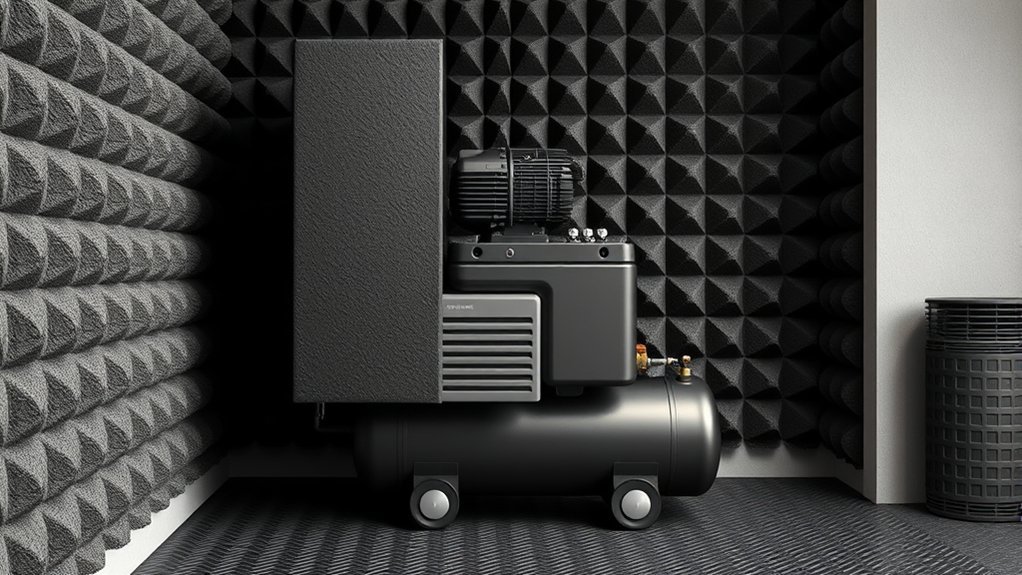
The primary sources of noise in air compressors stem from their mechanical and operational components, contributing considerably to noise pollution in garages. Understanding these sources helps us target effective noise reduction.
- Vibration and Mechanical Movement: Moving parts, such as pistons and crankshafts, generate vibrations that produce high-frequency noise.
- Motor Operation: The electric motor’s electromagnetic activity creates consistent operational noise, often amplified without proper acoustic insulation.
- Cooling Fans: Fans used for cooling generate airflow noise, adding to overall sound levels.
- Air Intake and Exhaust: The process of air intake and exhaust produces pulsatile noise, often the most noticeable source of noise pollution.
Identifying these sources allows us to implement targeted noise control measures, emphasizing the importance of acoustic insulation in reducing overall noise levels.
Strategies to Soundproof Your Garage Air Compressor
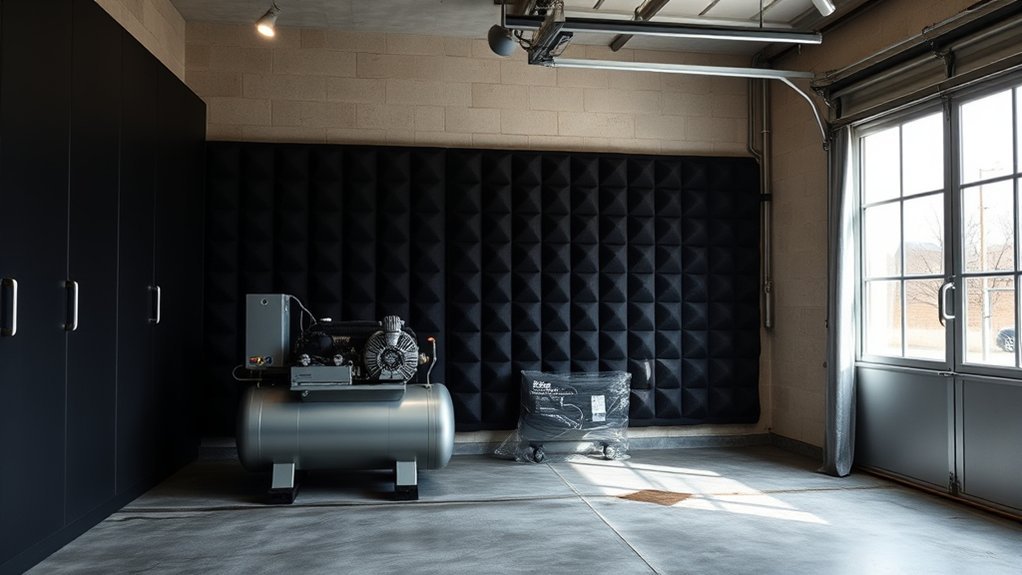
Effective soundproofing of your garage air compressor involves selecting appropriate enclosure materials and optimizing their design to absorb and block noise transmission. Addressing vibration through damping techniques further minimizes sound propagation and structural resonance. Implementing these strategies enhances noise reduction while maintaining compressor functionality.
Enclosure Materials and Design
Selecting appropriate enclosure materials and designing them effectively are essential steps in minimizing compressor noise. To optimize sound absorption, we focus on materials with high acoustic damping properties, such as dense mineral wool or acoustic panels. Proper design involves creating a sealed environment to prevent sound leakage and incorporating airflow considerations.
- Use dense, sound-dampening materials like MDF or concrete for the enclosure walls.
- Install acoustic panels or foam lining inside to absorb reflected sound waves.
- Incorporate venting solutions with sound baffles to allow airflow while reducing noise escape.
- Ensure tight sealing of all joints and access points to prevent sound leaks.
Vibration and Sound Dampening
Vibration control is essential for reducing overall noise levels from a garage air compressor, as vibrations can transmit sound through structural elements and amplify noise. Effective vibration isolation involves mounting the compressor on anti-vibration pads or isolating platforms to absorb oscillations. These solutions minimize the transfer of vibrations to surrounding structures, decreasing noise propagation. Additionally, installing acoustic panels around the compressor can further dampen airborne sound. Acoustic panels absorb sound waves, preventing reflection and reducing reverberation within the garage. Combining vibration isolation with strategic placement of acoustic panels creates a detailed soundproofing approach. This dual strategy not only lowers the perceived noise but also enhances the overall acoustic environment, making the space quieter and more comfortable for users.
Choosing Quieter Air Compressor Models
How can we identify air compressor models that operate more quietly without sacrificing performance? The key is evaluating the noise level comparison alongside compressor size options. When selecting a quieter model, consider these factors:
Choosing quieter air compressors involves balancing noise levels, size, and performance features.
- Decibel ratings: Look for models with lower dB ratings; typically, under 70 dB offers a significant noise reduction.
- Compressor type: Rotary screw and scroll compressors generally produce less noise than reciprocating types.
- Size options: Smaller compressors tend to operate more quietly, but ensure they meet your airflow requirements.
- Design features: Enclosed or sound-attenuated cabinets can further reduce noise output without impacting performance.
DIY Soundproofing Solutions for Your Garage
To effectively reduce noise from your garage air compressor, implementing DIY soundproofing strategies can make a substantial difference. Enhancing garage insulation minimizes sound transmission, while installing acoustic panels absorbs airborne noise. Applying soundproofing materials directly to walls and ceilings reduces vibration and echoes. Sealing gaps around doors and windows prevents sound leaks, optimizing overall noise control.
| Material | Application Area | Purpose |
|---|---|---|
| Garage insulation | Walls and ceiling | Reduce sound transmission |
| Acoustic panels | Interior walls | Absorb airborne noise |
| Sealant | Gaps and joints | Prevent sound leaks |
These measures, when combined, create an effective sound barrier, substantially diminishing compressor noise.
Maintenance Tips to Reduce Compressor Noise
Regular maintenance of your air compressor is essential for minimizing operational noise. Proper upkeep ensures efficient function and reduces vibration-related sound.
- Air filter maintenance: Regularly inspect and replace filters to prevent debris buildup, which forces the compressor to work harder and generate more noise.
- Lubrication techniques: Use appropriate lubricants as specified by the manufacturer, ensuring moving parts operate smoothly, reducing friction and noise.
- Tighten connections: Check and secure all bolts, fittings, and hoses to minimize vibrations that contribute to sound levels.
- Drain moisture: Regularly drain condensate from tanks, as accumulated moisture can cause internal components to rattle or seize, increasing noise.
Consistent application of these maintenance techniques optimizes compressor performance and sound levels.
When to Consider Professional Noise Reduction Services
While routine maintenance can greatly reduce compressor noise, there are circumstances when professional noise reduction services become necessary. If noise levels persist despite proper maintenance, a thorough noise assessment should be conducted by specialists to identify structural or mechanical sources of excessive sound. When the noise exceeds acceptable thresholds or causes disruption, professional installation of soundproofing measures is recommended. These experts can evaluate the compressor’s placement, enclosure integrity, and vibration isolation to develop targeted solutions. In cases where standard modifications are insufficient, advanced techniques such as acoustic insulation or vibration damping systems may be required. Engaging professionals ensures that noise reduction is effective, durable, and compliant with safety standards, making it a prudent choice for persistent or severe noise issues.
Frequently Asked Questions
How Does Compressor Size Affect Noise Levels?
Larger compressors typically produce more noise, requiring enhanced compressor soundproofing and noise absorption measures. Smaller units generate less sound naturally, but effective noise reduction still depends on targeted soundproofing strategies to minimize environmental impact.
Are Electric Compressors Quieter Than Gas-Powered Ones?
Electric compressors are generally quieter, producing about 70% less noise than gas-powered models, thanks to effective noise absorption and soundproof materials. These features considerably reduce operational sound, making electric units ideal for quieter garage environments.
What Are the Best Locations for Installing Compressors?
We recommend installing compressors in well-ventilated, insulated areas following installation guidelines that include acoustic treatment, such as soundproof panels, to minimize noise transmission. Proper placement guarantees efficiency and reduces disturbance to surrounding spaces.
Can Vibration Isolation Reduce Compressor Noise?
Vibration isolation acts like a shock absorber, reducing noise through vibration dampening. Using isolation pads beneath the compressor minimizes vibrations transferred to surroundings, effectively decreasing overall noise levels and creating a quieter, more comfortable workspace.
Do Noise-Reducing Mufflers Impact Compressor Performance?
Noise-reducing mufflers, when combined with soundproof barriers or acoustic enclosures, generally don’t impact compressor performance substantially. They effectively lower noise levels without restricting airflow, ensuring ideal operation while maintaining quieter operation in your garage.
Conclusion
In tackling garage air compressor noise, we focus on understanding sources, selecting quiet models, implementing DIY soundproofing, and maintaining regularly. By addressing vibrations, sealing gaps, and choosing appropriate equipment, we diminish noise effectively. Consistent upkeep ensures quieter operation over time. Ultimately, combining these strategies allows us to create a more comfortable, safer, and efficient workspace—reducing noise, enhancing productivity, and improving overall environmental quality.