Ad Blocker Detected
Our website is made possible by displaying online advertisements to our visitors. Please consider supporting us by disabling your ad blocker.
Imagine a finely tuned engine that, with proper care, can run for years; neglect it, and its lifespan sharply declines. Similarly, the longevity of an oil-free air compressor hinges on multiple interrelated factors—mechanical wear, maintenance, and operating conditions—that determine how long it will serve effectively. Understanding these variables is essential for optimizing performance and avoiding premature failure. Let’s explore the key elements that influence its lifespan and how you can extend its service life.
Key Takeaways
- Proper maintenance and regular inspections significantly extend the lifespan of oil-free air compressors.
- Operating conditions like temperature, humidity, and dust impact compressor durability.
- Excessive noise and declining performance indicate wear and potential end-of-life.
- Timely replacement of worn parts prevents costly failures and maintains efficiency.
- Modern, well-maintained units typically last between 10 to 20 years.
What Factors Affect the Lifespan of Oil-Free Air Compressors
Several key factors directly influence the lifespan of oil-free air compressors, primarily related to operational conditions and maintenance practices. Compressor noise levels often reflect mechanical integrity; excessive noise may indicate wear or imbalance, leading to premature failure. Additionally, lubrication requirements are critical, even in oil-free models, which rely on specialized coatings or minimal lubrication to prevent component wear. Failure to monitor and maintain proper lubrication can accelerate parts degradation, increasing downtime and reducing lifespan. Proper airflow management and vibration control also impact noise and mechanical stress, further affecting durability. Regular inspections, timely component replacements, and adherence to manufacturer guidelines for noise mitigation and lubrication are essential to extend compressor longevity and guarantee reliable operation over time.
How Usage Patterns Impact Compressor Durability
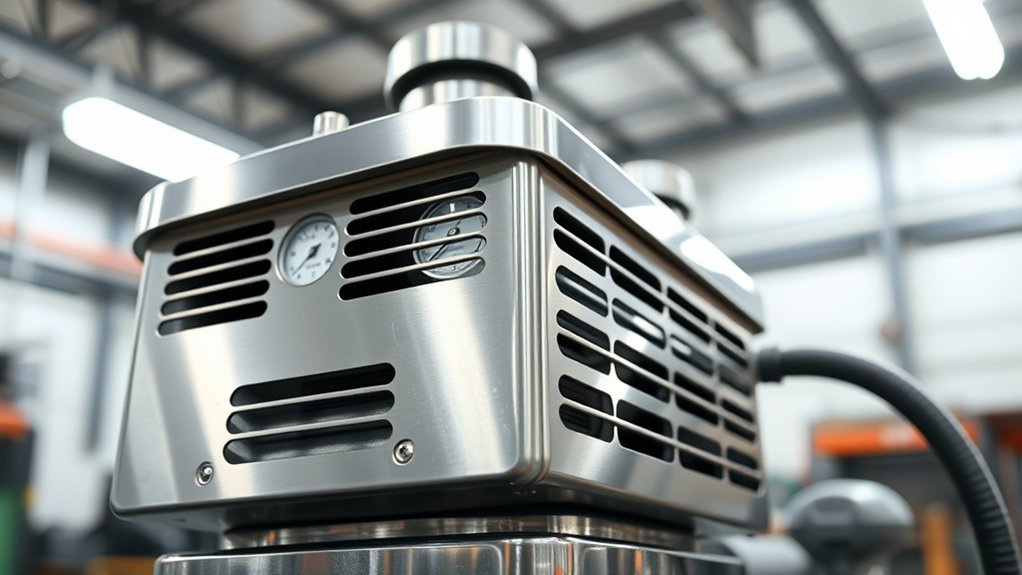
Our analysis shows that operating frequency directly influences compressor wear, with frequent cycles accelerating component fatigue. Consistent maintenance practices, such as timely filter replacements and system checks, are essential to mitigate deterioration. Understanding these patterns enables us to optimize usage and extend the compressor’s operational lifespan.
Operating Frequency Effects
The frequency at which an oil-free air compressor operates considerably influences its lifespan, as higher usage rates can accelerate wear and thermal stress on critical components. Increased operating frequency demands more frequent cycles, which may lead to quicker deterioration of seals, pistons, and valves. To maximize efficiency, it’s essential to balance operational load with compressor capacity, preventing unnecessary strain. Frequent operation also impacts noise levels, making noise reduction strategies essential for maintaining a suitable working environment and prolonging equipment life. By controlling operating frequency and implementing efficiency optimization measures, we can reduce thermal and mechanical stress, ultimately extending the compressor’s durability. Consistent operation at suitable frequencies minimizes excessive wear and supports sustained performance over time.
Proper Maintenance Practices
How do usage patterns directly influence the longevity of an oil-free air compressor? Consistent operation without proper maintenance can lead to increased wear and reduced lifespan. Adhering to lubrication requirements is vital; neglecting lubrication can cause component friction and overheating. Regularly inspecting and maintaining lubrication levels ensures peak performance and prevents premature failure. Additionally, implementing noise reduction techniques, such as installing vibration isolators or sound enclosures, not only minimizes noise pollution but also reduces mechanical stress on internal parts. Proper maintenance practices—like scheduled inspections, timely replacement of filters, and monitoring operating parameters—are essential for sustaining compressor durability. These measures help mitigate the adverse effects of high usage intensity, ultimately extending the service life and maintaining efficiency.
The Role of Proper Maintenance in Extending Compressor Life
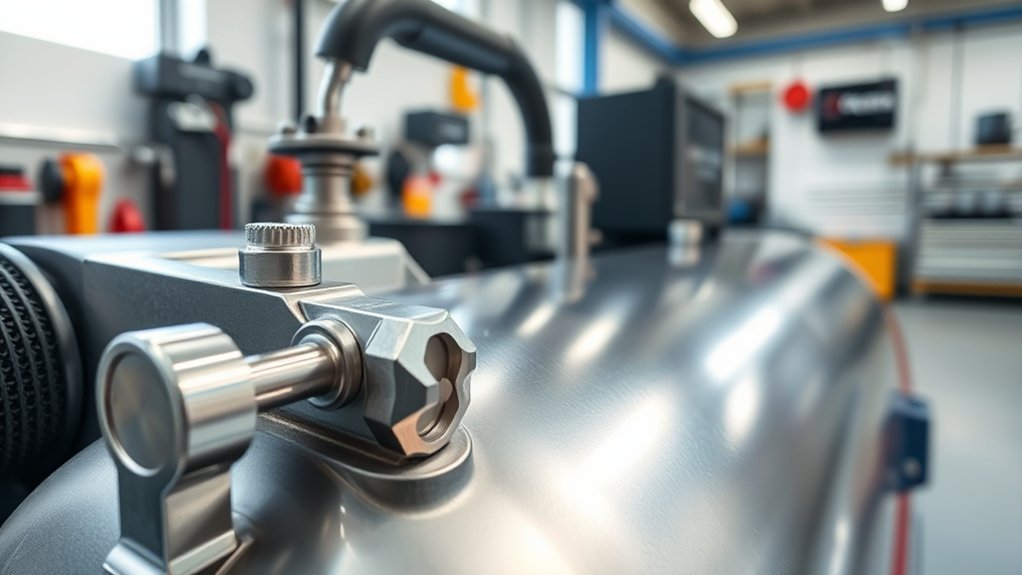
Regular inspection and cleaning are essential to identify potential issues before they escalate, ensuring peak performance. Timely replacement of worn or damaged parts prevents system failures and maintains efficiency. Implementing a disciplined maintenance schedule directly correlates with extending the compressor’s operational lifespan.
Regular Inspection and Cleaning
Routine inspection and cleaning are critical components of maintaining an oil-free air compressor’s longevity, as they help identify and address potential issues before they escalate. Proper maintenance guarantees ideal operation through:
- Regularly checking lubrication techniques to prevent component wear and ensure smooth airflow.
- Cleaning filters and cooling elements to maintain efficient heat dissipation and prevent overheating.
- Monitoring for unusual noise levels, enabling early noise reduction interventions that indicate underlying problems.
- Inspecting seals and connections to prevent leaks that could compromise performance or cause damage.
Timely Part Replacement
Since components naturally wear over time, timely part replacement is essential for maintaining an oil-free air compressor’s peak performance and extending its lifespan. Proper adherence to lubrication requirements ensures that moving parts operate smoothly, reducing friction-related deterioration. Replacing worn components proactively prevents breakdowns and maintains system efficiency. Additionally, timely part replacement supports noise reduction techniques; worn parts often generate excessive noise, indicating underlying issues. By addressing these early, we minimize operational disruptions and prolong service life. Regular monitoring of critical components—such as valves, seals, and filters—allows us to identify degradation before it impacts performance. Ultimately, strategic, timely replacements safeguard the compressor’s reliability, maximize energy consumption, and ensure consistent air quality, reinforcing the importance of diligent maintenance practices.
Operating Conditions That Influence Compressor Longevity
Operating conditions play a critical role in determining the lifespan of an oil-free air compressor. Environmental factors, such as temperature, humidity, and dust levels, directly affect component wear and efficiency. Proper operator training is essential to guarantee correct startup, shutdown, and maintenance procedures, minimizing operational errors. Additionally, we should consider:
- Maintaining ideal ambient temperatures to prevent overheating.
- Controlling humidity to avoid corrosion and moisture-related issues.
- Ensuring a clean environment to reduce particulate contamination.
- Providing thorough operator training to promote proper handling and routine checks.
Signs Your Oil-Free Air Compressor Is Near the End of Its Life
As an oil-free air compressor approaches the end of its service life, several key indicators emerge that signal the need for inspection or replacement. Deteriorating oil quality often results in increased wear and reduced efficiency, leading to inconsistent airflow and potential system failure. Additionally, rising noise levels serve as a practical diagnostic; abnormal or louder sounds typically indicate internal component stress or damage. These acoustic changes reflect mechanical degradation that could compromise compressor reliability. Monitoring oil quality and noise levels regularly allows us to detect early signs of impending failure, enabling proactive maintenance. Recognizing these indicators helps prevent costly downtime and extends the overall lifespan by addressing issues before they escalate.
Tips to Maximize the Performance and Durability of Your Compressor
To maximize the performance and extend the durability of your oil-free air compressor, consistent maintenance and proper usage are essential. Focus on enhancing energy efficiency and noise reduction through these strategies:
- Regularly inspect and replace filters to guarantee optimal airflow, reducing energy consumption.
- Maintain proper cooling by cleaning cooling fins and ensuring adequate ventilation, which prevents overheating and prolongs component life.
- Use vibration dampers to minimize noise levels, enhancing operational stability and reducing wear.
- Monitor operating pressure and avoid running the compressor at excessive loads, which conserves energy and reduces mechanical stress.
Implementing these practices helps sustain efficiency, minimizes wear, and contributes to a longer, more reliable compressor lifespan.
When to Consider Replacing Your Oil-Free Air Compressor
Knowing when to replace your oil-free air compressor is vital for maintaining peak performance and minimizing operational costs. Over time, wear and tear can reduce energy efficiency, increasing energy consumption and operational expenses. Additionally, declining compressor efficiency can heighten environmental impact by producing higher emissions and waste. When repair costs outweigh replacement benefits or performance metrics no longer meet process requirements, replacement becomes necessary. Modern units often feature improved energy efficiency, reducing both energy costs and environmental footprint. Monitoring factors like increased noise levels, persistent mechanical issues, and declining airflow helps determine if a replacement is due. Ultimately, timely replacement ensures continued operational reliability, aligns with sustainability goals, and minimizes environmental impact while maximizing energy efficiency.
Frequently Asked Questions
How Long Do Oil-Free Air Compressors Typically Last?
Oil-free air compressors typically last 10,000 to 20,000 hours, influenced by lubrication requirements and noise levels. Regular maintenance and monitoring guarantee peak performance, extending lifespan and minimizing noise-related issues for reliable, efficient operation.
Can Environmental Factors Shorten Compressor Lifespan?
Could environmental impact and corrosion resistance influence lifespan? Yes, harsh conditions and exposure to moisture or chemicals can accelerate wear, reducing longevity. Protecting compressors from these factors helps maintain ideal performance and extends operational life.
What Is the Average Maintenance Cost for an Oil-Free Compressor?
We find the average maintenance cost for an oil-free compressor varies, typically around $150-$300 annually, considering lubrication requirements and noise level management, which are essential for ideal performance and longevity in diverse operational environments.
Do Different Brands Have Varying Lifespan Expectations?
Different brands do have varying lifespan expectations, primarily influenced by brand reliability and warranty coverage. We analyze these factors to assess durability, noting that reputable brands with extensive warranties often offer longer-lasting compressors with better performance consistency.
How Does Compressor Size Affect Its Durability?
Bigger isn’t always better; compressor capacity directly influences durability factors, as larger units handle more workload but may experience increased wear and tear. We find that size impacts longevity, so selecting appropriately sized equipment optimizes durability and performance.
Conclusion
Just like a finely tuned machine, an oil-free air compressor’s lifespan depends on diligent care and proper use. We’ve seen units run smoothly for years when maintained regularly and operated within ideal conditions—much like a well-orchestrated symphony. Ignoring signs of wear or neglecting maintenance can accelerate failure, akin to a car breaking down on the highway. By staying proactive, we guarantee our compressor’s performance endures, maximizing its value and preventing costly downtime.