Ad Blocker Detected
Our website is made possible by displaying online advertisements to our visitors. Please consider supporting us by disabling your ad blocker.
Oil-free air compressors are often chosen for their ability to produce cleaner, contaminant-free air, which is vital for sensitive industries. While they promise reduced maintenance and operational downtime, they also present unique challenges, such as higher noise levels and potentially shorter lifespan due to material wear. Understanding these trade-offs is essential for making an informed decision—yet, it’s important to weigh their advantages against possible drawbacks before selecting the right solution for your needs.
Key Takeaways
- Oil-free compressors produce cleaner air, reducing contamination risks in sensitive applications like food, pharmaceuticals, and electronics.
- They require less maintenance due to the absence of oil-related components, lowering operational costs over time.
- Typically generate higher noise levels, which may impact workplace comfort and safety.
- May have a shorter lifespan and potentially lower durability compared to oil-lubricated models.
- Their higher initial cost is often offset by benefits like improved air quality and reduced maintenance needs.
What Are Oil-Free Air Compressors and How Do They Work?
Have you ever wondered how oil-free air compressors operate without the use of lubricating oil? They rely on advanced mechanical design, such as coated or ceramic pistons, to minimize lubrication challenges. These components are engineered to reduce friction and wear without traditional oil, which can be challenging to maintain consistently. Because of this design, oil-free compressors generally produce lower noise levels compared to lubricated models, as there’s no oil splash or pump noise to amplify sound. This absence of oil also decreases the risk of contamination, making them ideal for sensitive environments. However, the lack of lubrication can lead to increased wear over time, so understanding these operational nuances helps in evaluating their suitability for specific applications.
The Main Benefits of Choosing Oil-Free Air Compressors
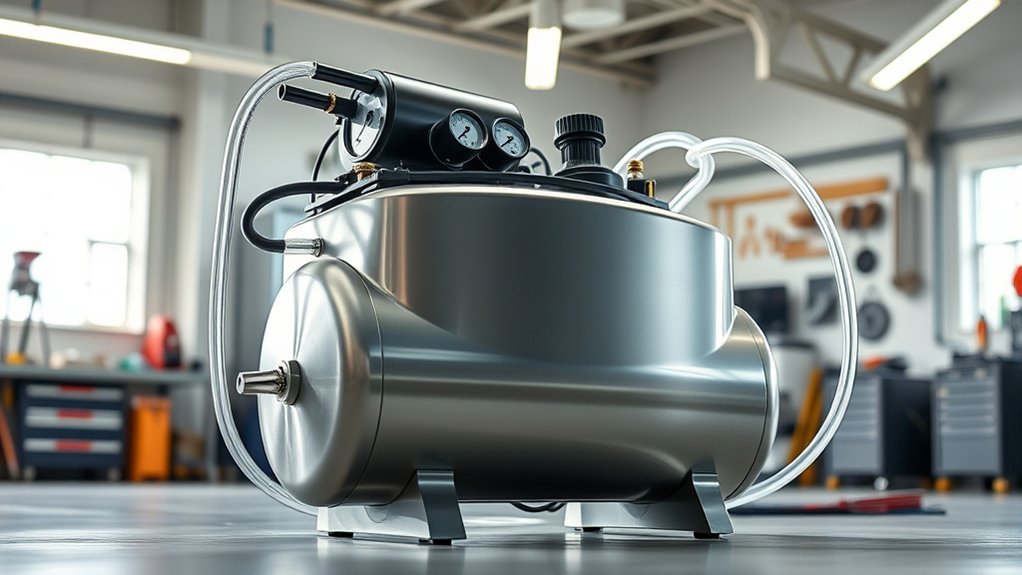
Choosing oil-free air compressors offers significant advantages in air quality, as they eliminate oil emissions that can compromise cleanliness. They also require less maintenance due to the absence of oil-related components, reducing operational downtime and costs. Additionally, they minimize oil contamination risks, ensuring safer use in sensitive applications.
Cleaner Air Quality
Is the quality of compressed air a crucial factor in your operations? Oil-free compressors deliver particularly cleaner air quality by eliminating oil aerosols that can contaminate products or processes. This reduction in airborne contaminants guarantees higher purity standards, especially essential in industries like pharmaceuticals, food processing, and electronics. Additionally, oil-free systems produce less compressor noise, minimizing environmental impact and enhancing workplace safety.
Key benefits include:
- Consistent air purity, reducing product defects
- Lower risk of oil contamination in sensitive applications
- Reduced maintenance from oil-related residue buildup
- Improved operational safety by limiting airborne pollutants
Lower Maintenance Needs
Because oil-free air compressors lack the complex oil lubrication systems found in traditional models, they inherently require less maintenance over their operational lifespan. This reduction in maintenance translates into improved cost efficiency, as there’s no need for regular oil changes, filter replacements, or lubrication inspections. Additionally, fewer moving parts and simplified design contribute to decreased downtime and lower servicing costs. The elimination of oil-related components also results in less mechanical noise, contributing to noise reduction during operation. Overall, these features make oil-free compressors more reliable and easier to maintain, which benefits users seeking efficient performance with minimal upkeep. The combination of lower maintenance requirements and noise reduction underscores the operational advantages of choosing oil-free systems for various applications.
Reduced Oil Contamination
The absence of oil in these compressors directly reduces the risk of oil contamination in the compressed air output. This benefit is vital for applications requiring high purity, such as medical or food industries, where oil contamination can compromise product quality and safety. Additionally, eliminating oil reduces environmental impact, as there’s no need for oil disposal or filtration systems to remove residual oil.
Key advantages include:
- Enhanced air purity—minimizes the risk of oil contamination in sensitive processes.
- Reduced maintenance costs—less oil-related wear and fewer filter replacements.
- Lower environmental impact—avoids oil spills and disposal issues.
- Improved operational safety—eliminates oil-related fire hazards and leaks.
Potential Drawbacks and Limitations of Oil-Free Compressors
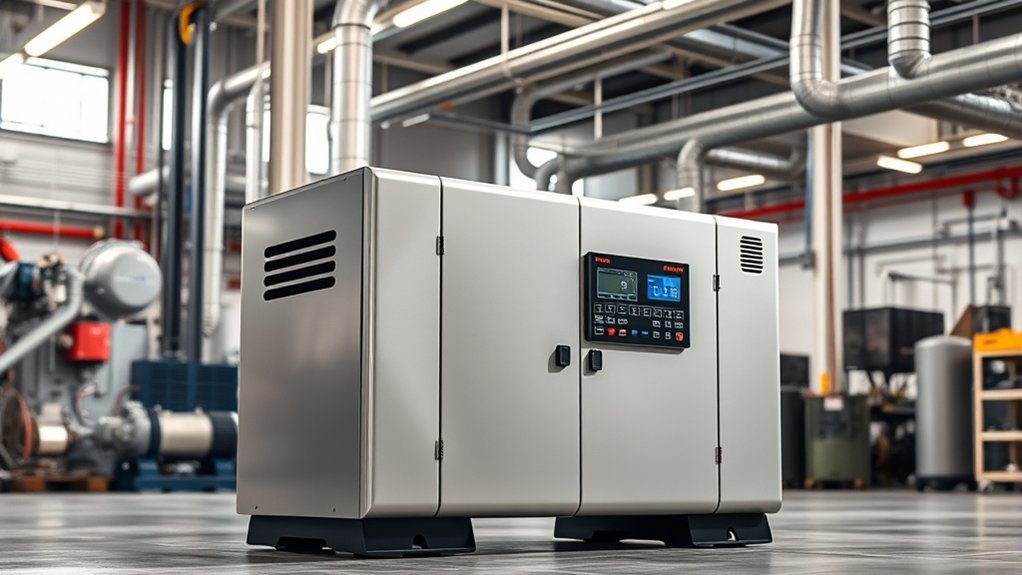
While oil-free air compressors offer significant advantages, they also present certain drawbacks that merit careful consideration. One key limitation is their potential environmental impact; without oil lubrication, they often rely on synthetic or alternative materials that may generate more waste or require more frequent maintenance. Additionally, oil-free models tend to produce higher noise levels due to their design, which can be disruptive in sensitive work environments. Although they eliminate oil contamination risks, the trade-off includes increased operational noise, which can affect worker comfort and safety. Moreover, these compressors may have reduced durability and a shorter lifespan compared to oil-lubricated counterparts, leading to higher long-term costs. Overall, understanding these limitations helps in making informed decisions about their suitability for specific applications.
How to Decide If an Oil-Free Air Compressor Is Right for You
Determining whether an oil-free air compressor is suitable for your needs requires careful assessment of your specific application requirements and operational environment. Consider these factors:
- Cost considerations: Oil-free models often have higher initial costs but lower maintenance expenses, impacting your long-term budget.
- Noise levels: If your workspace demands low noise levels, oil-free compressors typically operate more quietly, making them preferable.
- Air purity needs: For applications requiring contaminant-free air, oil-free compressors eliminate oil carryover, ensuring cleaner output.
- Operational environment: Environments sensitive to oil contamination benefit from oil-free units, especially in food, pharmaceutical, or electronics industries.
Comparing Oil-Free and Oil-Lubricated Compressors: Which Is Better?
Choosing between oil-free and oil-lubricated compressors depends on analyzing their respective advantages and limitations in relation to your specific operational demands. An efficiency comparison reveals that oil-lubricated models generally operate more efficiently over long periods due to reduced internal friction, making them suitable for continuous use. Conversely, oil-free compressors often have higher efficiency at lower loads, offering easier maintenance and quicker startup times. Noise levels tend to be lower in oil-free models because they lack the internal lubrication components that generate additional sound. However, oil-lubricated compressors typically produce more noise, which can impact work environments. Ultimately, your choice hinges on balancing efficiency needs with noise considerations and operational frequency to determine which type aligns best with your application.
Maintenance and Longevity: What to Expect With Oil-Free Compressors
Maintenance requirements for oil-free compressors are generally simpler and less frequent compared to their oil-lubricated counterparts. This reduction stems from fewer lubrication challenges, minimizing the risk of oil contamination and component wear. However, this simplicity doesn’t eliminate maintenance needs; proper upkeep is essential for longevity.
Oil-free compressors require less maintenance but still need regular inspections to ensure optimal performance and durability.
Key considerations include:
- Regular inspection of pistons and cylinders to detect early signs of wear.
- Monitoring for dust or debris buildup that can accelerate component deterioration.
- Ensuring that seals and valves remain functional to prevent leaks and maintain efficiency.
- Scheduled component replacements based on operational hours to mitigate wear-related failures.
While oil-free units tend to have a longer service life, neglecting these maintenance steps can compromise longevity and performance, especially in demanding applications.
Common Use Cases and Industries That Benefit From Oil-Free Technology
Oil-free air compressors are particularly well-suited for industries and applications where air purity and contamination control are critical. In industrial applications, they are essential for manufacturing processes requiring clean, oil-free air to prevent product contamination and ensure compliance with safety standards. Medical environments benefit greatly, as oil-free compressors provide sterile, contaminant-free air crucial for patient care, respiratory devices, and laboratory testing. These compressors eliminate the risk of oil breakdowns contaminating sensitive environments, reducing maintenance concerns and increasing operational reliability. Additionally, food processing industries rely on oil-free technology to maintain hygiene standards. Overall, oil-free compressors serve sectors demanding high-quality, contaminant-free air, making them indispensable for applications where purity and precision are non-negotiable.
Frequently Asked Questions
Are Oil-Free Air Compressors More Energy-Efficient Than Oil-Lubricated Ones?
Oil-free air compressors generally offer comparable energy savings to oil-lubricated models but often have higher maintenance costs due to their specialized components. We analyze efficiency based on operational costs, considering the trade-offs between energy use and ongoing maintenance expenses.
How Noisy Are Oil-Free Air Compressors During Operation?
We find oil-free air compressors generally produce moderate noise levels, typically between 60-80 dB, which can be further reduced with effective sound insulation. Their operation remains relatively quieter compared to some oil-lubricated models.
Can Oil-Free Compressors Handle High-Pressure Applications?
Oil-free compressors generally handle high-pressure applications well, offering portability advantages and lower maintenance costs. However, their durability under sustained high-pressure conditions varies, so evaluating specific models’ pressure ratings is essential for reliable, high-demand use.
Are There Specific Brands Known for Durable Oil-Free Compressors?
We’ve found that brands like Quincy, Ingersoll Rand, and Atlas Copco are renowned for durable oil-free compressors, backed by strong reputation and manageable maintenance costs. Their reliability makes them ideal for continuous, high-demand applications.
What Are the Environmental Impacts of Oil-Free Versus Oil-Lubricated Compressors?
Oil-free compressors generally produce fewer environmental emissions and eliminate concerns about oil disposal, reducing pollution and waste management issues. However, their energy efficiency varies, so we must analyze operational impacts to determine overall environmental benefits.
Conclusion
While oil-free compressors promise cleaner air and lower contamination risks, their higher noise levels and potentially shorter lifespan remind us that nothing’s perfect. We must weigh the benefits against the drawbacks, especially taking into account initial costs and environmental impact. Ultimately, choosing an oil-free system isn’t just about purity; it’s about understanding the trade-offs. After all, in our pursuit of perfection, even the cleanest air might come with a little noise—and that’s something to consider.