Ad Blocker Detected
Our website is made possible by displaying online advertisements to our visitors. Please consider supporting us by disabling your ad blocker.
Imagine a rotary screw compressor operating smoothly within a factory’s confines, converting electrical energy into compressed air with precision. Yet, beneath this efficiency lies a complex interplay of factors—lubrication, vibration, noise, and control strategies—that determine its true energy performance. Understanding these elements is essential to optimizing operation and avoiding costly inefficiencies. As we explore the intricacies of compressor efficiency, you’ll see how strategic adjustments can make a significant difference—if we identify where to focus.
Key Takeaways
- Proper lubrication reduces internal friction, heat, and energy consumption in rotary screw compressors.
- Variable speed drives optimize energy use by adjusting output based on demand.
- Regular vibration and noise analysis detect mechanical issues early, preventing energy waste.
- Maintaining optimal operating conditions (temperature, pressure) enhances compressor efficiency.
- Continuous monitoring with sensors and data analytics ensures sustained energy savings and system performance.
How Do Rotary Screw Compressors Consume Energy?
Rotary screw compressors consume energy primarily through the compression process, which involves converting intake air into high-pressure air by reducing its volume. This process requires continuous mechanical work, where efficiency hinges on factors like lubrication enhancement, which minimizes internal friction and heat loss. Proper lubrication ensures smoother rotor operation, reducing energy consumption and extending component life. Additionally, noise reduction measures play a role in maximizing energy use, as excessive noise often indicates mechanical inefficiencies that can lead to energy wastage. By maintaining peak lubrication and addressing noise sources, we can improve the compressor’s overall energy efficiency. These technical adjustments help guarantee the compressor operates smoothly, with less energy lost to friction, vibration, or unnecessary mechanical stress.
Key Factors Affecting Compressor Energy Efficiency

Several key factors influence the energy efficiency of screw compressors, and understanding these elements is crucial for enhancing performance. Critical aspects include lubrication optimization, which reduces internal friction and wear, and noise reduction, indicating smoother operation and less energy loss. Additionally, control strategies like variable speed drives adapt output to demand, boosting efficiency. The table below highlights essential factors:
| Factor | Impact | Optimization Approach |
|---|---|---|
| Lubrication | Minimizes friction, extends component life | Use high-quality, properly maintained lubrication |
| Noise Reduction | Reflects operational stability | Implement sound barriers and vibration dampers |
| Control Systems | Adjusts energy use to demand | Incorporate advanced control algorithms |
| Operating Conditions | Affects overall efficiency | Maintain optimal temperature and pressure |
Best Practices for Optimizing Compressor Performance
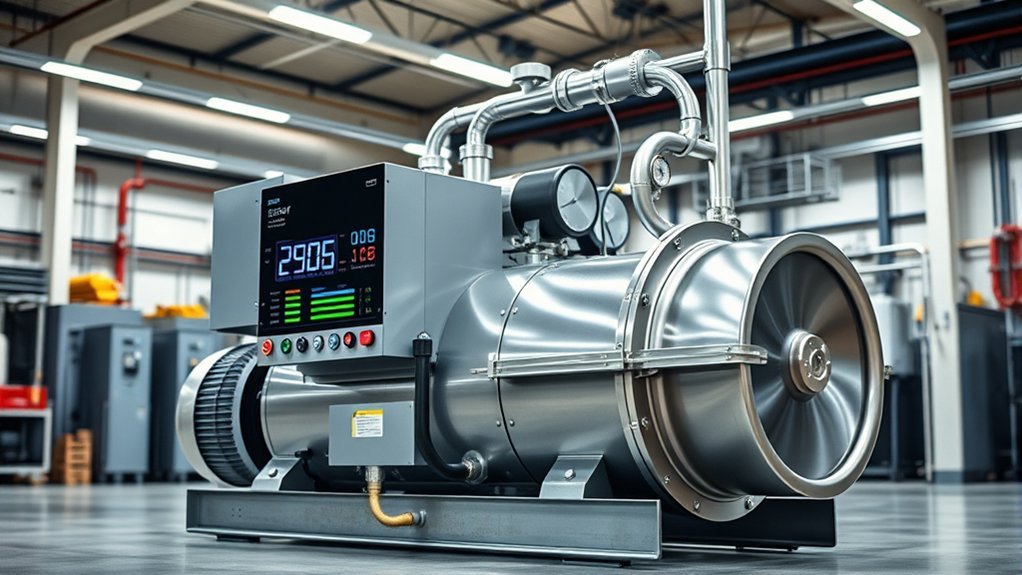
Optimizing compressor performance requires implementing targeted strategies that enhance operational efficiency and reliability. Vibration analysis plays a critical role, enabling early detection of misalignment, imbalance, or bearing wear, which can lead to energy loss or component failure if unaddressed. Regular vibration monitoring allows us to diagnose issues proactively, minimizing downtime. Simultaneously, lubrication optimization ensures that moving parts operate smoothly, reducing friction and wear that can increase power consumption. Using the correct lubricant type, maintaining proper levels, and scheduling routine oil analysis prevent contamination and degradation. Together, vibration analysis and lubrication optimization form a thorough approach to performance enhancement, reducing energy consumption and extending equipment lifespan. These practices foster a reliable, efficient compressed air system aligned with best energy management standards.
How to Monitor and Measure Energy Savings
To effectively evaluate energy savings from compressor optimization efforts, we must establish accurate measurement and monitoring protocols. Implementing innovative technologies, such as advanced sensors and real-time data analytics, allows for precise tracking of energy consumption patterns. Regular energy auditing provides a thorough assessment of system performance, identifying inefficiencies and quantifying improvements. By integrating these tools, we can establish baseline metrics and monitor variations attributable to optimization initiatives. Accurate data collection enables us to analyze operational efficiency and verify actual savings, rather than relying on estimations. Continuous monitoring ensures sustained performance and highlights areas for further improvement. Ultimately, leveraging innovative technologies and rigorous energy auditing empowers us to make data-driven decisions, maximizing the ROI of energy efficiency measures.
Common Mistakes That Reduce Energy Efficiency
Even small mistakes in operating and maintaining rotary screw air compressors can considerably undermine energy efficiency. Overlooking vibration analysis can lead to unnoticed misalignments or loosened components, causing increased mechanical resistance and energy waste. Similarly, neglecting noise reduction strategies often signals underlying issues like imbalance or bearing wear, which elevate operational load. These conditions force the compressor to work harder, consuming more energy without added productivity. Failing to regularly assess vibration levels and noise signatures prevents early detection of inefficiencies, allowing problems to escalate. By prioritizing vibration analysis and noise reduction, we can identify subtle mechanical issues before they impact performance. Addressing these mistakes ensures smoother operation, minimizes energy loss, and maintains peak compressor efficiency.
The Role of Maintenance and Upgrades in Saving Energy
How significant is the impact of proper maintenance and strategic upgrades on the energy efficiency of rotary screw air compressors? It’s substantial, directly affecting operational costs and system longevity. Regular lubrication optimization reduces friction losses, ensuring smoother compressor operation. Vibration analysis detects imbalance or wear early, preventing energy-draining inefficiencies. Upgrades like variable speed drives adapt energy consumption to demand, optimizing performance. Maintenance practices should include:
- Regular lubrication optimization
- Vibration analysis to identify anomalies
- Seal and filter replacements
- Cooling system inspections
- Control system updates
Implementing these measures ensures the compressor runs at peak efficiency, minimizing energy waste and extending equipment lifespan. Maintenance and upgrades are integral, not optional, in maintaining optimal energy performance.
Choosing Energy-Efficient Rotary Screw Compressor Systems
What factors should we consider when selecting an energy-efficient rotary screw compressor system? First, lubrication techniques are critical, as they influence both operational efficiency and component longevity. Opting for systems with advanced, low-friction lubrication reduces energy consumption and minimizes maintenance needs. Noise reduction is another key consideration; quieter models often feature optimized design elements that decrease sound emissions, improving workplace safety and comfort. We should also assess the compressor’s variable speed drive capability, which adjusts power output based on demand, considerably enhancing energy savings. Additionally, selecting systems with intelligent controls allows precise operation monitoring and further reduces waste. Ultimately, an in-depth evaluation of lubrication strategies, noise mitigation features, and control options ensures we choose a compressor system that maximizes energy efficiency without compromising performance.
Frequently Asked Questions
How Do Compressor Load Variations Impact Overall Energy Consumption?
Load fluctuations cause variations in power stability, increasing energy consumption during peak demands and underutilization periods. We analyze these impacts to optimize compressor operation, reducing energy waste and maintaining consistent efficiency despite load variations.
What Is the Typical Lifespan of Energy-Efficient Rotary Screw Compressors?
Like a dependable engine, energy-efficient rotary screw compressors typically last 10-20 years with proper lubrication maintenance and low compressor noise levels. Regular upkeep guarantees ideal performance and prolongs their operational lifespan, maximizing your investment’s value.
How Do Ambient Temperature and Humidity Affect Compressor Efficiency?
Ambient conditions greatly influence compressor efficiency; high temperatures cause overheating, while humidity effects lead to moisture buildup, reducing performance. Maintaining ideal ambient temperature and managing humidity levels are essential for ensuring consistent, energy-efficient compressor operation.
Can Variable Speed Drives Significantly Improve Energy Savings?
Like adjusting a car’s speed to save fuel, variable speed drives optimize compressor operation, providing significant energy savings by matching output to demand, reducing waste, and improving efficiency in fluctuating load conditions.
What Are the Environmental Benefits of Upgrading to Energy-Efficient Compressors?
Upgrading to energy-efficient compressors promotes renewable energy use and substantially reduces emissions, helping industries lower their carbon footprint. These environmental benefits support sustainable practices and contribute to global efforts in combating climate change effectively.
Conclusion
In essence, optimizing rotary screw compressor energy efficiency is akin to tuning a fine instrument—every adjustment matters. By diligently monitoring performance, embracing preventive maintenance, and implementing advanced control strategies, we can release significant savings and extend equipment lifespan. Like a well-orchestrated symphony, our proactive approach guarantees peak performance, minimizes waste, and sustains reliability—guiding us toward a future where energy efficiency isn’t just a goal but a standard.