Ad Blocker Detected
Our website is made possible by displaying online advertisements to our visitors. Please consider supporting us by disabling your ad blocker.
Like a well-orchestrated symphony, installing a single-stage air compressor demands precision and careful planning to guarantee maximum performance and safety. We recognize that proper setup affects everything from operational efficiency to longevity, which is why a methodical approach is essential. From site assessment to final checks, each step influences the compressor’s reliability. To achieve this, it’s vital to follow a structured process—one that we’ll guide you through, highlighting key considerations that could make or break your installation.
Key Takeaways
- Ensure proper site assessment, including space, ventilation, and safety considerations, before installation.
- Verify electrical supply and connections match the compressor’s voltage and amperage requirements.
- Securely mount and align the compressor, using anti-vibration pads to reduce noise and wear.
- Properly connect pneumatic lines, fittings, and safety devices, checking for leaks and proper calibration.
- Conduct thorough final checks, including safety inspections, pressure gauge calibration, and testing initial startup.
How to Prepare for Installing Your Single-Stage Air Compressor
Before beginning the installation of your single-stage air compressor, it’s crucial to conduct a thorough site assessment to guarantee peak performance and safety. This involves understanding common air compressor myths that can lead to improper setup, such as misconceptions about noise levels or efficiency. Recognizing the historical development of compressor technology helps clarify why certain design choices exist, influencing placement and ventilation needs. By analyzing environmental factors like airflow, electrical supply, and space constraints, we assure the unit operates ideal. Proper preparation minimizes future issues, enhances longevity, and guarantees safety compliance. This technical groundwork is essential for a successful installation, enabling us to address potential challenges proactively and set a foundation for reliable, efficient compressor operation.
Choosing the Right Location and Setup for Your Compressor
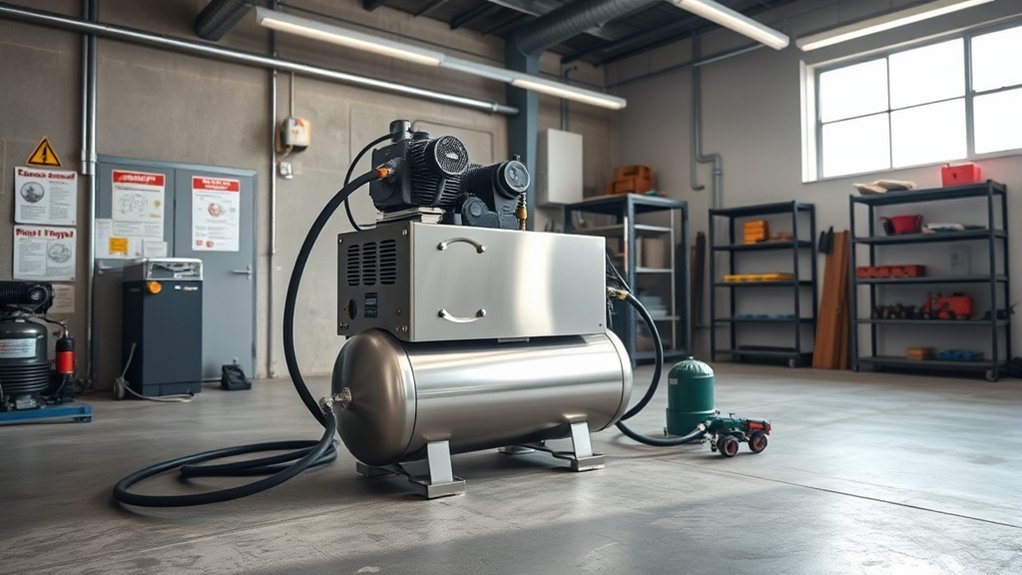
Selecting the most suitable location for your single-stage air compressor is critical to guarantee efficient operation and safety. We must consider noise reduction strategies, such as placing the unit in a sound-absorbing enclosure or away from work areas, to minimize disruption. Ventilation requirements are equally essential; adequate airflow prevents overheating and maintains peak performance. A well-ventilated space ensures heat dissipation from the motor and compressor components, reducing the risk of thermal damage. Additionally, the setup should facilitate easy access for maintenance and inspection while avoiding confined spaces that could compromise airflow. Proper placement balances noise control and ventilation needs, ensuring the compressor operates reliably, safely, and with minimal environmental impact.
How to Connect the Air Compressor to Power and Air Lines
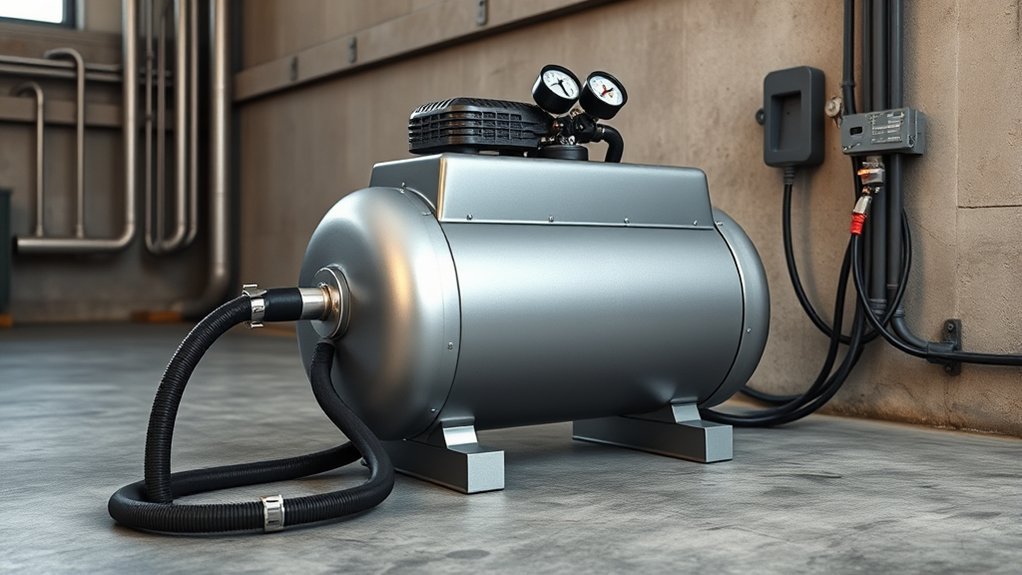
Connecting the air compressor to power and air lines requires careful attention to electrical specifications and hose routing to guarantee safety and efficiency. We need to verify that power supply requirements match the compressor’s voltage and amperage ratings, and that air lines are properly sized and secured to prevent pressure drops. By adhering to these technical standards, we can optimize performance and minimize operational risks.
Power Connection Requirements
To guarantee safe and efficient operation, proper power connection to the air compressor is essential. This involves ensuring correct electrical wiring that matches the compressor’s voltage and current specifications, preventing overloads or system failures. Using appropriately rated wiring, circuit breakers, and grounding minimizes risks associated with power surges, which can damage internal components or cause operational interruptions. It’s critical to verify that the power supply is stable and capable of handling the compressor’s startup surge, especially during initial activation. Properly installing protective devices, such as surge protectors and dedicated circuits, helps maintain consistent power flow and prevents electrical faults. Attention to these electrical wiring details ensures reliable operation, reduces downtime, and enhances the overall safety of the compressor system.
Air Line Setup Tips
Properly connecting the air compressor to both power and air lines requires careful attention to detail to guarantee safe and ideal operation. When installing air lines, use appropriately rated, corrosion-resistant tubing to maintain air quality and prevent contamination. Properly securing fittings minimizes leaks and ensures consistent pressure delivery. To optimize noise reduction, install flexible hoses and sound-dampening enclosures where feasible, reducing operational noise levels. Avoid long, convoluted runs that can cause pressure drops and air quality issues due to moisture buildup. Regularly drain moisture from the lines and install filters to maintain air purity. Confirming airtight connections and proper line routing not only preserves air quality but also enhances compressor efficiency by minimizing pressure losses and noise emissions.
Step-by-Step Guide to Installing the Compressor Components
We begin by preparing the installation area to guarantee it provides a stable, accessible workspace that minimizes vibration and allows for proper airflow. Next, we systematically connect the compressor components, verifying each connection for tightness and proper alignment to prevent leaks or malfunctions. This process requires careful attention to detail to facilitate a safe and efficient installation.
Preparing Installation Area
Establishing a clean, stable, and well-ventilated area is essential before installing a single-stage air compressor. This environment minimizes operational noise and enhances safety. To optimize noise reduction, select a location with soundproofing potential or incorporate insulating barriers. Vibration control is equally critical; choose a solid, level surface to prevent movement and structural stress. Installing anti-vibration pads or mounts beneath the compressor reduces transmitted vibrations, prolonging equipment lifespan and decreasing noise levels. Guarantee adequate space around the unit for airflow and maintenance access. Proper ventilation prevents overheating and maintains consistent performance. By carefully preparing the installation area with attention to noise and vibration mitigation, we create a more efficient, quieter, and durable setup for the compressor.
Connecting Compressor Components
How do we verify all compressor components are correctly connected to guarantee peak performance and safety? We conduct a thorough inspection to ensure all connections—electrical, pneumatic, and mechanical—adhere to manufacturer specifications. Properly secured fittings and tight connections are vital to prevent leaks and maintain efficiency. We review the alignment of the drive belt and verify the mounting stability to minimize vibrations that could increase noise. Regularly updating the maintenance schedule helps identify potential issues early, supporting noise reduction efforts. Confirming that all components are correctly linked ensures maximum operation, reduces downtime, and extends the compressor’s lifespan. This meticulous process is essential for sustaining performance, safety, and quiet operation over the unit’s service life.
Safety Tips and Best Practices During Installation
Ensuring safety during the installation of a single-stage air compressor is critical to preventing accidents and equipment damage. Proper adherence to safety protocols minimizes risks associated with hazardous materials and ensures personnel protection. Always wear appropriate personal protective equipment, including gloves, safety glasses, and hearing protection. Before commencing, verify the absence of hazardous materials in the work area and handle any chemicals or lubricants according to safety data sheets.
Key safety practices include:
- Conducting a thorough site assessment to identify potential hazards
- Ensuring all electrical connections comply with safety standards
- Using proper lifting techniques or equipment to prevent injuries
- Maintaining clear communication among team members throughout the process
Common Troubleshooting Tips for a Smooth Setup
To facilitate a smooth setup process, it’s vital that we proactively identify and address common troubleshooting issues that can arise during installation. Key areas include guaranteeing proper maintenance procedures, as neglected maintenance can cause system inefficiencies or failures. For noise reduction, confirming vibration isolation and securing components effectively minimizes operational noise and prevents mechanical issues. Troubleshooting often involves checking for air leaks, which compromise performance; sealing fittings and inspecting hoses is essential. Additionally, verifying electrical connections and motor alignment prevents startup issues. Regular maintenance procedures, such as monitoring pressure gauges and inspecting for wear, help detect potential problems early. Addressing these factors systematically promotes a stable installation environment, reduces downtime, and ensures peak compressor operation from the outset.
Final Checks and Maintenance Tips After Installation
After completing the installation process, conducting thorough final checks and establishing routine maintenance protocols become essential to sustain ideal compressor performance. Guaranteeing proper operation involves verifying connections, checking for leaks, and confirming pressure gauges are calibrated accurately. Adherence to maintenance schedules prevents unexpected failures and optimizes efficiency. Additionally, implementing troubleshooting protocols helps rapidly identify and resolve issues before they escalate. Key points include:
- Regular inspection of belts, hoses, and fittings for wear or damage
- Scheduled lubrication of moving parts to reduce friction and extend lifespan
- Monitoring oil levels and replacing oil according to manufacturer guidelines
- Periodic testing of safety valves and pressure relief devices
These steps ensure reliable operation and facilitate early detection of potential problems, ultimately maintaining system integrity and performance longevity.
Frequently Asked Questions
What Is the Average Lifespan of a Single-Stage Air Compressor?
We estimate a single-stage air compressor’s lifespan ranges from 8 to 15 years, depending on regular maintenance schedules that enhance compressor durability. Proper upkeep minimizes wear, ensuring reliable performance over its operational life.
How Often Should I Perform Maintenance on My Compressor?
Like a steady heartbeat, we recommend regular maintenance every 3-6 months, aligning with lubrication schedules to keep noise reduction ideal. Consistent checks guarantee reliable operation and extend your compressor’s lifespan through proactive care.
Can I Install a Single-Stage Compressor Outdoors?
Yes, you can install a single-stage compressor outdoors, but guarantee proper outdoor placement with weather protection. We recommend shielding from elements like rain and direct sunlight, and anchoring securely to prevent damage or instability during adverse weather conditions.
What Are the Energy Efficiency Considerations During Installation?
During installation, we prioritize energy savings by ensuring proper ventilation, selecting efficient components, and following installation tips like sealing leaks and optimizing airflow, which collectively enhance overall efficiency and reduce operational costs.
How Do I Choose the Right Size Compressor for My Needs?
Choosing the right compressor size is like fitting a glove; we assess compressor capacity and noise levels to match your workload precisely. We analyze your demand patterns, ensuring efficiency without excess, optimizing performance and minimizing operational noise.
Conclusion
In summary, proper installation of a single-stage air compressor is vital for safety and efficiency. Studies show that improper setup accounts for nearly 30% of compressor failures, emphasizing the importance of following best practices. By carefully evaluating your site, ensuring secure mounting, and verifying connections, you can considerably extend your compressor’s lifespan. A meticulous approach not only prevents costly repairs but also optimizes performance, making your investment both reliable and long-lasting.