Ad Blocker Detected
Our website is made possible by displaying online advertisements to our visitors. Please consider supporting us by disabling your ad blocker.
When installing an electric air compressor, selecting the correct location and guaranteeing proper setup are critical for safe, efficient operation. We understand the importance of precise electrical connections, ideal airflow, and effective safety measures. Each step influences performance and longevity, making careful planning essential. To achieve reliable results, following a thorough installation process is necessary—one that addresses every detail from power supply to leak testing. Let’s explore the key considerations that will ensure your system operates smoothly and safely.
Key Takeaways
- Choose a stable, well-ventilated location on a level surface, away from sensitive equipment.
- Ensure proper electrical connections with correct voltage, grounding, and rated cords for safety.
- Route air lines with minimal bends, secure fittings, and install drain valves on the tank for moisture removal.
- Calibrate pressure regulators and safety valves, setting them below maximum limits for safety and efficiency.
- Perform regular maintenance and leak testing to ensure optimal operation, safety, and noise control.
How to Choose the Right Location for Your Air Compressor
Where should you position your air compressor to guarantee peak performance and safety? Ideal placement involves considering noise reduction and vibration isolation. Place the compressor on a stable, level surface to minimize vibrations that could affect operation and cause noise amplification. Use vibration isolators or pads to absorb mechanical vibrations, preventing them from transferring to the surrounding structure. Confirm the location has adequate space around the unit for airflow and maintenance access, reducing heat buildup and noise propagation. Avoid confined or enclosed spaces, as these can increase noise levels and compromise cooling. Position the compressor away from sensitive equipment and work areas to decrease noise disturbance. Proper placement enhances machine longevity, safety, and operational efficiency while maintaining a quiet, stable environment.
Preparing Your Workspace for Installation
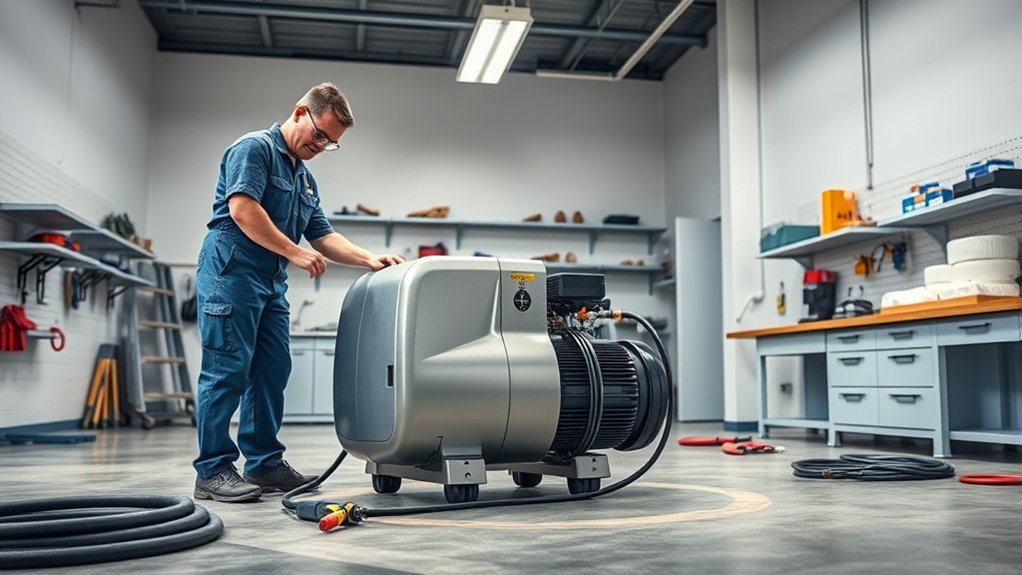
We need to clear the installation area to guarantee unobstructed access and safety. Proper ventilation is essential to prevent overheating and maintain air quality during operation. Additionally, gather all necessary tools beforehand to facilitate a smooth and efficient installation process.
Clear the Installation Area
Before beginning the installation, make certain the workspace is thoroughly cleared of any obstacles, debris, or unnecessary tools. A clean area guarantees ideal air quality by minimizing dust and particulate contamination, which can affect compressor performance. Remove clutter that could interfere with proper placement or hinder access to power sources and mounting points. Additionally, clearing the space aids in noise reduction, preventing excess vibrations from amplifying sound levels during operation. Ensure the surface is level and stable to support the compressor’s weight and reduce vibrations that could compromise performance or safety. By maintaining a tidy, well-organized workspace, we facilitate precise installation, improve air quality, and maximize noise control, ultimately ensuring a safer and more efficient setup process.
Ensure Proper Ventilation
Ensuring proper ventilation in the installation area is essential for maintaining ideal indoor air quality and preventing overheating of the compressor. Adequate airflow reduces heat buildup, which can compromise compressor performance and lifespan. Proper ventilation also minimizes the accumulation of fumes or airborne contaminants, contributing to healthier indoor air quality. We recommend installing the compressor in a well-ventilated space with unobstructed airflow outlets and inlets. Additionally, ventilation can aid noise reduction by dispersing sound waves more effectively, decreasing the impact of operational noise on surrounding environments. Maintaining a controlled airflow not only safeguards equipment but also ensures a safer, more comfortable workspace. Effective ventilation is a critical component of the installation process, promoting efficiency and operational longevity.
Gather Necessary Tools
Preparing your workspace for the installation begins with gathering all the necessary tools to guarantee a smooth and efficient process. A comprehensive tools checklist is essential to avoid interruptions. Make certain you have the proper safety gear, including gloves, goggles, and ear protection, to mitigate hazards.
| Tools Checklist | Safety Gear |
|---|---|
| Wrenches and screwdrivers | Safety goggles |
| Pipe wrenches | Gloves |
| Adjustable spanners | Ear protection |
| Power drill and bits | Respirator (if needed) |
Having these tools and safety gear organized beforehand minimizes delays and enhances safety. Precision in assembly relies on the correct tools, making thorough preparation critical for a seamless installation.
Connecting the Power Supply Safely and Correctly
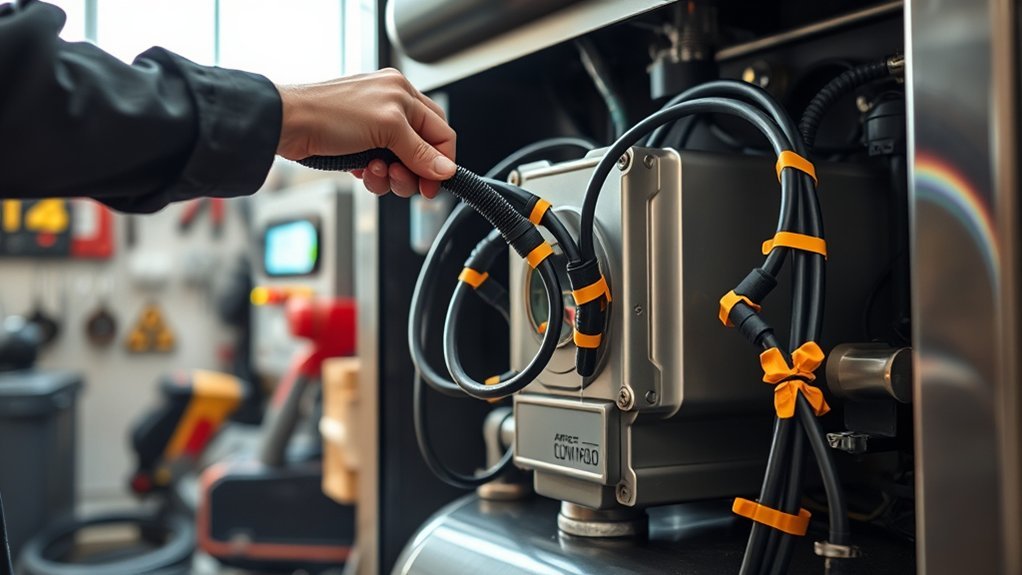
We must guarantee the power cord is correctly connected to prevent electrical faults and equipment damage. Proper grounding is essential to protect against electrical shock and to meet safety standards. Following precise connection procedures guarantees reliable operation and user safety during compressor use.
Proper Power Cord Connection
Before connecting the power cord to the air compressor, it’s essential to verify that the power supply matches the compressor’s voltage and current requirements. Confirming power cord compatibility is critical to prevent electrical hazards and equipment damage. Check the compressor’s specifications and select a power cord rated for the appropriate voltage and amperage. Additionally, confirm that the electrical outlet types align with the power cord’s plug configuration. Using the correct outlet type ensures a secure connection and reduces the risk of electrical faults. Avoid adapters or extension cords that do not meet the compressor’s specifications. Properly matching the power cord to the outlet type guarantees a safe, reliable connection that adheres to electrical standards and supports ideal compressor operation.
Ensuring Grounding and Safety
To guarantee safe operation, proper grounding of the electric air compressor is essential, as it prevents electrical hazards and protects both the equipment and users. Grounding safety ensures that any stray electrical current is safely diverted to the earth, reducing shock risk. To achieve this, we recommend:
- Verifying that the grounding conductor is intact and properly connected to a grounded terminal or rod.
- Using a grounding wire that meets local electrical codes and specifications.
- Regularly inspecting the grounding system for corrosion, damage, or loose connections.
Implementing these measures minimizes electrical hazards and ensures compliance with safety standards. Proper grounding is a critical safety step that enhances operational reliability and protects personnel from potential electric shocks.
Installing Air Lines and Fittings for Optimal Performance
For ideal performance, installing air lines and fittings with careful attention to routing and connection integrity is crucial. Proper routing minimizes sharp bends and unnecessary length, reducing pressure drops and maintaining peak airflow. Secure fittings ensure leak-free connections, preserving air quality and preventing energy loss. Use high-quality materials compatible with your compressor specifications to avoid degradation over time. Properly supported lines reduce vibration and noise, contributing to noise reduction and quieter operation. Sealing all connections thoroughly prevents moisture ingress, which can compromise air quality and equipment longevity. Additionally, organizing lines to avoid interference with other systems enhances safety and efficiency. Precise installation of air lines and fittings directly impacts compressor performance, air quality, and noise control, making meticulous setup indispensable for excellent operation.
Setting Up the Compressor Tank and Ensuring Proper Drainage
Properly setting up the compressor tank is essential for safe and efficient operation. Accurate installation guarantees effective drainage, preventing moisture buildup that can compromise compressor lubrication and lead to corrosion. To optimize performance, consider these steps:
- Position the tank on a level, stable surface to minimize vibrations and noise, aiding noise reduction.
- Install a drain valve at the tank’s lowest point for automatic or manual moisture removal, maintaining dry air output.
- Regularly inspect and drain accumulated water, preventing moisture-related issues that affect lubrication quality and compressor longevity.
Proper drainage supports consistent compressor lubrication by avoiding moisture contamination, while stable placement reduces operational noise, contributing to safer, quieter operation.
Configuring Pressure Settings and Safety Valves
We must carefully adjust the compressor’s pressure settings to match operational requirements while preventing over-pressurization. Installing reliable safety valves guarantees pressure relief in case of system malfunctions, safeguarding both equipment and personnel. Regular maintenance checks are essential to verify that all pressure controls and safety devices function correctly over time.
Adjusting Pressure Settings
When adjusting pressure settings on an electric air compressor, it’s essential to calibrate both the main pressure regulator and safety valves to guarantee safe and efficient operation. Proper calibration ensures accurate pressure readings through pressure gauge calibration, preventing over-pressurization. To optimize compressor noise reduction, set the pressure slightly below maximum operating levels, minimizing vibrations.
Key steps include:
- Verify pressure gauge accuracy using a calibration device before adjustments.
- Adjust the main pressure regulator to the desired operating pressure, ensuring stable output.
- Confirm safety valve settings are within manufacturer specifications, preventing dangerous pressure buildup.
Accurate pressure regulation not only enhances safety but also maintains compressor longevity and consistent performance.
Installing Safety Valves
Installing safety valves is a critical step in configuring pressure settings for an electric air compressor, as these devices serve as the primary safeguard against over-pressurization. Proper installation guarantees compliance with safety regulations and prevents equipment failure. Selecting the correct valve type—such as spring-loaded or pilot-operated—is essential for system compatibility. The valve must be set slightly above the maximum operating pressure but below the compressor’s limit to ensure safety without false activations.
| Valve Type | Suitable Pressure Range | Key Feature |
|---|---|---|
| Spring-loaded | Up to 150 PSI | Simple, reliable, cost-effective |
| Pilot-operated | Over 150 PSI | Precise control, high capacity |
Correct installation and configuration of safety valves optimize system safety and durability.
Regular Maintenance Checks
How often should we verify and adjust pressure settings and safety valves to maintain the best compressor performance? We recommend conducting these checks weekly to ensure optimal operation and safety. Regular maintenance involves:
- Confirming pressure settings align with manufacturer specifications, adjusting the pressure regulator as needed, and inspecting the safety valve for proper release function.
- Inspecting the air filter for debris buildup, replacing it if clogged, to maintain airflow and prevent pressure inconsistencies.
- Ensuring oil lubrication levels are adequate, checking for leaks, and replacing oil filters periodically to reduce wear and maintain consistent pressure output.
Consistent attention to these components preserves compressor efficiency, prolongs lifespan, and ensures safe operation, especially when monitoring pressure controls and safety devices.
Testing the System and Checking for Leaks
Before operating the compressor, it’s vital to verify that the system is free of leaks and functions properly. We recommend conducting a thorough pressure test, monitoring air pressure levels for fluctuations that indicate leaks. Inspect all fittings, hoses, and connections for signs of air escape, guaranteeing ideal air quality and efficiency. Leaks can compromise noise reduction efforts by increasing operational noise, so identifying and sealing leaks is essential. Use a soap solution on joints and fittings; bubbles will reveal leaks. Confirm that the compressor operates smoothly without abnormal vibrations or excessive noise, indicating proper functioning. Proper testing not only ensures safety but also maximizes system performance and longevity, maintaining consistent air quality and noise reduction standards.
Troubleshooting Common Installation Issues
Despite careful planning, installation issues can still arise during the setup of an electric air compressor. Common problems include excessive air compressor noise, incorrect compressor size, and improper placement. To address noise issues, verify that the compressor is mounted on a stable surface and utilize vibration pads if needed. Making sure the compressor size matches your system requirements prevents overloading or underperformance, which can cause operational inefficiencies. Additionally, check that the installation location provides adequate ventilation and minimizes noise transmission.
Key troubleshooting steps include:
- Confirm that the compressor size aligns with your airflow demands.
- Inspect mounting stability and add vibration isolation if noise persists.
- Ensure proper placement to optimize ventilation and reduce noise transmission.
Addressing these issues guarantees peak performance and minimizes installation setbacks.
Maintaining Your Air Compressor for Longevity
Regular maintenance is essential to guarantee your air compressor operates efficiently and remains dependable over time. Proper upkeep involves routine checks of air compressor lubrication to prevent wear and overheating, ensuring ideal performance. Additionally, maintaining clean filters and inspecting hoses reduces unnecessary strain, contributing to noise reduction. Proper lubrication minimizes friction, extending component lifespan and reducing operational noise.
| Maintenance Task | Purpose | Frequency |
|---|---|---|
| Check and replenish lubrication | Prevent wear, improve efficiency | Weekly |
| Inspect and replace filters | Enhance airflow, noise reduction | Monthly |
| Tighten fittings and hoses | Prevent leaks, maintain performance | Quarterly |
Essential Safety Tips to Follow During and After Installation
Ensuring safety during and after the installation of your electric air compressor is critical to prevent accidents and equipment damage. Proper safety measures protect personnel and preserve equipment integrity. First, always wear safety gloves when handling electrical components or pressurized parts to prevent injuries. Second, verify that emergency exits are unobstructed and clearly marked, allowing quick evacuation if necessary. Third, conduct a thorough inspection of connections, ensuring all safety valves and pressure relief systems are functional. Additionally, confirm the grounding of the compressor to prevent electrical hazards. Regularly review safety protocols, and ensure all personnel are trained on emergency procedures. These steps minimize risks and promote a safe operational environment during and after installation.
Frequently Asked Questions
What Are the Legal Regulations for Installing an Air Compressor?
We guarantee compliance with legal regulations by prioritizing noise reduction and ventilation requirements, adhering to local codes, OSHA standards, and manufacturer guidelines, and securing necessary permits, to guarantee safe, lawful, and efficient air compressor installation.
How Do I Ensure Proper Grounding of the Compressor?
We guarantee proper grounding by following effective grounding techniques, such as connecting to a grounding rod or metal conduit, and using appropriate grounding materials like copper grounding wires, to guarantee safety and compliance with electrical standards.
Can I Install an Air Compressor Indoors Safely?
Yes, you can install an air compressor indoors safely, ensuring noise levels are minimized with soundproofing and ventilation requirements are met for heat dissipation, preventing moisture buildup, and maintaining ideal operational conditions.
What Permits or Inspections Are Needed Before Installation?
Before installation, we check local permits and inspections, like securing necessary approvals, to guarantee safety and compliance. We also prioritize maintenance schedules and noise reduction, making sure the setup is efficient, legal, and minimizes disruptions.
How Do I Select the Right Accessories for My Compressor?
We select accessories by ensuring compatibility with our compressor’s specifications, focusing on high-quality maintenance tools and accessories that match the required pressure and connection types, ensuring ideal performance, safety, and ease of maintenance during operation.
Conclusion
By meticulously following these installation steps, we lay a solid foundation for your air compressor’s reliable performance. Proper setup is akin to tuning a finely crafted instrument—ensuring harmony between components and safety. When executed with precision and care, your system will operate smoothly, quietly, and efficiently, standing as a demonstration to diligent craftsmanship. Remember, a well-installed compressor is not just equipment; it’s the heartbeat of your compressed air needs, poised for long-term excellence.