Ad Blocker Detected
Our website is made possible by displaying online advertisements to our visitors. Please consider supporting us by disabling your ad blocker.
Industrial air compressors considerably influence operational energy consumption, making efficiency a critical concern for sustainable manufacturing. By examining the key factors that affect performance—such as load management, maintenance practices, and technological integration—we can identify opportunities to optimize energy use. Implementing practical strategies and advanced innovations not only reduces costs but also supports environmental goals. Understanding these interconnected elements is essential to achieving consistent compressor performance and long-term operational efficiency.
Key Takeaways
- Proper lubrication reduces friction and mechanical inefficiencies, lowering energy consumption.
- Regular maintenance and leak detection maintain optimal compressor performance and efficiency.
- Upgrading control systems and implementing variable speed drives adapt energy use to demand.
- Accurate compressor sizing prevents unnecessary energy waste from overcapacity.
- Monitoring operational metrics enables early issue detection and supports energy-efficient operation.
How Do Industrial Air Compressors Impact Energy Consumption?
Industrial air compressors are among the primary energy consumers in manufacturing and processing facilities, considerably impacting overall energy consumption. Their energy draw largely depends on operational efficiency and the management of internal factors like air compressor noise and compressor lubrication. Excessive noise often indicates mechanical inefficiencies, which can lead to higher energy use due to increased load on the motor. Proper lubrication is critical; inadequate or degraded lubricant causes increased friction and heat, reducing compressor efficiency and increasing power consumption. Additionally, poorly maintained lubrication systems can result in compressor overheating and wear, further elevating energy demands. By optimizing lubrication practices and minimizing air compressor noise through calibration and sound reduction measures, facilities can effectively reduce energy wastage, streamlining operations and lowering operational costs.
Key Factors That Influence Compressor Efficiency
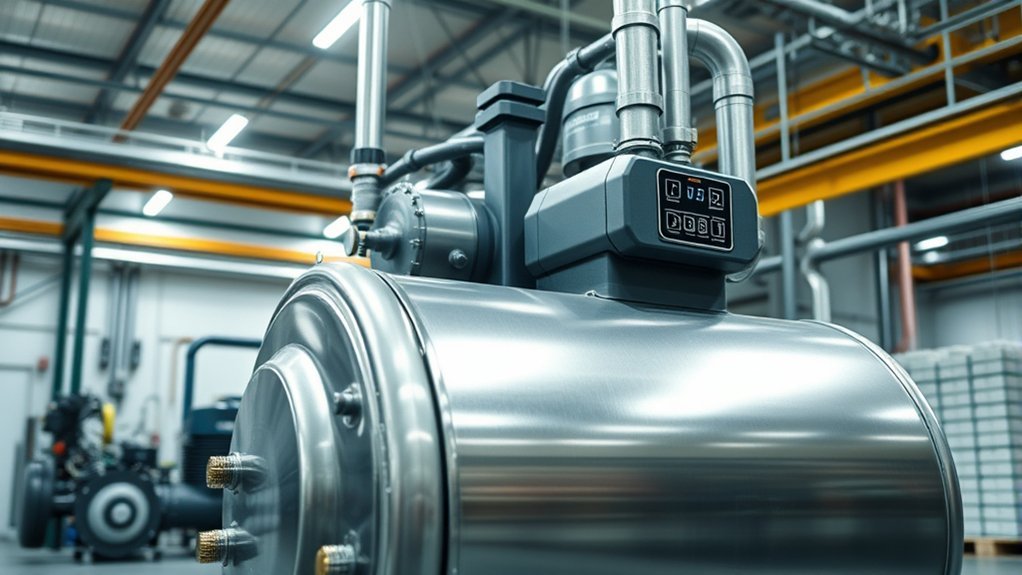
Several key factors directly influence compressor efficiency, shaping their energy consumption and operational performance. Compressor lubrication plays a crucial role; proper lubrication minimizes friction and wear, reducing energy losses and prolonging component lifespan. Inadequate lubrication can lead to increased heat, inefficiency, and potential equipment failure. Noise reduction is another critical factor, as excessive noise often indicates mechanical inefficiencies and vibration issues that waste energy. Implementing noise control measures typically involves optimizing component alignment and sealing, which also improves overall efficiency. Additionally, factors like inlet air filtering, cooling systems, and the design of compressor components considerably impact performance. By carefully managing lubrication and noise mitigation, we can enhance the operational efficiency of industrial compressors, leading to lower energy costs and increased reliability.
Practical Strategies to Reduce Energy Use in Air Compression
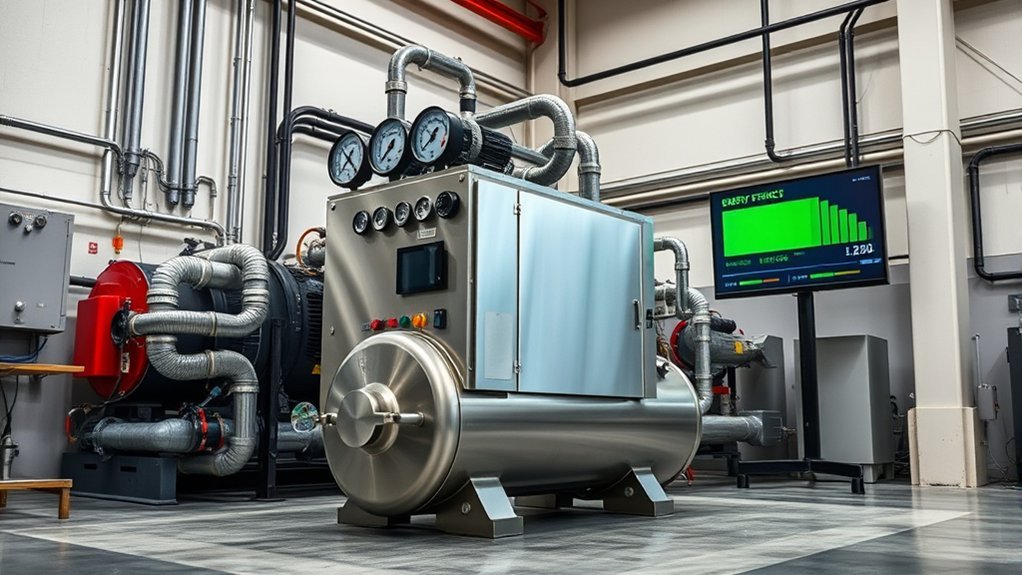
To effectively reduce energy consumption in air compression systems, we must implement targeted operational and maintenance strategies grounded in technical analysis. One primary approach involves energy saving upgrades, such as upgrading control systems, variable speed drives, and heat recovery units, to maximize efficiency. Accurate compressor sizing is critical; oversized units lead to unnecessary energy use during low demand periods, while undersized compressors cause operational strain and inefficiency. Regular maintenance, including leak detection and component tuning, ensures minimal pressure drops and peak performance. Load management strategies, like staging compressors for varying demand, further reduce energy waste. By combining precise compressor sizing with strategic upgrades and diligent maintenance, we can substantially lower energy consumption and improve overall system efficiency.
Technological Advances Improving Compressor Sustainability
Advancements in compressor technology have considerably enhanced sustainability by integrating smarter control systems, energy-efficient components, and environmentally friendly designs. Modern compressors now incorporate renewable integration, allowing seamless coupling with renewable energy sources like solar or wind, which reduces reliance on fossil fuels and lowers carbon footprints. Innovations in noise reduction employ advanced sound-dampening materials and optimized blade designs, *greatly* decreasing operational noise levels and minimizing environmental impact. Additionally, variable speed drives and modular components adapt to fluctuating demand, optimizing energy consumption. These technological improvements not only promote energy efficiency but also extend equipment lifespan, reduce maintenance costs, and align with sustainable industrial practices. Overall, these advances position modern compressors as integral assets for eco-conscious operations seeking to balance productivity with environmental responsibility.
How to Monitor and Maintain Optimal Compressor Performance
Effective monitoring and maintenance are essential for guaranteeing compressor performance remains ideal over its operational lifespan. By establishing rigorous maintenance schedules, we can systematically address components such as filters, lubricants, and valves, preventing efficiency loss. Regular assessment of performance metrics—like pressure stability, power consumption, and temperature fluctuations—provides real-time insights into operational health. Tracking these metrics allows us to identify deviations from baseline performance, indicating potential issues before failures occur. Advanced sensors and data logging tools facilitate continuous monitoring, enabling predictive maintenance rather than reactive repairs. Consistent review of these data points ensures maximum compressor efficiency, reduces downtime, and extends equipment lifespan. Ultimately, a disciplined approach to monitoring and maintenance sustains energy efficiency and operational reliability over the long term.
Frequently Asked Questions
What Are the Common Signs of Inefficient Air Compressor Operation?
We notice signs like fluctuating pressure, excessive energy use, and frequent cycling, which indicate inefficiency. Regular leak detection and proactive maintenance scheduling are essential to identify issues early, optimize performance, and reduce operational costs effectively.
How Does Compressor Size Affect Overall Energy Efficiency?
Proper compressor sizing is vital for efficiency optimization, as oversized units consume unnecessary energy during low demand, while undersized compressors strain under load, reducing lifespan and increasing operational costs, ultimately impacting overall energy performance.
Are There Industry Standards for Measuring Compressor Energy Performance?
Like the compass guiding sailors, industry standards direct us in measuring compressor energy performance through calibration and energy consumption metrics, ensuring consistency, accuracy, and optimization in efficiency assessments across diverse compressor models and operating conditions.
What Is the Typical Lifespan of Energy-Efficient Air Compressors?
Energy-efficient air compressors typically last 10-15 years with proper maintenance, including regular maintenance schedules and lubrication practices. We emphasize monitoring wear, optimizing performance, and timely part replacements to extend lifespan and guarantee consistent energy efficiency.
How Do Environmental Factors Influence Compressor Energy Consumption?
Environmental impact and climate influence profoundly affect compressor energy consumption; higher temperatures increase cooling demands, while humidity and air quality can strain components, reducing efficiency and elevating energy use, emphasizing the need for climate-adaptive maintenance strategies.
Conclusion
Just like tuning a precision instrument, maintaining compressor efficiency requires ongoing attention and fine-tuning. When we overlooked a small leak once, it cost us 15% more energy that month—an eye-opener. By leveraging advanced technologies and diligent monitoring, we can optimize performance, reduce waste, and extend equipment lifespan. A meticulous approach turns complex systems into well-oiled machines, ensuring sustainable, cost-effective operations. Ultimately, continuous vigilance transforms energy challenges into opportunities for innovation and efficiency.