Ad Blocker Detected
Our website is made possible by displaying online advertisements to our visitors. Please consider supporting us by disabling your ad blocker.
Choosing the right air compressor often involves subtle distinctions that can substantially impact operational efficiency and maintenance. While both oil-free and oil-lubricated models serve critical roles in various industries, understanding their core differences is essential for making an informed decision. These distinctions influence not only performance but also long-term costs and suitability for sensitive environments. As we explore this comparison, you’ll gain insights that could shape your equipment strategy—before you commit to a particular type.
Key Takeaways
- Oil-free compressors produce cleaner air and are quieter, ideal for sensitive environments like healthcare and food processing.
- Oil-lubricated compressors offer higher durability and efficiency, suitable for heavy-duty industrial applications.
- Oil-free units have higher initial costs but lower ongoing maintenance and environmental impact.
- Oil-lubricated compressors generate more heat and noise, requiring additional noise control and maintenance.
- Choice depends on application needs, considering factors like cleanliness, noise levels, environmental regulations, and budget.
What Are the Main Differences Between Oil-Free and Oil-Lubricated Compressors?
While both oil-free and oil-lubricated compressors serve the same fundamental purpose of compressing air, they differ considerably in their design and operational characteristics. Oil-free compressors operate without lubrication oil, resulting in a cleaner air output with minimal risk of oil contamination. This reduces environmental impact by eliminating oil disposal and potential leaks. Conversely, oil-lubricated units use oil to reduce friction, which can generate more heat and noise, impacting noise reduction efforts. Oil-lubricated compressors typically have longer lifespans and higher efficiency but require careful maintenance to manage oil-related emissions and disposal. When considering environmental impact and noise reduction, oil-free compressors are advantageous for applications demanding cleaner air and quieter operation, though they may have limitations in durability and performance under heavy-duty conditions.
Benefits and Drawbacks of Oil-Free Air Compressors
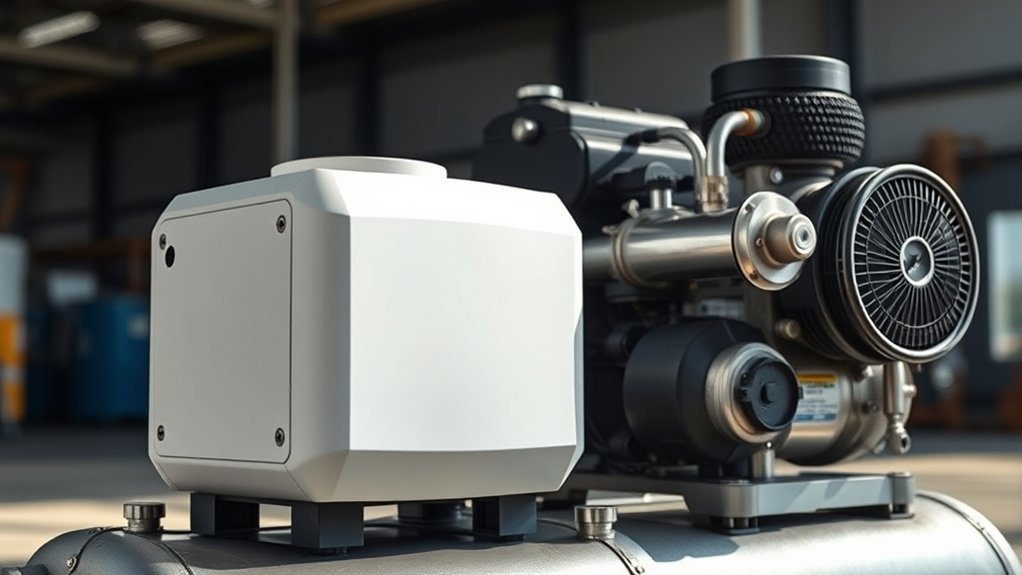
Are oil-free air compressors truly advantageous for specific applications? Their primary benefits include lower environmental impact due to the absence of oil contamination and reduced maintenance requirements. They operate with lower noise levels, making them suitable for noise-sensitive environments. However, drawbacks exist. They often have higher initial costs and may have limited durability under heavy-duty use compared to oil-lubricated models. To visualize their features:
| Feature | Characteristics |
|---|---|
| Environmental Impact | Minimal oil emissions; eco-friendly |
| Noise Levels | considerably quieter |
| Maintenance | Less frequent and simpler |
| Durability | Potentially shorter lifespan |
| Cost | Higher upfront investment |
Advantages and Limitations of Oil-Lubricated Air Compressors
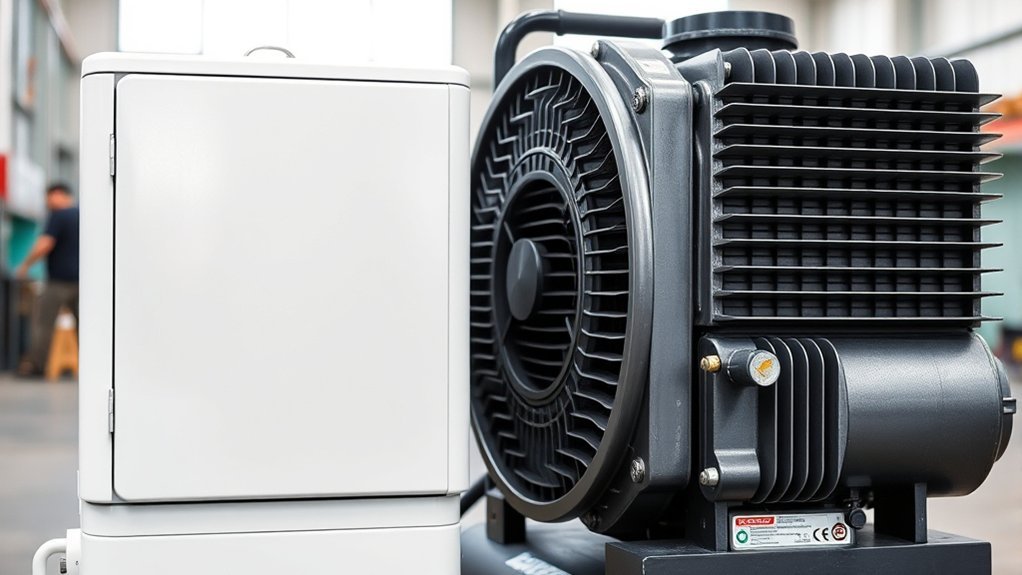
Oil-lubricated air compressors are frequently chosen for their durability and ability to handle demanding workloads, making them suitable for industrial applications where continuous operation is critical. Their advantages include longer service life and improved efficiency due to effective lubrication, which reduces wear and tear on internal components. However, limitations exist, particularly in environmental impact; oil leaks or emissions can pose contamination risks, and disposal must be managed carefully. Noise levels tend to be higher than oil-free models, as the lubrication system adds to operational sound. Additionally, maintenance requirements are more complex, involving oil changes and filter replacements. These factors highlight that, despite their robustness, oil-lubricated compressors demand careful consideration of environmental impact and noise control in their deployment.
How to Choose the Right Compressor for Your Application
Choosing the right compressor requires analyzing your application’s specific requirements, including pressure, flow rate, and air quality standards. We also consider maintenance demands and operational costs to determine long-term efficiency. By systematically evaluating these factors, we can identify the most suitable compressor type for your needs.
Application Specific Requirements
Selecting the appropriate compressor for a specific application requires a thorough understanding of operational demands and environmental constraints. Key considerations include environmental impact, where oil-free compressors often offer advantages by reducing contamination risk and emissions, making them suitable for sensitive environments. Noise levels are another critical factor; oil-free units tend to operate more quietly, beneficial in settings requiring minimal disruption. Conversely, oil-lubricated compressors may produce higher noise levels and potential oil mist, impacting air quality and compliance standards. We must evaluate these factors in relation to the application’s regulatory environment, cleanliness requirements, and workplace conditions. By analyzing environmental impact and noise levels, we can determine the most suitable compressor type to optimize performance while minimizing adverse effects on the environment and workforce.
Maintenance and Operating Costs
Understanding the long-term financial implications of compressor operation is critical when determining the best fit for a specific application. Oil-free compressors typically have higher initial costs but lower maintenance expenses due to fewer moving parts and no oil filters. Oil-lubricated units often entail ongoing costs related to oil changes, filters, and potential downtime. Energy efficiency plays a crucial role, with oil-free models generally offering lower operational energy consumption in clean environments. Noise levels are another factor; oil-free compressors tend to operate more quietly, reducing noise-related costs and workplace disturbance. Consider the following comparison:
| Feature | Oil-Free Compressors | Oil-Lubricated Compressors | Cost Implications |
|---|---|---|---|
| Initial Cost | Higher | Lower | Upfront investment |
| Maintenance | Lower | Higher | Ongoing expenses |
| Energy Efficiency | Generally higher | Varies | Operating costs |
| Noise Levels | Lower | Higher | Workplace noise costs |
| Suitability for Clean Environments | Essential | Not critical | Application-specific |
Maintenance and Operating Costs: Which Option Is More Cost-Effective?
While oil-free compressors typically have lower initial purchase prices, their maintenance and operational costs can be higher over time due to increased wear and the need for more frequent service. These compressors often have shorter service intervals and require more parts replacement, raising ongoing expenses. From an environmental impact perspective, oil-free models generate fewer waste fluids, reducing disposal costs and spill risks, which can lower total lifecycle costs. However, their noise levels tend to be higher, necessitating additional soundproofing measures that add to installation costs. Conversely, oil-lubricated compressors, despite higher initial investment, often deliver lower ongoing costs through longer-lasting components and less frequent maintenance. As a result, the choice between the two hinges on balancing upfront expenses against long-term operational savings and environmental considerations.
Common Use Cases and Recommendations for Each Type
Different applications demand specific compressor characteristics, making the choice between oil-free and oil-lubricated models critical for ideal performance. Oil-free compressors are preferred in environments requiring low environmental impact, as they produce minimal oil emissions and reduce disposal concerns. They are suitable for sensitive industries like healthcare and food processing, where purity is essential. Conversely, oil-lubricated compressors excel in heavy-duty applications such as manufacturing and construction, offering durability and efficient performance under continuous use. Noise levels also influence selection; oil-free units typically operate more quietly, making them ideal for noise-sensitive settings. Overall, understanding the specific environmental impact and noise considerations of each type helps determine the most appropriate compressor for each application, balancing operational needs with environmental and acoustic considerations.
Frequently Asked Questions
How Long Do Oil-Free Compressors Typically Last Compared to Oil-Lubricated Ones?
Oil-free compressors generally last around 10,000 to 20,000 hours, while oil-lubricated ones can exceed 30,000 hours with proper maintenance. Their longevity impacts maintenance costs and energy efficiency, influencing overall operational costs and equipment lifespan.
Are Oil-Free Compressors Suitable for Industrial-Scale Operations?
We believe oil-free compressors can be suitable for industrial-scale operations when considering maintenance frequency and cost efficiency. They reduce ongoing maintenance costs, but we must analyze operational demands to guarantee they meet industrial performance standards effectively.
What Environmental Regulations Impact the Choice Between Oil-Free and Oil-Lubricated Compressors?
Ironically, environmental impact and regulatory compliance favor oil-free compressors, as they produce fewer emissions and contaminants, making them more suitable for strict environmental regulations, whereas oil-lubricated units often face tighter restrictions and compliance challenges.
Can Oil-Free Compressors Operate Effectively at High Altitudes?
Oil-free compressors often handle high altitudes well, thanks to minimal lubrication requirements, which enhance altitude performance. Their design reduces the impact of lower atmospheric pressure, ensuring consistent operation without lubrication-related complications at elevated elevations.
How Does Noise Level Differ Between Oil-Free and Oil-Lubricated Compressors?
Imagine a quiet symphony—oil-free compressors typically produce less noise, aiding in noise mitigation and vibration reduction, whereas oil-lubricated models tend to hum louder due to internal moving parts, impacting sound levels and operational comfort.
Conclusion
Just as choosing the right tool depends on the task at hand, selecting between oil-free and oil-lubricated compressors hinges on specific operational needs. Both options bring strengths and limitations, echoing the timeless debate of form versus function. By analyzing factors like cleanliness, durability, and cost, we can make informed decisions that optimize efficiency and sustainability—ensuring our systems operate smoothly, much like a well-oiled machine that stands the test of time.