Ad Blocker Detected
Our website is made possible by displaying online advertisements to our visitors. Please consider supporting us by disabling your ad blocker.
When choosing between portable and stationary air compressors, we recognize that each type offers distinct advantages aligned with specific project needs and operational constraints. Their differing designs impact power, capacity, and mobility, which ultimately influence performance and efficiency. Understanding these technical distinctions is essential for making an informed decision, especially when considering long-term costs and maintenance. Let’s explore the critical factors that can help determine which compressor type best suits your application.
Key Takeaways
- Portable compressors are lightweight, mobile, and suitable for outdoor or quick-deployment tasks, while stationary compressors are larger and fixed for continuous, heavy-duty use.
- Stationary units offer higher power, larger tanks, and greater capacity, supporting sustained airflow for demanding projects.
- Portable models typically have lower initial costs, easier maintenance, and are ideal for short-term or small-scale applications.
- Stationary compressors tend to be quieter, more energy-efficient, and better suited for large-scale, ongoing operations.
- Mobility, project size, noise levels, and environmental impact are key factors influencing the choice between portable and stationary compressors.
What Are the Main Differences Between Portable and Stationary Air Compressors?
While both portable and stationary air compressors serve the same fundamental purpose of generating compressed air, their primary differences lie in design, mobility, and application scope. Portable units are compact and lightweight, emphasizing mobility and ease of transport, often featuring integrated handles and wheels. Stationary models, on the other hand, are larger and designed to remain fixed in one location, supporting higher capacity and continuous operation. Noise levels vary considerably; stationary compressors typically operate at lower noise levels due to sound insulation and larger enclosures, whereas portable units tend to be louder. Additionally, aesthetic design plays a role: stationary models prioritize functionality over appearance, while portable units are designed with a more user-friendly and visually appealing profile to facilitate outdoor or on-site use.
How Do Power, Capacity, and Size Compare in Portable and Stationary Models?
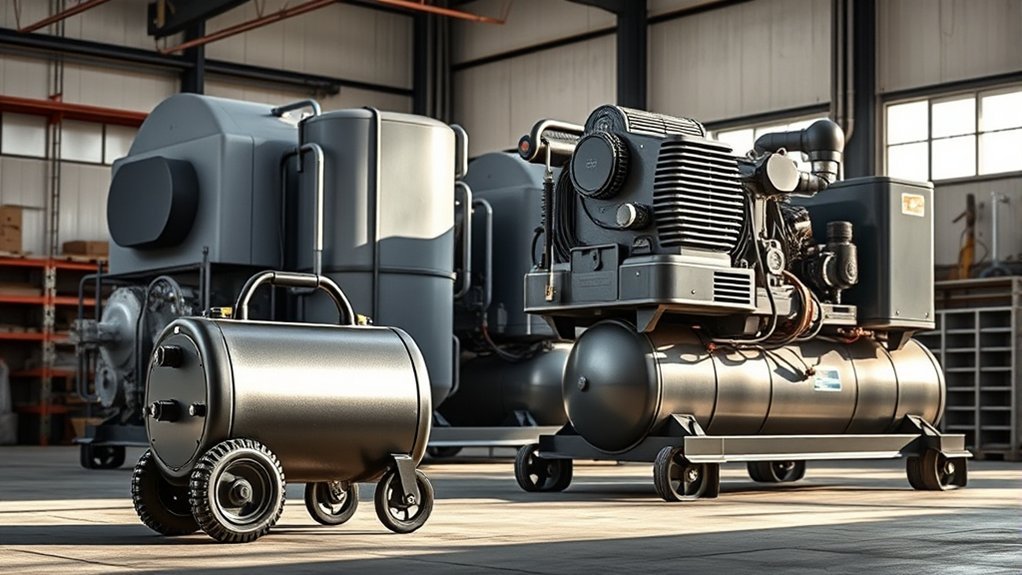
The power, capacity, and size of portable and stationary air compressors vary considerably to meet their specific operational demands. Portable models typically feature lower horsepower, which limits their energy efficiency but allows for easier mobility. They generally have smaller tanks, resulting in lower capacity and increased cycles, affecting continuous operation. Stationary compressors, on the other hand, deliver higher power, larger tanks, and greater capacity, optimizing energy efficiency for long-term, high-demand applications. Noise levels are also a significant factor; stationary units tend to operate more quietly due to better sound insulation, while portable models generate higher noise levels because of their compact design. Overall, the differences in power, capacity, and size directly influence operational efficiency, energy consumption, and suitability for various work environments.
Which Air Compressor Is Better for Different Types of Projects?
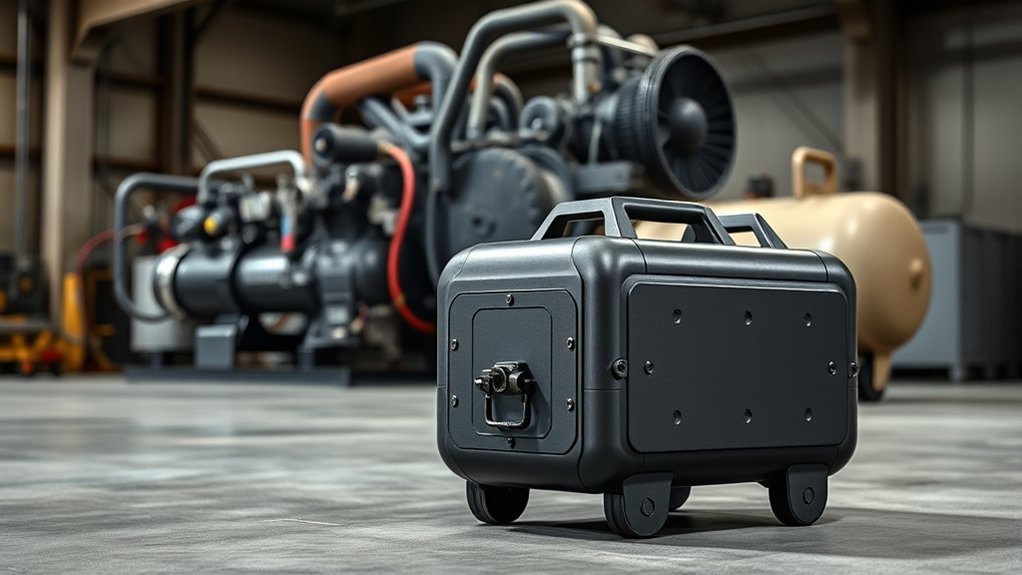
Choosing the appropriate air compressor depends on factors like portability for on-site flexibility, power and runtime for continuous operation, and the capacity to handle heavy-duty tasks. Portable models excel in mobility and quick setup, while stationary units provide sustained power for demanding projects. Evaluating these points guarantees the right match for each specific application.
Portability for On-Site Use
When evaluating portability for on-site use, we find that the size and weight of an air compressor directly influence its suitability for different projects. Portable units are typically lighter and more compact, making them ideal for quick deployment and maneuverability. Noise levels are also critical; portable compressors often feature sound-dampening designs, reducing on-site disruption. Aesthetic design matters as well, since portable models tend to have streamlined, user-friendly layouts that facilitate transport and setup. Stationary compressors, by contrast, generally lack these features, making them less suitable for dynamic environments where mobility is essential. Ultimately, choosing a compressor hinges on balancing these factors to guarantee peak functionality, convenience, and minimal disturbance during on-site operations.
Power and Duration Needs
Determining the appropriate air compressor for a project hinges on understanding its power output and operational duration requirements. For optimal performance, consider these factors:
- Power output: Stationary compressors typically provide higher CFM and PSI, suitable for continuous operation, while portable units are limited but sufficient for smaller tasks.
- Energy efficiency: Stationary models often deliver better energy efficiency over prolonged use, reducing operational costs.
- Noise levels: Portable compressors tend to be noisier, impacting work environments, whereas stationary units often feature sound dampening for quieter operation.
Matching these parameters to project demands ensures efficiency and longevity. For short-term, low-power tasks, portable compressors suffice. For sustained, high-power work, stationary compressors are more advantageous.
Suitability for Heavy-Duty Tasks
Heavy-duty tasks demand air compressors with substantial power capacity and durability, making stationary units generally the more suitable choice. These compressors typically deliver higher CFM and PSI, essential for demanding applications like industrial manufacturing or extensive automotive work. Noise levels are a key consideration; stationary units often operate quieter due to sound-dampening enclosures, which is advantageous in continuous operation environments. Additionally, their aesthetic design prioritizes functionality over form, often featuring robust, industrial aesthetics that support long-term use. While portable compressors excel in mobility, their limited power output and higher noise levels restrict their suitability for heavy-duty projects. Consequently, for large-scale, continuous tasks, stationary compressors provide the necessary strength, efficiency, and operational stability.
What Are the Cost Implications of Choosing Portable vs. Stationary Compressors?
Choosing between portable and stationary compressors involves careful consideration of initial and ongoing costs, as these substantially impact overall investment. A thorough cost comparison reveals key differences:
- Initial Investment: Portable units typically have lower upfront costs but may require frequent replacements due to limited durability.
- Maintenance Expenses: Stationary compressors generally incur higher maintenance expenses but benefit from easier access and longer service life.
- Operational Costs: Portable models often consume more energy for comparable tasks, increasing operational expenses over time.
While portable compressors may seem more economical initially, their higher maintenance and energy costs can offset savings. Conversely, stationary compressors, though more costly upfront, tend to offer lower long-term expenses, making them a more economical choice for large-scale or continuous use.
How Easy Is It to Use and Maintain Portable and Stationary Compressors?
Portable compressors are generally designed for ease of use, featuring lightweight builds and straightforward controls that facilitate quick setup and operation. Their simplicity in design makes routine maintenance more manageable, often requiring minimal technical expertise. Energy efficiency varies, but many portable units are optimized for lower power consumption given their smaller size, which benefits prolonged use. Noise levels are typically higher than stationary models, making them less suitable for noise-sensitive environments. Stationary compressors, on the other hand, tend to have more complex maintenance routines due to their larger, integrated systems, but they often offer better energy efficiency for continuous operation. Overall, portable compressors prioritize user-friendly operation and mobility, while stationary units focus on durability, energy savings, and quieter operation, albeit with more involved maintenance.
When Should You Opt for a Portable Air Compressor Instead of a Stationary One?
Opting for a portable air compressor makes sense when flexibility, ease of use, and quick deployment are priorities. These units excel in scenarios where the air compressor size and maintenance requirements need to be minimized, and mobility is essential. Consider choosing a portable compressor when:
Portable air compressors are ideal for quick, flexible, and easy-to-move compressed air solutions.
- Frequent relocation is necessary, such as job sites or outdoor projects.
- Limited storage space restricts the use of larger, stationary units.
- Short-term or intermittent use reduces the need for complex maintenance routines associated with stationary models.
Portable compressors generally have smaller air compressor sizes, making them easier to transport and store. Their maintenance requirements are also less intensive, favoring users who need quick, reliable access to compressed air without the commitment of extensive upkeep.
Which Factors Should Guide Your Final Decision Between Portable and Stationary Compressors?
When choosing between portable and stationary compressors, we must consider key factors like mobility requirements, power and capacity demands, and spatial constraints. These elements directly influence the suitability of each type for specific applications and environments. A thorough analysis of these factors guarantees a superior, data-driven decision tailored to operational needs.
Portability and Mobility Needs
How critical is mobility to your overall workflow? If portability is paramount, consider these factors:
- Mobility requirements: For frequent movement, a lightweight, compact compressor with battery-powered options reduces dependency on power outlets and simplifies transport.
- Noise level considerations: Portable units often operate quieter, ideal for noise-sensitive environments; stationary units tend to generate more noise, suitable for fixed locations.
- Operational environment: If the worksite is variable or outdoor, mobility needs may favor portable options, while stationary compressors excel in stable, fixed settings.
Assessing your workflow’s mobility demands and environmental constraints ensures the chosen compressor aligns with your operational efficiency and logistical needs.
Power and Capacity Requirements
Evaluating power and capacity requirements is fundamental to selecting the right compressor, especially as these factors directly impact performance and operational efficiency. Higher capacity models deliver sustained airflow for demanding tasks, while portable units typically have lower cfm ratings. Noise levels and energy efficiency are also essential considerations, influencing operational costs and workplace comfort.
| Feature | Portable Compressor | Stationary Compressor |
|---|---|---|
| Power Output | Moderate to high | High |
| Capacity (cfm) | Lower | Higher |
| Noise Levels | Generally louder | Quieter |
| Energy Efficiency | Moderate | Optimized for continuous use |
| Suitability | Smaller jobs, mobility | Large-scale, continuous tasks |
Space and Installation Constraints
Evaluating space and installation constraints is crucial in determining whether a portable or stationary compressor best fits your operational environment. Space limitations influence the choice by examining size, mobility, and setup complexity. Consider these factors:
- Available footprint: Portable units require minimal space, suitable for tight environments, whereas stationary compressors need dedicated, larger areas.
- Noise levels: Stationary models often generate higher noise, impacting environmental conditions and worker comfort, while portable units tend to be quieter and more adaptable.
- Environmental impact: Stationary compressors may have a greater environmental footprint due to installation needs and energy consumption, whereas portability allows for flexible, site-specific use minimizing environmental disturbance.
These factors collectively guide the decision, balancing operational demands, noise considerations, and environmental impact within spatial constraints.
Frequently Asked Questions
What Are the Typical Lifespan Differences Between Portable and Stationary Compressors?
We find stationary compressors generally last longer, thanks to lower maintenance needs and stable operation, whereas portable compressors tend to have shorter lifespans due to frequent mobility advantages, which increase wear and tear over time.
How Do Noise Levels Compare Between Portable and Stationary Air Compressors?
Like a whispering breeze versus a roaring storm, portable compressors generally have higher sound levels, making noise comparison vital. Stationary units often feature soundproofing, reducing noise levels, which is essential for sensitive work environments.
Can Portable Compressors Handle Continuous Operation Like Stationary Models?
Portable compressors typically can’t handle continuous operation like stationary models due to maintenance challenges, including overheating risks. However, their mobility advantages make them ideal for short-term, flexible applications rather than sustained, high-demand tasks.
Are There Specific Safety Concerns Unique to Portable or Stationary Compressors?
We recognize safety concerns vary; portable compressors pose risks from mobility, such as tipping, while stationary units require secure installation. Fuel efficiency and maintenance requirements influence safety protocols, and understanding these factors helps mitigate risks effectively.
What Accessories or Attachments Are Compatible With Each Type?
We recommend reviewing air filter options and hose compatibility carefully; portable compressors often support lightweight, flexible hoses, while stationary units accommodate larger, durable attachments, ensuring ideal operation and safety for each compressor type’s specific accessories and attachments.
Conclusion
In conclusion, choosing between portable and stationary compressors hinges on understanding your project’s demands and operational context. While portable units excel in flexibility and quick deployment, stationary models provide sustained power for large-scale tasks. We believe that making an informed decision requires weighing factors like capacity, mobility, and budget carefully. Ultimately, selecting the right compressor ensures you don’t bite off more than you can chew, aligning equipment capabilities with your specific needs.