Ad Blocker Detected
Our website is made possible by displaying online advertisements to our visitors. Please consider supporting us by disabling your ad blocker.
Maintaining a reciprocating air compressor involves a systematic approach that prioritizes regular inspections, component checks, and timely replacements. Proper upkeep guarantees peak performance, reduces downtime, and extends the equipment’s lifespan. Addressing issues early can prevent costly repairs and operational disruptions. As we explore the essential maintenance practices, you’ll see how consistent, methodical care is critical to achieving reliable, long-term compressor operation—an area where neglect can have significant consequences.
Key Takeaways
- Perform regular inspections of lubrication, safety features, and connections to identify early signs of wear or damage.
- Replace oil, filters, and seals routinely to maintain optimal compressor performance and prevent internal component wear.
- Monitor and address abnormal noises, vibrations, or pressure drops promptly to avoid major breakdowns.
- Use vibration analysis and sound checks to detect misalignments or imbalances early.
- Keep cooling systems clean and ensure proper mounting to prevent overheating and extend compressor lifespan.
Understanding the Basics of Reciprocating Air Compressors
Reciprocating air compressors operate through a piston-cylinder mechanism that compresses air by converting mechanical energy into pneumatic energy. This process directly influences compressor efficiency, as factors like piston design, stroke length, and cylinder sealing impact energy conversion performance. To enhance efficiency, we focus on minimizing energy losses due to internal friction and air leakage. Noise reduction also plays a crucial role, since reciprocating compressors generate significant sound from piston movement and valve operation. Implementing sound-absorbing materials and designing quieter valve systems can substantially lower noise levels. Understanding these foundational aspects enables us to select and maintain compressors tailored for ideal performance, ensuring energy-efficient operation while reducing noise pollution. This knowledge forms the basis for effective maintenance strategies and long-term operational reliability.
Performing Regular Inspections and Routine Maintenance Checks
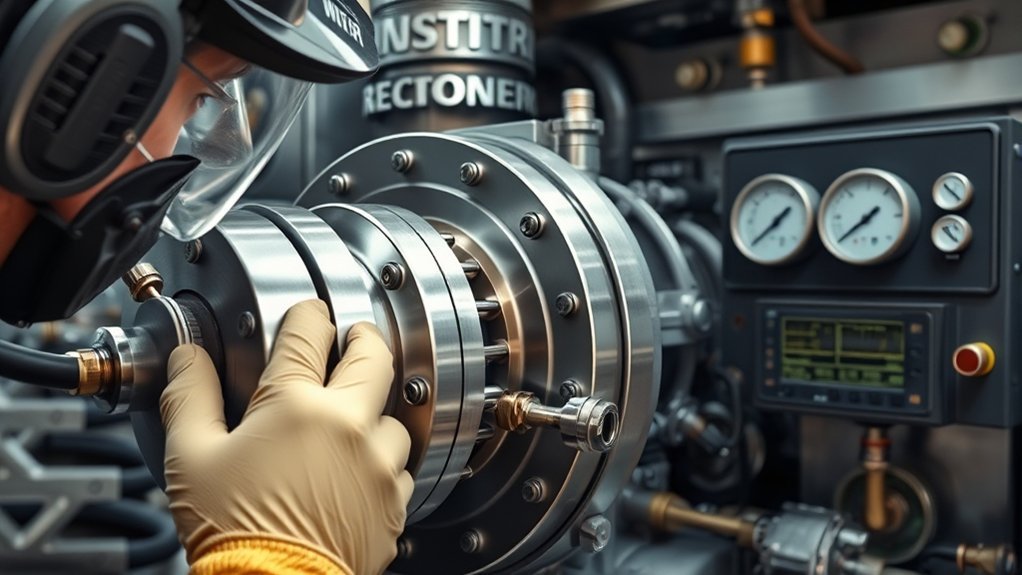
How frequently should we perform inspections and routine checks to guarantee ideal compressor performance? Regular assessments should occur weekly or bi-weekly, depending on operational intensity. We focus on verifying lubrication techniques to prevent component wear, ensuring oil levels are adequate and lubrication pathways are unobstructed. Routine inspections also involve checking safety protocols, such as emergency shutoff functionality and pressure relief devices, for proper operation. We systematically examine belts, valves, and connections for leaks or damage, documenting any irregularities. Maintaining strict adherence to safety protocols minimizes risks during inspections. These routine checks enable early detection of issues, prolonging equipment lifespan and optimizing efficiency. Consistent inspections are essential for sustaining reliable, safe compressor operation and preventing costly downtime.
Changing Oil and Other Consumables for Optimal Performance
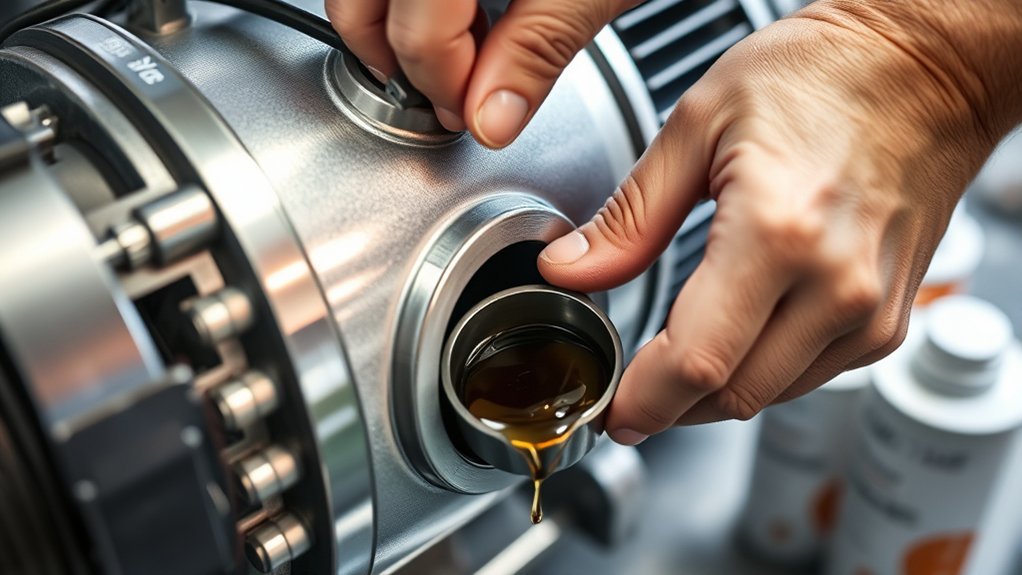
Regular inspections help us identify early signs of wear and fluid loss, but maintaining peak compressor performance also depends on timely replacement of consumables. Proper oil filtration is critical to remove particulates and maintain oil quality, preventing abrasive wear on cylinders and pistons. We regularly check and replace oil filters to guarantee ideal flow and filtration efficiency. Seal replacement is equally crucial; worn or damaged seals can cause leaks, reducing efficiency and risking component damage. Monitoring seal integrity and replacing seals when necessary prevents contamination and maintains system pressure. Consistently changing the oil, along with maintaining filtration systems and seal replacements, ensures the compressor operates smoothly, prolongs service life, and sustains operational efficiency. This routine maintenance is essential for reliable, high-performance compressor operation.
Troubleshooting Common Issues and When to Call a Professional
Despite diligent maintenance, reciprocating air compressors can still encounter operational issues that require prompt diagnosis. Vibration analysis often reveals imbalances or misalignments, while noise reduction techniques help identify abnormal sounds indicating worn components. Recognizing these signs early prevents further damage and costly repairs. When troubleshooting, consider the following indicators:
| Issue | When to Call a Professional |
|---|---|
| Excessive Vibration | Persistent imbalance or misalignment detected by vibration analysis |
| Unusual Noise | Persistent knocking, squealing, or rattling |
| Decreased Output or Pressure | Inefficient compression, indicating internal wear |
Engaging experts ensures proper diagnosis and repairs, especially when troubleshooting complex vibration or noise issues that can compromise compressor longevity.
Tips to Extend the Lifespan of Your Air Compressor
To maximize the operational lifespan of your reciprocating air compressor, implementing proactive maintenance strategies is essential. Regularly monitoring and optimizing energy efficiency reduces strain on components, preventing premature wear. Ensuring proper lubrication minimizes friction and heat buildup, enhancing longevity. Routine inspections for leaks and worn parts help maintain peak performance and reduce unnecessary energy consumption. Additionally, controlling vibration and noise levels through proper alignment and mounting not only prolongs compressor life but also contributes to noise reduction, creating a safer work environment. Keeping the cooling system clean and functional prevents overheating, which can accelerate component degradation. By maintaining these practices, we can extend the compressor’s lifespan, improve operational reliability, and achieve cost-effective performance over time.
Frequently Asked Questions
How Do I Identify Early Signs of Compressor Wear and Tear?
We identify early wear signs through lubrication issues like unusual oil consumption and examining vibration patterns for irregularities, which often indicate component imbalance or misalignment. Regular monitoring helps detect these signs before major failures occur.
What Safety Precautions Should I Take During Maintenance?
Like a knight’s armor, personal protective equipment shields us during maintenance; we must follow strict safety protocols, including emergency shutdown procedures, guarantee proper ventilation, and verify power sources are disconnected before inspecting or repairing the compressor.
Can I Upgrade Parts to Improve Compressor Efficiency?
Yes, we can upgrade components like valves and pistons for efficiency enhancements, which optimize airflow and reduce energy consumption. These component upgrades improve overall compressor performance, but thorough analysis guarantees compatibility and avoids potential operational issues.
How Does Ambient Temperature Affect Compressor Performance?
Ambient temperature impacts compressor performance by influencing ambient cooling efficiency and temperature regulation. Higher temperatures reduce cooling effectiveness, increasing internal component stress and decreasing overall efficiency, while lower temperatures enhance cooling, maintaining ideal operation and prolonging compressor lifespan.
What Are the Environmental Considerations for Compressor Disposal?
We prioritize eco-friendly disposal by adhering to recycling strategies that minimize environmental impact, ensuring hazardous components are properly managed, and promoting sustainable practices to reduce waste and support environmental health during compressor disposal.
Conclusion
By adhering to these maintenance practices, we enhance the compressor’s reliability and efficiency, ultimately reducing downtime and operational costs. While some may view routine checks as time-consuming, the long-term benefits—preventing costly repairs and extending equipment lifespan—far outweigh the initial effort. A disciplined maintenance regimen guarantees peak performance, and when issues arise, prompt troubleshooting minimizes disruption. Investing in proper upkeep is, thus, a strategic decision that sustains both productivity and equipment longevity.