Ad Blocker Detected
Our website is made possible by displaying online advertisements to our visitors. Please consider supporting us by disabling your ad blocker.
Maintaining oil-lubricated air compressors requires meticulous attention to several critical components to ensure consistent performance and durability. Proper oil management, routine inspections, and timely replacements are fundamental, yet many operators overlook the nuanced details that prevent costly failures. Understanding these intricacies can considerably extend equipment lifespan and optimize efficiency. We will explore the essential practices that form the backbone of effective maintenance, revealing the often-overlooked factors that could make or break your compressor’s reliability.
Key Takeaways
- Regularly monitor and maintain oil levels, ensuring proper viscosity and cleanliness to prevent component wear and overheating.
- Conduct routine inspections of belts, filters, and cooling fins to identify wear, contamination, or damage early.
- Change and filter oil at recommended intervals, using compatible, high-quality lubricants to extend compressor life.
- Check and adjust belt tension and alignment to optimize efficiency and prevent premature failure.
- Keep cooling system components clean and functioning to prevent overheating and maintain optimal operating temperatures.
Understanding the Importance of Proper Oil Lubrication in Air Compressors
Since proper oil lubrication is critical for the efficient operation and longevity of air compressors, understanding its role is essential for maintenance. Oil viscosity directly influences lubrication effectiveness; selecting the correct viscosity guarantees ideal film strength between moving parts, reducing wear and preventing overheating. Inadequate viscosity can lead to increased friction, component fatigue, and potential failure. Additionally, lubrication frequency is crucial to maintain consistent oil film integrity, especially under varying operational loads and ambient conditions. Regularly scheduled lubrication prevents oil degradation, such as thickening or thinning, which can impair its ability to protect internal components. Precise control of oil viscosity and adherence to recommended lubrication intervals are fundamental to minimizing downtime, extending compressor life, and ensuring reliable performance.
How to Check and Maintain the Correct Oil Levels?

Maintaining correct oil levels is vital for guaranteeing ideal lubrication and preventing internal component damage. To check oil levels, we recommend inspecting the oil sight glass or dipstick at regular intervals when the compressor is off and cooled. Confirm the oil has proper viscosity for maximum flow and lubrication; using the wrong viscosity can impair performance. Keep in mind that consistent filter maintenance is essential, as contaminated filters can affect oil circulation and cause inaccurate readings. When adding oil, use the manufacturer’s specified type and fill to the recommended level, avoiding overfill, which can lead to excessive pressure. Regular checks and proper attention to oil viscosity and filter condition help maintain efficient operation and extend the lifespan of the compressor.
Recognizing Signs of Oil Contamination and How to Clean It
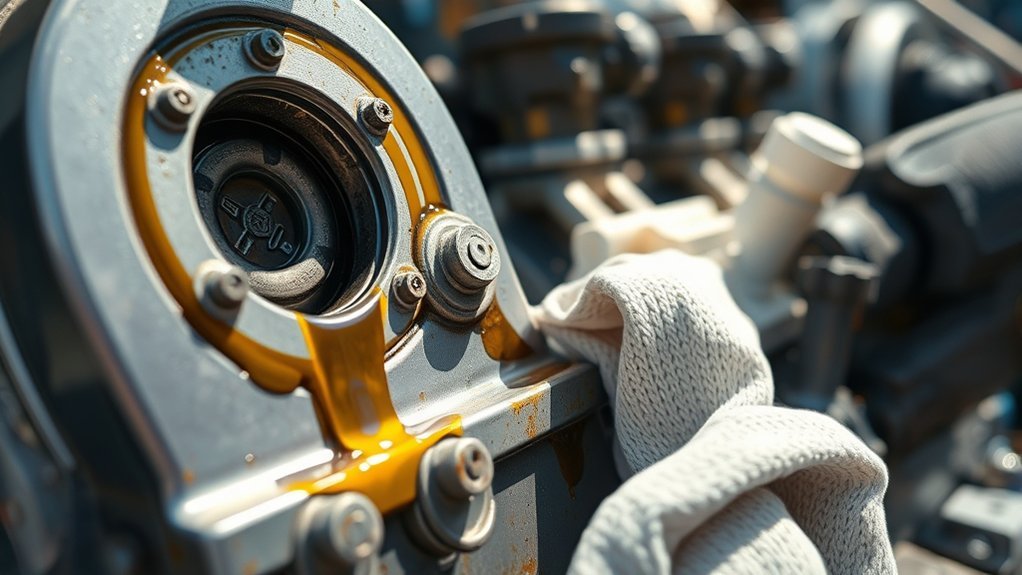
Oil contamination in air compressors often manifests through distinct visual, physical, and operational indicators, making early detection vital for preventing damage. Signs include milky or frothy oil, which indicates water intrusion; dark, sludge-like oil signaling degradation; increased pressure drops; and unusual compressor noise or vibration. Regularly inspecting oil samples helps identify contamination early, supporting effective oil filtration and contamination prevention. When contamination is detected, cleaning involves draining contaminated oil, inspecting and replacing filters, and flushing the system with appropriate cleaning solutions. Maintaining strict oil analysis protocols guarantees ongoing contamination prevention. Key actions include:
Early detection of oil contamination prevents damage through visual checks, sample analysis, and prompt filter maintenance.
- Monitoring oil color and consistency visually
- Checking for foam or froth in the oil
- Conducting routine oil sample analysis
- Replacing or cleaning filters promptly
- Ensuring proper oil filtration systems
Best Practices for Changing and Replacing Compressor Oil
Regularly changing and replacing compressor oil is essential to guaranteeing peak equipment performance and longevity. To achieve ideal results, we emphasize thorough oil filtration during drainage to remove contaminants and particulates, preventing system wear. Always verify lubricant compatibility with the compressor manufacturer’s specifications; using incompatible oils can impair lubrication and cause damage. When replacing oil, ensure the new lubricant meets the required viscosity and additive packages, supporting proper lubrication and heat dissipation. Prior to refilling, clean or replace filters to maintain oil purity. Properly document oil change intervals based on operating hours and environmental conditions. By adhering to these best practices, including diligent oil filtration and lubricant compatibility checks, we can extend compressor lifespan and minimize downtime.
Troubleshooting Common Oil-Related Issues and Their Solutions
When compressor oil exhibits signs of degradation or contamination, troubleshooting becomes essential to prevent further damage and maintain peak performance. Oil viscosity may become inconsistent, leading to inefficient lubrication and excessive wear. Contamination, such as dirt, water, or metal particles, compromises the oil’s protective qualities. To address these issues:
- Check oil viscosity regularly against manufacturer specifications
- Inspect and replace oil filters promptly to prevent contamination buildup
- Ensure proper sealing to avoid ingress of moisture and debris
- Use high-quality oil formulated for specific compressor models
- Maintain ideal operating temperatures to prevent oil breakdown
Effective contamination prevention and monitoring oil viscosity are critical in troubleshooting these issues. Regular analysis and maintenance ensure the oil remains clean and performs at peak efficiency while extending compressor lifespan.
Tips for Extending the Lifespan of Your Oil-Lubricated Air Compressor
Maintaining ideal oil levels through regular checks guarantees proper lubrication and prevents component wear. Implementing proper drainage practices removes contaminants that can degrade oil quality, while adhering to scheduled maintenance routines promotes early detection of potential issues. Together, these practices considerably extend the operational lifespan of your compressor.
Regular Oil Checks
Have you checked your air compressor’s oil levels recently? Regular oil checks are essential to guarantee maximum performance and extend lifespan. Proper assessment involves verifying oil filtration efficiency and monitoring oil temperature, as excessive heat can degrade oil quality and impair lubrication. Use a clean, calibrated dipstick or sight glass for accurate readings, and inspect oil color and consistency—darker or gritty oil indicates contamination. Ensure oil levels are within the recommended range; low levels risk increased wear, while overfilling can cause foaming. Key points to remember include:
- Check oil levels before each shift
- Use manufacturer-approved oil types
- Regularly inspect oil filtration components
- Measure oil temperature to prevent overheating
- Replace oil if contamination is evident
Consistent monitoring preserves lubrication effectiveness, reducing equipment stress.
Proper Drainage Practices
Regular oil checks help guarantee the compressor operates smoothly, but proper drainage practices are equally vital for maintaining peak performance and extending equipment lifespan. Consistently monitoring and adjusting drainage frequency prevents oil from becoming contaminated with water, debris, or sludge, which can impair lubrication and cause corrosion. Incorporating effective oil filtration systems ensures contaminants are removed prior to drainage, extending the interval between drain cycles. Precise drainage practices involve scheduled removal of accumulated moisture and particulates at manufacturer-recommended intervals, preventing oil deterioration and compressor damage. Regularly inspecting drainage valves and ensuring they function correctly minimizes residual moisture retention. Adhering to ideal drainage frequency and maintaining robust oil filtration greatly prolongs compressor life, reduces downtime, and ensures consistent operational efficiency.
Scheduled Maintenance Routines
Why is establishing a disciplined maintenance routine essential for maximizing the lifespan of your oil-lubricated air compressor? Regularly scheduled maintenance ensures consistent performance, reduces wear on critical components, and prevents costly failures. Key tasks include inspecting and replacing the oil filter to maintain ideal lubrication, which minimizes compressor noise caused by inefficient parts. Additionally, routine checks of gauges and belts help identify issues early. Proper lubrication prevents overheating and extends component life. Neglecting scheduled routines accelerates wear, increases energy consumption, and shortens your compressor’s operational life.
- Regular oil filter inspections and replacements
- Monitoring compressor noise levels for early warning signs
- Scheduled lubrication of moving parts
- Checking and adjusting belt tension
- Routine cleaning of cooling fins and vents
Frequently Asked Questions
What Type of Oil Is Best Suited for My Specific Compressor Model?
We recommend using oil with the specified viscosity for your compressor, ensuring proper lubrication and performance. Prioritize oil filtration to prevent debris, and always follow the manufacturer’s guidelines to select the most suitable oil type for peak operation.
How Often Should I Perform an Oil Analysis on My Compressor?
We recommend performing oil analysis every 500 to 1000 hours of operation, considering oil filtration efficiency and ideal oil change intervals. Regular analysis detects wear particles early, preventing costly repairs and ensuring compressor longevity.
Can Using Synthetic Oil Improve Compressor Performance and Longevity?
Using synthetic oil, with its stable viscosity and superior lubricating properties, can enhance compressor performance and extend lifespan compared to mineral oil. Synthetic oils resist breakdown under high temperatures, reducing wear and maintenance needs.
What Impact Does Ambient Temperature Have on Oil Maintenance Schedules?
Like a swimmer adjusting to changing water, temperature fluctuations affect oil viscosity, requiring more frequent oil maintenance schedules in extreme environments. We monitor ambient temperature closely to optimize oil changes and guarantee compressor efficiency and longevity.
Are There Any Environmentally Friendly Oil Disposal Options for Compressors?
We recommend eco-friendly disposal options like recycling biodegradable oils through certified facilities, ensuring minimal environmental impact. Using biodegradable oils in compressors also reduces hazardous waste, making maintenance more sustainable and aligning with environmentally conscious practices.
Conclusion
By adhering to these maintenance practices, we help guarantee our air compressors operate smoothly and reliably over time. Regular checks and timely interventions act as the gentle guiding hand that preserves the system’s integrity, minimizing wear and unexpected downtime. Through diligent oil management and routine inspections, we create a harmonious balance that extends equipment lifespan and sustains peak performance, ultimately supporting our operations with confidence and precision.