Ad Blocker Detected
Our website is made possible by displaying online advertisements to our visitors. Please consider supporting us by disabling your ad blocker.
When setting up a garage air compressor, we recognize the importance of selecting the right location to guarantee safety, noise control, and efficient operation. Proper electrical connections, ventilation, and hose organization are critical components that can affect performance and longevity. To optimize your setup, it’s essential to follow specific guidelines that address these factors thoroughly. Let’s explore the key considerations that can help you establish a reliable and safe compressor system.
Key Takeaways
- Select a well-ventilated, noise-reduced location away from heat and moisture sources.
- Choose the appropriate compressor type (reciprocating, rotary screw, or centrifugal) based on your workload.
- Verify electrical circuits are dedicated, grounded, and match voltage requirements before connecting.
- Properly connect hoses with secure fittings, store them properly, and check for leaks regularly.
- Follow safety practices like draining moisture, organizing tools, and avoiding overloads during operation.
How to Choose the Right Location for Your Garage Air Compressor
Selecting the ideal location for your garage air compressor is essential to guarantee safety, efficiency, and ease of maintenance. We recommend choosing a spot that minimizes noise transfer to living areas and ensures proper ventilation. Consider garage aesthetics by integrating the compressor into a designated corner or utility zone, maintaining a clean, organized appearance. Effective storage solutions, such as wall mounts or shelving, keep hoses and accessories accessible while reducing clutter. Avoid placing the compressor near heat sources or moisture-prone areas to prevent equipment damage. Additionally, assure the proximity to power outlets for straightforward installation. A well-chosen location streamlines operation, enhances safety, and preserves the garage’s overall appearance, making maintenance and repairs more manageable over time.
Understanding Different Types of Garage Air Compressors
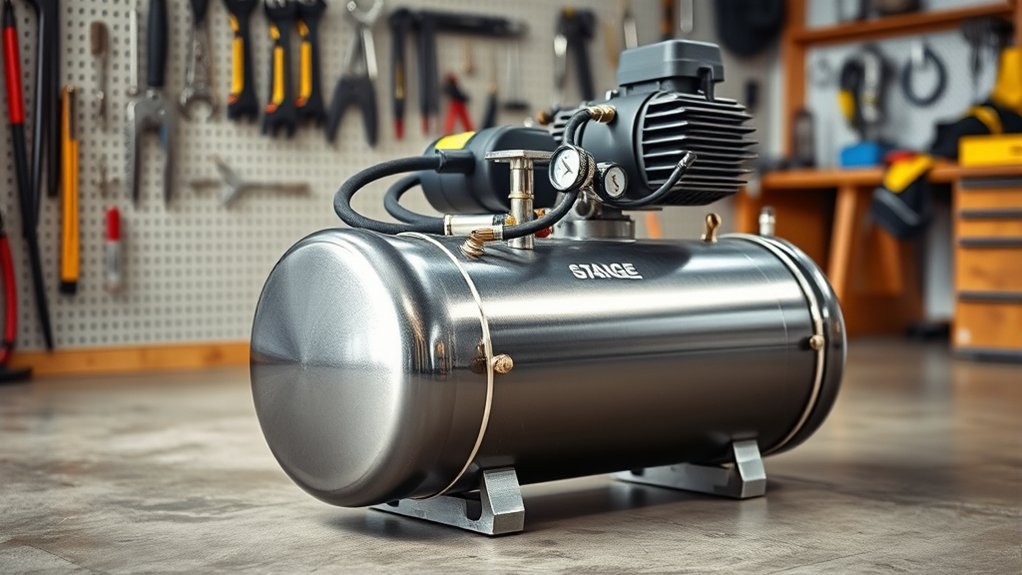
Understanding the different types of garage air compressors is essential for choosing the right equipment to meet your specific needs. The main types include reciprocating, rotary screw, and centrifugal compressors, each suited for different applications. Reciprocating models are ideal for intermittent tasks and small-scale use, offering affordability and ease of maintenance. Rotary screw compressors provide continuous operation, making them suitable for larger projects, with quieter operation and effective noise reduction. Centrifugal compressors are industrial-grade, designed for high-volume demands. When selecting, consider air compressor brands known for quality, durability, and noise reduction features. Visualize a compact reciprocating unit, a large rotary screw with sound-dampening enclosures, or a high-capacity centrifugal model—each with distinct operational characteristics tailored to your garage setup.
Connecting Your Compressor to Power and Compressed Air Lines
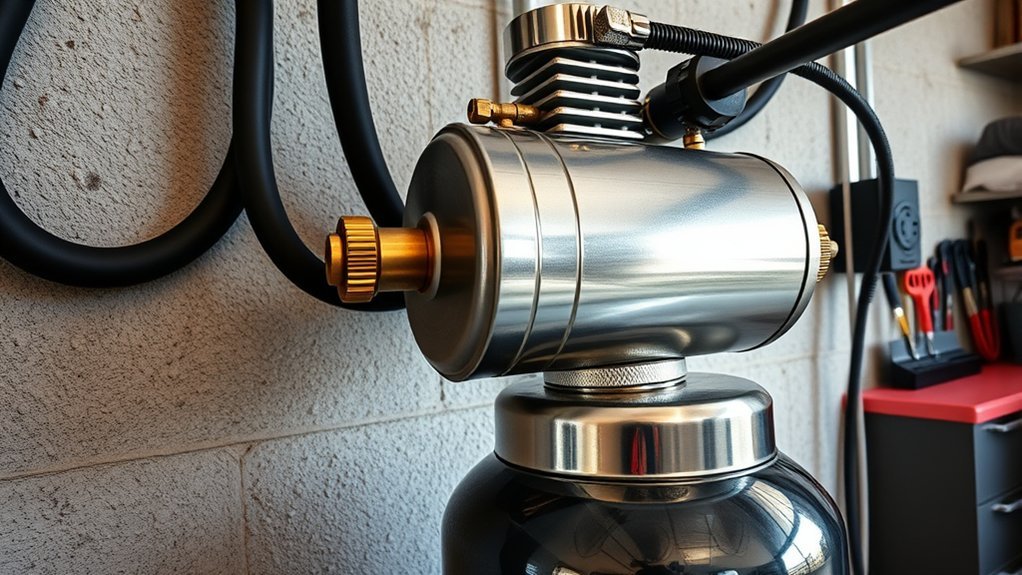
Connecting your compressor to the power supply and compressed air lines requires careful planning to guarantee safety and efficiency. Proper connections assure optimal performance and prevent hazards. Use appropriate air compressor accessories, such as pressure regulators and quick-connect fittings, to streamline operation. Adequate storage solutions, like wall-mounted tanks or shelves, keep hoses and accessories organized, reducing clutter and potential damage.
| Aspect | Consideration |
|---|---|
| Power Connection | Use dedicated circuits; secure grounding; verify voltage |
| Compressed Air Lines | Use durable piping; minimize length; avoid leaks |
| Storage Solutions | Install wall mounts; organize accessories; assure safety |
Precision in setup guarantees long-term functionality and safety.
Setting Up Hoses and Attachments Safely and Efficiently
To set up hoses and attachments safely and efficiently, we must guarantee all connections are secure to prevent leaks and disconnections during operation. Using the appropriate attachments for each task minimizes equipment stress and enhances safety. Regular safety checks help identify potential issues before they cause malfunctions or injuries.
Secure Hose Connections
Ensuring hose connections are secure is essential for safe and efficient operation of your garage air compressor. Proper attachment depends on selecting suitable hose material and matching connection fittings to prevent leaks or disconnection under pressure. Confirm that fittings are tightened adequately without over-tightening, which can damage threads. Use fittings with compatible sizes to ensure a snug fit and avoid air loss. Check for signs of wear or damage in hoses, especially near connection points. When attaching hoses, verify that the connection fittings are fully engaged and sealed. Properly secured connections maintain airflow efficiency and minimize safety hazards.
- Tightened connection fittings without cross-threading
- Hose material resistant to pressure and abrasion
- Consistent fit between fittings and hoses
- No visible cracks or wear at connection points
- Secure, leak-free attachment to compressor outlet
Use Proper Attachments
Selecting and installing the correct attachments is essential for maintaining safety and efficiency when using your garage air compressor. Properly choosing attachments ensures compatibility with your compressor’s fittings and prevents leaks or disconnections. Always verify attachment compatibility before use, matching the fitting size and type precisely.
| Attachment Type | Compatibility Check | Usage Application |
|---|---|---|
| Blow Gun | Fits outlet size | Cleaning surfaces |
| Impact Wrench | Compatible coupling | Tightening bolts |
| Spray Nozzle | Correct diameter | Painting tasks |
| Tire Inflator | Proper fitting | Inflating tires |
Using incompatible attachments risks leaks, tool damage, and safety hazards. Precise selection optimizes performance and safety.
Regular Safety Checks
Have you double-checked that hoses and attachments are correctly connected before operating your air compressor? Regular safety checks are essential to maintain safe and efficient operation. Adhering to safety protocols involves inspecting hoses for wear, cracks, or leaks, ensuring fittings are secure, and verifying that attachments are rated for the compressor’s pressure. Implementing a strict maintenance schedule helps prevent accidental disconnections or failures during use.
- Visualize tight, secure fittings with no signs of deterioration
- Confirm that hoses are free of kinks and abrasions
- Check that quick-connects lock firmly in place
- Test safety release valves periodically for proper function
- Review safety protocols to guarantee compliance before each use
Ensuring Proper Ventilation and Noise Control in Your Garage
How can we effectively manage ventilation and noise control when setting up a garage air compressor? Guaranteeing proper ventilation is critical for maintaining indoor air quality, especially given the potential emissions from compressor operation. Installing an efficient ventilation system, such as exhaust fans or air vents, helps expel fumes and circulate fresh air, reducing hazardous buildup. Noise control requires strategic placement of the compressor away from work areas and the use of sound dampening enclosures or barriers. Proper ventilation minimizes airborne contaminants and temperature fluctuations, safeguarding indoor air quality. Combining these measures ensures the garage remains safe and comfortable, preventing health issues linked to poor air circulation and excessive noise. Precise setup of ventilation systems is essential for ideal compressor operation and safety.
Routine Maintenance Tips to Keep Your Compressor Running Smoothly
Regular maintenance is essential for ensuring your compressor operates efficiently and reliably over time. Adhering to a strict maintenance schedule helps prevent downtime and prolongs equipment lifespan. Key tasks include inspecting and replacing air compressor accessories such as filters, hoses, and valves, which are critical for maximum performance. Regularly draining moisture from the tank prevents corrosion, while lubricating moving parts reduces wear. Monitoring pressure levels and checking safety valves safeguard against over-pressurization. Keep an eye on belt tension and replace worn belts promptly. Additionally, cleaning cooling fins ensures proper heat dissipation. Establishing routine maintenance schedules with detailed checklists ensures these tasks are performed consistently, minimizing unexpected failures and maintaining peak compressor efficiency.
Troubleshooting Common Setup Issues
When troubleshooting setup issues, we first verify the power supply to guarantee consistent voltage and proper grounding. Next, we check the pressure regulator settings to confirm they match the manufacturer’s specifications. Finally, we inspect all hose connections for secure fittings to prevent leaks and maintain ideal airflow.
Power Supply Checks
Ensuring the power supply is functioning correctly is essential for a reliable garage air compressor setup. Proper checks prevent issues stemming from outdated air compressor history and inadequate garage insulation, which can cause inconsistent power flow. Start by verifying the circuit breaker is not tripped, then examine the power cord for damage or loose connections. Use a multimeter to confirm voltage consistency at the outlet, ensuring it matches the compressor’s specifications. Inspect the outlet’s grounding to prevent electrical faults. Consider the garage’s insulation, as poor insulation can cause temperature fluctuations affecting electrical performance. Visualize the setup:
- A stable, properly grounded outlet
- Sufficient amperage capacity
- No visible frayed wires
- Consistent voltage readings
- Properly insulated garage environment
Pressure Regulator Settings
Proper pressure regulator settings are essential for ideal compressor performance and safety. To guarantee accuracy, we must verify pressure gauge accuracy regularly, as faulty gauges can lead to improper regulator calibration. Accurate gauges provide reliable readings, enabling precise adjustments of the regulator to maintain optimal pressure levels. When setting the regulator, start by referencing the compressor’s recommended pressure range, then adjust slowly while monitoring the gauge. If discrepancies are observed between the pressure gauge and a calibrated external gauge, recalibrate or replace the regulator to prevent over-pressurization or insufficient airflow. Properly calibrated regulators help avoid damage to tools and components, ensuring safe operation. Regular checks and adjustments maintain consistent pressure, maximizing efficiency and safety throughout your garage compressor setup.
Proper Hose Connections
Accurate pressure regulation depends on secure and correct hose connections, as leaks or improper fittings can compromise airflow and system performance. Proper hose connections guarantee optimal compressor operation, prevent pressure drops, and reduce system downtime. When setting up, consider hose storage to avoid kinks and tangles that impair airflow. Assure hoses are properly attached to the compressor’s outlet, using high-quality fittings that match the system’s specifications. Secure connections to the compressor mounting point prevent movement or accidental disconnection during operation. Inspect fittings for wear or damage and replace as needed. Properly routed hoses minimize strain, allowing for consistent airflow. Key considerations include:
- Tightening fittings with the correct torque
- Using quick-connect couplings for efficiency
- Avoiding sharp bends or kinks
- Storing hoses properly after use
- Confirming secure attachment to compressor mounting points
Tips for Safe and Effective Use of Your Garage Air Compressor
To maximize safety and efficiency when using your garage air compressor, adhering to specific operational guidelines is vital. Always inspect hoses for wear, secure connections properly, and avoid overloading circuits to prevent hazards. Proper storage organization ensures accessible controls and minimizes trip hazards, enhancing safety. Integrate garage decor elements to keep the workspace visually orderly, reducing clutter that could interfere with compressor operation. Use designated storage areas for accessories and tools to optimize workflow and safety. Regularly drain moisture from the tank to prevent corrosion and maintain compressor longevity.
| Safety Practice | Implementation |
|---|---|
| Hose Inspection | Check for cracks/damage before use |
| Storage Organization | Use labeled bins for accessories |
| Moisture Drainage | Drain tank weekly |
| Garage Decor | Keep pathways clear, tidy workspace |
Frequently Asked Questions
What Safety Gear Should I Wear When Operating the Air Compressor?
We recommend wearing personal protective gear, including safety goggles and gloves, to shield against debris. Use ear protection for noise reduction, and consider a respirator if working with potentially harmful fumes or dust.
How Do I Choose the Right Air Hose Length for My Needs?
We choose the hose length based on workspace layout, considering hose material for durability and flexibility, and hose diameter to guarantee ideal airflow; typically, a ¼-inch diameter suffices for most applications, with length adjusted for distance.
Can I Install a Drain Valve Myself?
Installing a drain valve ourselves is feasible; with proper installation tips, it’s a straightforward DIY maintenance task. Remember, 80% of compressor failures are due to poor drainage, emphasizing the importance of correct, precise installation for longevity.
What Are Signs My Compressor Needs Professional Repair?
We notice our compressor needs professional repair when it produces unusual noise levels, like excessive compressor noise, or exhibits oil leaks, indicating potential internal issues. Prompt expert evaluation guarantees safety and restores ideal performance efficiently.
How Do I Prevent Rust Buildup Inside the Tank?
To prevent rust buildup inside the tank, we treat it like a fortress—regular tank maintenance, draining moisture, and applying rust prevention coatings are essential. These steps safeguard your compressor, ensuring longevity and superior performance through diligent care.
Conclusion
In summary, a well-optimized garage air compressor setup enhances safety, efficiency, and longevity. Proper placement, soundproofing, and maintenance are vital—considering that compressors can generate noise levels exceeding 90 decibels, roughly equivalent to a lawnmower. By following best practices, we guarantee reliable performance and minimize hazards. A systematic approach ensures your compressor operates smoothly, safeguarding both your workspace and your equipment for years to come.