Ad Blocker Detected
Our website is made possible by displaying online advertisements to our visitors. Please consider supporting us by disabling your ad blocker.
Understanding the PSI rating of a single-stage air compressor is essential for selecting the right tool for your specific tasks, as it directly impacts performance and safety. This measurement indicates the maximum pressure the unit can generate and sustain, but interpreting it correctly requires a clear grasp of how it relates to operational demands. As we explore what influences PSI and how to choose the appropriate level, you’ll see why precision matters when it comes to compressor efficiency and longevity.
Key Takeaways
- PSI rating indicates the maximum pressure a single-stage air compressor can generate and sustain during operation.
- Typical PSI ranges for small compressors are 90–125 PSI, suitable for light tasks.
- Higher PSI improves performance for pneumatic tools but may increase noise and moisture levels.
- Proper adjustment and regular maintenance ensure accurate PSI and optimal compressor performance.
- Monitoring PSI regularly helps prevent over-pressurization, leaks, and ensures safety during operation.
What Does PSI Rating Mean for Single-Stage Air Compressors?
The PSI rating of a single-stage air compressor indicates the maximum pressure the device can generate and sustain during operation. This measurement reflects the compressor’s ability to deliver compressed air at a specific pressure level, essential for various tasks. When evaluating air compressor brands, understanding PSI ratings helps determine suitability for intended applications. Industry standards define safety margins and performance benchmarks, ensuring compressors operate reliably within specified limits. A higher PSI rating generally allows for more demanding tasks, but it’s vital to match the compressor’s capacity with the application’s requirements. By considering industry standards and the PSI ratings of different brands, users can select equipment that guarantees consistent performance, safety, and efficiency in industrial, commercial, or DIY environments.
How PSI Affects Compressor Performance and Task Suitability
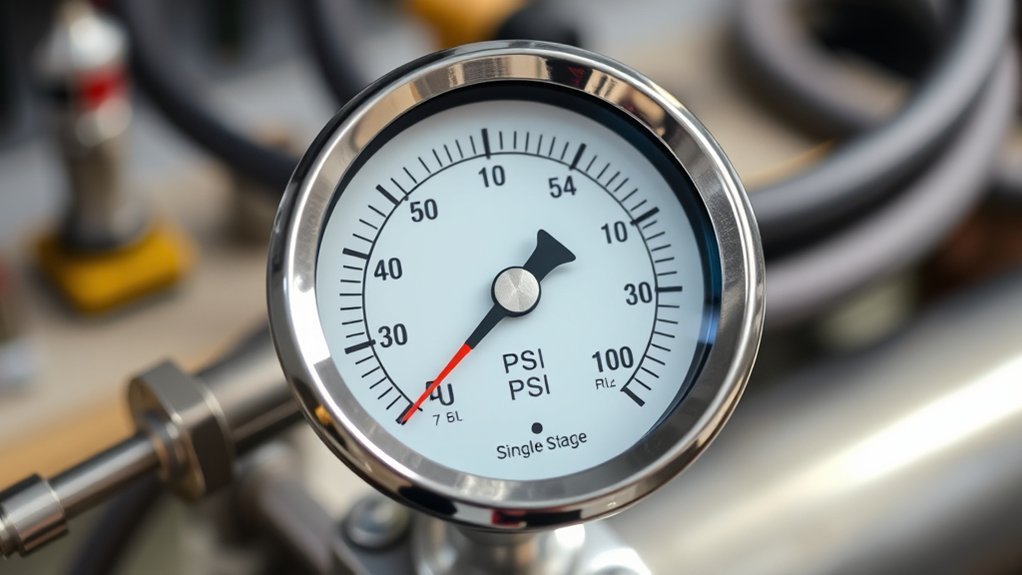
Since PSI directly determines the pressure output of a compressor, it considerably impacts its performance and suitability for specific tasks. Higher PSI levels enhance capabilities for demanding applications like pneumatic tools and industrial processes but can influence air quality and noise levels. Specifically:
- Elevated PSI often increases noise levels, which may hinder use in noise-sensitive environments.
- Higher pressure settings can affect air quality by increasing moisture and particulate presence, requiring filtration.
- Tasks needing precise, consistent pressure benefit from appropriate PSI ratings to ensure efficiency and safety.
Adjusting PSI to match task requirements ensures maximum performance, maintains air quality, and manages noise levels, making the compressor suitable for its intended application.
Typical PSI Ranges for Different Types of Single-Stage Compressors
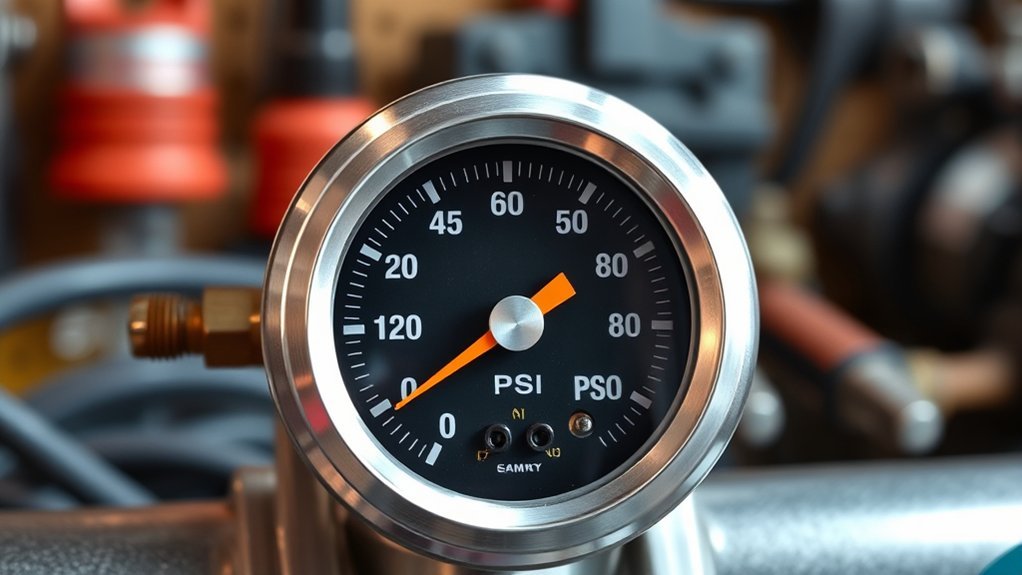
Single-stage compressors are designed to operate within specific PSI ranges that vary depending on their size, application, and construction. Typically, small models deliver between 90 and 125 PSI, suitable for light-duty tasks and requiring minimal air filter and lubrication system maintenance. Medium-sized units usually operate within 125 to 150 PSI, tailored for more demanding applications, with enhanced air filter efficiency and more robust lubrication systems to guarantee longevity. Large single-stage compressors, often used in industrial settings, operate up to 175 PSI, demanding precise calibration of both air filters and lubrication systems to prevent overheating and wear. Understanding these typical PSI ranges helps in selecting the appropriate compressor for specific tasks, ensuring ideal performance and durability.
Factors That Influence the PSI Rating of a Compressor
The PSI rating of a compressor is directly affected by its design and construction, which determine its maximum pressure output. Operating conditions, such as temperature and load, also play a critical role in maintaining consistent pressure levels. Additionally, how the compressor is used influences its PSI, as frequent or heavy-duty cycles can impact its pressure capabilities.
Compressor Design and Build
The design and build of an air compressor substantially influence its PSI rating by determining the maximum pressure it can generate and sustain. Factors such as materials used, component configuration, and cooling systems directly impact performance and energy efficiency. Specifically:
- Material strength: High-quality alloys enable higher pressure endurance without risking failure.
- Component arrangement: Optimized layouts improve airflow and reduce noise, contributing to noise reduction.
- Cooling mechanisms: Effective cooling maintains consistent performance and prevents overheating, allowing higher PSI levels. These design choices enhance energy efficiency by reducing power waste and minimizing noise production. Overall, meticulous engineering guarantees the compressor can achieve higher PSI ratings reliably, with better operational stability and quieter operation.
Operating Conditions and Usage
Operating conditions and usage patterns substantially influence a compressor’s PSI rating by affecting its ability to generate and maintain pressure levels over time. Air quality is critical; contaminants like dust, oil, or moisture can impair compressor components, reducing efficiency and pressure stability. Regular filtration and proper maintenance help maintain ideal PSI output. Noise levels also impact operation; excessive noise may indicate internal strain or imbalance, potentially limiting pressure capacity or causing damage. Proper ventilation and placement reduce noise-related stress, guaranteeing consistent performance. Additionally, duty cycle and workload frequency influence PSI stability; overloading the compressor can cause pressure drops and mechanical wear. In brief, monitoring air quality, controlling noise levels, and adhering to recommended operating parameters are essential to preserve the compressor’s rated PSI and ensure reliable, long-term performance.
How to Determine the Right PSI for Your Projects
Determining the appropriate PSI for your projects requires understanding the specific requirements of the tools and materials involved. Accurate PSI calibration techniques are essential for maintaining air compressor safety and optimal performance. To identify the correct pressure:
- Consult the manufacturer’s specifications for your tools, noting the recommended PSI range.
- Use a reliable pressure gauge to verify the compressor’s output, ensuring it matches the tool’s requirements.
- Adjust the compressor’s pressure regulator precisely, avoiding over-pressurization that could compromise safety or damage equipment.
Consistent monitoring and calibration help prevent accidents and equipment failure. Always adhere to recommended PSI levels for each application to ensure safety and efficiency. Proper understanding of these parameters allows for precise control and minimizes risks associated with incorrect PSI settings.
Common Mistakes When Choosing a Compressor Based on PSI
Choosing a compressor based solely on PSI ratings can lead to significant mistakes if we overlook other critical specifications. Many air compressor myths suggest that higher PSI always equates to better performance, but this overlooks the importance of psi measurement accuracy. Relying solely on PSI can cause us to select a unit that doesn’t meet our actual project needs, risking insufficient airflow or damage. It’s essential to understand that PSI indicates pressure, not airflow volume, which is equally crucial for proper operation. Misjudging PSI can lead to overestimating a compressor’s capacity, especially if measurement inaccuracies exist. Consequently, a thorough evaluation that includes both PSI and cubic feet per minute (CFM) ratings, along with understanding true psi measurement accuracy, ensures more reliable, effective compressor choices.
Tips for Maintaining and Monitoring Your Compressor’s PSI Level
Regular pressure checks are essential to guarantee your compressor operates within safe parameters and maintains ideal performance. Implementing proper maintenance practices, such as inspecting valves and replacing filters, helps prevent pressure fluctuations. Consistent monitoring allows for early detection of issues that could compromise system reliability.
Regular Pressure Checks
To guarantee peak performance and safety, we need to routinely verify the compressor’s PSI levels. Regular pressure checks ensure optimal air quality and noise reduction by preventing over-pressurization or leaks. When measuring PSI, focus on these key steps:
- Use a calibrated gauge to ensure accurate readings, especially in critical applications.
- Inspect the pressure relief valve periodically to prevent unsafe pressure buildup.
- Record readings consistently to identify fluctuations that could indicate system issues.
Consistent monitoring helps maintain stable air quality and reduces noise caused by pressure inconsistencies. It also allows for early detection of leaks or malfunctions, safeguarding both performance and safety. Regular checks are essential for reliable operation of single-stage compressors.
Proper Maintenance Practices
Maintaining ideal PSI levels requires consistent attention to your compressor’s components and proper operational procedures. Regular inspection of pressure gauges, valves, and seals guarantees accurate readings and prevents leaks, which affect fuel efficiency. Monitoring PSI helps optimize performance, reducing unnecessary energy consumption. To enhance noise reduction and fuel efficiency, keep components clean and lubricated, and replace worn parts promptly. Proper calibration of pressure settings prevents over-pressurization, minimizing strain on the motor. Use the following table to guide routine maintenance tasks:
| Maintenance Task | Purpose |
|---|---|
| Check pressure gauges | Ensure accurate readings |
| Inspect valves and seals | Prevent leaks, optimize PSI |
| Lubricate moving parts | Reduce noise, improve efficiency |
| Replace worn components | Maintain system integrity |
| Calibrate pressure settings | Prevent over-pressurization |
Consistent upkeep ensures reliable operation and energy efficiency.
Frequently Asked Questions
Can a Compressor’s PSI Be Adjusted Beyond Its Rated Maximum?
We can’t safely adjust a compressor’s PSI beyond its rated maximum, as it risks damage, increased noise levels, and oil lubrication issues, which can compromise performance and safety. Always adhere to manufacturer specifications for ideal operation.
How Does Altitude Affect a Compressor’s PSI Performance?
Like explorers adjusting for altitude effects, we calibrate compressors to maintain ideal PSI performance, as increased elevation decreases atmospheric pressure, impacting output; precise calibration ensures consistent operation despite altitude-related pressure variations.
Are Higher PSI Ratings Always Better for All Applications?
Higher PSI ratings aren’t always better; choosing the right compressor type depends on your application. Regular maintenance tips guarantee peak performance, regardless of PSI, but always match compressor specifications to your specific needs for efficiency and safety.
What Safety Precautions Are Necessary When Operating High-Psi Compressors?
Like sailors steering treacherous waters, we wear safety gear and follow emergency procedures, ensuring safe operation of high-psi compressors. We prioritize protective equipment, regular maintenance, and clear protocols to prevent accidents and safeguard everyone involved.
How Do Weather Conditions Impact Compressor PSI Stability?
Weather conditions, such as humidity effects and temperature fluctuations, directly impact compressor PSI stability by causing pressure variations. We monitor these factors closely, ensuring consistent operation and adjusting settings as needed to maintain ideal performance and safety.
Conclusion
Understanding your compressor’s PSI rating is key to ensuring ideal performance and safety. By choosing the right PSI for your specific tasks and maintaining it properly, you prevent inefficiencies and prolong your equipment’s lifespan. Think of PSI as the heartbeat of your compressor—monitor it regularly to keep your system running smoothly. Staying informed and attentive to these technical details empowers you to make precise, effective decisions for your projects.