Ad Blocker Detected
Our website is made possible by displaying online advertisements to our visitors. Please consider supporting us by disabling your ad blocker.
When installing a rotary screw air compressor, precision and adherence to technical standards are essential to guarantee peak performance and safety. We recognize that the process involves detailed site preparation, proper foundation work, and meticulous connection of electrical and piping systems. A systematic approach minimizes operational issues and maximizes longevity. Understanding these fundamental steps is important, as overlooked details can lead to costly downtime or safety hazards, making it imperative to explore each phase thoroughly.
Key Takeaways
- Select a clean, dry, and well-ventilated site with sufficient space for maintenance and airflow.
- Ensure proper foundation leveling and secure mounting to prevent vibrations and misalignment.
- Follow electrical safety standards for wiring, grounding, and component connections.
- Install noise reduction features like vibration mounts and soundproof enclosures to minimize operational noise.
- Verify lubrication, airflow, and electrical connections through thorough inspection before commissioning.
Understanding the Basics of Rotary Screw Air Compressors
Understanding the basics of rotary screw air compressors is essential for selecting and installing the right system. These compressors operate via twin rotors that trap and compress air efficiently, making lubrication requirements critical to guarantee smooth operation and prevent wear. Proper lubrication reduces friction, extends component lifespan, and maintains peak performance. Additionally, noise reduction techniques are crucial, as rotary screw compressors can generate significant sound levels; implementing soundproof enclosures, vibration isolators, and refined muffler designs can mitigate noise output. Recognizing these technical aspects allows us to design systems that are both reliable and quieter, ultimately improving operational efficiency. A clear understanding of lubrication needs and noise control strategies ensures the compressor functions effectively within the desired environment, minimizing maintenance costs and enhancing user comfort.
Preparing Your Installation Site for Optimal Performance
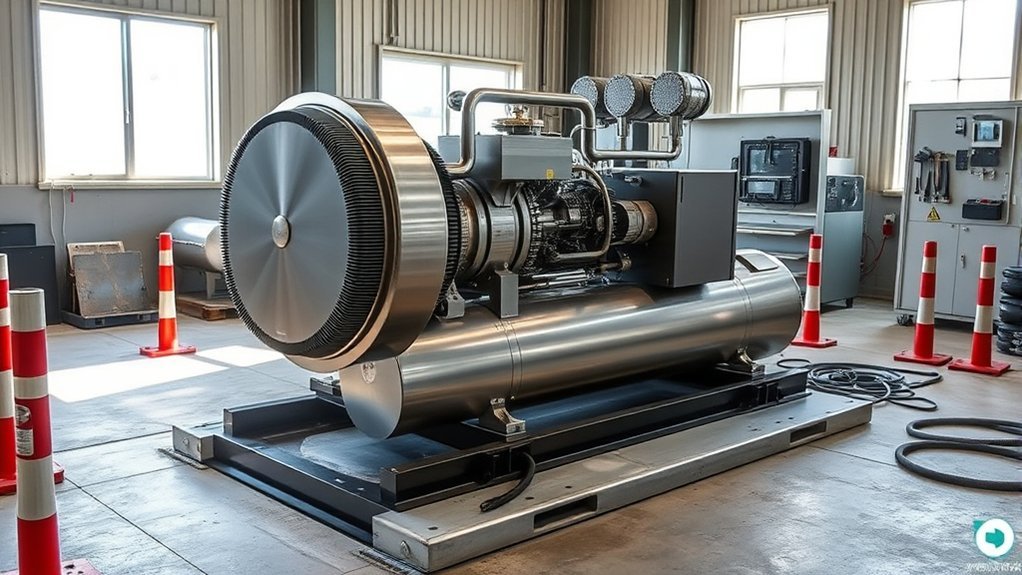
Selecting the most suitable site layout and ensuring proper environmental conditions are critical for maximizing compressor efficiency and longevity. We must evaluate factors like ventilation, noise control, and proximity to utilities to minimize operational disruptions. Additionally, safety protocols require careful planning to prevent hazards and comply with relevant standards.
Site Selection and Layout
Have you considered how the choice of installation site directly impacts the efficiency and longevity of your rotary screw air compressor? Ideal site selection requires analyzing air quality to prevent contamination that can damage components and reduce performance. It’s essential to position the compressor in an area with clean, dry air intake conditions, minimizing particulate and moisture ingress. Additionally, noise reduction should be a primary factor; selecting a location away from work zones and sensitive areas helps mitigate sound pollution and complies with noise regulations. Proper layout planning also involves ensuring adequate ventilation and space for maintenance access. By addressing air quality and noise control in your site selection, you enhance compressor reliability, operational efficiency, and lifespan, ultimately supporting consistent production and reducing downtime.
Environmental and Safety Considerations
Preparing your installation site with proper environmental and safety measures is essential to guaranteeing ideal compressor performance and personnel safety. Addressing noise reduction strategies minimizes disturbance and complies with regulations, while managing environmental impact reduces emissions and waste. Site considerations should include adequate ventilation, stable foundations, and containment for potential leaks. The following table summarizes key factors:
| Environmental/Safety Aspect | Implementation Focus |
|---|---|
| Noise reduction | Soundproof enclosures, vibration damping |
| Ventilation | Proper airflow to prevent overheating |
| Leak containment | Spill-proof drip trays, secure piping |
| Emission control | Filters, exhaust management |
| Safety signage | Clear warnings and hazard identification |
These measures ensure safety, reduce environmental footprint, and facilitate efficient operation.
Essential Tools and Equipment Needed for Installation
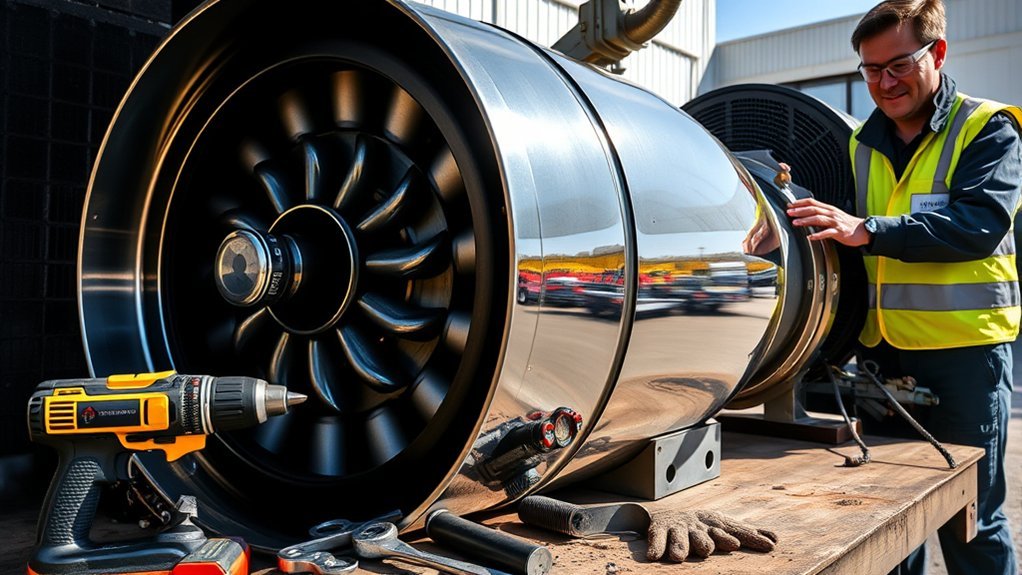
To guarantee a smooth and efficient installation of a rotary screw air compressor, assembling the appropriate tools and equipment is essential. Key items include basic hand tools—wrenches, screwdrivers, and torque gauges—to ensure secure connections. Specialized equipment such as pressure gauges and flow meters is necessary for verifying lubrication systems and airflow. Proper electrical tools are vital for safe power connections and grounding. Additionally, noise reduction accessories like vibration mounts and sound enclosures help minimize operational noise, enhancing safety and compliance. Precise alignment tools are required to guarantee ideal compressor positioning, reducing wear and energy consumption. A complete toolkit ensures all components are correctly installed, maintaining the integrity of lubrication systems and delivering quieter, more reliable operation.
Step-by-Step Guide to Installing Your Rotary Screw Air Compressor
Installing a rotary screw air compressor requires a systematic approach to guarantee peak performance and longevity. First, select an appropriate site with proper ventilation and accessible drainage. Position the compressor on a stable, level foundation, ensuring adequate space for maintenance and airflow. Address lubrication requirements by verifying oil levels and ensuring the lubrication system is correctly integrated to prevent wear and overheating. Implement noise reduction techniques, such as installing vibration pads or acoustic enclosures, to minimize operational sound levels. Secure all mounting points, double-check alignment, and confirm that cooling systems are unobstructed. Finally, conduct a thorough inspection to verify that all components are correctly installed and operational, setting the stage for safe and efficient compressor operation.
Connecting Electrical and Piping Systems Safely
Ensuring proper wiring practices and secure piping connections is essential for safe operation and system reliability. We must adhere to safety compliance measures that meet relevant codes and standards to prevent hazards. By systematically addressing these points, we can optimize the installation’s safety and performance.
Proper Wiring Practices
Proper wiring practices are essential for the safe and efficient operation of rotary screw air compressors, as improper connections can lead to electrical faults, equipment damage, or safety hazards. Ensuring correct grounding, adhering to manufacturer specifications, and verifying voltage compatibility are critical steps. Additionally, wiring should facilitate ideal lubrication procedures and noise reduction by minimizing vibrations and electrical interference. Proper cable management, including the use of appropriately rated conduit and secure connections, reduces the risk of shorts or disconnections. Regular inspection and testing of wiring integrity help identify potential issues before they escalate. Critical considerations include:
- Correct grounding and bonding
- Use of appropriately rated conductors
- Minimizing electrical noise interference
- Ensuring accessible wiring for maintenance
- Securing cables to prevent mechanical stress
Secure Piping Connections
To connect electrical and piping systems safely, we must prioritize secure fittings and proper alignment to prevent leaks, disconnections, and electrical hazards. Selecting appropriate piping materials—such as corrosion-resistant stainless steel or durable copper—is essential for system longevity and safety. Connection fittings should be compatible with the chosen piping materials, ensuring tight, vibration-resistant seals. Proper alignment during installation minimizes stress on connections, reducing the risk of leaks or joint failure. We carefully verify each connection, tightening fittings according to manufacturer specifications without over-tightening, which could damage components. Consistent inspection after installation helps identify potential issues early. By meticulously managing piping materials and connection fittings, we create a reliable, safe foundation for the compressor’s operation.
Safety Compliance Measures
When connecting electrical and piping systems for a rotary screw air compressor, adherence to safety compliance standards is vital to prevent accidents and guarantee reliable operation. Proper implementation of lubrication procedures ensures components are adequately protected, reducing wear and the risk of failure. Additionally, wiring must meet electrical codes to prevent short circuits and electrical hazards. Piping should be securely fastened to avoid leaks, while safeguards like grounding minimize shock risks. Attention to noise reduction measures is essential to protect personnel and meet regulatory standards. To ensure safety, consider these key points:
- Verify electrical connections conform to local codes
- Use appropriate conduit and grounding techniques
- Implement soundproofing to reduce operational noise
- Conduct regular lubrication checks for optimal performance
- Follow safety protocols during installation and maintenance
Calibrating and Testing the Compressor After Installation
After completing the installation, we proceed with calibrating and testing the compressor to guarantee peak performance and reliability. Calibration procedures involve verifying key parameters such as pressure settings, temperature limits, and control system responses, ensuring they align with manufacturer specifications. We utilize precise measurement tools to adjust sensors, valves, and control algorithms accordingly. Performance testing then evaluates operational efficiency, airflow rates, and power consumption under typical load conditions. This step confirms the compressor operates within its designated parameters and identifies any deviations requiring correction. Thorough calibration and performance testing not only optimize the compressor’s function but also help prevent future failures. These procedures are critical for validating the installation’s success and ensuring the compressor delivers consistent, reliable service.
Common Installation Mistakes to Avoid
Proper installation is essential for guaranteeing the longevity and efficiency of a rotary screw air compressor, but common mistakes can undermine these goals. Errors such as neglecting proper airflow paths can cause overheating, while misjudging the placement of the air filter hampers filtration efficiency. Failing to verify the lubrication system’s correct setup can lead to inadequate lubrication, increasing wear. Overlooking vibration isolation may cause undue stress on components. Additionally, improper electrical connections risk system stability. To avoid these pitfalls:
- Incorrect air filter placement affecting filtration
- Overlooking lubrication system alignment
- Poor ventilation or airflow obstructions
- Skipping vibration isolation measures
- Inadequate electrical wiring or grounding
Attention to these details guarantees maximum performance and reduces downtime.
Maintenance Tips to Extend Your Compressor’s Lifespan
Regular maintenance is critical for maximizing the lifespan of your rotary screw air compressor, as it guarantees all components operate under ideal conditions. Consistent air filter maintenance is essential to prevent dirt and debris from entering the system, reducing wear on internal parts and maintaining peak airflow. Implementing a strict lubrication schedule ensures that bearings and gears are properly lubricated, minimizing friction and preventing premature component failure. Regularly inspecting and replacing filters, along with adhering to manufacturer-recommended lubrication intervals, enhances compressor efficiency. These practices help mitigate the risk of overheating, reduce energy consumption, and extend overall service life. By systematically managing air filtration and lubrication, we guarantee the compressor functions reliably and efficiently over its operational lifespan.
Troubleshooting Tips for a Smooth Startup
Ensuring a smooth startup for your rotary screw air compressor requires careful troubleshooting to identify and address potential issues before operation begins. Proper focus on noise reduction during startup minimizes vibration and operational disruption. Additionally, selecting the appropriate lubricant is critical to prevent premature wear and ensure optimal performance.
Key troubleshooting steps include:
- Verifying correct lubricant type and level to prevent startup delays
- Inspecting for air leaks that could cause abnormal noise or pressure drops
- Ensuring electrical connections are secure and properly calibrated
- Checking for debris or contamination that may impede compressor components
- Evaluating sound insulation to support noise reduction strategies
Addressing these factors proactively helps facilitate a seamless startup, reduces downtime, and promotes long-term compressor reliability.
Frequently Asked Questions
How Long Does a Typical Rotary Screw Air Compressor Installation Take?
Typically, installation takes 1-2 days, allowing us to set up efficiently, schedule maintenance, and implement noise reduction measures, ensuring peak operation and minimal downtime for your rotary screw air compressor.
What Are the Energy Efficiency Considerations During Installation?
Think of installation as tuning a musical instrument; we prioritize energy savings and power optimization, ensuring precise calibration. We analyze electrical systems and airflow, minimizing energy waste, and enhancing overall compressor efficiency for long-term operational cost reductions.
Can the Compressor Be Installed Outdoors in All Weather Conditions?
We can install the compressor outdoors if we guarantee proper outdoor placement and implement weatherproofing measures; this safeguards against environmental factors, maintains operational efficiency, and prolongs equipment lifespan despite varying weather conditions.
What Safety Precautions Should Be Followed During Installation?
They say safety comes first, and we agree. We follow strict safety protocols, wear appropriate personal protective equipment, and guarantee proper grounding and ventilation to prevent hazards during installation, because safety is no accident.
How Often Should the Compressor Be Inspected Post-Installation?
We suggest inspecting the compressor weekly, following a strict maintenance schedule, and utilizing troubleshooting tips to identify issues early. Regular inspections help guarantee peak performance, minimize downtime, and extend the lifespan of your rotary screw air compressor.
Conclusion
In summary, proper installation of a rotary screw air compressor is vital for peak performance, reliability, and longevity. We’ve seen that meticulous site preparation, precise alignment, and adherence to safety standards directly influence operational efficiency. Investigating installation best practices confirms that thorough inspection and maintenance are essential, debunking myths that shortcuts won’t impact long-term performance. By applying a systematic, analytical approach, we guarantee your compressor functions effectively, supporting your operations with minimal downtime and maximum energy efficiency.