Ad Blocker Detected
Our website is made possible by displaying online advertisements to our visitors. Please consider supporting us by disabling your ad blocker.
At the crossroads of compressor choices, how do we determine whether a pancake or hot dog model best suits our needs? Both types serve distinct applications, yet their differences in design, capacity, and performance can substantially influence project outcomes. Understanding these nuances is vital for making an informed decision that balances efficiency, cost, and safety. To navigate this effectively, we need to examine their core features and practical implications—so let’s explore what sets these compressors apart.
Key Takeaways
- Pancake compressors are compact, lightweight, and ideal for quick, light-duty tasks; hot dog compressors offer higher capacity for continuous use.
- Pancake models operate more quietly and are suitable for DIY and occasional projects; hot dog units support professional, sustained workloads.
- Hot dog compressors typically have larger tanks, providing longer run times compared to the smaller, low-profile pancake tanks.
- Pancake compressors are generally more energy-efficient and easier to maintain, while hot dog models are more robust and suited for heavy-duty tasks.
- Shape and size influence application suitability: pancake for portability and quick bursts, hot dog for higher performance and continuous operation.
What Are Pancake and Hot Dog Air Compressors and How Do They Differ?
Pancake and hot dog air compressors are two common types of portable, piston-driven units designed for specific applications, yet they differ markedly in design and functionality. These air compressor types are distinguished primarily by their shape, size, and intended compressor applications. Pancake compressors feature a low-profile, circular tank, making them lightweight and easy to transport, well-suited for light-duty tasks like inflating tires or powering small tools. Hot dog compressors have a longer, cylindrical tank, offering higher capacity and longer continuous run times, ideal for more demanding applications such as spray painting or framing. The design differences influence their performance, with pancake units providing quick bursts of compressed air, while hot dog models support sustained operation. Understanding these distinctions helps match compressor types to specific tasks effectively.
Key Factors to Consider When Choosing Between Pancake and Hot Dog Compressors
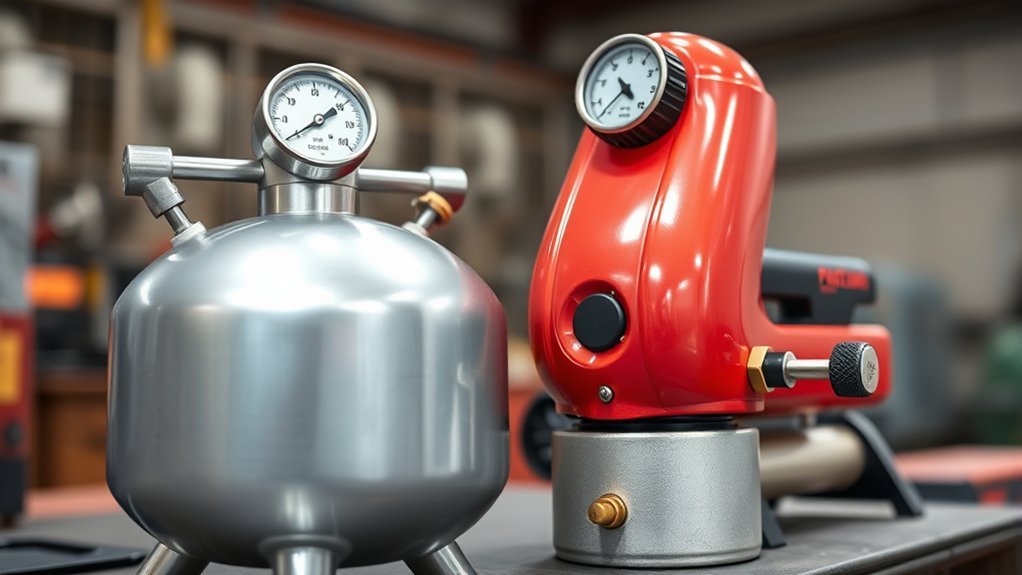
When selecting between pancake and hot dog compressors, several key factors must be carefully evaluated to guarantee the chosen unit aligns with specific operational needs. Energy efficiency is essential; pancake compressors generally consume less power due to their design, making them suitable for intermittent use. Conversely, hot dog compressors often offer higher CFM output, which may lead to increased energy consumption but better handle continuous workloads. Noise levels are another critical consideration; pancake compressors tend to operate more quietly, benefiting environments where noise reduction is vital. Hot dog compressors typically generate higher noise levels, potentially requiring soundproofing measures. Ultimately, understanding how energy efficiency and noise levels impact your application helps ensure peak performance, cost savings, and compliance with workplace noise regulations.
Pros and Cons of Pancake Air Compressors for Your Projects
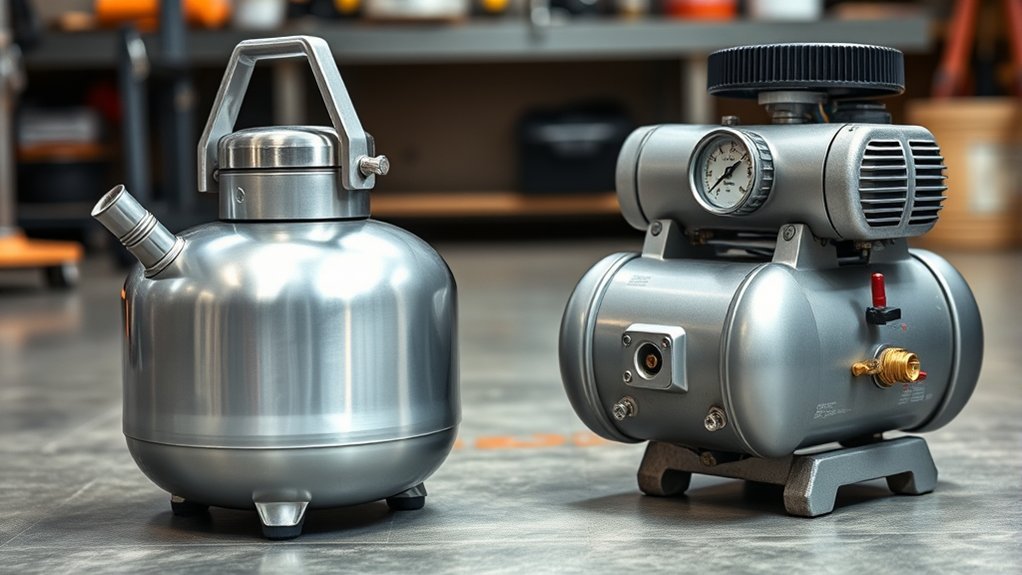
Although pancake air compressors are often praised for their portability and simplicity, they also present specific advantages and limitations that can considerably impact project outcomes. Their compact design makes them ideal for small-scale tasks, but their limited tank capacity can restrict continuous operation. The noise level, often lower than larger models, remains a concern depending on the compressor oil types used, which influence durability and maintenance. Additionally, the air compressor noise during operation can be disruptive in quiet environments. Pros include lightweight portability, affordability, and ease of maintenance. Cons involve limited airflow capacity, higher frequency of oil changes, and potential overheating under heavy use. Overall, pancake compressors suit light-duty applications but may fall short for more demanding projects requiring sustained airflow.
Advantages and Disadvantages of Hot Dog Air Compressors
Hot dog air compressors are valued for their portability and efficient performance in small to medium-sized tasks. Their compact design allows for easy transport and use in tight spaces, making them ideal for mobile or on-site applications. However, their smaller size often results in increased air compressor noise during operation, which can be a concern in noise-sensitive environments. When considering energy efficiency considerations, hot dog compressors tend to consume more energy relative to their output compared to larger models, due to higher operating pressures needed for peak performance. This can lead to increased operational costs over time. While their portability is a clear advantage, users must balance this with potential drawbacks like higher noise levels and less energy efficiency, especially when used frequently or for extended periods.
Which Air Compressor Is Best for DIY, Professional, or Occasional Use?
When selecting an air compressor for different use cases, evaluating ideal power levels is vital to guarantee it meets the demands of the task. Portability and size also play significant roles, especially for DIY projects or job sites with limited space. By analyzing these factors, we can identify which compressor type best balances performance and convenience for each user category.
Ideal Power Levels
Determining the ideal power level for an air compressor depends heavily on the intended application and usage frequency. For DIY tasks, a compressor with a lower horsepower (around 1-2 HP) typically suffices, emphasizing energy efficiency and manageable noise levels. Professional environments demand higher power ratings (3-5 HP or more) to sustain continuous operation and higher airflow needs. Occasional users benefit from moderate power units that balance performance with lower noise and energy consumption. Key considerations include:
- Adequate CFM for consistent tool operation
- Reduced air compressor noise levels for comfort
- Energy efficiency to lower operational costs
- Sufficient power for the specific task volume
- Longevity and durability for frequent use
Matching power levels to your needs ensures suitable performance, minimal noise pollution, and energy efficiency.
Portability and Size
Choosing the appropriate size and portability for an air compressor is essential, as these factors directly influence ease of transport, workspace requirements, and ease of use across different applications. For DIY projects or occasional use, pancake compressors excel due to their compact design aesthetics and lightweight nature, making them highly portable. Conversely, hot dog compressors, with larger tanks and more robust construction, are better suited for professional environments requiring sustained operation. Noise levels also vary notably: pancake models tend to operate quieter, ideal for shared spaces. Here’s a comparison:
| Feature | Pancake Compressors | Hot Dog Compressors |
|---|---|---|
| Design Aesthetics | Compact, lightweight | Larger, robust |
| Noise Levels | Lower, quieter | Higher, louder |
| Portability | High | Moderate |
| Suitable for | DIY, occasional | Professional use |
Tips for Maintaining and Using Your Air Compressor Safely and Effectively
Regular inspections of safety valves are essential to prevent over-pressurization and potential hazards. Maintaining clean filters guarantees ideal airflow and reduces strain on the compressor, enhancing longevity. Proper storage and drainage practices are critical to prevent corrosion and ensure reliable operation over time.
Regularly Inspect Safety Valves
How often do we check the safety valves on our air compressors to guarantee they function correctly? Regular safety valve testing is essential for reliable operation and safety. We must verify that the safety valve opens at the designated pressure, preventing over-pressurization. Failing to inspect these valves can compromise emergency shutdown protocols, risking system failure or injury.
Key considerations include:
- Conduct safety valve testing at scheduled intervals
- Use calibrated pressure gauges for accuracy
- Replace valves exhibiting sluggish response or leaks
- Document testing results for maintenance records
- Assure quick access for immediate inspection during emergencies
Consistent inspection ensures the safety valve functions correctly, maintaining system integrity and protecting users from potential hazards during over-pressurization scenarios.
Keep Filters Clean and Clear
Maintaining clean filters is essential for peak air compressor performance and safety; clogged or dirty filters can reduce airflow, increase energy consumption, and cause undue wear on internal components. Dirty filters compromise air quality by allowing contaminants to circulate, potentially damaging sensitive parts and affecting the overall efficiency. Additionally, restricted airflow from clogged filters can elevate noise levels, making operation louder and less tolerable. Regular inspection and timely cleaning or replacement of filters guarantee ideal airflow and maintain consistent air quality. This proactive approach minimizes strain on the compressor, reduces operational costs, and prolongs equipment lifespan. Keeping filters clear not only enhances performance but also ensures safer, quieter operation—both critical factors in effective compressor management.
Properly Store and Drain
Proper storage and drainage are crucial for preserving the longevity and safe operation of your air compressor. Effective maintenance prevents moisture buildup, which can cause corrosion and degrade air compressor lubrication. Always drain moisture from the tank after each use to prevent rust and maintain peak performance. Store the compressor in a controlled environment, adhering to storage temperature tips to avoid condensation and thermal stress. Regularly inspect and clean air filters and drain valves to ensure proper airflow and safety. Use the correct storage techniques, such as keeping the unit upright and protected from extreme temperature fluctuations, to avoid damaging internal components. Properly draining moisture and following storage guidelines greatly extend the compressor’s lifespan and ensure consistent, safe operation.
- Drain moisture regularly after use
- Store in a temperature-controlled environment
- Inspect and clean drain valves and filters
- Avoid extreme temperature fluctuations
- Maintain proper air compressor lubrication
Frequently Asked Questions
How Do Noise Levels Compare Between Pancake and Hot Dog Compressors?
We find that pancake compressors generally produce lower noise levels due to their design, offering quieter operation in noise comparison and sound levels, whereas hot dog compressors tend to be louder, making them less ideal for noise-sensitive environments.
What Is the Typical Lifespan of Each Compressor Type?
A hot dog compressor typically lasts 8-10 years, while a pancake model can reach 10-12 years with proper maintenance. Their longevity benefits from consistent maintenance and portability advantages, making them reliable for long-term use.
Are There Any Safety Features Unique to Pancake or Hot Dog Compressors?
We find that pancake compressors often feature safety shutoff valves for overheating, while hot dog compressors emphasize robust design considerations like reinforced casings. Their portability features also influence safety, ensuring secure handling during operation.
Can These Compressors Be Used for Industrial-Scale Projects?
We believe these compressors aren’t suitable for industrial-scale projects due to high maintenance needs and limited durability. Their portability benefits are great for small tasks, but they lack the robustness required for continuous, large-scale industrial operations.
How Do Energy Efficiency and Operating Costs Differ?
We find pancake compressors generally more energy-efficient with lower operating costs, offering better energy savings, whereas hot dog compressors often have higher energy consumption, leading to increased costs over time, making them less ideal for long-term operational savings.
Conclusion
In summary, selecting the right compressor hinges on understanding your workload demands—pancake models excel in portability for light tasks, while hot dog units are better suited for sustained, high-capacity use. Notably, studies show that portable compressors account for over 60% of DIY project needs, highlighting their popularity. By analyzing your specific needs and considering performance metrics, you can optimize efficiency, safety, and cost-effectiveness—ensuring your air compressor investment aligns precisely with your project requirements.