Ad Blocker Detected
Our website is made possible by displaying online advertisements to our visitors. Please consider supporting us by disabling your ad blocker.
When evaluating air compressors for various applications, understanding the fundamental differences between pancake and hot dog models is essential. Their distinct design features influence performance, portability, and suitability for specific tasks. As we analyze these two types, it’s important to take into account how their capabilities align with your project requirements. The choice isn’t just about size — but how each model’s strengths and limitations can impact your efficiency and long-term costs.
Key Takeaways
- Pancake compressors are compact, lightweight, and portable, ideal for quick, light-duty tasks; hot dog compressors are larger and more durable for heavy-duty use.
- Pancake models offer higher CFM and PSI for faster operation, while hot dog compressors have lower power but support industrial applications.
- Hot dog compressors often include advanced safety features and longer-lasting filters, suitable for demanding, continuous work environments.
- Pancake compressors are budget-friendly and easier to store, whereas hot dog compressors tend to be more expensive but more robust for long-term use.
- Maintenance requirements differ: pancake compressors need frequent filter cleaning, while hot dog models benefit from longer oil and filter life.
What Are Pancake and Hot Dog Compressors? An Overview of Basic Types
Have you ever wondered what differentiates pancake and hot dog compressors? These basic types serve specific functions based on design and capacity. Pancake compressors typically feature a flat, circular tank, making them lightweight and portable. Hot dog compressors, with their elongated shape, often accommodate higher airflow needs. When comparing air compressor brands, it’s crucial to evaluate their environmental impact—many brands now prioritize energy efficiency to reduce emissions. Pancake models usually consume less power, resulting in a smaller environmental footprint, while hot dog compressors may operate more efficiently under heavy-duty loads. Both types are designed to meet different user demands, but understanding their basic structures helps clarify how their environmental impacts vary based on size, power consumption, and usage patterns.
Key Differences in Design and Size: How They Affect Portability and Storage
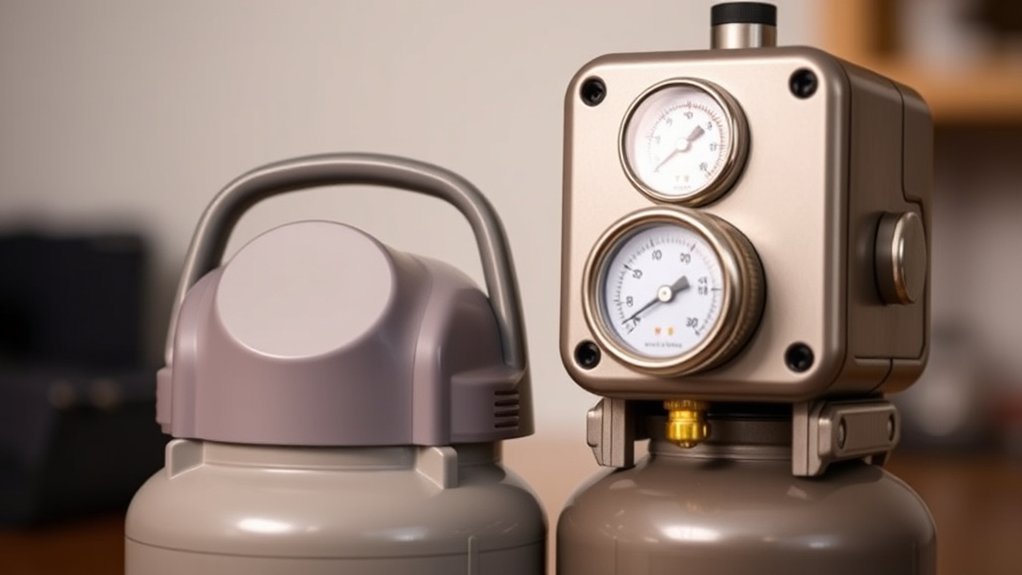
The design and size of pancake and hot dog compressors directly influence their portability and storage options. Design innovation in these models emphasizes compactness and ergonomic handling, making them suitable for varied work environments. Pancake compressors typically feature a flat, circular shape with a low profile, optimizing space efficiency and ease of transport. Conversely, hot dog compressors often have a more elongated form, which can pose challenges for storage but may accommodate larger tanks or additional features. Effective storage solutions depend on these design distinctions; pancake models fit easily into tight spaces or cabinets, while hot dog compressors require more dedicated storage. The choice between them hinges on how their structural differences align with user needs for mobility, convenience, and space management.
Performance Comparison: CFM, PSI, and Power Capabilities
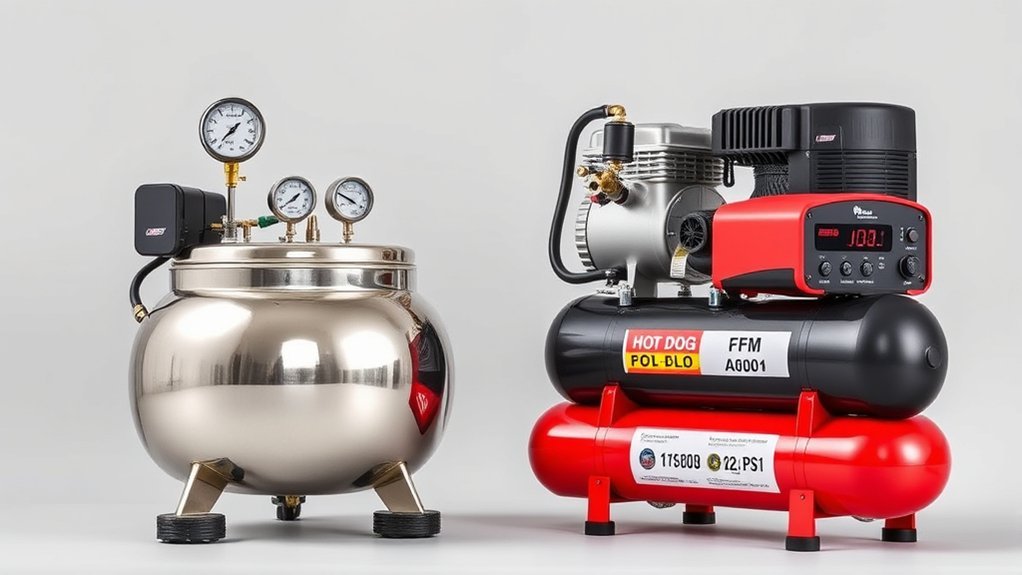
When comparing pancake and hot dog compressors, their performance metrics—specifically CFM, PSI, and power capabilities—are critical indicators of suitability for different tasks. Pancake compressors generally deliver higher CFM and PSI, enabling faster operation for demanding applications, while hot dog models tend to have lower power output, suitable for light-duty tasks. Air compressor noise levels vary; pancake types often operate more quietly, enhancing their practicality in noise-sensitive environments. Additionally, energy efficiency ratings are essential, with pancake compressors typically offering better efficiency due to their design, leading to lower operational costs. Understanding these metrics helps determine if a compressor meets specific job requirements, balancing power needs with noise considerations and energy consumption for ideal performance.
Ideal Use Cases for Pancake Compressors Versus Hot Dog Compressors
Understanding the specific applications of pancake and hot dog compressors helps optimize their use in various tasks. Pancake models typically handle heavy-duty tasks due to their higher CFM and PSI capacities, making them suitable for demanding jobs. Conversely, hot dog compressors excel in portability, ideal for quick, light-duty tasks requiring mobility.
Suitable for Heavy Duty Tasks
While both pancake and hot dog compressors can handle various tasks, their suitability for heavy-duty applications varies considerably. Pancake compressors generally have higher CFM ratings and larger tanks, making them more capable of sustained, demanding tasks like framing or roofing. They often feature a more aesthetic design that facilitates cooling and durability, though they tend to operate with a higher noise level. Hot dog compressors, with their compact form factor, are limited in capacity and suitable mainly for light-to-moderate tasks.
| Feature | Pancake Compressor | Hot Dog Compressor |
|---|---|---|
| Heavy-duty capability | High (better for sustained use) | Limited (best for light tasks) |
| Aesthetic design | Larger, robust, utilitarian | Compact, minimalistic |
| Noise level | Usually louder | Quieter |
Ideal for Portability Needs
Portability often determines the practical application of pancake and hot dog compressors, especially in environments requiring frequent movement or on-site use. Pancake compressors excel here due to their lightweight design, compact size, and ease of transport, making them ideal for contractors or DIY enthusiasts on the go. Their color options often include bright, visible hues, enhancing visibility during transportation. Hot dog compressors, although slightly more portable than larger models, tend to be bulkier and less maneuverable, limiting their use in highly mobile settings. Brand reputation plays a crucial role in choosing the right model, as trusted brands often prioritize portability features and durable construction. Overall, pancake compressors are better suited for portability needs, thanks to their size, weight, and brand reliability.
Pros and Cons: Which Compressor Suits Your Projects Best?
We evaluate how each compressor’s versatility impacts performance across various tasks, considering their design strengths and limitations. Cost and maintenance factors also influence long-term suitability, affecting overall project efficiency. By analyzing these points, we can determine which compressor aligns best with your specific project demands.
Versatility for Different Tasks
Choosing the right compressor depends heavily on the range of tasks you plan to undertake, as each type offers distinct advantages and limitations. Pancake compressors excel in portability and quick recovery times, making them suitable for light-duty tasks like airbrush precision and small-scale repairs. Their compact design allows for easy transport, but they may lack the sustained airflow needed for intensive industrial applications. Conversely, hot dog compressors typically provide higher CFM output, supporting continuous operation in demanding environments such as manufacturing or automotive work. Their larger size can hinder mobility, but they handle higher workloads more efficiently. For projects requiring fine detail, like airbrush work, pancake compressors are advantageous. For heavy-duty, industrial applications, hot dog compressors offer the robustness and consistent airflow necessary for prolonged use.
Cost and Maintenance Factors
When evaluating pancake and hot dog compressors for your projects, cost and maintenance considerations play a pivotal role. Pancake compressors generally have a lower initial cost, but their air filters require regular cleaning to maintain efficiency. Hot dog compressors tend to be more expensive upfront but feature enhanced safety features, reducing long-term risks. Maintenance for both types includes checking safety features and replacing air filters periodically. Below is a comparison:
| Aspect | Pancake Compressor | Hot Dog Compressor |
|---|---|---|
| Initial Cost | Lower | Higher |
| Maintenance Cost | Moderate | Slightly higher due to safety features |
| Air Filter | Needs frequent cleaning | Durable, longer lifespan |
| Safety Features | Basic safety mechanisms | Advanced safety mechanisms |
Maintenance and Durability: What to Expect Over Time
Although both pancake and hot dog compressors are designed for durability, their maintenance needs and longevity can vary considerably over time. Oil lubrication plays a critical role in extending component life and ensuring smooth operation; however, pancake compressors typically require more frequent oil checks and changes due to their smaller oil reservoirs. Hot dog compressors, with larger tanks and more robust construction, often maintain stable oil levels longer. Noise levels are also indicative of future durability; higher noise during operation can signal wear or insufficient lubrication, leading to increased maintenance. Over time, improper oil management and elevated noise can accelerate wear on pistons and valves, reducing overall lifespan. Regular maintenance, including oil checks and noise monitoring, is essential for optimizing durability in both compressor types.
Cost and Value: Budgeting for Your Air Compressor Purchase
Understanding the costs associated with pancake and hot dog compressors is essential for making an informed investment. Initial purchase price varies considerably, with pancake models generally offering lower upfront costs, while hot dog compressors might incur higher expenses but offer enhanced capacity. When budgeting, consider the long-term value, including energy efficiency, which affects ongoing operational costs. Energy-efficient models reduce electricity consumption, providing savings over time, especially when paired with compatible air compressor accessories that optimize performance. Additionally, maintenance costs and durability influence overall value; durable compressors with fewer repairs may justify higher initial investments. Balancing these factors enables a thorough assessment of cost versus benefit, ensuring that your choice aligns with your usage needs and budget constraints.
Frequently Asked Questions
Can Pancake or Hot Dog Compressors Handle Industrial Tasks?
We believe pancake and hot dog compressors aren’t suitable for industrial tasks due to limited air pressure consistency and compressor portability, which are essential for demanding environments. They excel in light-duty applications, not heavy-duty industrial operations.
Which Compressor Type Has a Longer Lifespan?
We believe pancake compressors often outlast hot dog compressors due to simpler maintenance requirements and better portability factors. Regular maintenance, like checking seals and oil levels, substantially extends lifespan, making them more durable for long-term industrial use.
Are There Noise Differences Between Pancake and Hot Dog Compressors?
We find that pancake compressors generally have a lower noise level comparison, making them quieter, but their sound durability can vary. Hot dog compressors tend to be louder, though their design often enhances overall compressor sound durability over time.
Do These Compressors Require Special Accessories or Attachments?
These compressors typically don’t require special accessories but have varying accessory compatibility and attachment variations. We recommend checking manufacturer specifications to guarantee compatibility, especially for specific tools or tasks, to optimize performance and safety during use.
How Energy-Efficient Are Pancake Versus Hot Dog Compressors?
They say, “You get what you pay for,” and energy efficiency varies; pancake compressors often consume less power, but hot dog models may need more maintenance. Price comparison and maintenance tips reveal subtle efficiency gains worth considering.
Conclusion
Ultimately, choosing between a pancake and hot dog compressor hinges on your specific needs. For instance, a hobbyist tackling light projects might find a pancake model’s portability and quiet operation ideal, while a contractor handling continuous heavy-duty tasks may prefer the durability and capacity of a hot dog compressor. By analyzing factors like performance, costs, and project demands, you can make a well-informed decision that maximizes efficiency and value in your work.