Ad Blocker Detected
Our website is made possible by displaying online advertisements to our visitors. Please consider supporting us by disabling your ad blocker.
Did you know that neglecting regular maintenance on your air compressor can lead to early component failure and decreased efficiency? Many operators overlook critical tasks like checking for leaks, replacing filters, or draining moisture, which are essential for safe and ideal operation. Understanding these procedures can seem complex initially, but proper upkeep is key to extending your equipment’s lifespan. We’ll guide you through the necessary steps to keep your compressor running smoothly and safely.
Key Takeaways
- Regularly inspect hoses, fittings, and safety valves for wear, leaks, and proper operation.
- Change compressor oil and clean filters every 250 hours or monthly to maintain efficiency.
- Drain moisture from the tank regularly to prevent corrosion and damage.
- Check belts, pistons, and valves for wear or damage, replacing as needed to ensure optimal performance.
- Perform system calibration quarterly and verify safety mechanisms to ensure safe operation.
How to Inspect Your Air Compressor for Basic Issues
Regular inspection of your air compressor is essential to identify and address basic issues before they escalate. Prioritize air compressor safety by checking for loose fittings, leaks, and abnormal vibrations. Examine hoses and connections for signs of wear or damage, as compromised components can lead to safety hazards or reduced efficiency. During inspection, consider storage considerations—ensure the compressor is stored in a clean, dry environment to prevent corrosion and maintain peak performance. Inspect the pressure relief valve for proper operation, and verify that safety shut-off mechanisms function correctly. Regularly reviewing these elements helps prevent malfunctions and promotes safe operation. Maintaining a systematic inspection routine not only enhances safety but also extends the lifespan of your compressor, reducing downtime and repair costs.
Regularly Change and Clean Compressor Oil and Filters

Regularly changing the compressor oil and cleaning filters is essential to maintain ideal performance and prevent component wear. Monitoring oil levels ensures proper lubrication, while filter maintenance keeps contaminants from circulating through the system. Consistent attention to these tasks minimizes downtime and extends the lifespan of your compressor.
Importance of Oil Changes
Why is it essential to change and clean compressor oil and filters consistently? Maintaining oil quality is critical because degraded oil loses its lubricating properties, increasing wear on internal components and reducing efficiency. Regular oil changes prevent contamination buildup, ensuring peak compressor performance and longevity. Fresh oil minimizes thermal breakdown and sludge formation, which can obstruct filters and impair operation. Proper oil disposal is equally important; contaminated oil must be disposed of in accordance with environmental regulations to prevent pollution. Neglecting timely oil changes can lead to increased energy consumption, costly repairs, and potential compressor failure. By adhering to a strict maintenance schedule for oil replacement and disposal, we safeguard the compressor’s internal mechanisms and sustain its operational integrity over the long term.
Cleaning Filter Components
How often should we clean and replace compressor filters to guarantee peak performance? Typically, filters require inspection every 250 hours of operation or monthly, whichever comes first. Regular component inspection ensures contaminants are removed and filter efficiency maintained. When necessary, perform filter replacement promptly to avoid airflow restrictions.
| Filter Type | Replacement Interval |
|---|---|
| Intake filters | Every 3–6 months |
| Oil filters | Every 250 hours of use |
| Air filters | Monthly or after heavy use |
Consistent cleaning and inspection prevent dust buildup and maintain ideal airflow. Proper filter management minimizes system strain, extends component life, and ensures consistent compressor performance.
Monitoring Oil Levels
Maintaining proper oil levels is essential for ensuring ideal compressor performance and longevity. Regularly checking the oil level with the compressor in a level position helps prevent insufficient lubrication or overfilling. Use oil with the correct viscosity, as specified by the manufacturer, to optimize lubrication and heat dissipation. Consistent monitoring allows early leak detection—any sudden drop in oil level may indicate a seal or gasket failure, risking damage. Additionally, inspecting the oil’s clarity and color can reveal contamination or degradation, prompting timely oil changes. Clean or replace filters during this process to prevent dirt and debris from compromising oil quality. Accurate oil level monitoring and maintenance of oil viscosity are critical for reducing wear, preventing overheating, and extending the compressor’s service life.
How to Drain Moisture From the Tank Properly
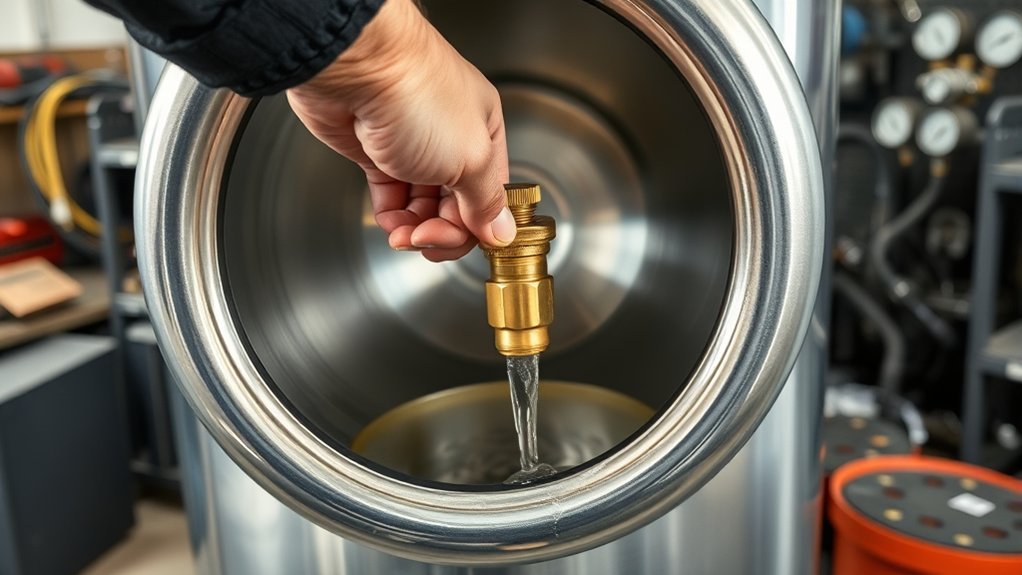
Have you ever considered the importance of regularly draining moisture from your air compressor tank? Moisture accumulation occurs naturally during operation, which can lead to corrosion and damage if not properly managed. To drain moisture effectively, we recommend using proper drain valve techniques. First, confirm the compressor is off and depressurize the tank safely. Position a container or cloth beneath the drain valve to catch any residual water. Slowly open the valve, allowing moisture to escape in a controlled manner. Avoid opening it quickly, as this can cause water and oil to spray or lead to injury. Once the moisture has been drained, securely close the valve. Regularly performing this maintenance prevents corrosion, prolongs tank life, and maintains ideal compressor performance.
Checking and Replacing Worn-Out Belts and Hoses
Regularly inspecting belts and hoses is vital to guarantee ideal compressor performance and safety. During belt replacement, look for signs of wear such as fraying, cracking, or glazing, which compromise tension and efficiency. Proper tension is essential; a loose belt can slip, reducing power transfer, while an overly tight belt causes premature wear. When inspecting hoses, check for cracks, leaks, or soft spots that indicate deterioration. Hose inspection should include feeling for brittleness and examining fittings for corrosion or looseness. Replacing worn-out belts and hoses promptly prevents catastrophic failures and maintains optimal airflow and pressure. Always ensure replacements meet the manufacturer’s specifications for size and material compatibility. Regular upkeep through belt replacement and hose inspection maximizes compressor longevity and operational safety.
Tips for Maintaining Proper Air Pressure and Safety Settings
Properly set air pressure and safety controls are key to guaranteeing ideal compressor performance and operator safety. Regular air pressure calibration ensures the compressor maintains the correct output, preventing over-pressurization that could cause damage. Safety alarm systems are essential for real-time alerts if pressure exceeds safe limits, allowing immediate shutdowns. Accurate pressure regulation involves checking the pressure gauge and adjusting the pressure regulator accordingly. Consider the following calibration and safety parameters:
| Parameter | Recommended Setting | Monitoring Frequency |
|---|---|---|
| Max Operating Pressure | 135 psi (varies) | Monthly |
| Safety Alarm Activation | 125 psi | Weekly |
| Calibration Accuracy | ±2 psi | Quarterly |
| System Inspection | Visual + Tests | Monthly |
Adhering to these guidelines maintains safety and peak performance.
Troubleshooting Common Air Compressor Problems
Unusual noises and pressure loss are common indicators of underlying air compressor issues that require immediate attention. We will examine how to identify abnormal sounds and diagnose causes of pressure drops to guarantee ideal performance. Addressing these problems promptly helps maintain compressor efficiency and prevents further damage.
Identifying Unusual Noises
When an air compressor emits unusual noises, it often indicates underlying mechanical issues that require prompt diagnosis. Noisy motors can signal worn bearings or electrical faults, while abnormal vibrations typically point to imbalanced rotating components or misaligned pulleys. These sounds are early warning signs of potential failures, so precise identification is vital. Listen carefully to determine whether the noise is a high-pitched squeal, grinding, or knocking, as each suggests different problems. Abnormal vibrations are often felt physically, but their audio counterpart can help pinpoint specific issues. Addressing these noises promptly prevents further damage, reduces downtime, and prolongs the compressor’s lifespan. Regular inspection and maintenance are essential for early detection and effective troubleshooting of these mechanical anomalies.
Addressing Pressure Loss
Addressing pressure loss in an air compressor requires systematic troubleshooting to identify and resolve the underlying causes. First, perform leak detection by inspecting hoses, fittings, and valves for visible damage or hissing sounds, as leaks markedly reduce pressure. Next, verify pressure regulation settings; improper calibration can cause fluctuations and loss. Third, check for worn or faulty piston rings and valves that may compromise compression efficiency. Fourth, confirm that the compressor’s intake and exhaust filters are clean and unobstructed, preventing airflow restrictions. By methodically examining these components, we can pinpoint the source of pressure loss and restore peak performance. Accurate leak detection and proper pressure regulation are critical in maintaining consistent pressure and prolonging the compressor’s lifespan.
When to Seek Professional Help for Advanced Repairs
Determining the right time to seek professional assistance for advanced air compressor repairs is essential to guarantee safety and prevent further damage. If issues persist after basic troubleshooting, or if you encounter abnormal noises, excessive vibrations, or sudden pressure drops, it’s time for expert intervention. Emergency repairs, especially when safety is compromised, require immediate professional attention. Regular professional inspections help identify hidden faults that could escalate if left unaddressed.
| Situation | Recommended Action |
|---|---|
| Persistent performance issues | Consult a professional for diagnostics |
| Sudden, severe malfunctions | Seek immediate emergency repairs |
| Unusual noises or vibrations | Schedule professional inspection |
| Post-accident or damage event | Arrange thorough professional assessment |
Frequently Asked Questions
How Often Should I Schedule Professional Maintenance for My Compressor?
We recommend scheduling professional maintenance annually, aligning with lubrication schedules and filter replacement intervals. Regular inspections guarantee peak performance, prevent breakdowns, and extend your compressor’s lifespan by addressing issues before they escalate.
What Are Signs of Internal Component Wear Not Visible Externally?
Have you ever noticed reduced airflow or increased noise? These signs often indicate internal wear or component deterioration, which aren’t externally visible. Regular monitoring helps catch internal component deterioration early, ensuring compressor efficiency and preventing costly repairs.
Can I Upgrade Parts for Better Compressor Performance?
Yes, upgrading parts can enhance compressor performance; consider using high-quality compressor lubricants and replacing filters regularly to optimize efficiency, reduce wear, and extend lifespan. Guarantee compatibility with your specific compressor model for best results.
How Do Temperature Fluctuations Affect Compressor Safety and Efficiency?
Temperature fluctuations cause thermal expansion, risking compressor damage and decreased safety. Proper temperature regulation guarantees consistent efficiency, preventing overheating or freezing, thereby safeguarding components and maintaining ideal performance through controlled thermal conditions.
Are There Eco-Friendly Maintenance Options for Air Compressors?
Yes, we recommend eco-friendly lubricants and sustainable filter options to reduce environmental impact. These alternatives maintain compressor efficiency, minimize hazardous waste, and support sustainable practices, ensuring safe, effective operation while being environmentally responsible.
Conclusion
By adhering to these maintenance steps, we keep our compressor running like a finely tuned engine—smooth, reliable, and ready to perform. Regular inspections and timely replacements act as the heartbeat of its longevity, warding off corrosion and wear. Think of proper care as nurturing a delicate ecosystem; neglect it, and the system falters. Stay vigilant, proactive, and your compressor will serve as a steadfast workhorse, powering your projects with precision and confidence.