Ad Blocker Detected
Our website is made possible by displaying online advertisements to our visitors. Please consider supporting us by disabling your ad blocker.
While choosing the right air compressor often involves weighing practical considerations, the decision can substantially impact operational efficiency and environmental impact. Gas-powered and electric models each offer distinct advantages and limitations, depending on application requirements. Understanding these differences is essential to making an informed choice that balances mobility, noise levels, maintenance, and cost-effectiveness. Consider what factors will ultimately influence your workflow—and whether the right fit might be more nuanced than it initially appears.
Key Takeaways
- Gas compressors offer greater portability and mobility, ideal for remote or outdoor job sites.
- Electric compressors are quieter, produce fewer emissions, and are better suited for indoor or noise-sensitive environments.
- Gas units generally require more maintenance and have higher operational costs due to fuel consumption.
- Electric models provide consistent performance, lower energy costs, and minimal maintenance over the long term.
- Choice depends on mobility needs versus environmental considerations and whether the compressor will be used indoors or outdoors.
What Are the Main Differences Between Gas-Powered and Electric Air Compressors?
While both gas-powered and electric air compressors serve the same fundamental purpose—compressing air for various applications—they differ markedly in design, operation, and suitability for specific tasks. Fuel efficiency is a key distinction; gas compressors generally consume more energy relative to output, especially during extended use, making them less efficient for continuous operation. Electric compressors, on the other hand, benefit from high energy efficiency and consistent power delivery. Noise levels also vary markedly: gas compressors tend to be louder due to internal combustion engines, often exceeding 80 decibels, whereas electric models operate more quietly, typically below 70 decibels. These differences influence their practicality in different environments, with electric compressors favored for noise-sensitive settings and gas models preferred for portability and remote locations.
When Should You Choose a Gas-Powered Air Compressor?
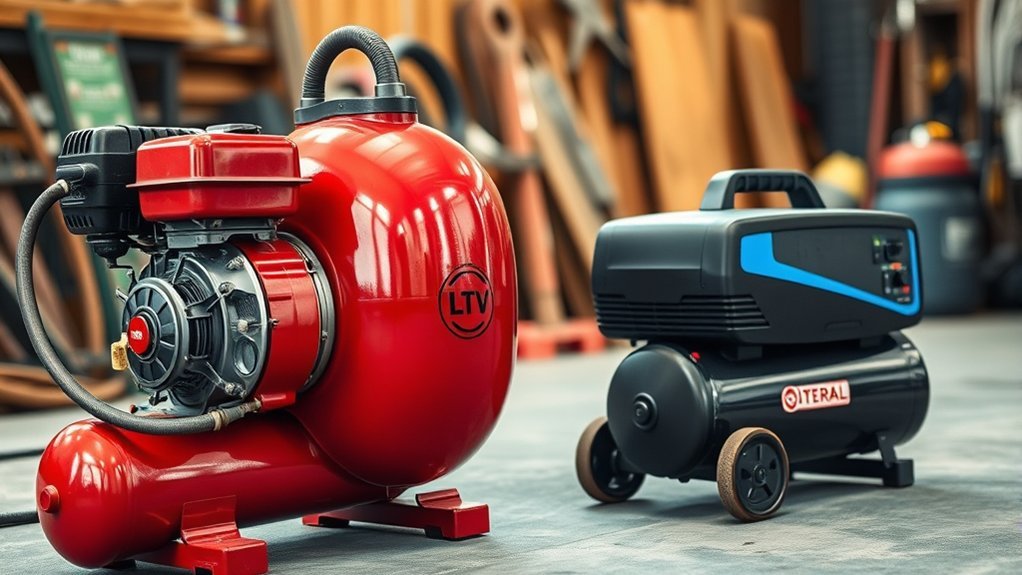
We should consider a gas-powered air compressor when portability is critical, especially in locations lacking reliable electrical infrastructure. Additionally, if power supply availability is inconsistent or unavailable, gas units provide a self-sufficient option. These factors collectively determine when a gas-powered compressor is the ideal choice for specific operational requirements.
Portability Needs
When evaluating portability needs, a gas-powered air compressor becomes the most suitable choice for tasks requiring frequent movement across varied job sites or remote locations. Gas models excel in mobility due to their independence from external power sources, enabling rapid deployment without the constraints of electrical outlets. Fuel efficiency is a critical factor; modern gas compressors optimize fuel consumption, extending operational periods between refuels and reducing overall costs. Additionally, noise levels are generally higher in gas-powered units, which can impact work environments, especially in noise-sensitive areas. Despite this, their portability advantages outweigh stationary limitations, making them ideal for construction sites, agricultural operations, or remote repairs. Ultimately, selecting a gas-powered compressor hinges on evaluating mobility requirements alongside considerations of fuel efficiency and acceptable noise emissions.
Power Supply Availability
Choosing the appropriate power source for an air compressor depends heavily on the availability and reliability of electrical supply at the work site. When electrical outlets are limited or unreliable, a gas-powered compressor becomes the logical choice. Gas engines operate independently of external electrical sources, ensuring consistent performance in remote or off-grid locations. If the work environment has abundant, stable electrical outlets, an electric compressor offers convenience and energy efficiency. Conversely, inconsistent or absent electrical supply makes gas-powered units more practical, as they do not rely on external power. Evaluating the power source availability helps determine the best compressor type, ensuring continuous operation without interruptions caused by power fluctuations or outages. This assessment is vital for optimizing productivity and minimizing downtime.
Why Opt for an Electric Air Compressor for Indoor Use?
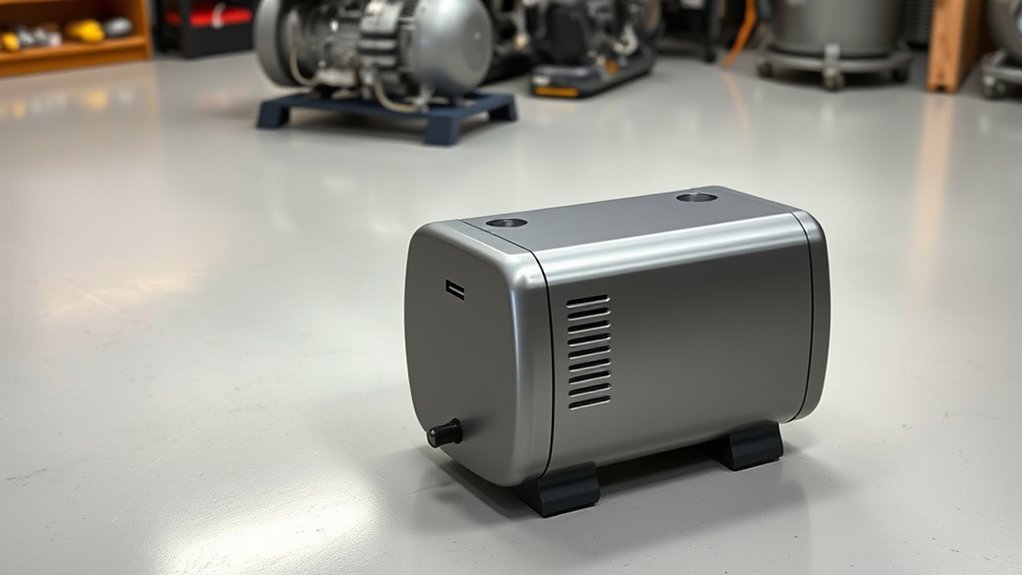
Electric air compressors are often preferred for indoor applications due to their operational efficiency and safety profile. They produce minimal emissions, making them suitable for enclosed indoor environments where ventilation may be limited. Additionally, their design typically results in lower noise levels, which is critical for maintaining a comfortable indoor environment and reducing workplace disruption. Unlike gas-powered models, electric compressors do not emit exhaust fumes, eliminating health risks associated with indoor air quality. Their consistent power supply guarantees stable performance, essential for precision tasks in confined spaces. Overall, electric compressors offer a safer, quieter, and more environmentally friendly option for indoor use, aligning with the demands of indoor environments that prioritize safety, air quality, and operational efficiency.
How Do Performance and Maintenance Compare for Both Types?
How do the performance and maintenance requirements of gas-powered and electric air compressors compare? In terms of performance comparison, gas compressors typically offer higher mobility and greater power output, making them suitable for heavy-duty applications. Electric models, however, deliver consistent performance with less fluctuation, especially in indoor settings. When examining maintenance requirements, gas compressors demand more frequent servicing—such as oil changes, filter replacements, and engine tune-ups—due to their complex mechanical systems. Electric compressors, by contrast, generally require less upkeep, primarily limited to electrical component inspections and filter replacements. This distinction influences operational reliability and downtime. Overall, gas models excel in rugged, portable tasks, while electric units are favored for steady, low-maintenance use in controlled environments.
Which Air Compressor Is More Cost-Effective Over Time?
While initial purchase costs are often the most immediate concern, evaluating long-term cost-effectiveness requires a thorough analysis of operational and maintenance expenses. Electric compressors generally offer superior energy efficiency, reducing ongoing energy costs compared to gas-powered units. This increased efficiency translates into lower utility bills and a smaller environmental impact due to reduced greenhouse gas emissions. Gas-powered compressors tend to have higher fuel consumption and maintenance costs, which can escalate over time. Additionally, electric models typically require less maintenance, further decreasing operational expenses. Over the lifespan of the equipment, the cumulative savings from lower energy use and reduced maintenance make electric compressors more cost-effective overall, especially for continuous or high-volume applications. Consequently, energy efficiency and environmental impact are key factors in long-term cost analysis.
What Factors Should You Consider Before Making Your Decision?
When choosing between gas and electric air compressors, we must evaluate factors like power source compatibility with your existing setup, portability needs for jobsite mobility, and ongoing operating costs including maintenance. These elements directly influence efficiency, convenience, and long-term financial impact. Analyzing each factor guarantees a well-informed decision tailored to your specific application requirements.
Power Source Compatibility
Determining the appropriate power source for an air compressor requires a thorough assessment of your operational environment and energy availability. Gas-powered compressors typically offer superior fuel efficiency and independence from electrical outlets, making them suitable for remote or outdoor tasks. Conversely, electric models tend to produce lower noise levels and require a stable power supply, ideal for indoor or noise-sensitive environments. Consider these factors:
| Criterion | Gas-Powered | Electric |
|---|---|---|
| Fuel Efficiency | High, suitable for long-term use | Lower, dependent on electricity |
| Noise Levels | Generally louder | Quieter |
| Energy Availability | No external power needed | Needs accessible power source |
| Environmental Impact | Emissions present | Cleaner operation |
Choosing the right power source hinges on operational needs, environment, and energy infrastructure.
Portability and Mobility
Evaluating the portability and mobility of an air compressor involves examining its size, weight, and ease of transport, which are critical factors depending on the job site. For remote operation, lightweight models are advantageous, reducing fatigue and simplifying relocation across varied terrains. When considering weight considerations, electric compressors tend to be heavier due to their motors and components, potentially limiting mobility. Gas-powered units often offer a better balance for job sites requiring frequent movement, as they are typically more portable and easier to carry or tow. Additionally, compact designs enhance maneuverability, especially in confined spaces. Ultimately, appraising the compressor’s size and weight relative to the job’s mobility needs ensures efficient operation without unnecessary logistical challenges.
Operating Costs and Maintenance
Considering operating costs and maintenance is essential to making an informed choice between gas-powered and electric air compressors, as these factors considerably impact overall expenses over time. Fuel efficiency directly affects operational costs, with gas models typically consuming more fuel, increasing expenses. Maintenance requirements also differ; gas compressors often need more frequent servicing due to engine complexity, whereas electric units generally require less upkeep. Noise levels influence not only comfort but regulatory compliance in certain environments. When evaluating options, consider:
- Fuel efficiency and fuel costs
- Routine maintenance frequency
- Engine and motor durability
- Noise levels during operation
- Long-term repair expenses
Understanding these factors helps determine which compressor aligns better with your budget and operational needs, ensuring most favorable efficiency and reduced downtime over its lifespan.
Frequently Asked Questions
Are Gas or Electric Compressors Quieter During Operation?
We find electric compressors are generally quieter due to lower noise levels and better sound insulation, making them more suitable for noise-sensitive environments. Gas compressors tend to produce higher noise levels, requiring additional soundproofing measures during operation.
Which Type Has a Longer Lifespan With Proper Maintenance?
We find gas-powered compressors typically have a longer lifespan with proper maintenance, despite higher maintenance costs, due to robust build quality. Electric models often have a lower environmental impact and reduced maintenance expenses, but may wear out sooner.
How Do Energy Efficiencies Compare Between the Two?
We find electric compressors more energy-efficient, consuming less power and reducing environmental impact, while gas-powered units often have higher fuel consumption, making them less eco-friendly. It’s a trade-off that impacts operational costs and sustainability.
Can Electric Compressors Handle Heavy-Duty Industrial Tasks?
Electric compressors can handle heavy-duty industrial performance, but they often face maintenance challenges due to prolonged operation and high demand, which can impact reliability and efficiency in demanding industrial environments.
What Safety Concerns Are Associated With Each Type?
We recognize that gas-powered compressors pose safety concerns due to fuel emissions and higher maintenance complexity, requiring proper ventilation and handling. Electric models reduce emissions but demand careful electrical safety measures to prevent shocks and short circuits.
Conclusion
Ultimately, choosing between gas-powered and electric compressors hinges on your specific needs. For instance, a construction crew working remotely might prioritize portability and opt for gas. Conversely, an indoor workshop may benefit from electric models’ quieter operation and lower maintenance. Evaluating your environment, operational demands, and long-term costs guarantees an informed decision. This careful analysis can lead to optimized performance and cost savings, much like a company that switched to electric compressors for indoor use, reducing noise and maintenance expenses markedly.