Ad Blocker Detected
Our website is made possible by displaying online advertisements to our visitors. Please consider supporting us by disabling your ad blocker.
Imagine the hum of a stationary air compressor powering up, ready to deliver consistent airflow for your project. Ensuring its wiring is correctly installed is critical for safety and performance. We’ll guide you through verifying voltage compatibility, connecting wiring securely, and grounding properly, so your setup operates reliably without hazards. Proper wiring isn’t just a technical step; it’s the foundation of safe, efficient compressor operation. Let’s explore each phase in detail to get your compressor wired correctly.
Key Takeaways
- Verify voltage compatibility and inspect wiring gauge, connections, and grounding before connecting the compressor.
- Ensure the circuit breaker’s amperage rating matches the compressor’s electrical requirements.
- Follow wiring diagrams to connect power, control, and overload protection correctly.
- Use properly rated wires and secure all connections to prevent overheating and ensure safety.
- Test the wiring with a multimeter for proper voltage, continuity, and insulation before operation.
How to Prepare Your Electrical System for a Stationary Air Compressor
Before wiring your stationary air compressor, it’s crucial to evaluate and prepare your electrical system to handle its power requirements. We start by verifying voltage compatibility, ensuring the circuit voltage matches the compressor’s rated voltage to prevent overloads or damage. Next, assess your existing wiring safety by inspecting for proper gauge wiring, secure connections, and grounding. Upgrading circuit components may be necessary if your current wiring cannot support the compressor’s amperage, which is essential for safe operation. Confirm that the circuit breaker capacity aligns with the compressor’s startup and running currents. Properly preparing your electrical system minimizes risks of electrical faults, reduces the chance of tripping breakers, and ensures reliable operation, which is fundamental for long-term equipment performance.
How to Properly Connect Power Supply and Circuit Breaker
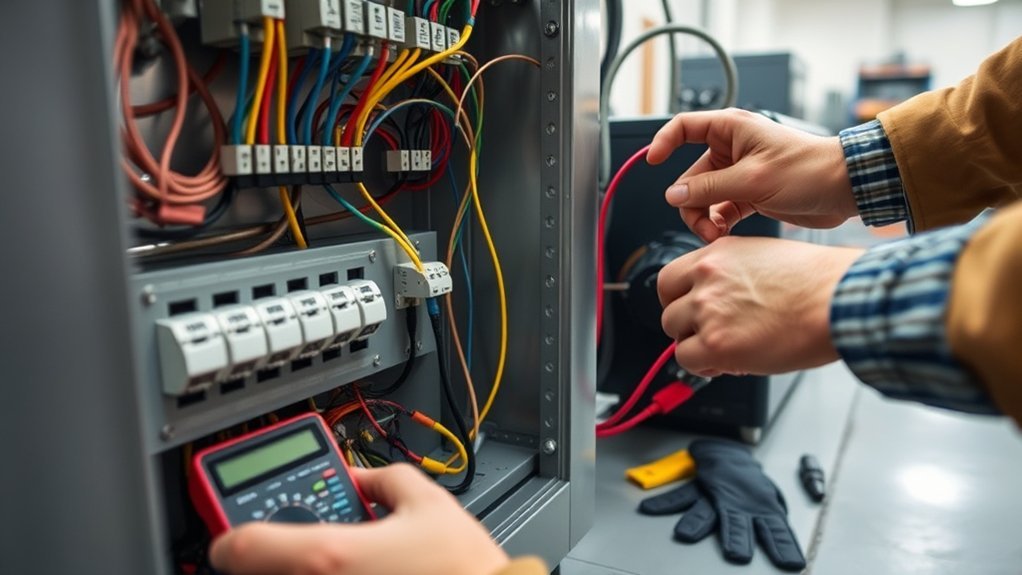
To guarantee safe and reliable operation, we must connect the power supply to the compressor and install the appropriate circuit breaker correctly. Adhering to electrical codes is essential to ensure proper wiring and safety compliance. Begin by verifying the circuit breaker’s amperage rating aligns with the compressor’s electrical specifications. Use properly rated wires and connectors, ensuring secure connections to prevent overheating or arcing. Follow safety precautions by disconnecting power before working on the system and using insulated tools. Proper grounding is critical to prevent electrical shock and equipment damage. Confirm that all wiring complies with local electrical codes and manufacturer instructions. Accurate installation of the circuit breaker ensures protection against electrical faults, safeguarding both personnel and equipment during operation.
How to Wire the Compressor Motor Safely and Correctly
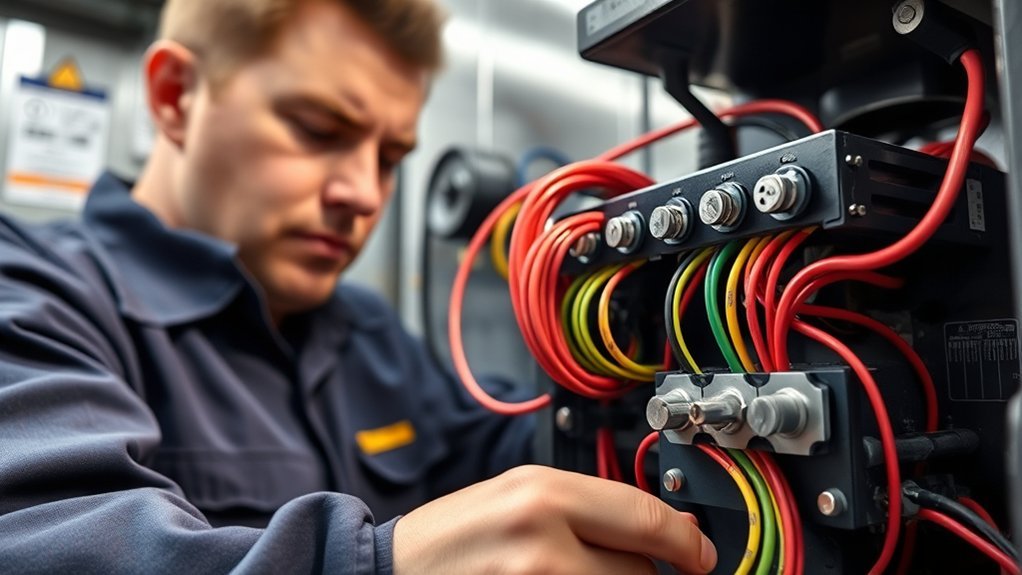
Wiring the compressor motor correctly is essential for safe operation and ideal performance. Begin by consulting the wiring diagrams provided with your compressor to confirm proper connection of power lines, control, and overload protection. Use appropriate gauge wire rated for the motor’s voltage and current specifications. Connect the motor leads according to the wiring diagram, ensuring that hot, neutral, and ground wires are correctly identified and attached. Incorporate a motor overload relay into the circuit to prevent damage from overheating or electrical faults. Verify all connections are secure, insulated, and compliant with electrical codes before powering on. Proper wiring reduces the risk of electrical hazards and guarantees the motor operates efficiently without unnecessary stress or overheating.
How to Ground Your Air Compressor for Safety
Ensuring proper grounding of your air compressor is critical for safety and electrical fault prevention. Correct grounding safeguards against electrical shock and equipment damage, especially when considering voltage requirements and grounding methods. To ensure effective grounding, follow these steps:
- Confirm that the compressor’s grounding wire matches the specified gauge for your voltage requirements.
- Use a grounding rod or a grounded metal conduit as per local electrical codes.
- Connect the grounding wire securely to the compressor’s grounding terminal.
- Verify that all grounding connections are tight, corrosion-free, and compliant with grounding methods recommended by the manufacturer and electrical standards.
Proper grounding creates a safe, reliable electrical system, minimizing risks associated with electrical faults and ensuring operational safety.
How to Test the Wiring and Ensure Safe Operation
Before operating your air compressor, we must verify that all wiring connections are correct and functioning properly, as faulty wiring can lead to electrical hazards or equipment failure. First, inspect the wiring color codes to verify they match the manufacturer’s specifications—typically, black or red for hot, white for neutral, and green or bare for ground. Next, perform circuit testing using a multimeter set to measure voltage and continuity. Confirm that power is correctly supplied to each terminal and that there are no short circuits or open circuits. Check for proper insulation and secure connections. Conduct a thorough visual inspection followed by testing the circuit’s response under load conditions. These steps ensure safe, reliable operation and prevent potential electrical failures.
Frequently Asked Questions
Can I Wire the Compressor Myself Without a Licensed Electrician?
We don’t recommend wiring the compressor ourselves due to installation location and power supply considerations; professional electrical expertise guarantees safety, code compliance, and proper connection, minimizing risks associated with incorrect wiring and potential electrical hazards.
What Wire Gauge Is Recommended for Different Compressor Sizes?
For compressor wiring guidelines, we recommend using 14-gauge wire for up to 15 horsepower, 12-gauge for 20-30 horsepower, and 10-gauge for larger sizes; always consult manufacturer specs and local electrical codes for precise wire gauge selection.
How Do I Troubleshoot if the Compressor Won’T Start After Wiring?
If the compressor won’t start, we check the motor protection and power switch for faults. We verify wiring integrity, confirm the power supply is active, and test the overload protection to identify and resolve potential electrical issues.
Are There Specific Codes or Standards for Wiring Stationary Air Compressors?
We follow strict electrical grounding and circuit protection standards, such as NEC codes, ensuring safe compliance when wiring stationary air compressors. Proper grounding prevents electrical faults, while circuit protection safeguards equipment and personnel from overloads or short circuits.
What Safety Precautions Should I Take During the Wiring Process?
We guarantee absolute safety by meticulously following grounding procedures and insulation requirements, avoiding electrical hazards. We double-check connections, wear protective gear, and adhere strictly to electrical codes, preventing disastrous accidents during the wiring process.
Conclusion
In conclusion, wiring your stationary air compressor is like tuning a fine instrument—you want every connection precise and secure for peak performance. By carefully preparing your electrical system, matching components correctly, and thoroughly testing all connections, we guarantee safe and reliable operation. Proper wiring not only protects your equipment but also keeps your workspace safe, like a well-oiled machine running smoothly. Attention to detail here is key to long-lasting, trouble-free compressor performance.