Ad Blocker Detected
Our website is made possible by displaying online advertisements to our visitors. Please consider supporting us by disabling your ad blocker.
It’s a coincidence that many operators overlook how critical proper oil maintenance is, yet the frequency of changing air compressor oil can greatly impact performance and lifespan. We recognize that determining the right interval isn’t straightforward, as it varies with usage, environment, and compressor type. To guarantee your equipment runs efficiently and avoids costly repairs, it’s essential to understand the key factors and signs indicating when an oil change is due.
Key Takeaways
- Change compressor oil every 500 to 2,000 hours of operation or per manufacturer’s guidelines.
- Check oil quality daily; replace if it appears dark, gritty, or contaminated.
- More frequent oil changes are needed in harsh environments or under heavy load.
- Follow maintenance schedules specific to your compressor type (reciprocating, rotary screw, centrifugal).
- Regularly inspect and replace filters to prevent oil contamination and degradation.
How Often Should You Change Your Air Compressor Oil?
The frequency at which you should change your air compressor oil depends on several factors, including usage intensity, operating conditions, and the manufacturer’s recommendations. Proper compressor lubrication relies on clean oil, so regular oil filtration is vital to prevent contaminants from compromising performance. Typically, oil should be checked daily during operation, with changes recommended every 500 to 2,000 hours of use or as specified by the manufacturer. Frequent oil filtration ensures removal of debris and moisture, maintaining ideal lubrication and preventing wear. In harsh environments, more frequent changes may be necessary to preserve compressor efficiency. Ultimately, adhering to recommended oil change intervals and monitoring oil quality ensures reliable operation and prolongs the lifespan of your compressor components.
Factors That Influence Oil Change Intervals
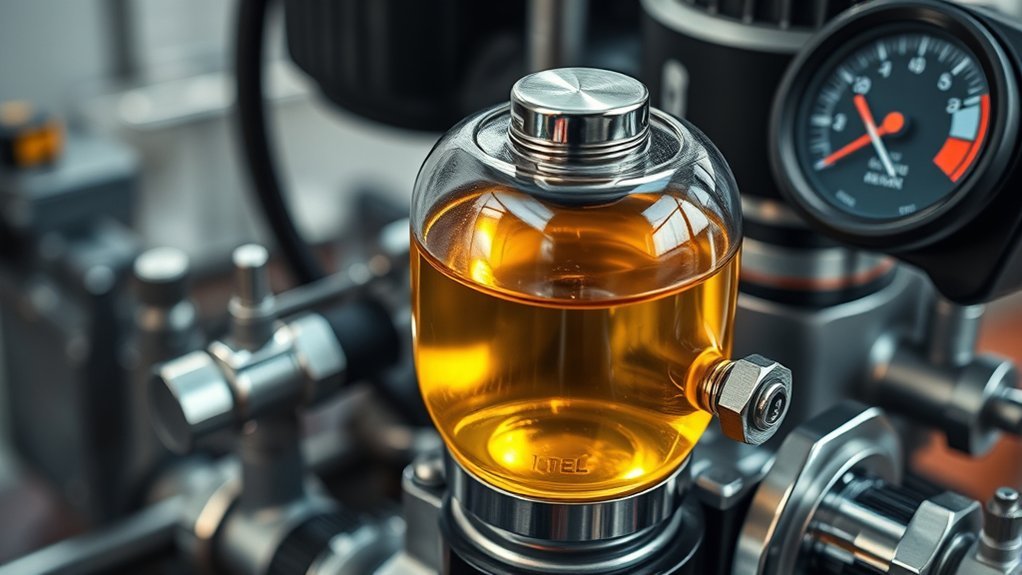
Various factors directly impact how often you should change your air compressor oil, and understanding these elements helps optimize maintenance schedules. Oil filtration quality is critical; poor filtration allows contaminants to accumulate, accelerating oil degradation and reducing lubrication effectiveness. Additionally, compressor overheating profoundly influences oil change intervals. Excessive heat causes thermal breakdown of the oil, diminishing its lubricating properties and increasing the risk of component wear. Operating under high temperatures or overloaded conditions also hastens oil contamination by debris and moisture ingress. Environmental factors like dust, humidity, and ambient temperature further affect oil longevity. Regularly monitoring these variables enables precise scheduling, preventing premature wear and ensuring compressor efficiency. Ultimately, tailoring oil change intervals based on these factors enhances reliability and extends equipment lifespan.
Signs It’s Time to Replace the Compressor Oil

How can you tell when your compressor oil needs replacing? One key indicator is oil contamination, which occurs when debris, moisture, or metal particles mix with the oil, impairing lubrication and heat dissipation. Regularly inspecting oil color and consistency helps identify contamination—dark, gritty, or frothy oil signals it’s time for a change. Additionally, if you notice increased pressure drops or abnormal compressor noise, these could stem from degraded oil. Proper filter maintenance is vital; clogged or dirty filters can accelerate oil degradation and contamination, so replacing filters regularly ensures clean oil circulation. Monitoring these signs and maintaining filters proactively can prevent premature oil failure, guaranteeing optimal compressor performance and longevity.
Recommended Maintenance Schedules for Different Compressor Types
Maintaining proper schedules tailored to each compressor type guarantees ideal performance and extends equipment lifespan. For reciprocating compressors, regular oil filtration every 500-1,000 hours prevents contaminants from degrading oil quality and ensures efficient compressor cooling. Rotary screw compressors require more frequent oil changes, typically every 2,000-3,000 hours, with attention to oil filtration to avoid buildup that hampers heat dissipation. Centrifugal compressors, operating at high speeds, need scheduled oil changes based on manufacturer guidelines—often every 4,000-6,000 hours—along with consistent monitoring of oil condition. Proper maintenance also involves inspecting and replacing filters to maximize compressor cooling and prevent overheating. Adhering to these schedules guarantees peak lubrication, reduces wear, and maintains consistent operational efficiency across compressor types.
Tips for Extending Oil Life and Maintaining Optimal Performance
To maximize the lifespan of compressor oil and guarantee peak performance, it’s essential to implement targeted strategies that reduce contamination and thermal degradation. Proper oil filtration is critical, as it removes particulates and moisture that accelerate oil breakdown. Regularly monitoring oil condition through analysis helps identify contamination early, allowing for timely filtration or oil changes. Maintaining optimal compressor lubrication involves controlling operating temperatures and avoiding overloading, which can cause thermal stress on the oil. Additionally, ensuring clean intake filters prevents dirt ingress. These measures collectively extend oil life, improve efficiency, and reduce downtime.
- Use high-quality filtration systems to remove debris
- Schedule routine oil analysis for early detection of degradation
- Keep operating temperatures within manufacturer specifications
- Regularly inspect and replace intake filters
Frequently Asked Questions
Can Using Synthetic Oil Extend Compressor Oil Change Intervals?
Using synthetic oil offers benefits like superior stability and lubrication, which can extend oil change schedules, reducing maintenance frequency. We recommend monitoring your compressor’s performance and following manufacturer guidelines to determine ideal intervals for synthetic oil use.
How Does Ambient Temperature Affect Compressor Oil Degradation?
When ambient temperature rises, oil viscosity drops, accelerating degradation; conversely, low temperatures increase viscosity, hampering lubrication. We find that monitoring temperature fluctuations helps optimize oil change schedules, ensuring compressor longevity and preventing costly breakdowns.
Is There a Difference in Oil Change Frequency for Portable vs. Stationary Compressors?
We find that portable compressors typically require more frequent oil changes due to their exposure to variable conditions, whereas stationary compressors, with stable environments, benefit from longer intervals, but always follow manufacturer recommendations for peak performance.
What Are the Environmental Considerations for Disposing of Used Compressor Oil?
We follow environmental regulations by guaranteeing proper disposal of used compressor oil through oil recycling programs, preventing contamination. Adhering to these standards minimizes environmental impact and ensures compliance with legal requirements, promoting responsible waste management practices.
How Do Oil Additives Impact the Longevity of Compressor Oil?
We find that additive effects enhance oil quality, substantially extending compressor oil longevity by reducing oxidation and wear. Proper additive use optimizes performance, preserves oil integrity, and guarantees efficient operation, ultimately prolonging compressor lifespan and reducing maintenance costs.
Conclusion
In summary, maintaining the right oil change schedule is essential for your compressor’s health and efficiency. Think of it as giving your machinery a critical tune-up—neglecting it can lead to costly downtime and wear. By adhering to manufacturer guidelines, monitoring oil quality regularly, and adjusting for environmental conditions, we can guarantee our compressors run smoothly like a well-oiled machine. Proper maintenance isn’t just a task; it’s the key to long-lasting, reliable performance.