Ad Blocker Detected
Our website is made possible by displaying online advertisements to our visitors. Please consider supporting us by disabling your ad blocker.
Understanding the precise PSI requirements for workshop air compressors is critical to optimizing tool performance and ensuring safety. Incorrect pressure settings can lead to inefficiency, premature equipment wear, or safety hazards. To achieve reliable results, we need to analyze how PSI interacts with various tools and tasks, and recognize the factors that influence ideal pressure levels. Exploring these aspects further will help us determine the best practices for selecting and maintaining the right compressor settings.
Key Takeaways
- Check manufacturer specifications for optimal PSI settings for each workshop tool.
- Match compressor PSI output to the highest PSI requirement of your tools to ensure proper operation.
- Adjust and calibrate compressor PSI regularly to maintain safety, efficiency, and air quality.
- Consider peak PSI demands to prevent overloading and ensure safety during sudden pressure surges.
- Use pressure regulation and safety devices like relief valves to maintain consistent, safe PSI levels.
Understanding PSI and Its Role in Workshop Air Compressors
Although PSI (pounds per square inch) may seem like a straightforward measurement, it plays a critical role in determining the performance and safety of workshop air compressors. Proper understanding of PSI is essential for optimizing air compressor efficiency, ensuring that tools operate effectively without overloading the system. Accurate PSI calibration guarantees the compressor delivers consistent pressure, preventing fluctuations that could compromise safety or damage equipment. By maintaining correct PSI levels, we maximize energy use and reduce wear on components, extending the system’s lifespan. Recognizing the importance of precise PSI measurement helps us fine-tune compressor performance, balancing power output with safety considerations. Ultimately, a thorough grasp of PSI’s role fosters better maintenance practices and enhances overall workshop productivity.
How to Determine the PSI Requirements for Your Tools and Tasks
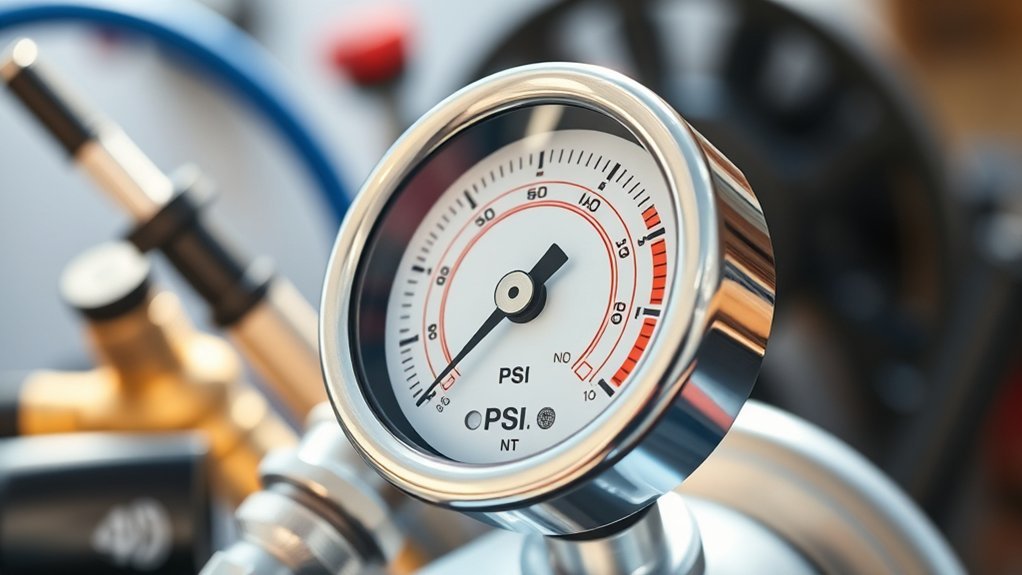
To accurately determine the PSI requirements for your tools and tasks, we need to consult manufacturer specifications and operational guidelines. This guarantees ideal air compressor efficiency and proper psi calibration, preventing over- or under-pressurization. Accurate PSI assessment reduces tool wear, enhances safety, and maximizes performance. Referencing manufacturer data helps identify the precise pressure needed for each application, avoiding unnecessary compressor strain. Consider the following example to compare typical tool requirements:
| Tool/Task | Recommended PSI |
|---|---|
| Pneumatic impact wrench | 90-120 PSI |
| Spray painting | 40-60 PSI |
| Tire inflator | 30-35 PSI |
| Air grinder | 90-110 PSI |
Properly calibrating your compressor’s PSI ensures efficiency and longevity, aligning with specific operational demands.
Factors That Influence the Ideal PSI for Your Workshop
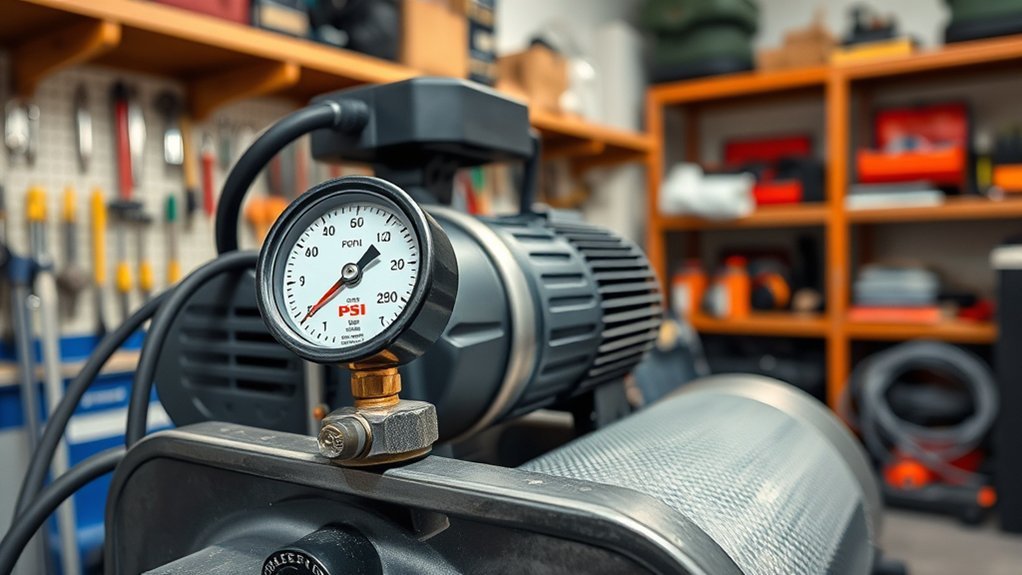
The ideal PSI for your workshop depends on a combination of technical factors that directly influence compressor performance and safety. Air quality plays a vital role, as higher PSI levels can increase moisture and particulate levels, affecting tool longevity and work quality. Proper filtration and moisture control help mitigate these issues, allowing for maximum PSI without compromising air purity. Noise levels are another essential factor; higher PSI often correlates with increased sound output, which can impact workspace comfort and safety regulations. Balancing PSI to meet tool requirements while minimizing noise pollution ensures a safer, more efficient environment. Ultimately, understanding how air quality and noise levels interact with PSI helps us select and operate compressors that align with our workshop’s specific demands.
Common Mistakes When Selecting an Air Compressor Based on PSI
One common mistake is ignoring peak PSI requirements, which can lead to insufficient power during high-demand tasks. Overlooking continuous usage also causes selection errors, resulting in compressor overloads or inefficiencies. Addressing these issues guarantees accurate capacity planning and reliable operation.
Ignoring Peak PSI Needs
Often, users focus on the compressor’s rated PSI without considering the peak pressure it must deliver during operation, which can lead to significant performance issues. Peak pressure is essential for ensuring the compressor can meet sudden demand surges without dropping below operational thresholds. Ignoring these peak PSI needs risks exceeding safety thresholds and causes equipment strain or failure. Additionally, compressors rated solely on continuous PSI may not accommodate the maximum pressure spikes required by certain tools or processes. Failing to account for peak pressure can result in inadequate performance or damage, especially when safety thresholds are ignored. Proper selection demands understanding both the rated PSI and the peak pressure to maintain efficiency, safety, and longevity of the compressor system.
Overlooking Continuous Usage
When selecting an air compressor, focusing solely on its PSI rating without considering continuous usage can lead to inefficiencies and equipment burnout. Continuous operation demands a compressor designed for sustained airflow, guaranteeing consistent air quality and minimal pressure fluctuations. Overlooking this aspect may cause excessive noise levels, disrupting workshop environment and productivity, while also compromising component longevity. Properly evaluating continuous PSI requirements helps maintain stable performance under load, reducing the risk of pressure drops that affect tool precision. Additionally, selecting a compressor with adequate capacity prevents overheating and reduces maintenance costs. By aligning PSI ratings with actual operational demands, we guarantee reliable performance, ideal air quality, and acceptable noise levels, ultimately improving workflow and extending equipment lifespan.
Matching Compressor PSI Capacity to Your Workshop’s Needs
To match compressor PSI capacity effectively, we first need to assess our workshop’s air consumption patterns and peak demand. Selecting an appropriate PSI range guarantees compatibility with existing tools and minimizes pressure fluctuations. This alignment optimizes performance and prevents unnecessary equipment wear.
Assessing Workshop Air Usage
Accurately evaluating your workshop’s air usage is essential for choosing a compressor with the right PSI capacity. This process prevents overloading systems and ensures safe operation. To do this effectively:
- Identify all tools and equipment that require compressed air, noting their individual PSI and CFM needs.
- Monitor air consumption during typical workflows to understand peak demand.
- Calculate total air requirements by summing the highest PSI and CFM values for all tools simultaneously.
- Evaluate existing air compressor performance to identify potential inefficiencies in air compressor maintenance and workshop safety protocols.
This detailed assessment ensures ideal compressor selection, minimizes energy waste, and maintains safe, efficient workshop operation. Properly matching PSI capacity supports ongoing maintenance and prevents safety issues related to inadequate air supply.
Selecting Appropriate PSI Range
Selecting the appropriate PSI range for your workshop’s air compressor is critical to ensuring reliable operation and safety. Accurate matching of compressor PSI capacity to your tools’ requirements minimizes fluctuations that can affect air quality and performance. For example, tools demanding high PSI need a compressor with a broader capacity range to prevent pressure drops that compromise airflow and finish quality. Additionally, choosing a compressor with adjustable PSI settings can enhance noise reduction, creating a safer and more comfortable work environment. Overly high PSI can lead to unnecessary wear and increased energy consumption, while too low PSI hampers tool efficiency. Consequently, understanding your workshop’s specific air quality needs and balancing them with noise reduction considerations guides selecting the most suitable PSI range, ensuring efficiency and safety.
Safety Considerations When Operating at Different PSI Levels
Operating at different PSI levels demands strict adherence to safety protocols to prevent accidents and equipment damage. Variations in PSI can impact air quality, generating contaminants if not managed properly, and influence noise levels, affecting workplace safety. To mitigate risks, consider these key factors:
- Regularly monitor air quality to prevent inhalation of compressed air contaminants.
- Use appropriate personal protective equipment when operating at higher PSI settings.
- Maintain equipment to ensure consistent noise levels, reducing hearing risk.
- Ensure pressure relief valves are functioning correctly to avoid over-pressurization hazards.
Understanding how PSI influences both air quality and noise levels is essential for safe operation. Proper safeguards help prevent injuries and ensure the compressor operates within safe, optimal parameters.
Tips for Adjusting and Maintaining PSI for Optimal Performance
To guarantee peak performance, we must carefully adjust and maintain the compressor’s PSI levels according to manufacturer specifications and operational requirements. Precise PSI regulation ensures ideal air quality, preventing moisture buildup and contaminant ingress that can compromise tool efficiency. Regularly calibrating pressure gauges helps sustain accurate PSI, which directly impacts air delivery consistency. Additionally, maintaining appropriate PSI levels minimizes noise levels, reducing operator fatigue and environmental disturbance. Proper adjustments involve monitoring compressor behavior under load and ensuring safety devices, like pressure relief valves, activate at designated thresholds. Consistent maintenance, including checking for leaks and cleaning filters, ensures stable operation. By adhering to these practices, we maximize compressor lifespan, improve air quality, and maintain a quieter, safer workspace.
Frequently Asked Questions
Can Using Higher PSI Damage My Air Tools?
Using higher PSI can damage your air tools by exceeding their pressure regulation limits, reducing tool longevity. It’s crucial to match compressor PSI with tool specifications to prevent wear, ensuring peak performance and avoiding costly repairs.
How Does Altitude Affect PSI Requirements?
Altitude acts like a thin veil, thinning the air, so our compressor must adapt. We use altitude adaptation and pressure regulation to maintain best PSI, ensuring tools operate effectively despite atmospheric pressure changes at higher elevations.
What Is the Maximum PSI Safety Limit for Standard Compressors?
The maximum safe PSI for standard compressors generally ranges between 150-200 PSI, adhering to safety regulations. Regular compressor maintenance guarantees these limits are maintained, preventing over-pressurization and ensuring operational safety and longevity of equipment.
Do Different Brands Have Varying PSI Standards?
Different brands often vary in PSI standards, which impacts brand compatibility and PSI consistency. We analyze these differences to guarantee ideal performance, preventing over-pressurization, and maintaining safety across diverse compressor models and applications.
How Often Should I Calibrate My Compressor’s PSI?
We recommend calibrating our compressor’s PSI monthly, following a strict maintenance schedule and calibration procedures. Regular calibration guarantees accurate pressure regulation, prevents equipment damage, and maintains ideal performance, especially under varying workload conditions.
Conclusion
In summary, understanding and accurately matching PSI levels to your tools isn’t just about performance—it’s about safety and longevity. By carefully analyzing your workshop’s specific needs, you can prevent unnecessary wear and guarantee ideal efficiency. Regular calibration and mindful adjustments play pivotal roles in this process. Ultimately, a precise approach to PSI management safeguards your equipment and enhances your workflow, reminding us that attention to detail often makes the difference between routine and exceptional performance.