Ad Blocker Detected
Our website is made possible by displaying online advertisements to our visitors. Please consider supporting us by disabling your ad blocker.
At the crossroads of industrial efficiency, choosing between a high pressure and a standard compressor is akin to selecting the right tool for a precise task. Each type embodies a different approach to air delivery, balancing factors like pressure, capacity, and complexity. Understanding the nuanced differences can greatly impact operational costs and suitability for specific applications. To make an informed decision, it’s crucial to analyze their design, performance, and deployment contexts—areas we’ll explore further.
Key Takeaways
- High pressure compressors exceed 300 psi, suitable for specialized industrial tasks; standard compressors operate at 100-150 psi for general use.
- High pressure units are more robust, louder, and energy-efficient but costlier and require more maintenance.
- Standard compressors are simpler, quieter, and cost-effective, ideal for light-duty and intermittent applications.
- High pressure compressors produce cleaner, drier air and handle higher airflow demands, while standard models are easier to maintain.
- Choice depends on required pressure, air quality, noise considerations, operational costs, and application-specific demands.
What Are High Pressure and Standard Air Compressors?
While both high pressure and standard air compressors serve the fundamental purpose of converting power into compressed air, they differ considerably in design and application. High pressure compressors generate markedly higher air pressures, often exceeding 300 psi, making them suitable for specialized industrial tasks. Standard compressors typically operate between 100-150 psi, catering to general manufacturing and maintenance needs. The environmental impact of high pressure units can be more pronounced, as their energy consumption tends to be higher, and they may produce more heat and noise during operation. Noise levels also vary, with high pressure models generally generating louder operational sounds due to their robust components and higher compression ratios. Understanding these differences helps in evaluating their suitability based on environmental considerations and noise management requirements.
Key Differences in Design and Construction
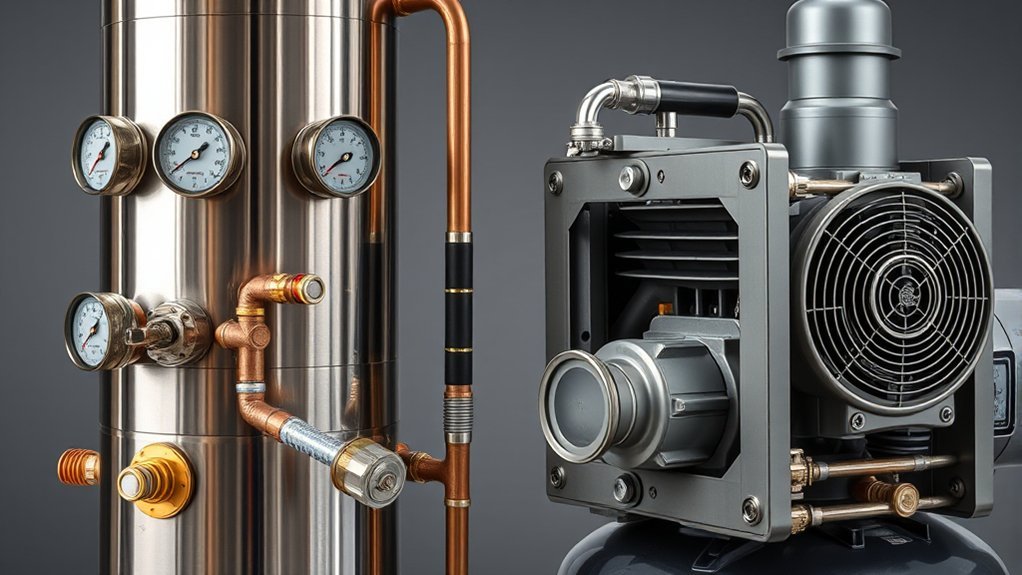
The design and construction of high pressure air compressors differ considerably from those of standard models, reflecting their specialized functions. High pressure units often feature enhanced air filtration systems to prevent contamination at elevated pressures, ensuring cleaner output and protecting internal components. Their components are robustly engineered, with thicker cylinders, reinforced valves, and reinforced seals to withstand higher stress levels. Noise levels are also a critical consideration; high pressure models incorporate sound-attenuating enclosures and vibration dampers to mitigate operational noise, which tends to be more pronounced due to increased compression ratios. In contrast, standard compressors prioritize simpler constructions with less emphasis on filtration and noise reduction. These structural differences are essential for achieving the performance and longevity required in high pressure applications.
How Do Their Performance Levels Compare?
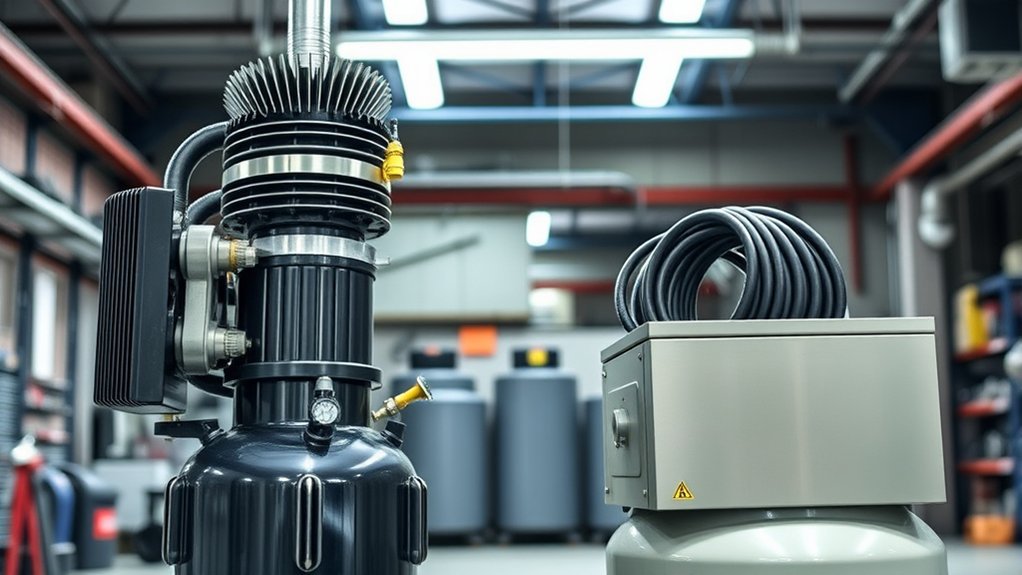
When comparing performance levels, we focus on compression efficiency, noting that high-pressure compressors often operate with lower efficiency due to increased system complexity. Power and speed variations are evident, with high-pressure units typically demanding more energy for similar output rates. Durability and longevity also differ, as high-pressure models generally face greater stress, impacting their operational lifespan.
Compression Efficiency Differences
High-pressure air compressors generally achieve higher compression efficiencies compared to standard compressors, primarily due to their advanced design features and optimized operating parameters. Their ability to compress air more effectively stems from enhanced thermal management and precise control systems, reducing energy loss during the compression cycle. Noise levels are often lower in high-pressure models because of improved insulation and vibration dampening, contributing to operational efficiency and user comfort. Portability features also influence efficiency, as compact and lightweight designs enable better deployment and minimized energy wastage during setup. Overall, high-pressure compressors demonstrate superior compression efficiency through optimized thermal and mechanical processes, which translates into reduced energy consumption and operational costs. This makes them more suitable for demanding applications requiring consistent, high-level performance.
Power and Speed Variations
High-pressure air compressors are engineered to operate at higher power outputs and increased rotational speeds compared to standard models, enabling them to generate greater airflow and pressure levels more rapidly. This heightened performance often results in improved energy efficiency, as they deliver more compressed air with less operational time and energy expenditure. However, the increased speed can elevate noise levels, potentially impacting workplace comfort and safety. The power variation allows high-pressure compressors to meet demanding industrial applications requiring swift pressure buildup, while standard compressors prioritize steady, lower-speed operation for general tasks. Overall, high-pressure units excel in performance but demand careful consideration of energy consumption and noise management to optimize operational efficiency.
Durability and Longevity
Although high-pressure air compressors are designed for demanding industrial tasks, their durability and longevity can vary considerably compared to standard models. High-pressure units often operate under increased stress, which can accelerate wear and reduce operational lifespan if not properly maintained. Environmental impact also plays a role; these compressors typically consume more energy, leading to higher emissions and greater ecological footprints over time. Noise levels are another factor—high-pressure models tend to produce louder operation, potentially affecting their long-term viability in noise-sensitive environments. Conversely, standard compressors generally offer increased durability due to lower operational stresses and reduced environmental impact. When evaluating performance levels, it’s crucial to take into account these factors, as they directly influence the compressor’s lifespan and overall cost-effectiveness.
Which Applications Suit High Pressure Compressors?
When choosing the suitable compressor for a particular application, understanding the appropriateness of high-pressure models becomes essential. High-pressure compressors excel in applications requiring elevated pressure levels, such as industrial processes, gas blending, and hydraulic systems. They often deliver better energy efficiency for these specialized tasks by reducing the need for multiple stages or additional equipment. However, their noise levels tend to be higher, which can impact operational environments. Therefore, in settings where noise reduction is critical, additional sound attenuation measures may be necessary. High-pressure compressors are ideal when the application demands precise, high-intensity airflow with minimal equipment footprint. Overall, their suitability hinges on balancing the benefits of increased pressure and energy efficiency against potential noise-related challenges.
When Is a Standard Compressor the Better Choice?
Standard compressors are often more cost-effective for small tasks and applications with light usage, making them suitable for budget-conscious operations. They also require simpler maintenance, reducing downtime and operational complexity. When task demands are modest, a standard compressor can efficiently meet needs without the added expense of high-pressure systems.
Cost-Effectiveness for Small Tasks
Are small tasks always better suited to high-pressure air compressors? Not necessarily. For limited applications, a standard compressor often offers better cost-effectiveness by providing sufficient airflow at lower pressure levels. These compressors tend to have lower initial investment costs and reduced energy consumption, making them more economical for short-term or low-volume tasks. Additionally, their air quality typically involves fewer contaminants, which is vital for tasks sensitive to impurities. Noise levels are generally lower with standard units, contributing to a more manageable work environment. When precision and air quality are essential at small scales, and high-pressure output isn’t required, a standard compressor remains the more practical and cost-effective choice. This balance of factors often outweighs the benefits of high-pressure capabilities for small, routine tasks.
Simpler Maintenance Needs
Because maintenance complexity directly impacts operational efficiency and downtime costs, choosing a compressor with simpler upkeep often favors a standard model. Standard compressors typically feature straightforward maintenance protocols, reducing the need for specialized skills or frequent interventions. They also tend to have lower noise levels, contributing to a safer and more comfortable work environment. These factors minimize operational disruptions and extend equipment lifespan. When considering maintenance needs, a standard compressor offers predictable service intervals and easier part replacements, which streamline ongoing upkeep. This simplicity is especially advantageous in environments where technical support or spare parts are limited. Overall, a standard compressor’s ease of maintenance ensures consistent performance with minimal downtime, making it the preferred choice for applications prioritizing operational simplicity and reliability.
Adequate for Light Usage
When evaluating compressor options for light-duty applications, a standard compressor often emerges as the more practical choice. They typically produce adequate air quality and maintain manageable noise levels, suitable for intermittent use. For tasks requiring minimal airflow, the simplicity of a standard compressor minimizes operational costs and reduces noise pollution.
| Feature | Standard Compressor | High Pressure Compressor |
|---|---|---|
| Air Quality | Sufficient for light tasks | May require additional filtration |
| Noise Levels | Lower, suitable for quiet environments | Generally louder |
| Maintenance | Simpler, less frequent | More complex, higher upkeep |
| Usage Frequency | Intermittent, light-duty applications | Heavy-duty, continuous use |
| Cost | Lower initial investment | Higher initial investment |
Cost, Maintenance, and Operating Expenses
While high pressure air compressors often entail higher initial investment costs, they can offer cost savings over time through reduced energy consumption and lower maintenance requirements. Their design minimizes wear and tear, leading to less frequent repairs and replacements. Operational expenses are also influenced by improvements in air quality, as these compressors produce cleaner, drier air, reducing downstream filtration needs. Additionally, noise levels are generally lower due to advanced insulation and sound-dampening technology, contributing to safer and more comfortable work environments.
- Reduced energy bills due to higher efficiency
- Lower maintenance costs with fewer parts needing replacement
- Improved air quality with less contamination, decreasing system wear
Factors to Consider When Choosing Between Them
Selecting the appropriate compressor requires a careful assessment of several vital factors that align with your operational needs and budget constraints. Air quality is fundamental; high-pressure compressors often produce cleaner, drier air suitable for sensitive applications, whereas standard compressors may require additional filtration. Noise levels also warrant consideration—high-pressure models tend to generate higher noise due to increased operational pressures, which could impact workspace safety and comfort. Additionally, evaluate the compressor’s capacity to meet your production demands without excessive energy consumption. Reliability and maintenance frequency are essential, especially under continuous operation. Ultimately, balancing these factors—air quality, noise levels, capacity, and operational costs—ensures you choose a compressor that best supports your system’s performance and complies with safety and environmental standards.
Common Challenges With High Pressure and Standard Compressors
Both high-pressure and standard compressors present unique operational challenges that can impact their longevity, efficiency, and safety. One common issue involves managing environmental impact, as improper emissions or leaks can lead to increased pollution. Noise reduction is another concern, especially in sensitive environments, where compressor operation can generate disruptive sound levels. Additionally, high-pressure systems often face material fatigue under extreme stress, risking failure if not properly maintained. Standard compressors may struggle with heat dissipation, reducing efficiency and risking overheating. These challenges necessitate precise monitoring and maintenance protocols to guarantee safe operation, minimize environmental footprint, and control noise levels effectively. Addressing these issues is critical for optimizing compressor performance and extending equipment lifespan.
Making the Right Choice for Your Needs
Choosing the appropriate compressor depends on a thorough assessment of your specific operational requirements, including pressure needs, flow rates, and environmental considerations. For energy efficiency, consider how each compressor type manages power consumption under load; high-pressure models often require more energy but can reduce operational costs over time if correctly matched to your needs. Noise levels are equally critical—standard compressors typically operate more quietly, making them suitable for sensitive environments. Conversely, high-pressure compressors may generate higher noise, requiring additional soundproofing or location considerations. We recommend evaluating your application’s pressure demands alongside these factors to avoid oversizing or undersizing. Ultimately, understanding your process parameters ensures you select a compressor that optimizes energy use, minimizes noise impact, and enhances overall operational efficiency.
Frequently Asked Questions
How Long Do High Pressure and Standard Compressors Typically Last?
Typically, high pressure compressors last 10-15 years, while standard ones reach 15-20 years, depending on maintenance schedules; higher costs imply more frequent upkeep for high pressure units, influencing long-term cost implications and operational efficiency.
Are There Environmental Differences Between High Pressure and Standard Compressors?
Environmental impacts differ remarkably; high-pressure compressors often have higher emission levels due to increased energy demands, making them more like a wildfire than a gentle breeze. We analyze these factors to minimize environmental footprints effectively.
Can High Pressure Compressors Operate Continuously Without Damage?
High pressure compressors can operate continuously without damage if they receive proper maintenance and are designed for operational longevity; however, increased stress requires vigilant upkeep to prevent wear and guarantee consistent performance over time.
What Safety Concerns Are Associated With High Pressure Compressors?
We acknowledge that high pressure compressors pose safety concerns, particularly pressure regulation issues, which can lead to over-pressurization. Implementing strict safety protocols guarantees proper operation, preventing accidents and equipment failure due to excessive pressure buildup.
How Does Energy Efficiency Vary Between the Two Compressor Types?
We find that high-pressure compressors often consume more energy, reducing efficiency metrics, but tailored designs can optimize energy consumption. It’s a case of comparing apples to oranges, emphasizing the importance of specific operational requirements and efficiency analyses.
Conclusion
Ultimately, choosing between high-pressure and standard compressors is like deciding whether to ride a rocket or a bicycle. While high-pressure units deliver unmatched power for the most demanding tasks, standard compressors offer simplicity and efficiency for everyday needs. We must weigh the cost, maintenance, and specific application requirements carefully. In the end, making the right choice guarantees our operations run smoother than a finely tuned machine—because one size never fits all in the world of compressed air.