Ad Blocker Detected
Our website is made possible by displaying online advertisements to our visitors. Please consider supporting us by disabling your ad blocker.
An air compressor failure can bring operations to a halt in seconds, costing both time and money. Proper servicing isn’t just routine; it’s essential to maintaining peak performance and safety. We’ll explore critical procedures—from inspecting components to establishing a maintenance schedule—that can prevent costly breakdowns. Understanding these steps is key to ensuring your equipment’s long-term reliability, but the details can be complex. Let’s examine what it takes to keep your compressor operating at best levels.
Key Takeaways
- Regularly inspect and clean intake filters, hoses, and vents to ensure optimal airflow and prevent contaminants.
- Perform preventive maintenance on cooling systems and check for leaks or corrosion to avoid overheating.
- Calibrate safety valves and pressure relief devices to maintain system safety and proper pressure regulation.
- Check belts, hoses, and connections for signs of wear or damage, replacing as needed to prevent failures.
- Establish a scheduled maintenance routine based on manufacturer guidelines to prolong compressor lifespan and efficiency.
How to Inspect Your Air Compressor Before Servicing
Before beginning any maintenance, it’s essential to thoroughly inspect your air compressor to identify potential issues that could affect performance or safety. We start by examining air quality, ensuring the compressor’s intake and exhaust vents are free of debris, which can compromise airflow and introduce contaminants. Monitoring noise levels is equally critical; unusual sounds may indicate worn bearings, misaligned components, or internal damage. We check for leaks or visible damage to hoses and fittings, as these can impair efficiency and lead to safety hazards. Additionally, inspecting the compressor’s cooling system helps prevent overheating, which can impact air quality by increasing moisture or particulate levels. This systematic evaluation allows us to diagnose operational anomalies early, ensuring reliable performance and safe operation during subsequent servicing.
Changing and Cleaning Air Filters for Optimal Performance
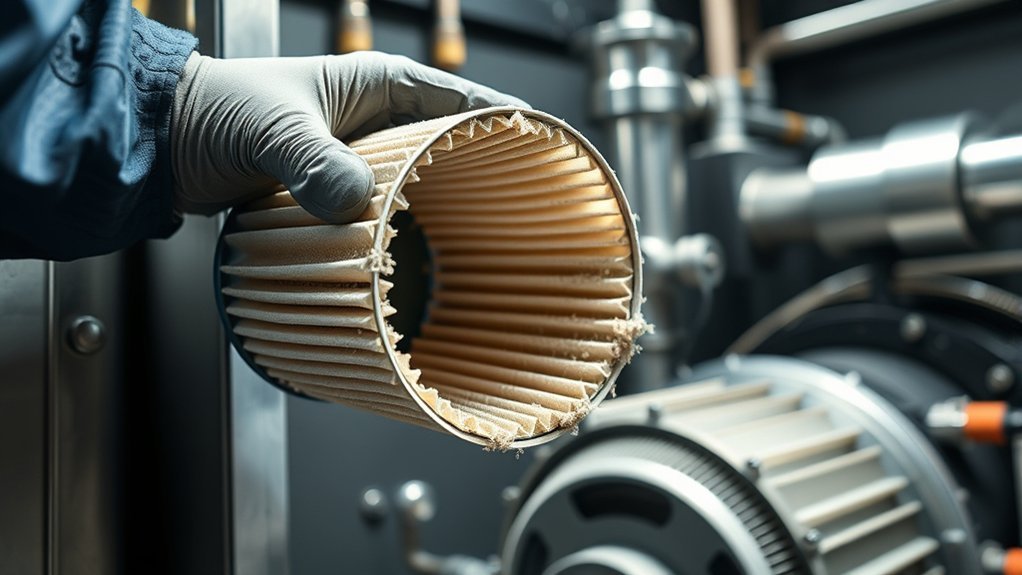
Regularly changing and cleaning air filters is essential for maintaining peak compressor performance, as clogged filters restrict airflow and increase system strain. Understanding air filter types—such as paper, foam, and synthetic filters—helps us select the appropriate filter for specific applications. Filter replacement intervals vary depending on usage, environment, and filter type but typically range from every 1,000 to 3,000 hours of operation. Regular inspection reveals when filters need cleaning or replacement; neglecting this can lead to reduced efficiency and potential damage. Proper maintenance involves removing debris, cleaning reusable filters according to manufacturer guidelines, and replacing disposable ones promptly. Adhering to these practices guarantees ideal airflow, prolongs equipment lifespan, and sustains consistent compressor output.
Draining and Replacing Compressor Oil and Lubricants

Proper oil drainage and lubricant replacement are critical for maintaining compressor efficiency and preventing component wear. We focus on precise procedures for safely removing old oil and selecting ideal lubricants to guarantee proper lubrication. By adhering to recommended practices, we can extend the operational lifespan and reliability of the compressor.
Oil Drainage Procedures
Have you ever wondered why routine oil drainage is essential for maintaining compressor efficiency? Proper drainage prevents contamination buildup, ensuring ideal lubrication. We start by positioning a catch basin beneath the drain plug, which is typically located at the compressor’s lowest point. Before opening the drain plug, we verify that the oil has cooled to avoid burns. As oil flows out, we monitor for signs of debris, indicating potential filtration issues. After draining, we inspect the oil filtration system and replace the filter if necessary. Tighten the drain plug securely to prevent leaks. Here’s a quick overview:
| Step | Key Focus | Purpose |
|---|---|---|
| Locate drain plug | Accessibility | Easy draining |
| Open drain plug | Controlled drainage | Complete oil removal |
| Re-tighten & check | Seal integrity | Prevent leaks |
Lubricant Replacement Tips
When replacing compressor lubricants, it’s vital to follow a systematic process to guarantee peak performance and longevity of the equipment. First, identify the appropriate lubricant types for your compressor, considering manufacturer specifications. Selecting the correct oil viscosity is essential; too thick, and it hampers circulation, too thin, and it reduces lubrication quality. Drain the existing lubricant thoroughly, making certain no residual contaminants remain. When refilling, use the recommended lubricant type and viscosity, maintaining consistent quality standards. Regularly checking oil levels and inspecting for contamination helps prevent equipment failure. Proper lubricant replacement minimizes wear and enhances compressor efficiency, extending its operational lifespan. Adhering to these tips ensures ideal lubrication, indispensable for reliable, long-term compressor operation.
Checking and Replacing Safety Valves and Pressure Relief Devices
How can we guarantee the safety and efficiency of an air compressor system? Regularly checking and replacing safety valves and pressure relief devices is essential. We start with safety valve calibration, ensuring the set pressure matches manufacturer specifications through pressure relief testing. If discrepancies are found, replacements are necessary to prevent overpressure risks. The following table illustrates key parameters:
| Component | Testing Method | Replacement Criteria |
|---|---|---|
| Safety Valve | Pressure relief testing | Fails calibration or shows wear |
| Pressure Relief Device | Functional pressure check | Inconsistent or leaks observed |
| Set Pressure | Calibration against specs | Deviates beyond tolerance |
| Mechanical Integrity | Visual inspection | Corrosion or damage present |
Maintaining these devices ensures proper pressure regulation and system safety.
Inspecting Belts, Hoses, and Connections for Wear and Damage
We use targeted visual inspection techniques to identify early signs of wear or damage on belts, hoses, and connections. Recognizing issues like cracks, fraying, or leaks promptly prevents system failures. Accurate assessment relies on systematic observation and understanding the typical failure patterns of these components.
Visual Inspection Techniques
Regular visual inspections are essential for maintaining the integrity of air compressor components, particularly belts, hoses, and connections. We rely on visual cues such as cracks, fraying, or glazing on belts, and signs of swelling, cracking, or corrosion on hoses. Inspection tools like flashlights and magnifying glasses enhance our ability to detect subtle damage. Consistent scrutiny involves examining contact points, fittings, and clamps for signs of leakage, looseness, or corrosion. We prioritize identifying irregularities that could compromise system performance or safety. Precise observation allows early detection of potential failures before functional issues arise. Effective visual inspection techniques demand a systematic approach, focusing on critical areas using appropriate tools to assess wear and damage accurately.
Recognizing Signs of Damage
Have you ever wondered what early signs of damage to belts, hoses, and connections look like? Recognizing these signs is crucial for preventing compressor failure. Unusual air compressor noise often indicates misaligned or worn belts and loose connections. Vibration analysis helps identify imbalances caused by damaged hoses or degraded mounting points. Look for cracks, fraying, or glazing on belts, and inspect hoses for bulges, cracks, or leaks. Loose or corroded connections may produce irregular vibrations or excessive noise. Monitoring these indicators through regular inspections and vibration analysis allows us to catch issues before they escalate. Promptly addressing these signs ensures peak compressor performance, reduces downtime, and extends the lifespan of essential components.
Cleaning and Reconditioning the Compressor Intake and Cooling System
Cleaning and reconditioning the compressor intake and cooling system are essential steps to maintain ideal performance and prevent overheating. Effective cooling system maintenance ensures maximum heat dissipation, reducing stress on internal components. Intake system cleaning involves removing dust, debris, and any obstructions that can impair airflow, which is critical for compressor efficiency. We recommend inspecting air filters regularly and replacing or cleaning them as needed to prevent contaminants from entering the system. For the cooling system, check for coolant leaks, corrosion, or buildup that could hinder heat exchange. Proper maintenance minimizes operating temperatures and prolongs component lifespan. By consistently performing intake system cleaning and cooling system reconditioning, we guarantee the compressor operates reliably under excellent conditions, avoiding costly downtime or damage caused by inadequate cooling.
Troubleshooting Common Air Compressor Problems and Maintenance Tips
When an air compressor experiences operational issues, prompt and accurate troubleshooting is essential to identify the root causes and prevent further damage. Troubleshooting noise is a common challenge that can considerably impact air compressor efficiency. Excessive or unusual sounds often indicate underlying problems such as worn bearings, loose components, or airflow restrictions. We recommend inspecting for loose fittings, checking for damaged belts, and listening carefully to pinpoint noise sources. Addressing these issues promptly ensures peak performance and reduces energy consumption. Regular maintenance, such as tightening fittings and replacing worn parts, can mitigate noise-related problems. By systematically diagnosing these issues, we enhance compressor reliability and efficiency, preventing costly downtime and extending the lifespan of the equipment.
Establishing a Regular Servicing Schedule for Long-Term Reliability
Establishing a regular servicing schedule is essential to guarantee the long-term reliability and peak performance of your air compressor. Effective maintenance scheduling ensures that critical components are inspected, lubricated, and replaced at ideal intervals, minimizing unexpected downtime. Consistent servicing enhances performance enhancement by preventing wear-related inefficiencies and maintaining excellent operating parameters. We recommend developing a detailed maintenance calendar based on manufacturer guidelines, workload, and operating conditions. This proactive approach allows early detection of potential issues, reducing repair costs and extending equipment lifespan. By adhering to a disciplined servicing routine, you ensure the compressor operates at maximum efficiency, saving energy and reducing operational costs. Ultimately, a well-structured maintenance schedule is key to sustaining long-term compressor performance and reliability.
Frequently Asked Questions
How Often Should I Replace the Compressor’s Safety Valves?
We recommend testing the safety valve regularly and replacing it every 1-2 years or as specified by the manufacturer, ensuring ideal safety and performance. Adhering to replacement intervals and safety valve testing maintains compressor integrity and prevents overpressure hazards.
What Are Signs of Internal Component Wear in an Air Compressor?
We observe internal wear through increased noise, inconsistent pressure, and overheating, which indicate component failure. Regular inspection of cylinders, pistons, and valves helps detect early signs of internal wear, preventing costly repairs and ensuring ideal compressor performance.
How Do Temperature Fluctuations Affect Compressor Performance?
Temperature fluctuations disrupt compressor performance by impairing temperature stability, which reduces cooling efficiency. We observe that inconsistent temperatures cause overheating or inefficient cooling, leading to decreased overall reliability and increased wear on internal components.
Can I Use Any Oil Type for Different Compressor Models?
We recommend checking oil compatibility and lubricant selection specific to each compressor model, as using incompatible oils can impair performance or cause damage. Always refer to manufacturer guidelines to guarantee proper operation and longevity.
What Are Advanced Troubleshooting Steps for Compressor Electrical Issues?
We understand electrical issues can be intimidating, but our advanced troubleshooting involves precise electrical diagnostics and circuit inspection, helping you identify faults efficiently. We’re confident this method restores your compressor’s performance and guarantees safety, reducing downtime.
Conclusion
Regular maintenance is key to keeping our air compressors running smoothly and reliably. By following these detailed inspection and servicing steps, we can catch issues early and prevent costly breakdowns. A proactive approach guarantees peak performance and safety, proving that prevention is always better than cure. Staying diligent with routine checks and maintenance schedules allows us to stay ahead of potential problems, ensuring our equipment remains in top condition—because a stitch in time really does save nine.