Ad Blocker Detected
Our website is made possible by displaying online advertisements to our visitors. Please consider supporting us by disabling your ad blocker.
Maintaining air compressors proactively is critical for ensuring they operate efficiently and have a long service life. Regular inspections, timely replacements, and monitoring key components can prevent costly breakdowns. Proper maintenance routines are grounded in technical precision and consistency, yet many operators overlook critical steps. Understanding these essential practices can markedly reduce downtime, but identifying the most effective strategies requires a closer look at the specific maintenance tips that truly make a difference.
Key Takeaways
- Regularly inspect and replace air filters, belts, and hoses to ensure optimal system efficiency and prevent unexpected failures.
- Drain condensate and monitor moisture levels to prevent corrosion and moisture-related equipment issues.
- Check and maintain proper tension and condition of belts and hoses to avoid premature wear and system breakdowns.
- Monitor pressure and temperature gauges consistently to detect early signs of operational issues.
- Follow a scheduled lubrication routine and use quality replacement parts to extend equipment lifespan and improve performance.
Why Regular Preventive Maintenance Matters for Your Air Compressor
Regular preventive maintenance is essential for ensuring the ideal performance and longevity of your air compressor. By systematically addressing wear and tear, we optimize efficiency, reducing energy consumption and operational costs. Regular checks and adjustments prevent unexpected breakdowns, minimizing downtime and costly repairs. Well-maintained components operate more effectively, allowing the compressor to perform at peak levels while consuming less power. This proactive approach also extends equipment lifespan, delaying the need for expensive replacements. Additionally, routine maintenance helps identify potential issues early, enabling targeted interventions that prevent efficiency losses. Overall, consistent preventive maintenance supports cost reduction by enhancing operational reliability, optimizing energy use, and avoiding unplanned expenses, making it an indispensable strategy for maintaining an economical and dependable air compression system.
Inspect and Replace Air Filters to Ensure Optimal Performance
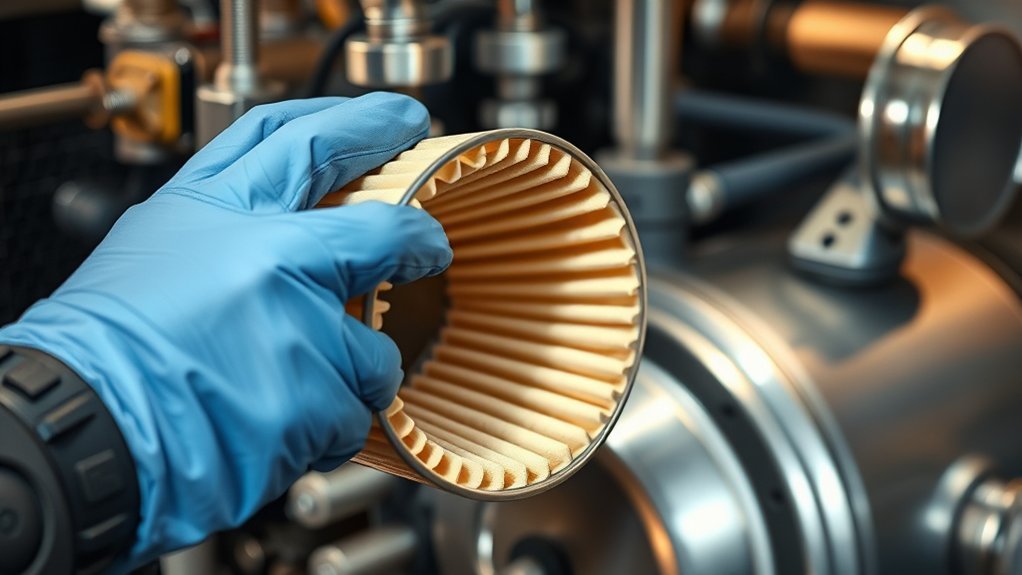
Regularly inspecting air filters allows us to assess their condition and identify potential blockages or damage that could impair airflow. Consistently replacing filters with high-quality parts guarantees contaminants are effectively removed, maintaining system efficiency. Prioritizing these maintenance steps helps optimize compressor performance and prolongs equipment lifespan.
Checking Filter Condition
How can we guarantee our air compressor operates at peak efficiency? Regularly checking the filter condition is essential. We examine the air filter materials for dirt accumulation, clogging, or damage, which can impair airflow and reduce performance. Proper filter installation techniques ensure a secure fit, preventing unfiltered air from bypassing the filter media. To optimize filter assessment, consider the following:
| Filter Material Condition | Installation Integrity | Operating Impact |
|---|---|---|
| Clean, undamaged | Properly seated | Max airflow, efficiency |
| Slight buildup | Slight misalignment | Slight performance drop |
| Heavy contamination | Improper fit | Increased wear, energy use |
| Damaged media | Loosened or misplaced | Reduced lifespan |
| Moisture presence | Poor sealing | Corrosion risk |
Maintaining these aspects guarantees consistent compressor performance and longevity.
Replacing Filters Regularly
Have you considered the impact of infrequent filter replacement on compressor efficiency? Neglecting timely filter changes can compromise air quality, reduce filter lifespan, and increase system strain. To maintain peak performance, we recommend:
- Monitoring filter condition regularly to detect dirt accumulation.
- Replacing filters before they reach the end of their designated lifespan, typically every 6 to 12 months depending on use.
- Ensuring filters are properly installed to prevent bypass and maintain effective filtration.
Consistent filter maintenance safeguards air quality, preventing contaminants from entering the system. It also preserves compressor efficiency by reducing pressure drops caused by clogged filters. Ultimately, regular replacement minimizes downtime, extends equipment lifespan, and ensures the compressor operates within ideal parameters.
Using Quality Replacement Parts
Using high-quality replacement parts is essential for maintaining the efficiency and longevity of air compressors, as inferior components can compromise system performance and lead to costly repairs. Adhering to proper replacement guidelines guarantees compatibility and peak performance. Quality parts reduce wear, prevent malfunctions, and extend service life. When selecting replacements, consider material standards, manufacturer specifications, and compatibility with existing components.
| Aspect | Significance |
|---|---|
| Material Quality | Ensures durability and resistance to wear |
| Compatibility | Prevents system inefficiencies and damage |
| Manufacturer Specs | Guarantees adherence to performance standards |
| Replacement Timing | Maintains efficiency and prevents costly breakdowns |
Following these guidelines ensures reliable operation and maximizes ROI.
Drain Condensate and Check for Moisture Build-Up
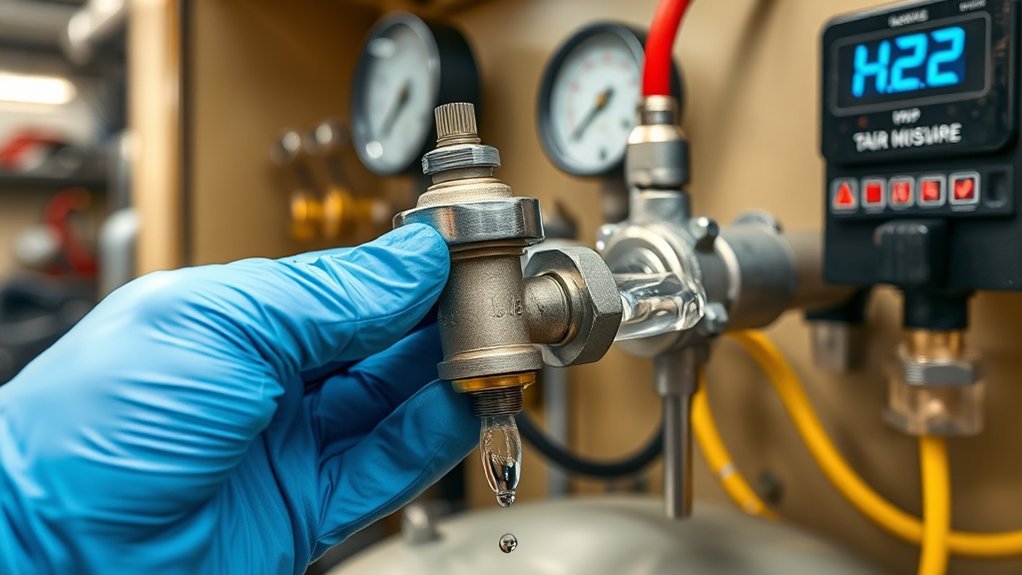
Regular draining of accumulated condensate is essential to prevent moisture-related issues in the compressor. We must also verify that drain valves operate correctly and monitor moisture levels consistently to guarantee system integrity. Addressing these points systematically helps maintain ideal compressor performance and longevity.
Regularly Drain Moisture Accumulation
To maintain the best performance, it’s essential that we regularly drain moisture from the air compressor’s tank, as accumulated condensate can impair operation and cause corrosion. Proper condensate removal is critical for effective moisture control, preventing moisture-related issues.
- We should schedule drain cycles at regular intervals, based on compressor usage and environmental conditions.
- During draining, we must guarantee that all condensate is fully expelled to avoid residual moisture buildup.
- Consistently check for signs of moisture accumulation, such as rust or water pockets, and address them promptly.
Implementing these steps ensures efficient condensate removal, reduces corrosion risk, and maintains ideal compressor function. Regular moisture management is indispensable for prolonging equipment lifespan and operational reliability.
Inspect Drain Valves Functionality
How can we guarantee the drain valves function properly to prevent moisture buildup? Conducting a thorough functionality check of the drain valve is essential. We start by manually opening the drain valve to ensure it releases accumulated condensate smoothly without sticking or leaks. Next, we verify that the valve closes securely afterward, preventing air loss. It’s crucial to inspect for corrosion, debris, or damage that could impair operation. Any signs of malfunction, such as slow drainage or inability to close, signal the need for immediate maintenance or replacement. Regular testing of the drain valve’s functionality not only ensures proper condensate removal but also protects the compressor from moisture-related issues. Consistent inspections are indispensable for reliable operation and ideal system longevity.
Monitor Moisture Levels Consistently
Monitoring moisture levels involves ongoing vigilance to guarantee the compressor operates efficiently and avoids damage. To ensure ideal humidity control, we rely on moisture sensors that provide real-time data. Regularly checking condensate drain points is essential to prevent moisture accumulation that can cause corrosion or system failure.
Key steps include:
- Using moisture sensors to detect moisture build-up early, enabling proactive intervention.
- Performing routine drain condensate to remove accumulated moisture, minimizing risks of water contamination.
- Monitoring humidity levels consistently to maintain precise control, especially in environments with variable air quality.
Lubricate Moving Parts and Monitor Oil Levels
Regular lubrication of moving parts is essential for maintaining ideal compressor performance and extending component lifespan. Adhering to precise lubrication schedules guarantees that components operate smoothly, reducing wear and the risk of mechanical failure. We must prioritize using high-quality oil tailored to the compressor specifications, as inferior oil can lead to increased friction and corrosion. Monitoring oil levels consistently allows us to detect leaks or contamination early, preventing potential damage. Proper lubrication not only minimizes downtime but also enhances energy efficiency by reducing frictional losses. Regularly scheduled lubrication routines and vigilant oil quality assessments form the backbone of effective preventive maintenance, ensuring that the compressor operates reliably and efficiently over its service life.
Examine Belts and Hoses for Wear and Tear
After confirming the compressor’s moving parts are properly lubricated and oil levels are maintained, the next step is to inspect belts and hoses for signs of wear and tear. We focus on three critical aspects:
Ensure optimal performance by regularly inspecting belt tension, condition, and hose integrity for signs of wear.
- Belt tension: Overly loose belts can slip, reducing efficiency, while excessively tight belts may cause premature bearing wear. Use a tension gauge to verify proper tension levels.
- Belt condition: Look for cracks, fraying, or glazing on the belt surface, indicating deterioration that could lead to failure.
- Hose integrity: Examine hoses for cracks, bulges, or leaks that compromise pressure retention or airflow, risking system failure.
Regular inspection of belt tension and hose integrity ensures peak compressor performance and minimizes unexpected downtime.
Keep an Eye on Pressure and Temperature Gauges for Early Signs of Issues
By closely observing pressure and temperature gauges during operation, we can detect early deviations that signal underlying issues. Sudden pressure fluctuations may indicate leaks or valve malfunctions, while unanticipated temperature alerts often suggest cooling system problems or excessive load. Monitoring these metrics allows us to intervene before failures occur, reducing downtime and maintenance costs.
| Indicator | Normal Range | Warning Signs |
|---|---|---|
| Pressure Fluctuations | Steady, within specified PSI limits | Rapid or inconsistent swings |
| Temperature Alerts | Stable temperature within limits | Sudden spikes or drops |
| Overall Trends | Gradual, predictable changes | Sharp deviations or irregularities |
Regularly analyzing these readings enhances proactive maintenance and system reliability.
Frequently Asked Questions
How Often Should I Schedule Professional Maintenance for My Air Compressor?
We recommend scheduling professional maintenance for your air compressor every 6 to 12 months, following a thorough maintenance checklist and strict safety protocols, to guarantee peak performance, prevent failures, and extend equipment lifespan efficiently.
What Are the Common Signs Indicating a Failing Air Compressor?
We notice noise, decreased pressure, and overheating as clear signs of a failing compressor. Proper lubrication prolongs compressor lifespan and prevents issues, so monitoring these signs helps detect problems early and maintain peak performance.
Can I Perform Preventive Maintenance Myself or Should I Hire a Technician?
We believe DIY inspection is feasible for basic maintenance if we follow strict safety precautions, but complex tasks should be handled by a qualified technician to guarantee precise troubleshooting, adherence to safety standards, and ideal compressor performance.
What Are the Best Practices for Storing Spare Parts and Replacement Components?
Proper spare parts organization and replacement component storage are vital. We recommend labeling, cataloging, and storing in a dry, temperature-controlled environment to guarantee quick access, maintain quality, and prevent corrosion or degradation—key for reliable compressor operation.
How Does Ambient Temperature Affect Air Compressor Maintenance Needs?
Ambient temperature greatly influences air compressor maintenance, as temperature fluctuations affect component wear and environmental impact. We monitor temperature variations carefully, adjusting maintenance schedules accordingly to prevent overheating, condensation issues, and guarantee ideal compressor performance and longevity.
Conclusion
By adhering to these preventive maintenance tips, we can keep our air compressors running smoothly and extend their lifespan like a well-oiled machine. Regular checks and timely interventions act as the heartbeat of reliable operation, preventing costly breakdowns and optimizing efficiency. Think of maintenance as the guardian of performance—without it, even the best equipment risks stagnation. Staying vigilant guarantees our systems remain resilient, delivering consistent results and safeguarding our investment over the long haul.