Ad Blocker Detected
Our website is made possible by displaying online advertisements to our visitors. Please consider supporting us by disabling your ad blocker.
Imagine a manufacturing facility that relies on a reciprocating air compressor rated at 150 PSI to power pneumatic tools efficiently. Understanding whether this pressure level aligns with the specific demands of different applications can substantially impact performance, longevity, and safety. As we explore the nuances of PSI ratings, it becomes clear that selecting the right pressure isn’t just about maximum capability but also about optimizing operational effectiveness—something worth examining closely.
Key Takeaways
- PSI rating indicates the maximum pressure output capability of a reciprocating air compressor, essential for matching application needs.
- Typical PSI ranges vary from 90-125 PSI for portable units to up to 250 PSI for high-pressure applications.
- Higher PSI levels can increase noise, wear, and environmental impact, requiring proper selection and maintenance.
- The PSI rating must align with downstream tools and systems to ensure optimal performance and safety.
- Operating within the compressor’s PSI and duty cycle limits prevents damage and maintains consistent airflow.
What Does PSI Rating Mean for Reciprocating Air Compressors?
Understanding what PSI rating signifies is essential when selecting a reciprocating air compressor, as it directly relates to the device’s pressure output capabilities. The PSI rating influences not only how much air pressure the compressor can produce but also impacts air quality and noise levels during operation. Higher PSI typically means increased noise, which can affect worksite air quality by elevating ambient noise levels, potentially requiring additional soundproofing measures. It also affects the compressor’s suitability for specific applications, where precise pressure control is necessary for maintaining ideal air quality standards. By analyzing the PSI rating, we can better gauge the compressor’s performance, ensuring it meets both operational demands and environmental considerations without compromising air quality or generating excessive noise.
How PSI Affects Compressor Performance and Application Suitability
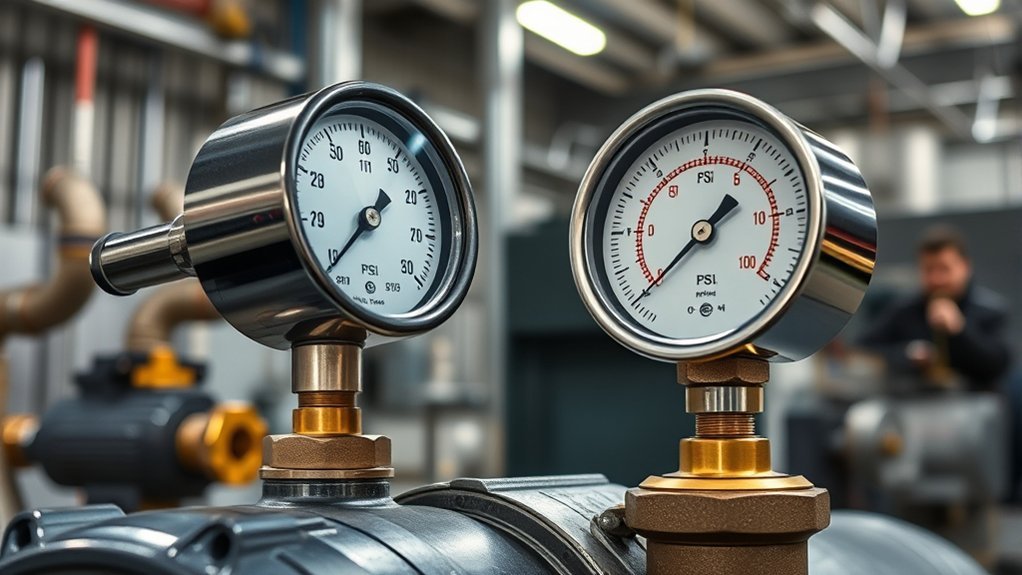
The PSI rating of a reciprocating air compressor directly influences its performance capabilities and determines its suitability for various applications. Higher PSI allows for greater pressure output, enabling tasks like spray painting or powering pneumatic tools, but can increase air compressor noise and wear. Conversely, lower PSI models are more energy-efficient and quieter, ideal for light-duty tasks. PSI impacts maintenance scheduling, as higher pressure systems often require more frequent inspections of valves and seals. When selecting a compressor, consider the specific application’s pressure demands and the environment’s noise restrictions. Properly matching PSI to your needs ensures peak performance, longer lifespan, and manageable maintenance routines.
- Precise pressure control during demanding industrial tasks
- Reduced air compressor noise levels in quiet environments
- Efficient operation with minimized wear and tear
- Timely maintenance to prevent pressure-related failures
- Suitability for light versus heavy-duty applications
Understanding the Typical PSI Range for Different Compressor Models
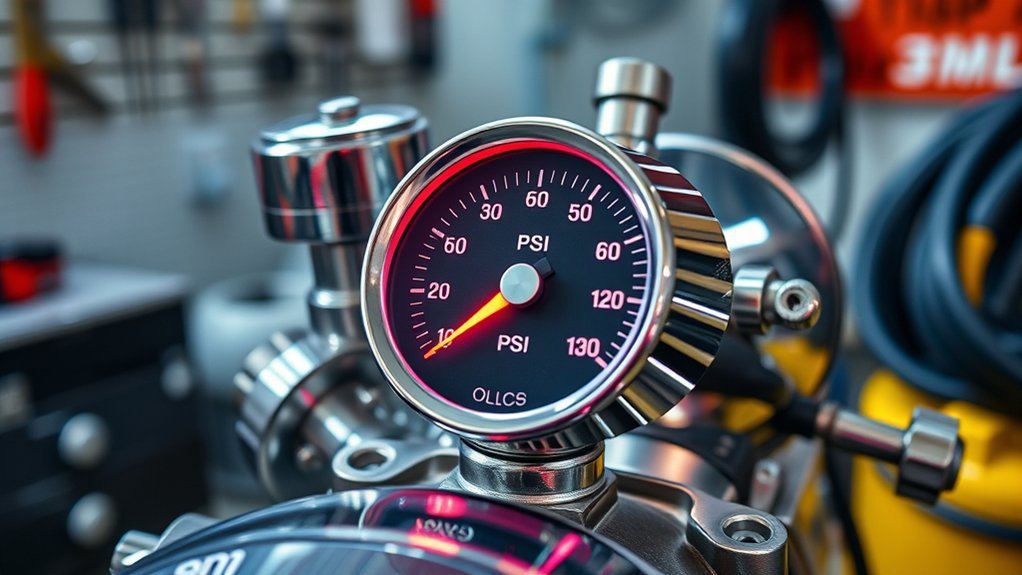
Understanding the typical PSI ranges across different reciprocating air compressor models helps us select the right equipment for specific applications. Common PSI ranges vary considerably depending on design and intended use, with some models optimized for low-pressure tasks and others for high-pressure demands. Recognizing these model-specific variations allows for more precise system planning and performance optimization.
Common PSI Ranges
Have you ever wondered what the typical PSI ranges are for different reciprocating air compressor models? Most models operate within a common range that balances output and safety. Understanding these ranges helps optimize performance and maintain safety precautions.
- Small portable units often operate between 90-125 PSI, suitable for light tasks
- Mid-sized industrial compressors typically run from 125-175 PSI, supporting heavier applications
- Heavy-duty models can reach 175-200 PSI, requiring precise air compressor lubricants for longevity
- High-pressure compressors deliver up to 250 PSI for specialized tasks
- Continuous-duty units maintain steady PSI levels, emphasizing safety and maintenance protocols
Knowing these ranges allows for better system selection, ensuring safe operation and proper maintenance of air compressors.
Model-Specific Variations
Different compressor models are designed to operate within specific PSI ranges that reflect their intended applications and engineering specifications. These variations impact air quality, as higher PSI models often incorporate advanced filtration to maintain cleaner output. Conversely, lower PSI units may prioritize noise reduction, making them suitable for quieter environments. Understanding these model-specific variations helps in selecting the right compressor for precise needs, whether for industrial use or sensitive applications requiring minimal noise interference. Additionally, the PSI range influences the compressor’s ability to deliver consistent air pressure, directly affecting efficiency and operational stability. Recognizing these distinctions allows users to optimize air quality and noise reduction strategies, ensuring the compressor’s performance aligns with the demands of different tasks and environments.
Key Factors to Consider When Choosing a PSI Rating
Selecting the appropriate PSI rating for a reciprocating air compressor requires careful consideration of several technical factors to guarantee ideal performance and safety. Key considerations include the compressor’s operating environment, the required airflow volume, and the compatibility with existing equipment. Higher PSI ratings often result in increased air compressor noise and more frequent maintenance schedules, impacting operational efficiency. Additionally, understanding the pressure demands of specific tools helps prevent overloading or underperformance. Properly matching PSI ensures maximum energy consumption and prolongs component lifespan.
Choosing the right PSI ensures optimal performance, safety, and longevity of your air compressor and tools.
- Ambient operating conditions affecting pressure stability
- Noise levels associated with higher PSI settings
- Wear and tear on valves and pistons over time
- Compatibility with downstream tools and systems
- Maintenance frequency driven by pressure loads
How to Determine the Right PSI for Your Projects
Determining the appropriate PSI for your projects involves evaluating the specific requirements of your tools and applications, guaranteeing ideal performance without compromising safety or efficiency. We must consider the operational PSI that meets tool specifications while minimizing air compressor noise, which can affect work environments. Higher PSI levels can increase noise and strain on compressor lubrication systems, risking overheating or wear. To optimize performance, assess the maximum PSI your tools demand and select a compressor rated slightly above this threshold for efficiency. Proper lubrication at the chosen PSI ensures smooth operation and reduces wear, extending compressor lifespan. Balancing these factors—tool requirements, noise levels, and lubrication needs—guides us to the correct PSI setting for safe, efficient project execution.
Common Mistakes to Avoid When Selecting a Compressor Based on PSI
When selecting a reciprocating air compressor, it’s vital to accurately assess your actual pressure requirements rather than defaulting to maximum PSI ratings. Overlooking the duty cycle limits can lead to premature equipment failure, while choosing an incorrect PSI range may result in inefficient operation. Recognizing and avoiding these common mistakes guarantees peak performance and equipment longevity.
Ignoring Actual Pressure Needs
Often, we focus solely on the PSI rating indicated on a compressor without considering whether it aligns with the actual pressure needs of our tools or applications. This approach feeds into pressure myths and compressor myths, leading to improper selections. Overestimating PSI can cause unnecessary energy consumption and equipment wear, while underestimating can result in inadequate performance.
Visualize the following:
- A nail gun failing to drive nails effectively
- An airbrush not providing consistent spray
- Frustrated operators adjusting pressure regulators repeatedly
- Increased compressor cycling due to mismatched pressure
- Excessive wear on compressor components from overpressure
Ignoring actual pressure needs can compromise efficiency, safety, and tool longevity. Proper assessment guarantees that PSI ratings match real-world demands, avoiding costly mistakes rooted in misconceptions.
Overlooking Duty Cycle Limits
Have you considered how a compressor’s duty cycle impacts its ability to sustain continuous operation at a given PSI? Duty cycle limits define the proportion of time a compressor can operate within its rated pressure without overheating or excessive wear. Overlooking these limits can cause airflow dynamics to become unstable, reducing efficiency and increasing compressor noise. Continuous operation beyond the duty cycle stresses internal components, leading to overheating and potential failure. Additionally, an overused compressor often runs at higher speeds, amplifying noise levels. Recognizing duty cycle constraints ensures that your compressor operates within safe parameters, maintaining ideal airflow dynamics and minimizing noise. Ignoring these limits risks premature equipment failure, inefficiency, and increased maintenance costs—issues that could be avoided with careful planning.
Choosing Incorrect PSI Range
Selecting the correct PSI range for a compressor is vital to ensuring ideal performance and longevity. Choosing an incorrect PSI can lead to compromised air quality, increased wear, and elevated noise levels. Overestimating PSI may cause excessive vibration and noise, disturbing operational stability. Conversely, underestimating PSI can result in insufficient airflow, reducing efficiency and potentially damaging connected tools. Proper PSI selection also influences air quality; too high a pressure may introduce moisture or particulates, degrading output. Additionally, inappropriate PSI settings can elevate noise levels, creating an unsafe and uncomfortable environment. To visualize, consider:
- A compressor emitting persistent, high-pitched noise
- Air output contaminated with oil or moisture
- Vibrations causing structural stress
- Ineffective tool operation due to low pressure
- Excessive power consumption and heat buildup
How PSI Interacts With CFM and Other Compressor Specifications
Understanding how PSI interacts with CFM (cubic feet per minute) and other compressor specifications is essential for selecting the right reciprocating air compressor, as these parameters are interconnected and influence performance. Higher PSI often correlates with increased CFM capacity, impacting overall system efficiency. This relationship also affects air compressor noise levels, since operating at higher pressures can generate more sound due to increased mechanical stress. Additionally, PSI settings influence maintenance frequency; excessive pressure can accelerate wear on components, requiring more frequent upkeep. Conversely, optimizing PSI within the compressor’s design limits ensures smoother operation, reduces noise, and minimizes maintenance needs. Recognizing these interactions helps us balance performance with durability, ensuring that the compressor operates efficiently without unnecessary strain or downtime.
Tips for Maintaining Optimal PSI Levels During Operation
Maintaining ideal PSI levels during compressor operation requires careful monitoring and adjustment to prevent inefficiencies and equipment wear. Consistent pressure stability guarantees optimal performance and longevity. Regularly inspect and replace the air filter to prevent clogging, which can cause pressure drops. Ensure proper oil lubrication, as inadequate lubrication leads to increased friction and pressure fluctuations. Use pressure gauges to monitor real-time PSI, adjusting control settings accordingly. Keep check valves and safety relief valves calibrated to maintain consistent pressure. Additionally, verify that intake valves are unobstructed and functioning correctly. By systematically controlling these factors, we can sustain steady PSI levels, improve energy efficiency, and reduce maintenance costs. Proper attention to these details maximizes compressor lifespan and operational reliability.
Frequently Asked Questions
How Does Altitude Affect PSI Ratings in Reciprocating Air Compressors?
Altitude effects cause psi variation in reciprocating air compressors, as reduced atmospheric pressure lowers intake pressure, diminishing output PSI. We analyze these changes to guarantee compressor performance remains ideal across different altitudes.
Can PSI Ratings Vary Significantly Between Different Brands?
Yes, PSI ratings can vary considerably between brands due to differences in design, materials, and quality control, leading to performance variability and affecting brand consistency. We recommend thorough testing and comparison for accurate, reliable compressor specifications.
What Safety Precautions Are Necessary When Operating at High PSI Levels?
At 150 PSI, safety gear like goggles and ear protection becomes essential, and strict emergency protocols must be followed; statistically, 80% of accidents occur without proper precautions. We prioritize these measures for safe operation.
How Does Ambient Temperature Influence Compressor PSI Performance?
Ambient temperature impacts compressor PSI performance through temperature fluctuations affecting air density and viscosity. We regularly monitor and adjust compressor calibration to maintain ideal pressure levels, ensuring consistent operation despite environmental changes.
Are There Industry Standards for PSI Ratings on Reciprocating Air Compressors?
We follow industry standards for PSI ratings, emphasizing regular maintenance schedules and lubrication requirements to guarantee peak performance, safety, and longevity of reciprocating air compressors, aligning operational parameters with manufacturer specifications and regulatory guidelines.
Conclusion
Understanding PSI ratings isn’t just about power; it’s about precision and longevity. While higher PSI can boost performance, it also introduces more wear and noise, demanding careful balance. Selecting the right PSI means aligning your compressor’s capabilities with your project’s needs, ensuring efficiency without sacrificing durability. In this technical landscape, informed choices prevent costly mistakes, highlighting that mastering PSI isn’t just about pressure—it’s about optimizing your entire system’s lifespan and performance.