Ad Blocker Detected
Our website is made possible by displaying online advertisements to our visitors. Please consider supporting us by disabling your ad blocker.
Imagine a piston moving back and forth like a heartbeat, compressing air with each stroke. That motion is the core of a reciprocating air compressor, a device vital in industrial applications where high-pressure air is essential. Its precise mechanics and components make it a reliable choice, yet understanding how it operates can be complex. To truly grasp its function, we need to explore its design, operation, and the factors that influence its performance.
Key Takeaways
- A reciprocating air compressor uses a piston moving within a cylinder to compress air mechanically.
- It operates through back-and-forth (reciprocating) piston motion, drawing in and compressing ambient air.
- Key components include the piston, cylinder, crankshaft, valves, and intercoolers for heat management.
- Suitable for high-pressure applications across industries like manufacturing, medical, and automotive.
- It requires regular maintenance to ensure efficiency, prevent leaks, and reduce noise and emissions.
What Is a Reciprocating Air Compressor and How Does It Work?
A reciprocating air compressor is a mechanical device that compresses air by using a piston moving within a cylinder. The piston’s reciprocating motion increases air pressure, drawing in ambient air during the intake stroke and compressing it during the compression stroke. To maintain ideal performance, cooling systems are integrated to prevent overheating caused by the high-pressure cycles. These cooling mechanisms often involve air or water cooling to regulate temperature and prolong component life. Noise reduction is also a key consideration; sound-absorbing enclosures and vibration dampers minimize operational noise, making the compressor suitable for various environments. Overall, precise control of cooling and noise reduction enhances efficiency, durability, and user safety in reciprocating air compressors.
Key Components of a Reciprocating Air Compressor
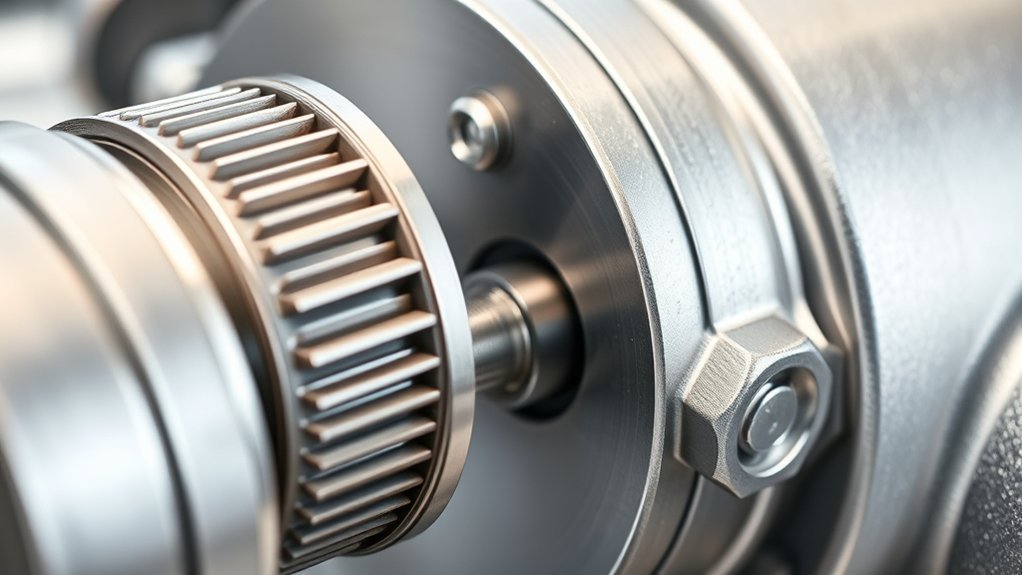
Understanding the key components of a reciprocating air compressor reveals how its design guarantees efficient operation and durability. The main components include the piston, cylinder, crankshaft, valves, and intercooler. The piston moves within the cylinder, compressing air, while the crankshaft converts rotary motion into reciprocating action. Valves control airflow, ensuring unidirectional flow during intake and compression. An intercooler can be integrated to improve efficiency and reduce environmental impact by minimizing heat generation. Noise reduction features, such as mufflers and sound enclosures, are essential for decreasing operational noise, contributing to a safer work environment. Precise construction and material selection for these components optimize performance, extend lifespan, and address environmental concerns, ensuring the compressor operates reliably while minimizing its ecological footprint.
How Does a Piston Drive the Compression Process?
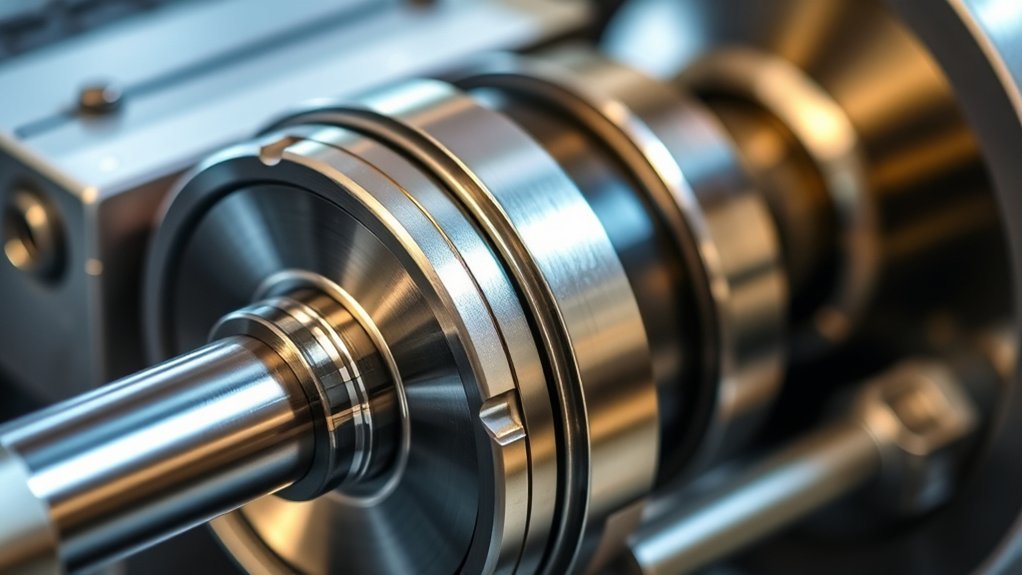
The piston plays an essential role in the compression process by converting the rotary motion of the crankshaft into linear reciprocating movement. This piston mechanism directly influences the compression dynamics within the cylinder. As the crankshaft rotates, it drives the piston up and down, creating a pressure difference that compresses the air.
Key aspects include:
- Reciprocating motion: The piston’s linear movement increases and decreases the volume, enabling compression.
- Sealing and valving: Valves control air intake and exhaust, synchronized with piston movement.
- Force transmission: The connecting rod transmits force from the crankshaft to the piston, ensuring efficient compression.
This precise piston mechanism guarantees consistent compression dynamics essential for maximum compressor performance.
Types of Reciprocating Air Compressors: Single-Stage vs. Two-Stage
Reciprocating air compressors are classified based on their compression stages, which directly impact efficiency, lubrication requirements, and noise reduction. Single-stage compressors compress air in one cylinder, suitable for lower pressure needs, with simpler maintenance and less noise. Conversely, two-stage compressors utilize two cylinders, offering higher pressure with improved efficiency and better heat dissipation. The two-stage design typically reduces lubrication demands per stage and minimizes noise levels due to staged operation.
| Feature | Single-Stage | Two-Stage |
|---|---|---|
| Lubrication requirements | Lower | Higher |
| Noise reduction | Moderate | Enhanced |
| Efficiency | Moderate | Superior |
| Max pressure | Lower | Higher |
Advantages of Using a Reciprocating Air Compressor
Reciprocating air compressors offer high-pressure output essential for demanding applications. Their versatility allows usage across various industries, from manufacturing to medical devices. Additionally, they operate cost-effectively, making them an economical choice for many compressed air needs.
High Pressure Output
Why do many industrial applications prefer reciprocating air compressors? Their ability to generate high-pressure output is a key advantage. This type of compressor can deliver pressures up to 3000 psi, making it ideal for demanding tasks.
Consider these benefits:
- Consistent High Pressure: guarantees reliable operation for tools and processes requiring maximum force.
- Enhanced Control: Precise pressure regulation improves efficiency and safety.
- Environmental Impact & Noise Levels: Despite higher noise levels, modern models incorporate noise-reduction features, and their efficient operation minimizes environmental impact due to reduced energy waste.
This high-pressure capacity makes reciprocating compressors indispensable in applications like welding and testing, where maximum pressure is critical, all while balancing noise and environmental considerations.
Versatile Application Range
Their ability to generate high pressure enables reciprocating air compressors to serve a wide array of industrial applications, from manufacturing to medical tools. This versatility stems from their capacity to handle various operating conditions and adapt to specific needs. Additionally, advancements in noise reduction technologies minimize environmental impact and operational disruptions.
| Application Type | Key Benefits |
|---|---|
| Manufacturing | High-pressure output for automation |
| Medical Equipment | Precise, reliable air supply |
| Automotive Services | Durable for continuous, heavy-duty use |
This broad application range highlights how reciprocating compressors can be tailored to diverse environments, balancing performance with environmental considerations like noise reduction and emission control.
Cost-Effective Operation
Because of their straightforward design and durable construction, reciprocating air compressors typically offer a more cost-effective solution compared to other compressor types. They provide significant energy savings by operating efficiently at variable loads, reducing power consumption during partial demands. Additionally, their mechanical simplicity results in lower maintenance costs and longer service life, minimizing downtime and expenses. From an environmental perspective, reciprocating compressors generate fewer emissions due to their efficient operation and the ability to optimize cycles for energy use.
- Reduced energy costs through efficient load management
- Lower maintenance expenses due to simple mechanics
- Minimized environmental impact via energy-efficient operation
Common Applications and Industries That Rely on Reciprocating Compressors
Reciprocating air compressors are integral to various industrial manufacturing processes, providing reliable compressed air for powering tools and equipment. They also play a vital role in medical and laboratory settings, where consistent and clean air supply is essential for precise operations. Understanding these applications highlights the compressor’s importance across diverse high-demand industries.
Industrial Manufacturing Processes
Have you ever wondered which industries depend on reciprocating air compressors for their core operations? These compressors are essential to several industrial manufacturing processes, where reliability and efficiency are paramount. Key applications include:
- Automotive Manufacturing: Powering pneumatic tools, spray painting, and assembly line automation, with attention to noise reduction to meet workplace standards.
- Chemical Processing: Providing compressed air for chemical transfer, mixing, and instrumentation, all while minimizing environmental impact through efficient operation.
- Aerospace Production: Ensuring precision in component manufacturing and testing, with a focus on environmental impact mitigation and noise control to maintain safety and compliance.
Reciprocating compressors play a crucial role in these sectors by balancing operational efficiency with environmental and noise considerations.
Medical and Laboratory Use
Ever considered how critical reliable compressed air is in medical and laboratory environments? Reciprocating air compressors are integral for ensuring consistent, contaminant-free airflow essential for sensitive applications. They support sterilization processes, operate surgical instruments, and facilitate analytical equipment calibration. In these settings, maintaining strict control over biological hazards is paramount; compressed air systems are designed with filtration and moisture removal to prevent contamination. By ensuring the purity of the air supply, reciprocating compressors directly contribute to patient safety and the integrity of diagnostic results. Their reliability minimizes downtime and reduces risks associated with air quality fluctuations, making them indispensable in environments where precision and safety are non-negotiable.
Factors to Consider When Choosing a Reciprocating Air Compressor
Selecting the right reciprocating air compressor requires careful evaluation of several key factors to guarantee it meets operational demands efficiently. First, consider energy efficiency, which directly impacts operational costs and environmental footprint. Second, assess noise levels, especially in sensitive work environments, to ensure minimal disruption. Third, evaluate the compressor’s capacity and pressure output to match your specific application requirements, avoiding under or over-specification. Additional factors include the compressor’s size and portability, which influence installation options and space constraints. By prioritizing energy efficiency, noise reduction, and capacity, we can select a compressor that optimizes performance while maintaining operational cost-effectiveness and compliance with noise regulations.
Maintenance Tips to Keep Your Compressor Running Efficiently
Regular maintenance is essential to guarantee your reciprocating air compressor operates at peak efficiency and minimizes downtime. Consistent inspection and cleaning of components such as valves, pistons, and cylinders prevent wear and maximize compression. Lubrication should be checked regularly to reduce friction and heat, supporting energy efficiency. Replacing worn filters and ensuring tight seals help maintain consistent airflow, reducing energy consumption. Proper alignment of belts and pulleys minimizes mechanical strain, further enhancing efficiency. Noise reduction is also achievable through vibration dampening and sound insulation of key components. Regularly monitoring operating parameters allows early detection of issues that could compromise energy efficiency or increase noise levels. Adhering to these maintenance practices ensures your compressor runs smoothly, efficiently, and with minimal operational noise.
Troubleshooting Common Issues in Reciprocating Air Compressors
When a reciprocating air compressor encounters operational issues, prompt and accurate troubleshooting is crucial to minimize downtime and prevent further damage. Common problems include irregular noise levels, increased environmental impact, and reduced efficiency. Addressing these issues involves:
- Inspecting for leaks — Air leaks reduce efficiency and increase noise levels, impacting environmental impact. Tighten fittings and replace damaged seals.
- Monitoring lubrication — Insufficient or contaminated oil can cause overheating and elevated noise, affecting environmental safety. Regular oil checks are essential.
- Checking valves and pistons — Wear or blockage can lead to inconsistent performance and increased emissions. Ensure valves are clean and pistons move freely.
Timely troubleshooting maintains compressor performance, reduces environmental impact, and keeps noise levels within acceptable limits.
How Do Reciprocating Compressors Compare to Other Types of Compressors?
When comparing reciprocating compressors to other types, efficiency and power output are key considerations, with reciprocating units often excelling in high-pressure applications. Maintenance requirements and initial costs also differ markedly, as reciprocating compressors typically demand more attention but may have lower upfront investments. Understanding these distinctions helps determine the most suitable compressor type for specific operational needs.
Efficiency and Power
How do reciprocating compressors compare to other types of compressors regarding efficiency and power? Reciprocating compressors generally exhibit high energy efficiency and substantial power output, especially in small to medium applications. Their positive displacement design allows precise control of flow rate and pressure, optimizing energy consumption.
Consider these key points:
- Energy Efficiency: Reciprocating units achieve high efficiency due to minimal slip and uniform compression, reducing energy waste.
- Power Output: They deliver high pressure and flow rates suitable for demanding industrial tasks.
- Operational Precision: Their ability to operate across variable loads enhances overall energy utilization, making them reliable in applications requiring consistent power.
Maintenance and Cost
Reciprocating compressors typically involve higher maintenance requirements and costs compared to other compressor types such as rotary screw or centrifugal units. This is due to the complexity of their moving parts, including pistons, valves, and cylinders, which require regular lubrication, inspection, and replacement. The environmental impact of reciprocating units is also notable, as they tend to generate more noise and vibrations, making noise reduction essential for compliance and safety. Maintenance expenses increase with the need for frequent repairs and component replacements. Conversely, rotary screw and centrifugal compressors generally offer lower ongoing costs and reduced environmental footprint. While reciprocating compressors excel in high-pressure applications, their higher maintenance demands and noise levels make them less cost-effective for continuous operation compared to alternative compressor types.
Frequently Asked Questions
What Is the Maximum Pressure a Reciprocating Air Compressor Can Achieve?
We typically see reciprocating air compressors reach maximum pressures of 150 to 300 psi, depending on design. Regular maintenance and proper lubrication methods are essential to sustain ideal performance and prevent pressure-related issues.
How Noisy Are Reciprocating Air Compressors During Operation?
A penny saved is a penny earned—reciprocating air compressors can be quite noisy, with sound levels varying widely; effective sound insulation reduces noise levels considerably, making operation more manageable in industrial settings.
What Is the Typical Lifespan of a Reciprocating Air Compressor?
We find that with proper maintenance frequency and regular lubrication requirements, reciprocating air compressors typically last 10 to 20 years, depending on usage intensity and operating conditions, ensuring reliable performance and extended service life.
Are Reciprocating Compressors Suitable for Continuous Operation?
Like a well-oiled orchestra, reciprocating compressors are suitable for continuous operation when proper lubrication and maintenance protocols are followed, ensuring reliability and performance. Neglecting these aspects risks overheating, wear, and potential failure under constant use.
How Energy-Efficient Are Reciprocating Air Compressors Compared to Other Types?
Reciprocating air compressors tend to have higher energy consumption but excel in efficiency metrics for specific applications. We find their efficiency depends on load conditions, making them suitable for intermittent use but less ideal for continuous, high-volume demands.
Conclusion
In the end, understanding our reciprocating air compressor is like mastering a crucial gear in a complex machine—each component and process symbolizing a cog in the larger system. When we maintain and operate it with precision, it performs reliably, much like a well-tuned engine driving progress. Recognizing its importance reminds us that, like a heartbeat, its consistent rhythm sustains the flow of industry—an essential pulse in the machinery of innovation.