Ad Blocker Detected
Our website is made possible by displaying online advertisements to our visitors. Please consider supporting us by disabling your ad blocker.
When choosing between mini and portable air compressors, understanding their technical distinctions and application suitability becomes essential. Both types serve specific needs, but their performance metrics, size, and durability vary considerably. We’ll explore these differences to help you determine which option aligns best with your operational demands and mobility requirements, ensuring you select the most efficient and cost-effective solution for your tasks.
Key Takeaways
- Mini air compressors are smaller, lightweight, and ideal for light-duty tasks, while portable compressors are larger with higher power for demanding jobs.
- Portable units typically offer higher airflow (CFM) and PSI, suitable for tire filling, spray painting, and heavy-duty applications.
- Mini compressors operate quieter, making them suitable for noise-sensitive environments, whereas portable models may include noise reduction features.
- Mini compressors are more affordable, energy-efficient, and easier to handle, while portable units are costlier but provide increased durability and performance.
- Choice depends on application needs: mini compressors for portability and quiet operation; portable compressors for higher capacity and versatile use.
What Are Mini Air Compressors and How Do They Work?
Mini air compressors are compact devices that generate compressed air for various applications, ranging from inflating tires to powering pneumatic tools. They operate through a motor-driven piston or rotary screw mechanism, which compresses ambient air into a storage tank. Their small size often results in lower airflow capacity but enhances portability. When considering air compressor noise, mini units typically produce less sound than larger models, making them suitable for noise-sensitive environments. However, their environmental impact depends on energy efficiency and emissions, as some models use more power or produce heat during operation. Understanding these factors helps determine their suitability for specific tasks, balancing performance with environmental considerations and noise levels to optimize usage in diverse settings.
Key Differences Between Mini and Portable Air Compressors
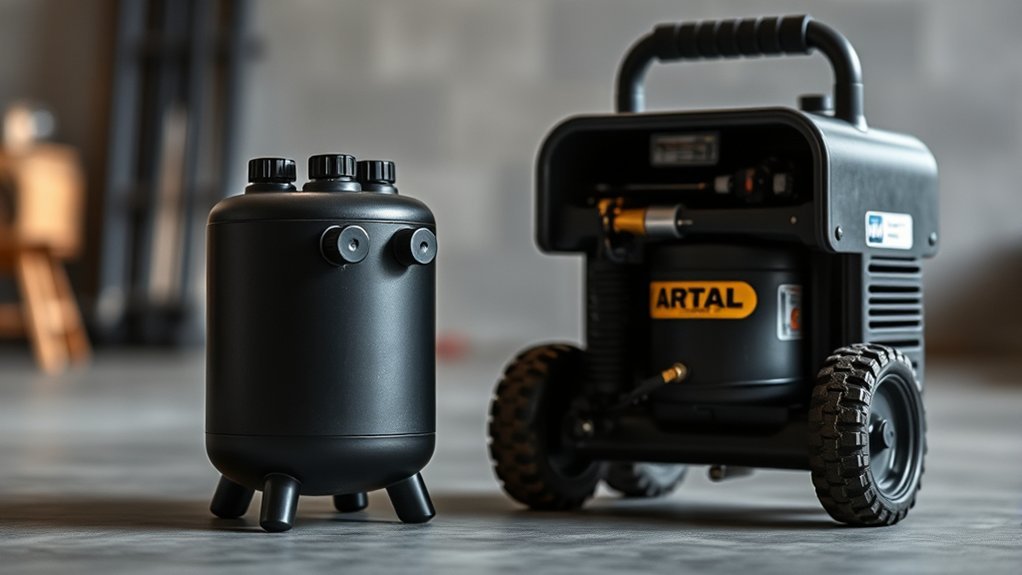
While both mini and portable air compressors are designed for mobility and convenience, they differ markedly in capacity, power, and typical applications. Mini compressors generally have lower air delivery rates, making them suitable for light tasks but often producing higher air compressor noise levels, which can be a concern in quieter environments. Portable compressors tend to feature increased power and higher air delivery rates, enabling them to handle more demanding jobs efficiently. They often incorporate noise reduction design elements, resulting in quieter operation compared to mini units. These differences impact their suitability for specific tasks; mini compressors excel in compact, low-volume applications, while portable compressors are better suited for higher-volume air needs with more controlled noise levels.
When Should You Use a Mini Air Compressor?
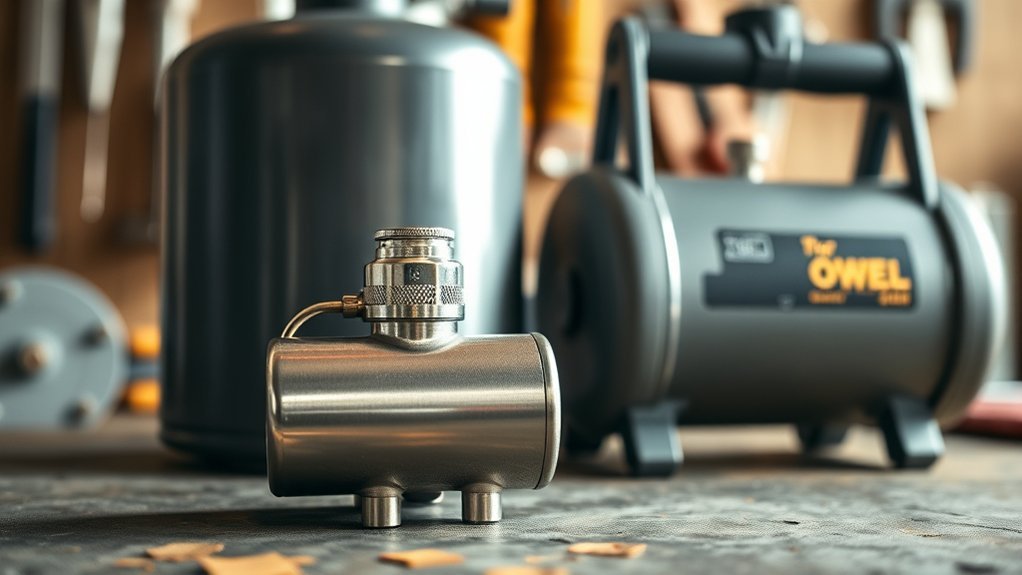
Mini air compressors are ideal for applications that require portability and quick, low-volume air supply without the need for extensive power or high output. They excel in environments where minimizing air compressor noise is *essential*, such as workshops or residential settings, as their smaller size typically results in quieter operation. Additionally, mini compressors tend to have a lower environmental impact due to reduced energy consumption and fewer emissions. They are well-suited for tasks like inflating tires, powering small pneumatic tools, or maintenance jobs that demand mobility and convenience. Their compact design allows for easy storage and transport, making them perfect for on-the-go use. Overall, mini air compressors provide an efficient, environmentally conscious solution for light-duty, localized applications.
Ideal Scenarios for Portable Air Compressors
Portable air compressors are most effective in scenarios that demand high mobility and versatile performance across diverse environments. They excel in applications like maintenance tasks, on-site repairs, and HVAC system adjustments, where portability minimizes downtime and enhances efficiency. Their adaptability makes them suitable for various industrial applications, especially when access to fixed power sources is limited. The table below highlights ideal use cases:
| Scenario | Key Benefit | Typical Environment |
|---|---|---|
| HVAC system servicing | Quick deployment in tight spaces | Commercial buildings |
| On-site industrial repairs | Mobility reduces setup time | Manufacturing plants |
| Emergency maintenance | Immediate response capability | Industrial facilities |
| Remote site operations | Flexibility in varied terrains | Construction sites |
Comparing Size, Weight, and Portability Features
When comparing air compressors, we evaluate their compactness and design to determine how well they fit into limited spaces. Lightweight construction is essential for ease of handling and reducing fatigue during transport, while overall size directly impacts portability. Analyzing these features helps identify which model offers maximum ease of movement for various applications.
Compactness and Design
Although both mini and portable air compressors are designed for mobility, their compactness and overall design differ considerably. Mini compressors typically feature a smaller footprint, making them ideal for confined spaces, but often lack advanced noise reduction features, leading to higher noise levels. Portable units tend to be slightly larger but incorporate design elements for better air quality output and noise control. The following table highlights key design aspects:
| Feature | Mini Air Compressor | Portable Air Compressor |
|---|---|---|
| Size & Weight | Smaller, lighter | Slightly larger, heavier |
| Air Quality Control | Basic filtration | Enhanced filtration |
| Noise Levels | Higher noise | Quieter operation |
This comparison underscores how design influences functionality, with portable units often prioritizing noise and air quality management.
Lightweight Construction
Have you ever wondered how the size and weight differences between mini and portable air compressors impact their ease of transport? Mini compressors generally feature a more compact, lightweight design, making them easier to carry and store. This reduced weight often results in less strain during transportation, though it may limit airflow capacity. Portable compressors, while slightly larger and heavier, incorporate advanced air filtration systems that optimize airflow and durability. The construction materials directly influence noise levels; lighter materials typically generate less noise, enhancing user comfort during operation. Both types emphasize efficient air filtration to maintain performance but differ in their approach to balancing size, weight, and noise. Ultimately, lightweight construction plays a critical role in the practical usability of these devices, especially where mobility is a priority.
Easy Transportation
The size and weight of air compressors directly influence their ease of transportation, impacting how quickly and efficiently we can move them between job sites or storage areas. Smaller, lighter models typically enhance portability, but we must also consider energy efficiency and noise levels. For example:
- Compact mini air compressors excel in tight spaces, reducing overall weight for easier handling.
- Portable units with ergonomic design improve mobility without sacrificing power, supporting energy-efficient operation.
- Noise levels tend to be lower in smaller models, facilitating transport in noise-sensitive environments.
Power and Performance: Which Compressor Offers More?
When comparing mini air compressors and portable air compressors, evaluating their power and performance involves examining their engine types, motor capacities, and airflow capabilities. Mini compressors typically feature smaller motors with limited airflow, suitable for light tasks but often producing lower air quality and increased noise levels. In contrast, portable units generally have more robust motors, delivering higher airflow rates, which enhances performance for demanding applications. This increased power can improve air quality by reducing moisture buildup and ensuring consistent output. However, higher power often correlates with increased noise levels, which may impact usability in noise-sensitive environments. Ultimately, portable compressors offer greater performance potential, but the trade-offs include increased noise and possibly larger size, whereas mini compressors provide quieter operation at the expense of raw power.
Ease of Use and Maintenance Considerations
When comparing ease of use and maintenance, we focus on portability and handling, as these affect setup and transportation efficiency. Maintenance requirements influence long-term operational costs and downtime, while ease of operation impacts user safety and productivity. Analyzing these factors helps determine which compressor offers a more practical solution for various applications.
Portability and Handling
While both mini and portable air compressors are designed for mobility, their handling and ease of use vary considerably. Mini compressors generally feature compact design, making them easy to carry; however, their battery efficiency can be limited, requiring frequent recharges for cordless operation. Portable compressors often include built-in wheels or handles, facilitating transport over varied terrains, but may produce higher noise levels, impacting usability in quiet environments. Key considerations include:
- Battery efficiency: Mini units tend to have shorter run times, demanding efficient power management.
- Noise levels: Mini compressors typically operate quieter, advantageous for sensitive tasks.
- Handling features: Portable models with ergonomic handles or wheels simplify movement, but can add weight and bulk.
Maintenance Requirements
Maintenance requirements considerably influence the overall usability of mini and portable air compressors. Regular upkeep focuses on maintaining excellent air quality, guaranteeing contaminants like dust and moisture don’t compromise performance. Filters need routine inspection and replacement to sustain compressor efficiency and prevent air quality degradation. Additionally, lubrication of moving parts reduces wear and extends lifespan, but it varies between models. Noise levels are also a key maintenance consideration; components such as mufflers or soundproof enclosures can mitigate noise, which impacts user comfort during operation. Frequent checks of pressure valves and hoses help prevent leaks and guarantee safety. Overall, the ease of maintenance depends on design complexity; simpler units generally require less time, but both types demand consistent attention to air quality and noise mitigation to maximize longevity.
Ease of Operation
Ease of operation in mini and portable air compressors hinges on design simplicity and user interface. These factors directly influence user experience, especially regarding air quality and noise levels. A straightforward design reduces setup time and minimizes user error. Key considerations include:
- intuitive controls for quick adjustments
- clear indicators of air quality, such as filters or gauges
- noise reduction features that lower operational sound levels
These elements ensure easier handling, especially in environments requiring precise air quality management. Lower noise levels not only improve user comfort but also facilitate operation in noise-sensitive settings. Simplicity in operation minimizes the need for frequent maintenance or troubleshooting, making these compressors more accessible for casual users and professionals alike.
Cost and Value: Which Option Fits Your Budget?
When evaluating cost and value, it’s essential to recognize that mini air compressors generally have a lower upfront price point compared to portable air compressors, making them appealing for budget-conscious consumers. Beyond initial costs, considering energy efficiency is critical, as mini compressors often consume less power, reducing ongoing operational expenses. Noise levels also influence overall value; mini units tend to operate more quietly, which is beneficial in noise-sensitive environments. Conversely, portable air compressors, while typically more expensive initially, may offer greater durability and higher performance, potentially justifying the investment over time. Ultimately, the choice hinges on balancing initial affordability with long-term operational costs and environmental factors, ensuring the selected compressor aligns with both budget constraints and practical needs.
Pros and Cons of Mini vs Portable Air Compressors
When evaluating mini versus portable air compressors, size and portability directly impact usability and convenience in various work environments. Power and performance differences influence their effectiveness for specific tasks, with mini units often prioritizing compactness over high capacity. Analyzing these factors helps determine which option best aligns with your operational needs and efficiency goals.
Portability and Size
Have you ever considered how the size and portability of an air compressor impact its practicality for different tasks? Mini air compressors excel in compactness, making them ideal for tight spaces and quick, on-the-go jobs. Portable compressors, while larger, offer better stability and increased air capacity, suited for more extensive tasks. When evaluating portability, consider these points:
- Size & Weight: Mini units are lightweight and easy to carry, but may lack durability.
- Air Quality & Noise Levels: Smaller compressors tend to produce less noise, enhancing air quality in confined environments.
- Transport & Storage: Portable compressors often include handles or wheels, facilitating movement, but take up more space.
Ultimately, size and portability directly influence usability, air quality, and noise, shaping the compressor’s suitability for specific applications.
Power and Performance
The power and performance of an air compressor directly influence its ability to complete specific tasks efficiently. Mini compressors often deliver lower CFM and PSI, limiting their capacity for high-demand applications. Portable units generally provide higher airflow, enhancing performance in tasks like tire filling or spray painting. However, increased power can lead to higher noise levels and potentially compromised air quality, especially with inadequate filtration. The following table compares their technical specifications:
| Feature | Mini Air Compressor | Portable Air Compressor | Impact on Performance |
|---|---|---|---|
| Power Output | Lower (around 1 HP) | Higher (up to 3 HP) | Better for heavy-duty tasks |
| Air Quality | Moderate, filter-dependent | Often equipped with filters | Improved air quality |
| Noise Levels | Quieter (around 50 dB) | Louder (60-80 dB) | Affects user comfort |
| Airflow (CFM) | 0.5–1.0 CFM | 2.0+ CFM | Determines task efficiency |
| Size & Portability | Compact, lightweight | Slightly larger, portable | Balances power with mobility |
Which Air Compressor Is Best for Your Needs?
Selecting the right air compressor depends on evaluating your specific operational requirements, including the volume of air needed, portability preferences, and power sources. For applications prioritizing low noise levels, mini air compressors generally produce less air compressor noise, making them suitable for quieter environments. Conversely, portable air compressors often offer higher airflow but may involve increased maintenance complexity. Consider these factors:
- Noise levels: Mini compressors typically operate more quietly.
- Maintenance: Portable units often require more frequent upkeep due to their larger size and complexity.
- Power source: Evaluate if battery-powered, electric, or gas-powered units align with your operational needs.
Ultimately, balancing noise, maintenance, and power considerations determines the best fit for your specific tasks.
Frequently Asked Questions
Can Mini and Portable Air Compressors Run Continuously?
Mini and portable air compressors generally can’t run continuously due to limited battery efficiency and cooling concerns, which affect their longevity and safety. We recommend intermittent operation to prevent overheating and maintain ideal performance during portable use.
What Safety Features Do These Compressors Typically Include?
Safety features act as the guardians of user protections, including thermal overload protection, automatic shut-off, and pressure relief valves, which uphold safety protocols by preventing overheating or over-pressurization, ensuring reliable, secure use of mini and portable air compressors.
How Long Do Mini and Portable Compressors Usually Last?
We find mini and portable compressors typically last between 100 to 300 hours of use, depending on maintenance tips and ideal usage conditions. Proper care guarantees longevity, especially with regular lubrication, filter cleaning, and avoiding excessive workloads.
Are Replacement Parts Readily Available for These Compressors?
Replacement parts are generally available, depending on the brand’s reputation and maintenance requirements. We find that reputable brands prioritize easy access to components, simplifying repairs and extending compressor lifespan, making maintenance more manageable and cost-effective for users.
Do Mini and Portable Air Compressors Operate Quietly?
Mini and portable air compressors generally operate quietly, thanks to lower noise levels and sound insulation features. We analyze their design, noting that efficient sound insulation helps reduce noise, making them suitable for noise-sensitive environments.
Conclusion
In conclusion, choosing between a mini and portable air compressor depends on your specific needs. Think of them as tools in a toolbox—each designed for different tasks. Mini units excel in portability and quiet operation, perfect for light-duty jobs, while portable compressors offer increased power for demanding tasks. Analyzing your workload, mobility requirements, and budget will guide you to the most efficient choice—ensuring your tools serve you, not the other way around.