Ad Blocker Detected
Our website is made possible by displaying online advertisements to our visitors. Please consider supporting us by disabling your ad blocker.
Maintaining a workshop stationary air compressor is essential for ensuring reliable performance and extending equipment lifespan. Proper inspection and timely replacement of key components, along with vigilant monitoring of operating parameters, can prevent costly downtime and safety hazards. Yet, the specifics of these maintenance practices are often overlooked or misunderstood. Understanding the detailed procedures involved can make a significant difference in your equipment’s longevity and efficiency, prompting us to explore best practices together.
Key Takeaways
- Regularly check and replace compressor oil and filters to prevent contamination and ensure optimal performance.
- Drain moisture and condensate frequently to prevent corrosion and maintain air quality.
- Inspect hoses, fittings, and connections for leaks or damage, tightening or replacing as needed.
- Monitor and adjust pressure controls and safety valves to maintain safe and efficient operation.
- Conduct routine inspections of critical components and lubricate moving parts to prolong compressor lifespan.
How to Inspect and Replace Compressor Oil for Optimal Performance
Regularly inspecting and replacing compressor oil is essential for maintaining ideal performance of stationary air compressors. Proper oil viscosity ensures peak lubrication and heat transfer, preventing excessive wear or energy loss. During inspections, check oil levels and appearance—dark, gritty, or viscous oil indicates contamination and the need for replacement. Contamination control is critical; foreign particles or moisture can degrade oil quality and damage internal components. Use a clean, transparent container to assess oil clarity and viscosity, ensuring it matches manufacturer specifications. When replacing, drain the old oil completely, and refill with the correct grade. Consistent maintenance of oil viscosity and contamination control helps maintain compressor efficiency, reduces downtime, and prolongs equipment lifespan.
Cleaning and Replacing Air Filters to Ensure Clean Air Intake
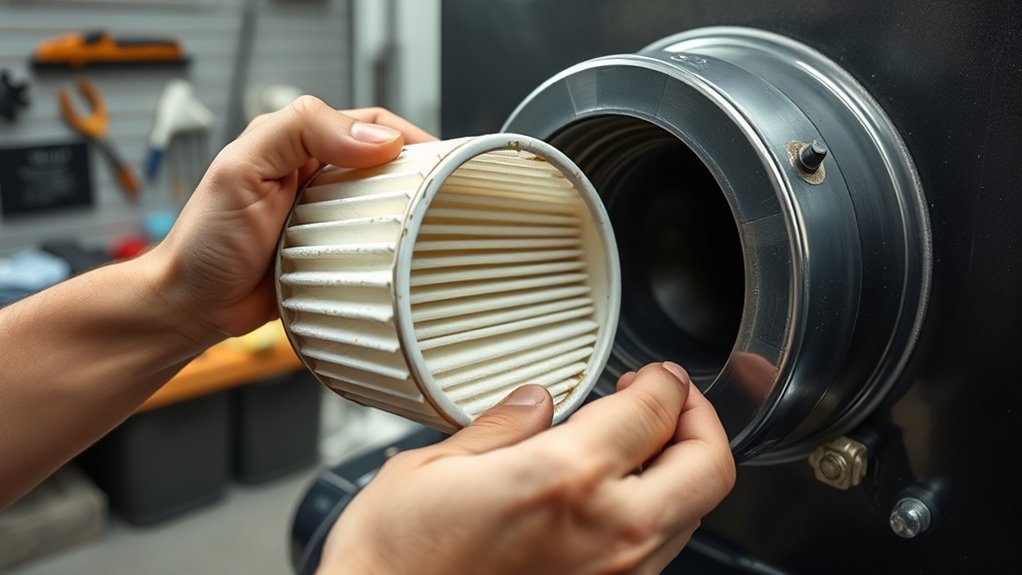
To maintain ideal air quality and compressor efficiency, we must prioritize cleaning and replacing air filters as part of routine maintenance. Understanding different air filter types—such as panel, pocket, and cartridge filters—helps us select the appropriate replacement. Proper filter installation techniques are essential; verify the filter fits securely without gaps to prevent unfiltered air bypass. During cleaning, inspect the filter for excessive dirt, debris, or damage, and replace it if cleaning can’t restore full functionality. When installing new filters, follow manufacturer guidelines for orientation and sealing to optimize airflow and filtration performance. Regularly scheduled filter maintenance minimizes contaminants entering the compressor, extending equipment lifespan, and preserving system efficiency. Accurate filter management is critical to maintaining a clean, reliable compressed air supply.
Draining Moisture and Condensate From the Compressor Tank
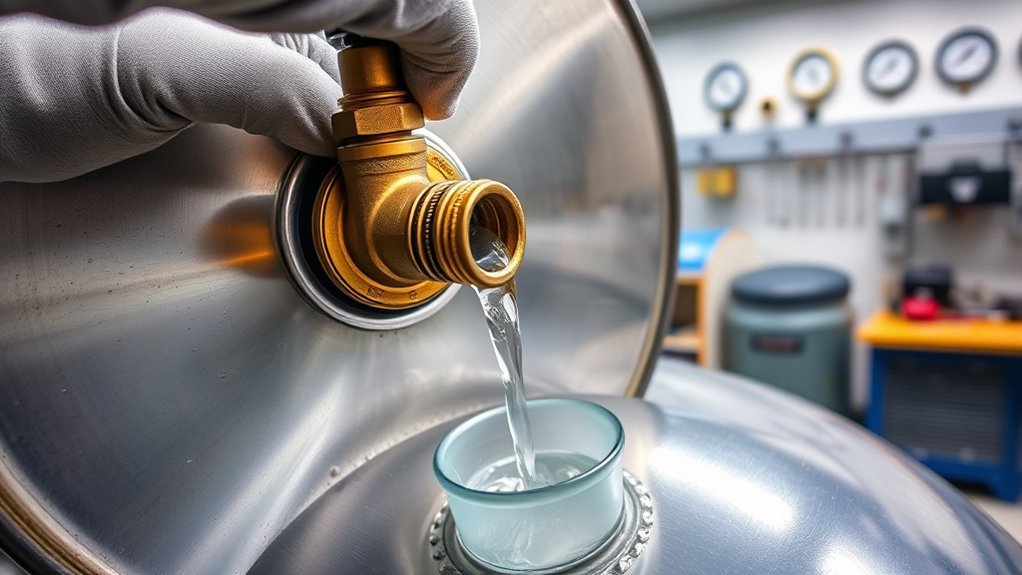
Why is it essential to drain moisture and condensate from the compressor tank regularly? Moisture accumulation occurs naturally during compression, leading to condensate buildup inside the tank. If not promptly removed, this condensate can cause corrosion, weakening the tank’s structural integrity, and may contaminate the compressed air system. Effective condensate removal ensures the compressor operates efficiently and prolongs its lifespan. Regular draining involves opening the drain valve to expel accumulated moisture, especially after periods of use or at scheduled intervals. This process prevents moisture-related issues, reduces the risk of rust, and maintains air quality. Proper maintenance of condensate removal is a critical step in optimizing compressor performance and safeguarding the overall system.
Checking and Tightening Hoses, Fittings, and Connections
We regularly inspect hoses for signs of wear, cracks, or damage to guarantee integrity. Proper fit tightening of fittings and connections is essential to prevent leaks and maintain system pressure. We also check for any signs of leaks around connections, which can indicate loose fittings or damaged hoses requiring immediate attention.
Inspect Hose Integrity Regularly
How often should you check the integrity of your compressor hoses? Regular inspections—at least monthly—are essential to guarantee safety and peak performance. During these checks, examine hose durability by inspecting for cracks, bulges, or signs of wear. Tighten fittings and connections to prevent leaks, but avoid overtightening that could damage the hose or fittings. Consider material compatibility; ensure hoses are suited to the operating pressure, temperature, and chemical exposure in your workshop. Pay close attention to areas where hoses bend or twist, as these are common failure points. Maintaining consistent inspection routines helps catch issues early, prolongs hose lifespan, and maintains system efficiency, reducing downtime and safety risks.
Ensure Proper Fit Tightening
Ensuring that hoses, fittings, and connections are properly tightened is essential for maintaining system integrity and preventing leaks. Proper fit and component compatibility are critical to avoid over-tightening or loosening, which can compromise performance. We recommend verifying that each connection matches manufacturer specifications before tightening. Use a torque wrench where applicable to ensure consistent tightness. Tighten fittings incrementally, avoiding excessive force that could damage components. Properly secured connections minimize vibration-induced wear and reduce leak risks. The following table summarizes key tightening considerations:
| Component | Proper Fit | Torque Specification | Compatibility Notes |
|---|---|---|---|
| Air Hoses | Exact diameter match | Manufacturer’s specs | Ensure material compatibility |
| Fittings | Thread size & type | Use torque wrench | Check for corrosion resistance |
| Couplings | Locking mechanism | Tighten securely | Verify connection security |
| Seals & O-rings | Correct size & material | Hand-tight plus slight turn | Prevent leaks |
Check for Leak Signs
Are there visible signs indicating leaks in the compressor system? Effective leak detection begins with inspecting hoses, fittings, and connections for cracks, corrosion, or loose fittings. Use a systematic approach to identify potential leak points. Sound testing can be highly effective; listen for hissing or escaping air, which indicates a leak. Applying a soap solution to suspect areas can also reveal leaks through bubbling. Tightening fittings and replacing damaged hoses promptly prevents pressure loss and maintains system efficiency. Always confirm connections are secure but avoid overtightening, which can cause damage. Regularly performing leak detection and sound testing helps catch leaks early, reducing energy waste and prolonging compressor lifespan. Accurate maintenance hinges on diligent inspection and timely repair of all connections.
Monitoring and Adjusting Pressure Settings for Safety and Efficiency
Regular pressure checks are essential to maintain safety and operational efficiency, ensuring the compressor operates within specified limits. Safe adjustment procedures require precise control and adherence to manufacturer guidelines to prevent over-pressurization or system failure. Optimizing pressure settings involves balancing performance needs with safety margins, minimizing energy consumption and wear.
Regular Pressure Checks
Monitoring the pressure gauge regularly is crucial to maintaining safe and efficient compressor operation. Consistent pressure checks guarantee the system remains within ideal parameters, preventing over-pressurization or under-pressurization. Key steps include:
- Verify the pressure aligns with manufacturer specifications for pressure regulation.
- Conduct periodic compressor calibration to sustain measurement accuracy.
- Adjust pressure settings only within recommended limits to avoid system stress.
- Document pressure readings to track performance trends and identify potential issues early.
Accurate pressure readings enable proper regulation and help detect calibration drift. Maintaining precise pressure control enhances safety, prolongs equipment life, and maximizes efficiency. Regular pressure checks are a fundamental component of thorough compressor maintenance, ensuring reliable operation and compliance with safety standards.
Safe Adjustment Procedures
To guarantee safe and efficient compressor operation, we must carefully monitor and adjust pressure settings within manufacturer-recommended limits. Precise adjustments prevent overpressure conditions that could trigger an emergency shutdown, risking equipment damage or safety hazards. When modifying pressure controls, always verify that safety valves and pressure regulators are functioning correctly, ensuring they activate at designated thresholds. Proper adjustment also contributes to noise reduction, minimizing operational vibrations and sound levels. Regularly check for leaks or irregularities during pressure adjustments, as these can compromise safety and efficiency. Accurate calibration of pressure gauges is essential to avoid under- or excessive-pressurization. By adhering to these procedures, we maintain ideal performance while safeguarding personnel and equipment from potential hazards.
Optimal Pressure Settings
Ensuring ideal pressure settings on stationary air compressors is essential for maintaining both safety and operational efficiency. Correct pressure levels optimize air compressor accessories’ performance and minimize compressor noise, enhancing workplace safety. To achieve this, consider these points:
- Regularly verify pressure gauges against manufacturer specifications.
- Adjust pressure regulators to maintain consistent output within recommended ranges.
- Use pressure relief valves to prevent over-pressurization.
- Monitor pressure settings during operation to identify fluctuations that could impact efficiency.
Properly calibrated pressure settings not only improve the lifespan of compressor components but also contribute to noise reduction. Consistent adjustments prevent unnecessary strain on components, ensuring safe and efficient operation across all applications.
Inspecting and Replacing Safety Valves and Other Critical Components
Regular inspection and timely replacement of safety valves and other critical components are essential to maintaining the compressor’s safe and efficient operation. We adhere strictly to safety protocols to prevent overpressure incidents, verifying that safety valves release at designated set points. During inspections, we check for signs of corrosion, wear, or damage, ensuring component compatibility with the compressor model. Replacement procedures must follow manufacturer specifications to guarantee proper fit and functionality. Using incompatible or substandard parts compromises safety and can lead to system failure. We document all inspections and replacements, maintaining accurate records for compliance and future troubleshooting. Consistent attention to these critical components minimizes downtime, enhances safety, and prolongs equipment lifespan.
Lubricating Moving Parts to Reduce Wear and Maintain Smooth Operation
Lubricating moving parts is essential for reducing friction and preventing premature wear, which can compromise compressor performance. Proper lubrication methods guarantee that components operate smoothly and extend service life. To achieve optimal results, we recommend these key steps:
- Use manufacturer-recommended lubricants tailored for specific moving parts.
- Regularly check and replenish lubrication levels to prevent dry operation.
- Ensure correct moving part alignment before applying lubricant to avoid uneven wear.
- Schedule periodic inspections to verify lubrication efficacy and adjust as needed.
Consistent lubrication minimizes mechanical resistance and heat generation, maintaining efficiency. Proper moving part alignment complements lubrication, preventing undue stress. Adhering to precise lubrication methods guarantees smoother operation and prolongs compressor lifespan, reducing downtime and repair costs.
Scheduling Regular Maintenance and Keeping Detailed Records
Scheduling routine maintenance for stationary air compressors is critical to maintaining peak performance and preventing unexpected failures. Effective maintenance scheduling guarantees that all key components receive timely inspections and service, reducing downtime and extending equipment lifespan. Consistent record keeping is essential; detailed records of maintenance activities, parts replaced, and service dates provide a thorough history that facilitates troubleshooting and future planning. Accurate documentation enables us to identify patterns, assess compressor health, and enhance maintenance intervals. By establishing a systematic approach to scheduling and record keeping, we improve operational reliability, ensure compliance with manufacturer recommendations, and minimize costly repairs. This disciplined process is fundamental to achieving long-term efficiency and maintaining the compressor’s best functionality.
Troubleshooting Common Compressor Issues and When to Call a Professional
Understanding the common issues that can arise with stationary air compressors helps us respond quickly and effectively to maintain ideal operation. Troubleshooting begins with identifying symptoms such as excessive compressor noise, pressure fluctuations, or overheating, which often relate to worn air compressor accessories or inadequate lubrication.
Identifying issues like noise, pressure changes, or overheating helps maintain optimal stationary air compressor performance.
We should consider these points:
- Persistent noise may indicate faulty or loose components, requiring inspection for compressor noise reduction.
- Pressure drops suggest leaks or blocked filters, necessitating system checks.
- Overheating can result from insufficient cooling or clogged filters, demanding cleaning or replacement.
- Unusual vibrations often point to misaligned or damaged parts, calling for professional assessment.
When these issues persist, it is crucial to call a professional for precise diagnostics and repairs, especially for complex or internal component failures.
Frequently Asked Questions
How Often Should I Perform a Full Compressor Maintenance Check?
We recommend performing a full compressor maintenance check every 3 to 6 months, adhering to lubrication schedules and filter replacement intervals, to guarantee peak performance and prevent unexpected breakdowns. Regular checks maintain efficiency and prolong equipment lifespan.
What Are the Signs of a Failing Compressor Motor?
We notice that motor overheating or vibration issues often coincide with declining compressor performance, signaling a failing motor. Regular monitoring helps detect these signs early, preventing costly breakdowns and ensuring peak operation of your workshop equipment.
Can I Use Generic Replacement Parts for My Compressor?
We recommend checking the compressor’s lubrication requirements and replacement frequency before using generic parts; using OEM components guarantees compatibility, maintains ideal lubrication, and prolongs your compressor’s lifespan, preventing costly repairs and ensuring reliable operation.
How Do Temperature Fluctuations Affect Compressor Performance?
Temperature fluctuations challenge compressor efficiency through inconsistent temperature regulation, causing performance impacts like increased wear and potential overheating. Understanding fluctuation impact helps us maintain ideal operation, ensuring reliability despite environmental changes.
What Safety Precautions Should I Follow During Maintenance?
During maintenance, we guarantee safety by wearing personal protective gear, following strict emergency shutdown procedures, and verifying system depressurization. We also double-check electrical connections and keep a fire extinguisher nearby for added safety.
Conclusion
Regular maintenance isn’t just about extending equipment life; it’s about ensuring safety, efficiency, and reliability. By consistently inspecting and addressing potential issues, we prove that proactive care prevents costly failures—supporting the theory that prevention is better than cure. When we treat our compressors with precision and diligence, we uphold operational integrity, demonstrating that meticulous attention to detail is essential for peak performance and long-term success in any workshop environment.