Ad Blocker Detected
Our website is made possible by displaying online advertisements to our visitors. Please consider supporting us by disabling your ad blocker.
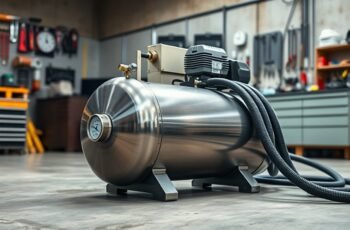
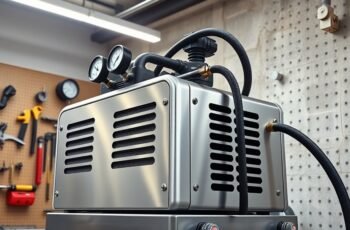
A single-stage air compressor is a pivotal component in many industrial and automotive applications, designed to compress air in a single piston stroke. Its simplicity and efficiency make it a popular choice for tasks requiring reliable, high-quality compressed air. Understanding how it operates, its core components, and its advantages can markedly influence equipment selection and maintenance strategies. To fully grasp its capabilities and limitations, it’s essential to explore how this device functions in detail.
Key Takeaways
- A single-stage air compressor compresses air in one piston stroke, simplifying the design and improving efficiency.
- It contains core components like a cylinder, piston, crankshaft, and valves, often with noise reduction features.
- Suitable for small to medium workloads, it produces high-quality, moisture-free compressed air.
- Regular maintenance involves checking filters, lubricating parts, and inspecting valves to ensure optimal performance.
- Key factors for selection include pressure output, noise levels, energy efficiency, and component durability.
What Is a Single-Stage Air Compressor and How Does It Work?
What exactly distinguishes a single-stage air compressor from other types? It operates through a single piston stroke, compressing air in one continuous cycle, which simplifies design and enhances efficiency for specific applications. This compression process impacts air quality by limiting moisture and particulate contamination, ensuring cleaner output. Additionally, because it runs at lower speeds and with fewer moving parts, noise levels are markedly reduced compared to multi-stage compressors. The streamlined operation minimizes vibration and sound emission, making it suitable for environments where noise control is critical. Overall, the single-stage design balances efficiency, air quality, and noise levels, making it a practical choice for many industrial and DIY tasks. Its straightforward mechanism emphasizes reliability and ease of maintenance.
Key Components of a Single-Stage Air Compressor
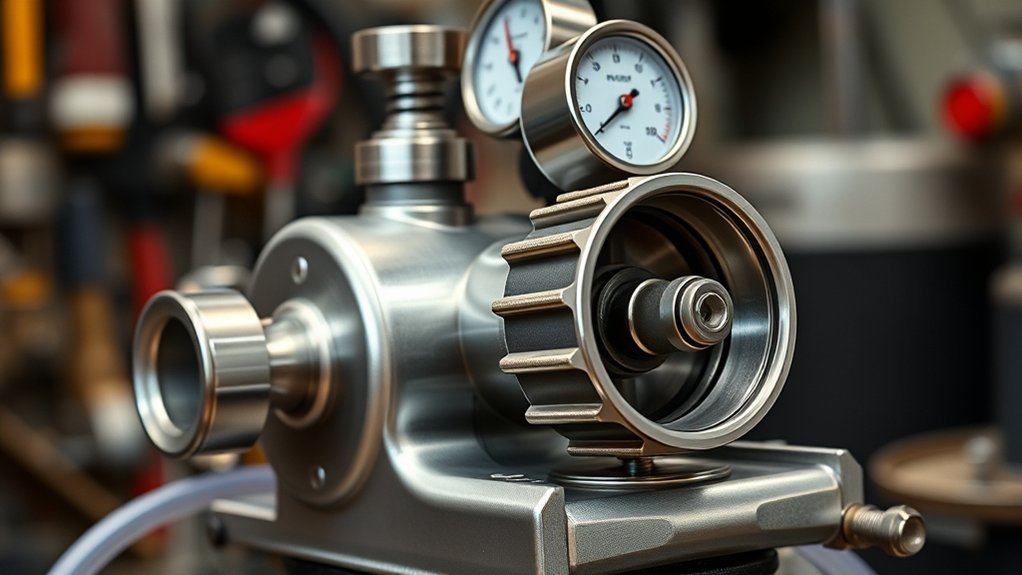
A single-stage air compressor consists of several interconnected components that work together to generate compressed air efficiently. The key components include the cylinder, piston, crankshaft, and valves. The cylinder houses the piston, which moves to compress air in one cycle. The crankshaft converts rotary motion into reciprocating motion, powering the piston. Intake and exhaust valves regulate airflow, impacting air quality by preventing contamination. Noise reduction features, such as silencers and vibration dampers, minimize operational sound levels. The following table summarizes these components:
| Component | Function | Importance |
|---|---|---|
| Cylinder | Contains piston, compresses air | Ensures air quality control |
| Piston | Compresses air during cycle | Affects efficiency |
| Crankshaft | Converts rotational to reciprocating motion | Noise reduction support |
| Valves | Regulate airflow, maintain air quality | Impact on air quality and noise |
How Single-Stage Compressors Compress Air in a Single Cycle
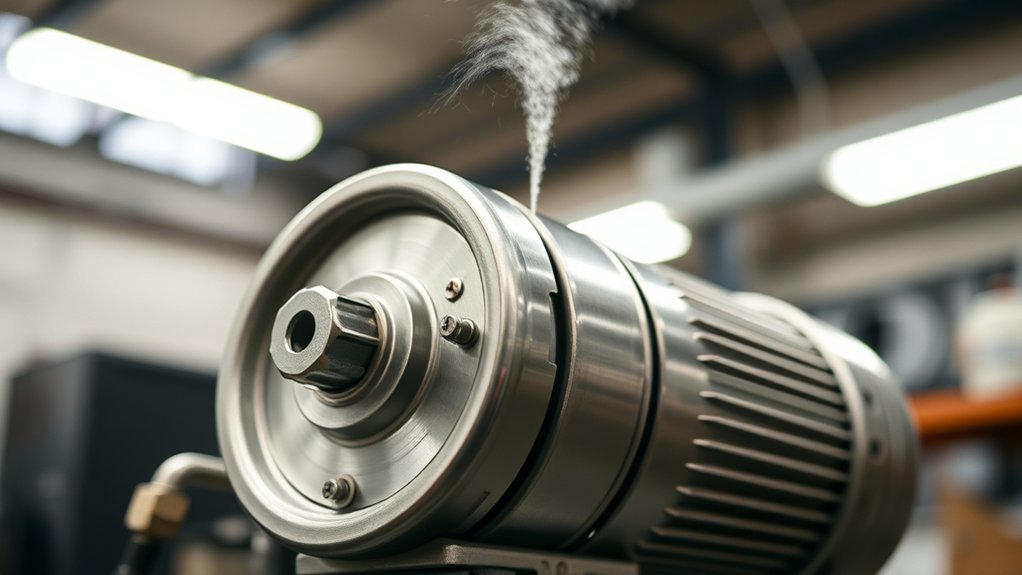
In a single-stage compressor, air intake occurs during the suction phase, followed by compression within the cylinder during the power stroke. This process relies on a single piston movement to draw in, compress, and expel air in one continuous cycle. Understanding this sequence clarifies how the compressor efficiently transforms atmospheric air into high-pressure output.
Intake and Compression Process
During the intake and compression process of a single-stage air compressor, the piston moves downward to draw in ambient air through an intake valve. As air enters, lubrication techniques are essential to reduce friction and wear on moving parts, ensuring smooth operation and longevity. Once the piston reaches the bottom of its stroke, the intake valve closes, and the piston begins compressing the air by moving upward, increasing pressure and temperature. Safety precautions are critical during this phase, as high-pressure air poses risks of mechanical failure and injury if components are not properly maintained or if safeguards are bypassed. Proper lubrication and adherence to safety protocols help optimize compression efficiency, prevent overheating, and maintain the integrity of internal components throughout the intake and compression cycle.
Single Power Stroke Mechanism
The single power stroke in a single-stage air compressor occurs when the piston completes its upward movement after compression, resulting in the delivery of compressed air. This cycle is fundamental to efficiency, with a focus on optimizing fuel consumption and minimizing noise. During this stroke, energy transfer is maximized, reducing unnecessary power use and lowering operational costs. Noise reduction is achieved through design features like mufflers and vibration dampers, which are vital for quieter operation. Additionally, the efficiency of this process impacts overall fuel economy, making these compressors suitable for continuous, cost-sensitive applications. Understanding this mechanism helps us appreciate how single-stage compressors balance power, noise, and fuel efficiency for reliable performance.
| Aspect | Impact | Importance |
|---|---|---|
| Fuel Efficiency | Reduces operational costs | Essential for cost savings |
| Noise Reduction | Minimizes disturbance | Improves operator comfort |
| Power Transfer | Maximizes energy use | Enhances overall efficiency |
| Mechanical Design | Affects durability and performance | Ensures long-term reliability |
| Cycle Timing | Optimizes compression cycle | Boosts productivity |
Advantages of Using a Single-Stage Air Compressor
What makes single-stage air compressors particularly advantageous for various applications? Their design promotes superior air quality by reducing moisture and contaminants during compression, resulting in cleaner output essential for sensitive tasks. Additionally, the simplified mechanism enhances energy efficiency; since compression occurs in a single piston stroke, less power is required compared to multi-stage units. This streamlined process minimizes mechanical losses and reduces operational costs. The compact structure also means less maintenance and lower initial investment, making them ideal for small to medium workloads. Overall, the combination of improved air quality and energy efficiency makes single-stage compressors a reliable, cost-effective choice for many industrial and commercial settings.
Common Applications and Suitable Uses for Single-Stage Compressors
Single-stage air compressors are well-suited for a range of applications where their compact design, efficient performance, and high-quality output align with operational demands. They excel in environments requiring consistent air quality, as their design minimizes contaminants and guarantees cleaner output suitable for sensitive tools and processes. Their energy efficiency makes them ideal for continuous operation in manufacturing, automotive repair, and woodworking shops, reducing operational costs. The streamlined compression process in single-stage units offers reliable, steady airflow at lower pressures, making them suitable for tasks that demand moderate pressure levels. Overall, their suitability hinges on applications where air quality and energy efficiency are critical, providing a dependable solution for small to medium-scale operations that prioritize streamlined, cost-effective, and high-quality compressed air delivery.
Differences Between Single-Stage and Multi-Stage Compressors
Have you ever wondered how compressor design impacts performance and efficiency? The key difference between single-stage and multi-stage compressors lies in their compression process. Single-stage compressors compress air in one step, which often results in lower energy efficiency due to higher discharge temperatures and increased work input. Multi-stage compressors divide the compression into multiple phases, allowing for better heat dissipation and reduced energy consumption, enhancing overall energy efficiency. Additionally, multi-stage units typically operate more quietly because they generate less heat and vibration during operation. Noise levels tend to be lower compared to single-stage compressors, especially in high-capacity applications. Understanding these differences helps in selecting the right compressor suited for specific operational demands and energy conservation objectives.
Factors to Consider When Choosing a Single-Stage Compressor
When selecting a single-stage compressor, it’s important to evaluate several essential factors that influence performance, efficiency, and suitability for specific applications. Efficiency improvements are key, so we consider the compressor’s volumetric efficiency and power consumption to maximize operational costs. Noise reduction also plays a significant role, especially in environments where noise levels impact worker safety or comfort; selecting models with sound attenuation features can mitigate this issue. Additionally, we assess the compressor’s maximum output pressure and duty cycle to guarantee it meets workload demands without unnecessary energy expenditure. Material durability and component quality are indispensable for long-term reliability. Ultimately, balancing these factors allows us to choose a compressor that delivers ideal performance, efficiency, and quiet operation tailored to the specific application.
Maintenance Tips to Keep Your Single-Stage Compressor Running Smoothly
Regular maintenance is vital for guaranteeing your compressor operates at peak performance and longevity. To maximize efficiency, regularly check and replace air filters, ensuring unobstructed airflow and preventing overheating. Lubricate moving parts according to manufacturer specifications, reducing wear and energy consumption. Conduct routine inspections of belts, valves, and pressure gauges, addressing issues before they escalate. Safety precautions include disconnecting power before servicing and verifying pressure release mechanisms to prevent accidents. Consistent cleaning of cooling fins and vents helps maintain ideal operating temperatures, further enhancing efficiency. Keeping detailed maintenance logs allows for predictive analysis, minimizing downtime. By adhering to these practices, we guarantee safe, efficient operation, extending equipment lifespan while minimizing operational costs.
Troubleshooting Common Issues in Single-Stage Air Compressors
When troubleshooting single-stage air compressors, we focus on identifying unusual noises that may indicate mechanical issues and diagnosing pressure loss that can stem from leaks or improper regulation. Addressing these problems promptly requires precise analysis of system components and operational parameters. By understanding these common issues, we can implement targeted solutions to restore ideal performance.
Identifying Unusual Noises
Unusual noises from a single-stage air compressor often indicate underlying mechanical issues that require prompt identification. Vibration analysis is essential here, as abnormal vibrations can signal misaligned components, worn bearings, or unbalanced rotors. Listening for knocking, hissing, or squealing helps isolate specific problems. For instance, a knocking sound may suggest piston or valve issues, while squealing often points to belt or pulley misalignment. Noise mitigation involves inspecting mounting rigidness to reduce resonance and tightening loose parts. Accurate diagnosis relies on correlating specific noise patterns with mechanical faults, enabling targeted repairs. Recognizing these sounds early prevents further damage, maintains efficiency, and guarantees compressor longevity. Therefore, systematic noise analysis should be an integral part of compressor maintenance routines.
Addressing Pressure Loss
Pressure loss in a single-stage air compressor often signals inefficiencies or mechanical faults that impair performance. To address this, we analyze potential causes such as compressor valve leaks, damaged piston rings, or clogged intake filters, which reduce overall energy efficiency. These issues force the compressor to work harder, increasing energy consumption and operational costs. Additionally, pressure loss can contribute to elevated noise levels, complicating noise reduction efforts. Regular maintenance, including inspecting and replacing worn components, helps restore ideal pressure levels. Implementing proper sealing techniques and ensuring clean intake filters improve energy efficiency and minimize unnecessary noise. By systematically troubleshooting these factors, we enhance compressor reliability, reduce operational costs, and promote quieter, more efficient operation.
Frequently Asked Questions
What Is the Typical Lifespan of a Single-Stage Air Compressor?
We find that a single-stage air compressor typically lasts 10-15 years with proper maintenance routines and regular lubrication. Consistent upkeep minimizes wear, extends lifespan, and guarantees ideal performance, making it a reliable choice for various industrial applications.
How Energy-Efficient Are Single-Stage Compressors Compared to Multi-Stage Models?
We find that single-stage compressors generally have higher energy consumption than multi-stage models, making them less efficient overall; however, they excel in simplicity and lower initial costs, which can influence practical efficiency comparisons depending on application needs.
Can a Single-Stage Compressor Handle Continuous Long-Term Operation?
Like a trusty steed, a single-stage compressor can handle continuous long-term operation if properly maintained; its cost efficiency benefits from simpler maintenance requirements, though it may face limitations under high-demand, sustained workloads.
What Are the Noise Levels Usually Produced by Single-Stage Compressors?
We find that single-stage compressors typically produce noise levels around 70-85 decibels, resulting in moderate sound emissions. These levels can vary based on design, size, and operation conditions, impacting their suitability for different work environments.
Are There Specific Safety Considerations for Operating Single-Stage Compressors?
We follow strict safety protocols and maintenance procedures, like regular inspections and pressure relief checks, to prevent hazards, guarantee efficient operation, and avoid accidents with single-stage compressors, emphasizing risk management and system integrity.
Conclusion
In conclusion, understanding the mechanics and advantages of single-stage air compressors helps us make informed choices for our applications. Their simplicity, efficiency, and reliability make them a dependable tool—much like the trusty steed of yesteryear—ready to serve in various manufacturing and automotive tasks. By considering key factors and proper maintenance, we ensure optimal performance. As with any machine, respecting its design and limits keeps it running smoothly, echoing the timeless wisdom of craftsmanship.