Ad Blocker Detected
Our website is made possible by displaying online advertisements to our visitors. Please consider supporting us by disabling your ad blocker.
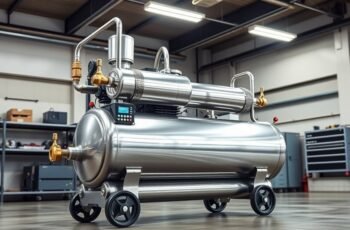
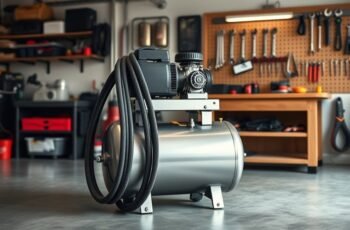
It’s a coincidence that many industrial processes rely on compressed air without us fully understanding the mechanics behind it. A two-stage air compressor offers a sophisticated approach to air compression by performing it in two steps, which results in higher efficiency and durability. This design’s complexity warrants closer examination, especially for those considering its advantages over simpler models. Understanding how it works could be essential for optimizing your compressed air systems.
Key Takeaways
- A two-stage air compressor compresses air in two sequential steps for higher efficiency and capacity.
- It uses an intermediate cooling process between stages to lower air temperature.
- The system involves multiple cylinders, intercoolers, and valves for optimized airflow and thermal management.
- It offers improved energy savings, reduced noise, and better thermal control compared to single-stage compressors.
- Ideal for industrial applications requiring high pressure, continuous operation, and reliable performance.
What Is a Two-Stage Air Compressor and How Does It Work?
A two-stage air compressor operates by compressing air in two sequential steps, enhancing efficiency and output capacity. This process allows for better energy conservation as each stage reduces the workload on the subsequent one, minimizing power consumption. The first stage compresses air to an intermediate pressure, then cools it before entering the second stage for final compression to higher pressures. This staged approach not only improves overall efficiency but also markedly reduces noise levels, as the compression occurs more gradually and with less vibration. By optimizing air cooling and reducing thermal stress, two-stage compressors deliver quieter operation. These features make them ideal for industrial settings where energy savings and noise reduction are critical for operational efficiency and worker safety.
Key Components of a Two-Stage Air Compressor Explained
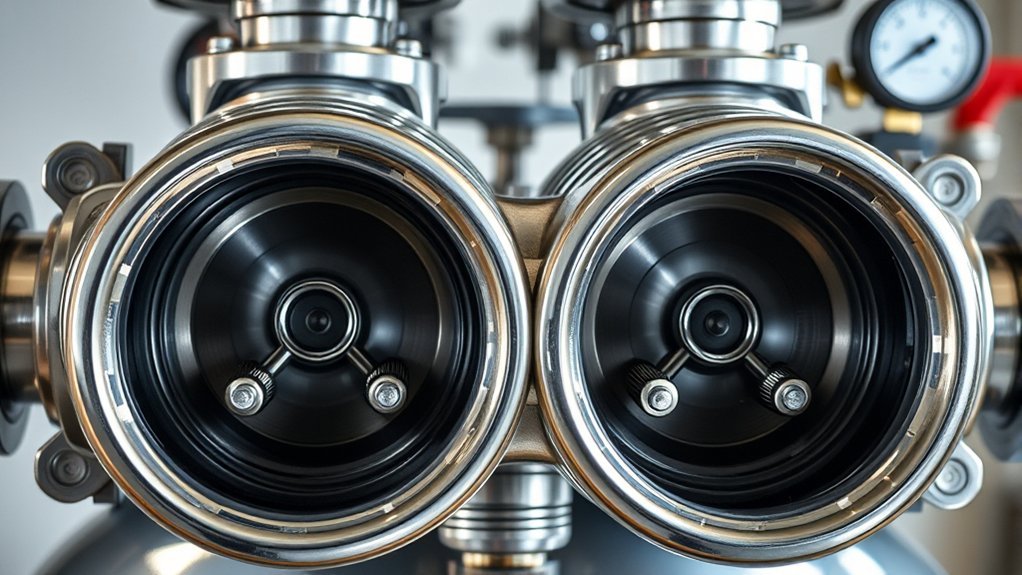
Understanding the key components of a two-stage air compressor is essential for evaluating its efficiency and performance. We focus on the compressor cylinders and stages, intercoolers and cooling systems, and valves that regulate airflow. Analyzing these elements reveals how they work together to optimize compression and energy use.
Compressor Cylinders and Stages
Compressor cylinders and stages form the core of a two-stage air compressor, enabling it to achieve higher pressure levels efficiently. The design involves multiple cylinders arranged sequentially, with the first stage compressing air and passing it to the second for further compression. This setup reduces strain on individual components and improves overall performance. Key considerations include:
- Lubrication systems ensure smooth operation and longevity of cylinders
- Proper staging optimizes compression efficiency
- Noise reduction techniques are incorporated through sound-dampening components
- Precise cylinder design minimizes vibrations and enhances stability
- Effective stage separation prevents overheating and maintains consistent pressure
These features collectively improve reliability, reduce maintenance costs, and optimize noise control, making two-stage compressors suitable for demanding industrial applications.
Intercoolers and Cooling Systems
How do intercoolers and cooling systems enhance the efficiency of a two-stage air compressor? They play a vital role by reducing the temperature of compressed air between stages, which improves energy efficiency by decreasing the work needed for further compression. Cooler air results in lower discharge temperatures, minimizing thermal stress on components and prolonging equipment lifespan. Additionally, effective cooling contributes to noise reduction, as lower operating temperatures decrease vibration and mechanical noise. Intercoolers typically use heat exchange processes—such as air or water cooling—to dissipate heat efficiently. Overall, integrating advanced intercoolers and cooling systems optimizes performance, reduces power consumption, and guarantees stable operation, making two-stage compressors more reliable and energy-efficient in demanding industrial applications.
Valves and Airflow Regulation
Valves and airflow regulation components are fundamental to controlling the performance and efficiency of a two-stage air compressor. Proper valve design guarantees precise control over compression stages, reducing energy loss and enhancing airflow refinement. These valves regulate inlet and outlet pressures, maintaining ideal operation conditions. Effective airflow regulation minimizes pressure drops and ensures consistent delivery of compressed air. Key aspects include the selection of valve types, such as poppet or rotary, and their material durability. Additionally, the timing and sequencing of valves influence overall compressor efficiency. Properly designed valves facilitate smooth shifts between stages, improving performance. Overall, a focus on valve design and airflow regulation directly impacts the compressor’s reliability, energy consumption, and ability to meet operational demands efficiently.
How Does the Compression Process Differ in Single-Stage vs. Two-Stage Compressors?
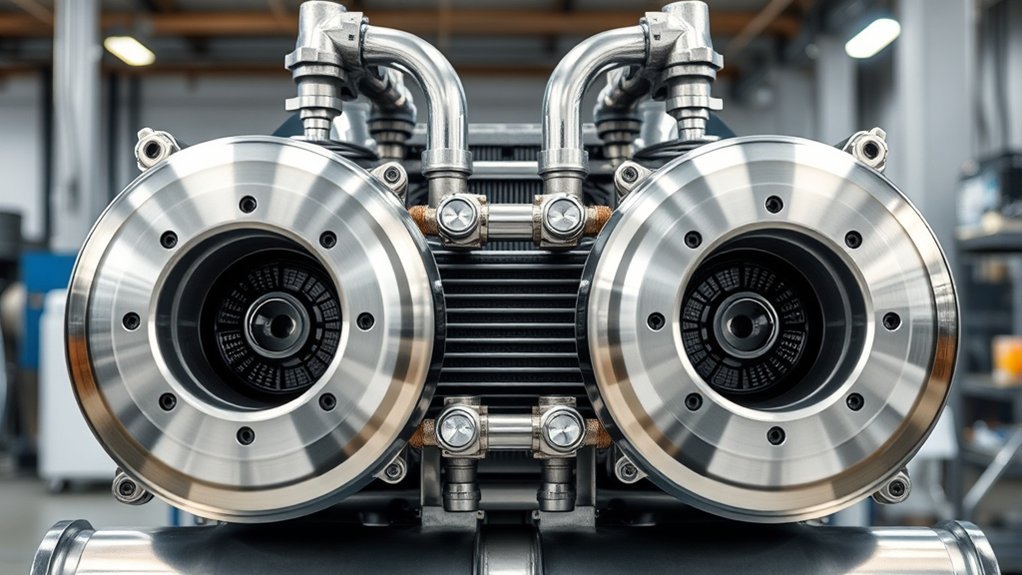
The compression process differs fundamentally between single-stage and two-stage systems, primarily in how the air is compressed and cooled. Two-stage compressors split the process into separate phases, allowing better temperature control and reducing thermal stress, which enhances efficiency. Understanding these distinctions is essential for evaluating performance and optimizing system design.
Compression Stages Explained
Have you ever wondered what sets single-stage and two-stage compressors apart in their compression processes? In a two-stage compressor, the compression occurs sequentially, with air first compressed to an intermediate pressure before final compression. This process differs from a single-stage system, where air is compressed directly to the target pressure. The key distinctions include:
- Energy efficiency improves in two-stage systems due to reduced work per stage.
- Intercoolers are used between stages to lower air temperature, enhancing overall efficiency.
- Noise reduction is achieved as the compression is distributed, lessening peak sound levels.
- Temperature management during compression is more effective, preventing overheating.
- Compression ratio per stage is lower, reducing mechanical stress and wear.
These features make two-stage systems more precise, efficient, and quieter overall.
Temperature Management Differences
Understanding how temperature is managed during compression reveals significant differences between single-stage and two-stage compressors. In single-stage systems, temperature regulation relies solely on cooling after compression, often limiting efficiency due to high thermal loads. Conversely, two-stage compressors employ inter-stage cooling, where compressed air is cooled before entering the second stage. This process reduces the temperature of the air, minimizing thermal stress on the components and enabling more efficient compression. Effective temperature management in two-stage systems directly supports efficiency optimization by lowering energy consumption and reducing heat-related wear. This split compression process allows for better control over thermal conditions, resulting in improved system longevity and consistent performance. Overall, the distinct approach to temperature regulation in two-stage compressors offers clear advantages in operational stability and energy efficiency.
Efficiency and Performance
How does the compression process differ between single-stage and two-stage compressors regarding efficiency and performance? Two-stage compressors optimize energy savings by reducing the work needed per compression cycle through intermediate cooling, which minimizes compression ratios in each stage. This results in lower power consumption and improved overall efficiency. Additionally, the staged process enhances noise reduction since compression occurs more gradually, producing less vibration and sound. Key distinctions include:
- Lower energy consumption due to staged compression
- Improved temperature control, reducing thermal stress
- Enhanced noise reduction through smoother operation
- Higher operational efficiency at elevated pressures
- Reduced wear and maintenance costs over time
These factors make two-stage compressors a superior choice for applications demanding consistent performance and energy-conscious operation.
Benefits of Using a Two-Stage Air Compressor for Heavy-Duty Tasks
Two-stage air compressors are particularly advantageous for heavy-duty tasks because they deliver higher efficiency and more consistent airflow compared to single-stage units. This efficiency translates into significant energy savings, as the compressor operates more effectively under demanding conditions, reducing overall power consumption. Additionally, the multi-stage compression process inherently minimizes fluctuations in airflow, ensuring stable pressure delivery during prolonged operations. Noise reduction is another key benefit; two-stage compressors typically operate more quietly due to their optimized cooling and compression cycles, which decreases vibration and sound levels. These attributes make two-stage units ideal for industrial environments where energy efficiency and noise control are critical, ultimately enhancing productivity while lowering operational costs.
When Should You Choose a Two-Stage Air Compressor Over a Single-Stage Model?
Choosing a two-stage air compressor becomes advantageous when your applications demand higher efficiency, consistent airflow, and reduced operational costs. These models excel in scenarios requiring sustained performance and energy savings, especially where single-stage units fall short.
Consider opting for a two-stage compressor if:
- You prioritize energy efficiency, lowering long-term power consumption
- Noise levels need to be minimized in your work environment
- Your system demands higher pressure ratios without sacrificing performance
- Continuous operation is essential for your processes
- Reduced maintenance and operational costs are a priority
This choice guarantees better thermal management, lower energy costs, and quieter operation, making it ideal for demanding industrial or manufacturing settings where efficiency and noise control are critical.
Common Applications and Industries That Rely on Two-Stage Compressors
We observe that two-stage air compressors are integral to industries with high and consistent air demand, such as manufacturing and assembly lines. These systems are also essential in automotive, transportation, construction, and heavy equipment sectors where reliability and efficiency are critical. Analyzing these applications highlights the specific performance advantages that make two-stage compressors the preferred choice.
Manufacturing and Assembly Lines
Have you ever wondered why manufacturing and assembly lines often depend on reliable air compression? Two-stage air compressors provide consistent, high-quality airflow essential for precision tasks and automation. They improve air quality by reducing moisture and contaminants, which is critical for maintaining product integrity. Additionally, these compressors facilitate noise reduction, creating safer and more efficient work environments.
Key applications include:
- High-speed pneumatic tools
- Precision assembly operations
- Material handling systems
- Quality control testing
- Automation and robotics integration
These industries rely on two-stage compressors for their ability to deliver stable pressure and cleaner air, minimizing downtime and maintenance. The enhanced efficiency and quieter operation make them indispensable for demanding manufacturing environments, ensuring smooth, reliable production processes.
Automotive and Transportation Sectors
The automotive and transportation sectors rely heavily on two-stage air compressors to support critical manufacturing and maintenance operations. These compressors enable precise, high-pressure applications essential for assembling vehicles and maintaining transportation infrastructure. In aviation safety, two-stage compressors ensure reliable power for braking systems, hydraulic controls, and cabin pressurization, reducing risks associated with failure. They also contribute to minimizing environmental impact by improving energy efficiency compared to single-stage models, leading to reduced emissions and operational costs. Additionally, their ability to deliver consistent, high-quality compressed air enhances safety standards across transportation industries. Overall, two-stage compressors are indispensable for optimizing performance, ensuring safety, and promoting environmentally responsible practices in these sectors.
Construction and Heavy Equipment
Why are two-stage air compressors so essential in construction and heavy equipment operations? Their ability to deliver high-pressure, consistent airflow enhances efficiency and durability across demanding tasks. Historically, the development of these compressors improved operational performance while reducing environmental impact through energy efficiency. Industries relying on two-stage compressors include heavy machinery manufacturing, concrete production, mining, tunneling, and large-scale infrastructure projects. These applications demand reliable, high-capacity air power with minimal environmental footprint. The multi-stage process reduces heat generation and compresses air more efficiently, aligning with modern environmental standards. As construction projects grow more complex, the role of two-stage compressors becomes increasingly critical for sustainable, high-performance heavy equipment operation.
Maintenance Tips to Keep Your Two-Stage Air Compressor Running Efficiently
Regular maintenance is critical to ensuring our two-stage air compressor operates at peak efficiency and longevity. Consistent inspection and cleaning of components, such as filters and intercoolers, maximize energy efficiency by reducing unnecessary load and heat buildup. Proper lubrication of pistons and bearings minimizes friction, preventing wear and maintaining ideal compression cycles. Additionally, routine checks of valves and belts ensure reliable operation and reduce noise levels, contributing to noise reduction. Monitoring pressure settings and airflow rates allows us to detect inefficiencies early, saving energy and preventing costly repairs. By maintaining excellent operating parameters and addressing minor issues proactively, we extend the compressor’s lifespan, improve energy efficiency, and maintain quieter operation—essential for both operational performance and environmental compliance.
Troubleshooting Common Issues With Two-Stage Air Compressors
Identifying and resolving common issues in two-stage air compressors requires a systematic approach rooted in technical analysis. Troubleshooting begins with assessing operational parameters, focusing on energy conservation and noise reduction. Common problems include overheating, which signals possible lubrication failure or clogged filters, and excessive noise, often caused by misaligned components or worn bearings. Other issues involve pressure fluctuations due to valve malfunctions or leaks, and reduced output from worn pistons or valves. Addressing these involves precise diagnostics, such as checking for air leaks or inspecting for mechanical wear. Regular maintenance enhances energy efficiency and minimizes noise. By systematically analyzing these key areas, we can pinpoint issues efficiently, ensuring optimal compressor performance and extending equipment lifespan.
How to Select the Right Two-Stage Air Compressor for Your Needs
Choosing the appropriate two-stage air compressor requires a thorough understanding of your specific operational demands and performance requirements. Key factors include air quality, noise reduction, and capacity. To optimize selection, evaluate the following:
| Criterion | Importance | Considerations |
|---|---|---|
| Air Quality | Ensures contaminant-free output | Use filters and moisture control |
| Noise Reduction | Minimizes operational disruption | Select models with soundproofing |
| Capacity | Meets peak and average demands | Calculate cfm requirements |
| Energy Efficiency | Reduces operational costs | Compare power consumption |
The Future of Two-Stage Air Compressor Technology
What advancements are shaping the future of two-stage air compressor technology? Innovations focus on reducing environmental impact while supporting sustained market growth. Energy-efficient motor designs, variable frequency drives, and advanced cooling systems are central to these developments. Additionally, integration of IoT technology enables real-time monitoring, optimizing performance and minimizing waste. Material improvements, such as lightweight composites, improve durability and efficiency. These technological strides aim to lower emissions, promote sustainability, and meet stricter environmental regulations. As market demand expands, manufacturers are investing in smarter, more eco-friendly solutions to stay competitive. The future of two-stage air compressors hinges on balancing enhanced performance with environmental stewardship, ensuring both economic viability and ecological responsibility.
Frequently Asked Questions
What Is the Typical Lifespan of a Two-Stage Air Compressor?
A two-stage air compressor typically lasts 10-15 years with proper maintenance, reducing long-term maintenance costs and noise levels. Regular servicing guarantees peak performance, extending its lifespan and maintaining efficiency in demanding industrial applications.
How Energy-Efficient Are Two-Stage Air Compressors Compared to Other Types?
Think of two-stage air compressors as the marathon runners of efficiency; they outperform single-stage models. Our efficiency comparison shows they use less energy, and a detailed cost analysis confirms long-term savings despite higher initial investment.
Are There Specific Safety Considerations for Operating Two-Stage Compressors?
We prioritize strict maintenance procedures and safety protocols, including regular inspections, proper pressure regulation, and safety valve checks, to guarantee safe operation. Adhering to these measures minimizes risks and maintains compressor performance and operator safety.
Can a Two-Stage Compressor Be Used for Continuous, Long-Term Operation?
Can a two-stage compressor run continuously? Yes, but we must consider maintenance frequency and noise levels; its design supports long-term use, yet regular upkeep guarantees ideal performance and safety during extended operations.
What Are the Environmental Impacts of Using a Two-Stage Air Compressor?
Using a two-stage air compressor impacts the environment through noise pollution and compliance with environmental regulations. We analyze energy efficiency and emissions, understanding these factors helps minimize ecological footprints, ensuring sustainable operation and adherence to legal standards.
Conclusion
In essence, a two-stage air compressor acts as a dual-engine, harmonizing precision and power to meet demanding industrial needs. Like a finely tuned symphony, its stages work in concert, balancing thermal dynamics and mechanical stress. This intricate dance ensures durability and efficiency, symbolizing our pursuit of mastery over energy. As technology evolves, so does our capacity to harness this symphony for greater innovation—an ongoing proof of our relentless drive for excellence.