Ad Blocker Detected
Our website is made possible by displaying online advertisements to our visitors. Please consider supporting us by disabling your ad blocker.
Understanding the PSI rating of an electric air compressor is vital for ensuring it meets your specific operational needs. It directly influences performance, safety, and compatibility with tools and applications. However, selecting the right PSI isn’t always straightforward, as it involves balancing pressure requirements with efficiency and safety considerations. To optimize your equipment’s functionality, it’s essential to grasp how PSI ratings impact different tasks and what factors influence proper calibration.
Key Takeaways
- PSI rating indicates the maximum air pressure an electric compressor can deliver.
- Typical PSI range for most applications is between 90 and 150 PSI.
- Higher PSI ratings enable use for demanding pneumatic tools and heavy-duty tasks.
- PSI should be matched with airflow (CFM) for optimal compressor performance.
- Proper calibration and safety measures are essential for maintaining PSI levels.
What Is PSI and Why Does It Matter for Electric Air Compressors?
PSI, or pounds per square inch, is a measure of pressure that indicates how forcefully air is delivered by an electric air compressor. Understanding its historical development reveals how PSI ratings have evolved from basic industrial standards to precise, application-specific metrics. This evolution reflects advancements in compressor technology and efficiency. PSI directly influences operational effectiveness, but it also bears environmental impact considerations. Higher PSI levels often mean increased energy consumption, leading to greater carbon footprints. Consequently, selecting an appropriate PSI rating involves balancing performance needs with environmental sustainability. As technology progresses, manufacturers aim to optimize PSI ratings to minimize environmental impact while maintaining power. Recognizing this interplay helps us appreciate PSI’s significance beyond mere pressure measurement, emphasizing its role in technological, environmental, and efficiency contexts.
How PSI Ratings Impact Different Types of Pneumatic Tasks
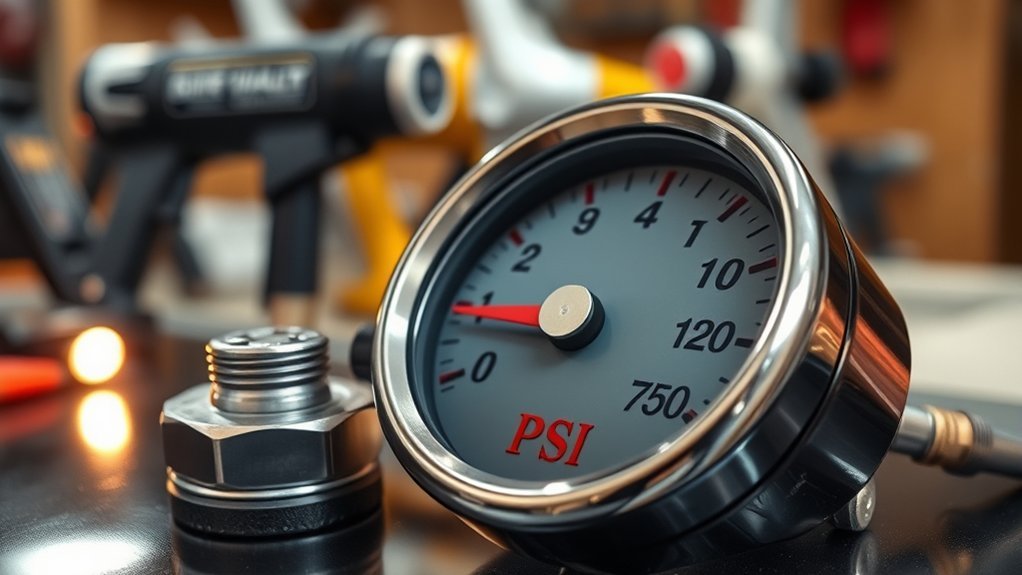
Different pneumatic tasks demand specific PSI ratings to guarantee ideal performance and safety. Over time, historical trends reveal that adjusting PSI levels has optimized task efficiency while reducing environmental impact. Lower PSI settings can minimize energy consumption, aligning with eco-friendly initiatives, whereas higher PSI is essential for demanding applications like heavy-duty sanding or drilling. Understanding these requirements assures equipment longevity and operator safety.
- Proper PSI calibration balances operational efficiency with environmental sustainability, highlighting the importance of precise pressure control.
- Historical trends show a shift towards energy-efficient PSI levels, reducing overall carbon footprint.
- Selecting the appropriate PSI is vital for safety, performance, and minimizing environmental impact across various pneumatic tasks.
Determining the Right PSI for Inflating Tires and Automotive Use
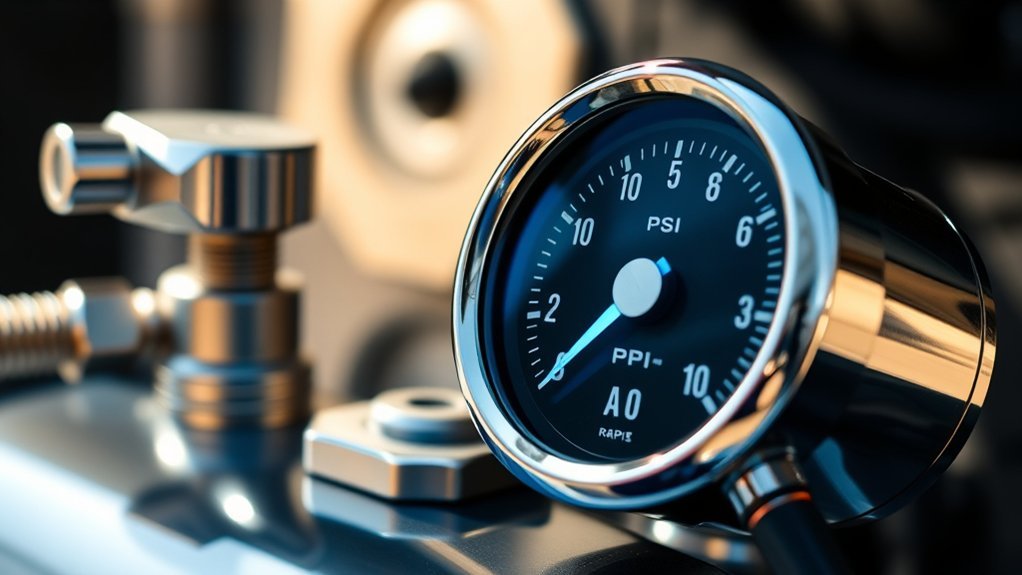
Accurately determining the appropriate PSI for tire inflation is essential for ideal vehicle performance and safety. We must consider manufacturer specifications and load conditions to establish the correct pressure range. By analyzing these factors, we can guarantee proper inflation guidelines for various automotive applications.
Optimal PSI for Tires
Have you ever wondered how to determine the ideal PSI for your tires to guarantee safety and efficiency? Proper inflation maintains perfect contact with the road, enhances fuel economy, and prevents uneven wear. When considering the optimal PSI, it’s crucial to account for factors like load, driving conditions, and ambient temperature. Additionally, maintaining correct tire pressure influences indoor gardening environments by reducing vibrations and heat, thereby improving air quality in enclosed spaces.
- Precise PSI levels prevent over-inflation or under-inflation, which can impact vehicle handling.
- Consistent pressure regulation extends tire lifespan, reducing waste and environmental impact.
- Proper inflation supports stable indoor air quality by minimizing emissions from tire degradation.
Monitoring PSI ensures safety, efficiency, and a healthier indoor environment.
Automotive Inflation Guidelines
Determining the correct PSI for automotive inflation is essential for ideal vehicle performance and safety. Historical trends show that industry standards have evolved to emphasize precise pressure guidelines, reflecting advancements in tire technology and safety protocols. Modern recommendations, typically found on the vehicle’s placard or owner’s manual, specify PSI values tailored to specific load and driving conditions. Consistent adherence to these standards guarantees proper contact patch, fuel efficiency, and tire longevity. Overinflation or underinflation, deviations from industry standards, can compromise handling or cause uneven wear. Analyzing these trends highlights the importance of using accurate, calibrated gauges and understanding manufacturer specifications. This approach guarantees proper inflation practices that align with both safety protocols and evolving industry standards, maximizing vehicle performance and safety.
Choosing the Correct PSI for Powering Pneumatic Tools and Equipment
Selecting the appropriate PSI for pneumatic tools requires careful consideration of ideal pressure levels to guarantee reliable operation. We must also evaluate tool compatibility, as exceeding recommended PSI can cause damage or safety hazards. Balancing these factors enhances both safety and efficiency in tool performance.
Optimal PSI Levels
What is the ideal PSI level for powering pneumatic tools effectively and safely? Generally, 90 to 120 PSI offers best performance across various applications, including indoor gardening setups where precise control reduces noise and vibration. Maintaining appropriate PSI levels guarantees equipment efficiency while minimizing wear and tear. Proper PSI calibration also supports noise reduction efforts, critical in confined spaces. When selecting PSI settings, consider:
- The specific tool’s manufacturer recommendations to prevent damage or safety hazards.
- The importance of consistent PSI for delicate tasks, such as adjusting irrigation systems or delicate pruning.
- The need for adjustable pressure settings to adapt to different tasks and reduce unnecessary energy consumption.
Tool Compatibility Needs
To guarantee pneumatic tools operate efficiently and safely, choosing the correct PSI setting based on their compatibility is essential. Historical trends show that tool manufacturers specify ideal PSI ranges to prevent damage and optimize performance. Matching compressor PSI with tool requirements ensures consistent operation and longevity. Over time, the industry has shifted toward more environmentally friendly practices, emphasizing energy efficiency and reduced emissions, which influence PSI selection. Incorrect PSI levels can lead to tool inefficiency or failure, resulting in increased energy consumption and waste. Understanding the specific PSI needs of each tool allows us to select compressors that support sustainable, high-performance operation. Precise compatibility minimizes unnecessary energy use, aligning with eco-conscious trends while maintaining operational integrity.
Safety and Efficiency
Ensuring safety and maximizing efficiency when using pneumatic tools requires careful attention to the compressor’s PSI settings. Correct PSI levels prevent tool damage, reduce energy waste, and ensure operator safety, especially in precision tasks like electric vehicle manufacturing or renewable energy component assembly. Over-pressurizing can compromise equipment lifespan and pose safety hazards, while under-pressurizing diminishes performance.
- Maintaining optimal PSI aligns with energy-efficient practices, reducing power consumption and supporting sustainable operations.
- Proper PSI calibration minimizes the risk of accidents, protecting workers and equipment alike.
- Selecting the right PSI ensures consistent operation, which is essential for delicate tasks in electric vehicle production and renewable energy systems, ultimately promoting safety and efficiency in evolving industrial applications.
How to Read and Interpret PSI Ratings on Compressor Labels
Understanding how to read and interpret PSI ratings on compressor labels is crucial for selecting the right equipment for specific tasks. PSI, or pounds per square inch, indicates the maximum pressure the compressor can generate, which directly influences its suitability for applications like electric vehicle maintenance or renewable energy systems. When examining labels, look for the rated PSI, typically marked alongside CFM (cubic feet per minute), to evaluate performance capacity. Higher PSI ratings are essential for tasks requiring significant force, such as powering pneumatic tools or ensuring proper insulation in renewable energy setups. Accurate interpretation helps guarantee equipment meets the specific pressure demands without overburdening the compressor, optimizing efficiency and longevity. This knowledge is indispensable for integrating electric vehicle technology and renewable energy solutions effectively.
Factors That Influence the Effective PSI of Your Air Compressor
Several critical factors directly affect the actual PSI output of an air compressor, including tank size, ambient temperature, and equipment condition. Variations in tank volume influence pressure stability, while temperature fluctuations alter air density and pressure efficiency. Additionally, regular maintenance and wear can markedly impact the compressor’s ability to sustain its rated PSI.
Compressor Tank Size
The size of a compressor’s tank directly impacts the effective PSI it can maintain during operation, as larger tanks can store more compressed air before the pressure drops considerably. This influences consistent performance, especially for tasks requiring stable air pressure. Additionally, tank size affects air quality, since larger tanks tend to allow for better filtration and moisture separation, reducing contaminants in the output. Noise levels are also impacted; bigger tanks often operate at lower cycles, resulting in quieter operation.
- Larger tanks provide a steadier PSI, avoiding frequent compressor cycling.
- They enable improved air quality by reducing moisture and particulate buildup.
- They tend to produce lower noise levels due to less frequent cycling, enhancing work environment comfort.
Ambient Temperature Effects
Ambient temperature considerably influences the effective PSI output of an air compressor by affecting air density and compressor efficiency. Higher temperatures reduce air density, decreasing the compressor’s ability to generate and maintain specified PSI levels, which can impact water pressure and overall performance. Conversely, cooler temperatures increase air density, often enhancing PSI stability. Temperature fluctuations can also stress electrical components, challenging electrical compatibility and potentially causing overheating or electrical failures. These factors underscore the importance of considering ambient conditions when evaluating compressor performance, especially in environments with significant temperature variation. Proper calibration and monitoring are essential to guarantee the compressor maintains ideal PSI, water pressure, and electrical safety standards across different ambient temperatures.
Maintenance and Wear
Regular maintenance and addressing wear are vital factors that directly influence an air compressor’s ability to sustain its rated PSI levels. Over time, components like the air filter and oil lubrication system degrade, reducing efficiency and pressure output. A clogged air filter restricts airflow, causing the compressor to work harder and lower PSI. Insufficient or degraded oil lubrication results in increased friction and component wear, impairing compressor performance. To guarantee optimal PSI levels, it’s essential to regularly inspect and replace air filters and maintain proper oil levels and quality. Proper maintenance minimizes wear-induced pressure drops and prolongs equipment lifespan.
- Ensuring clean, unobstructed airflow with a well-maintained air filter
- Using appropriate, high-quality oil for effective lubrication
- Monitoring system pressures to detect early signs of wear
Common Mistakes When Selecting a Compressor Based on PSI Needs
Selecting a compressor based solely on PSI ratings can lead to critical errors if we overlook how pressure requirements interact with airflow and intended applications. Historically, trends in manufacturing processes have focused on increasing PSI capabilities, but higher PSI doesn’t guarantee suitability for specific tasks. Misjudging this can cause inefficiencies or system failure. It’s vital to analyze both PSI and airflow (CFM) in relation to the application. Below is a comparison table highlighting key factors:
| Factor | Importance |
|---|---|
| PSI rating | Ensures enough pressure for tools but not sole metric |
| Airflow (CFM) | Critical for sustained operation and efficiency |
| Application needs | Must match compressor specs for ideal performance |
| Manufacturing trends | Influence design and pressure capabilities |
| Historical context | Guides understanding of evolving standards |
How to Adjust and Maintain PSI for Optimal Compressor Performance
To guarantee peak performance, it’s essential to properly adjust and maintain the PSI of your air compressor, as fluctuations can directly impact efficiency and safety. Consistent PSI regulation ensures ideal airflow, preserves air compressor aesthetics, and minimizes unnecessary wear. Properly calibrated pressure settings also contribute to noise reduction, enhancing operational comfort. Regularly check and adjust the pressure relief valve and pressure switch to prevent over-pressurization. Incorporate routine inspections and maintenance schedules to prevent leaks and gauge deterioration. Additionally, consider the compressor’s environment; a stable, clean setting maximizes performance and prolongs lifespan.
- Monitor gauge readings regularly for precise adjustments
- Use quality components to maintain stable PSI levels
- Keep air intake filters clean to support noise reduction and efficiency
Comparing PSI Ratings Across Different Electric Air Compressor Models
Different electric air compressor models offer a wide range of PSI ratings, reflecting their suitability for various applications and performance requirements. Higher PSI models typically deliver increased airflow, enabling tasks like spray painting or powering pneumatic tools efficiently. When comparing these models, air quality is a critical factor; higher PSI units often incorporate advanced filtering systems to maintain cleaner output, essential for precision work. Noise levels also vary notably across models; powerful compressors with higher PSI ratings tend to generate more noise, which can impact work environments. Conversely, quieter units with moderate PSI are preferable for indoor or noise-sensitive settings. Analyzing these factors helps users select a model that balances desired air quality, noise considerations, and PSI capabilities aligned with specific operational demands.
Tips for Safety and Efficiency When Using Air Compressors at Various PSI Levels
When operating air compressors at various PSI levels, prioritizing safety and efficiency is essential to prevent accidents and optimize performance. Different models, including vintage models, often have unique characteristics that influence operation, such as noise levels and pressure tolerances. Properly adjusting PSI settings minimizes the risk of over-pressurization, which can cause equipment failure or injury. For safety, always verify the compressor’s maximum PSI capacity and adhere to manufacturer guidelines. To enhance efficiency, monitor noise levels; vintage models tend to be louder, which can impact work environments.
- Regularly inspect pressure relief valves to prevent pressure buildup
- Use sound-dampening enclosures for vintage models with high noise levels
- Adjust PSI gradually to avoid sudden pressure surges
Frequently Asked Questions
How Does Altitude Affect PSI Performance in Electric Air Compressors?
Altitude effects cause PSI fluctuations in electric air compressors because lower air density reduces pressure output. We analyze this by adjusting pressure settings, ensuring consistent performance, and understanding how decreased atmospheric pressure impacts the compressor’s ability to maintain ideal PSI levels.
Can PSI Ratings Indicate a Compressor’s Overall Durability or Lifespan?
Like a sturdy bridge withstands storms, PSI ratings alone can’t predict a compressor’s durability or lifespan. Regular compressor maintenance and safety precautions are vital, as they guarantee peak performance and extend equipment life beyond just PSI specifications.
Are Higher PSI Ratings Always Better for Industrial Applications?
Higher PSI ratings aren’t always better; they require precise pressure regulation and safety mechanisms. We analyze application needs, ensuring the compressor’s PSI aligns with operational demands for ideal safety, efficiency, and equipment longevity in industrial settings.
How Do Temperature Variations Influence PSI During Compressor Operation?
Temperature variations cause thermal expansion, increasing air volume and decreasing pressure, which challenges pressure regulation. We analyze these effects to optimize compressor performance, ensuring consistent PSI levels despite temperature changes during operation.
What Are the Signs of Over-Pressurization or Under-Pressurization in Compressors?
We’ve seen over-pressurization cause safety hazards like bursting hoses, while under-pressurization results in poor performance. Regular maintenance and safety precautions, such as monitoring pressure gauges, help identify these issues early and guarantee compressor reliability.
Conclusion
Understanding PSI ratings is essential for optimizing electric air compressor performance and ensuring safety. By selecting the right PSI, calibrating properly, and maintaining your equipment, you prevent costly failures and maximize efficiency—saving you from frustration that can feel as overwhelming as a hurricane. We hope this guide helps you navigate PSI ratings confidently, empowering you to make informed decisions that keep your tasks running smoothly and your tools performing at their peak.