Ad Blocker Detected
Our website is made possible by displaying online advertisements to our visitors. Please consider supporting us by disabling your ad blocker.
When selecting an electric air compressor, understanding the technical specifications and their implications is crucial for making an informed decision. We’ll examine critical features like motor power, airflow rate, and pressure capabilities, along with considerations for tank size and operational costs. Proper evaluation guarantees the equipment fits your specific needs, whether for industrial, commercial, or DIY projects. To optimize performance and longevity, it’s essential to take into account how these factors interconnect—so let’s explore what truly matters in this purchase.
Key Takeaways
- Assess your tool requirements for proper CFM and PSI compatibility.
- Consider compressor type (reciprocating, rotary screw, oil-free) based on task frequency and environment.
- Evaluate tank size for capacity needs and energy efficiency to prevent unnecessary costs.
- Review brand reputation and customer feedback for reliability and performance insights.
- Prioritize safety features, maintenance ease, and energy efficiency for long-term ownership benefits.
How Do Electric Air Compressors Work and Why They Matter
Electric air compressors operate by converting electrical energy into compressed air through a series of mechanical components, primarily a motor and a pump or piston assembly. This process traces back to the air compressor history, which has evolved from manual and steam-powered devices to electric models for efficiency. Modern electric compressors are designed to minimize environmental impact by reducing emissions and energy consumption. They work by drawing power to drive the motor, which then powers the piston or rotary screw mechanism, compressing ambient air into a storage tank. This compressed air is essential in various industrial, commercial, and DIY applications. Understanding how these systems function helps us evaluate their efficiency and environmental footprint, emphasizing their importance in sustainable practices and technical advancement.
What Are the Key Features to Look for in an Electric Air Compressor
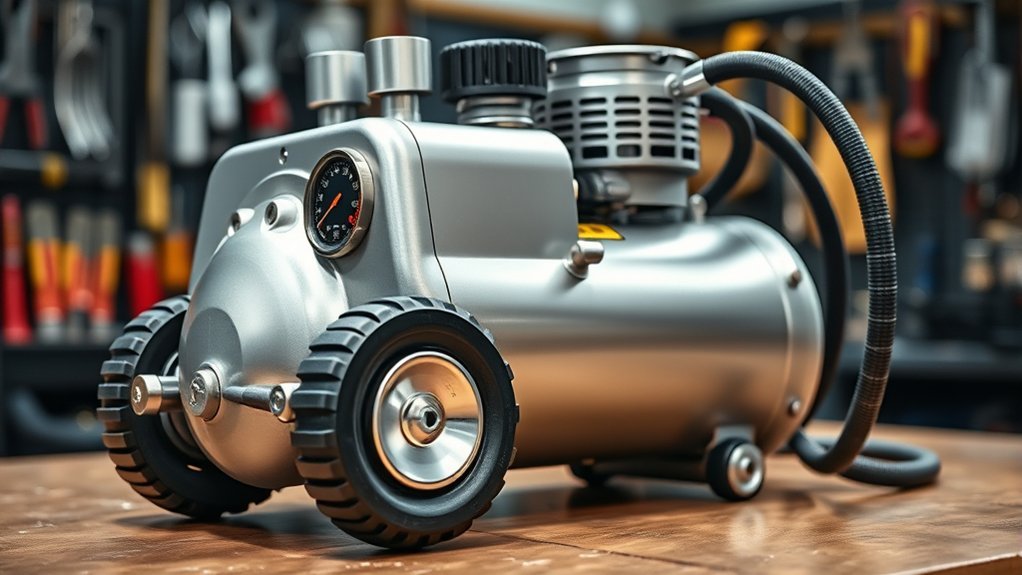
When selecting an electric air compressor, we focus on power and motor size to guarantee sufficient performance for your tasks. CFM and PSI ratings determine airflow capacity and pressure, directly impacting efficiency. Additionally, portability and size influence ease of use and suitability for different work environments.
Power and Motor Size
Have you considered how the motor power directly influences an air compressor’s performance? Higher motor wattage typically offers greater power output, enabling the compressor to handle demanding tasks more efficiently. When evaluating motor size, focus on power efficiency and motor durability; larger motors generally consume more energy but provide sustained performance over time. The best motor size balances power needs with operational longevity, minimizing overheating and wear.
| Motor Power | Power Efficiency | Motor Durability |
|---|---|---|
| 1-2 HP | Moderate | Moderate |
| 2-3 HP | Good | Good |
| 3-5 HP | High | Excellent |
| >5 HP | Very high | Very durable |
CFM and PSI Ratings
Understanding CFM (Cubic Feet per Minute) and PSI (Pounds per Square Inch) ratings is essential for selecting an air compressor that meets your specific needs. CFM indicates the volume of air delivered per minute, directly impacting airflow efficiency and compatibility with tools. PSI reflects the pressure output, influencing the compressor’s ability to power high-demand applications. Both ratings affect air quality; higher CFM and PSI typically produce cleaner, more consistent airflow. Noise levels are also linked to these ratings, as units with higher CFM and PSI may operate louder, impacting environment comfort. When evaluating compressors, verify the CFM and PSI align with your tool specifications to optimize air quality and minimize unnecessary noise. Precise ratings enable effective, efficient operation tailored to your workload.
Portability and Size
Are you prioritizing ease of transport and workspace efficiency? When evaluating an electric air compressor, portability and size are critical. A compact design minimizes space requirements and enhances maneuverability, especially in tight or dynamic work environments. Weight reduction directly influences ease of transport, reducing operator fatigue and enabling quick repositioning. Key features to take into account include:
- Size dimensions for storage and workspace integration
- Overall weight for ease of movement
- Handle and wheel features for improved portability
How to Determine the Right CFM and PSI for Your Projects
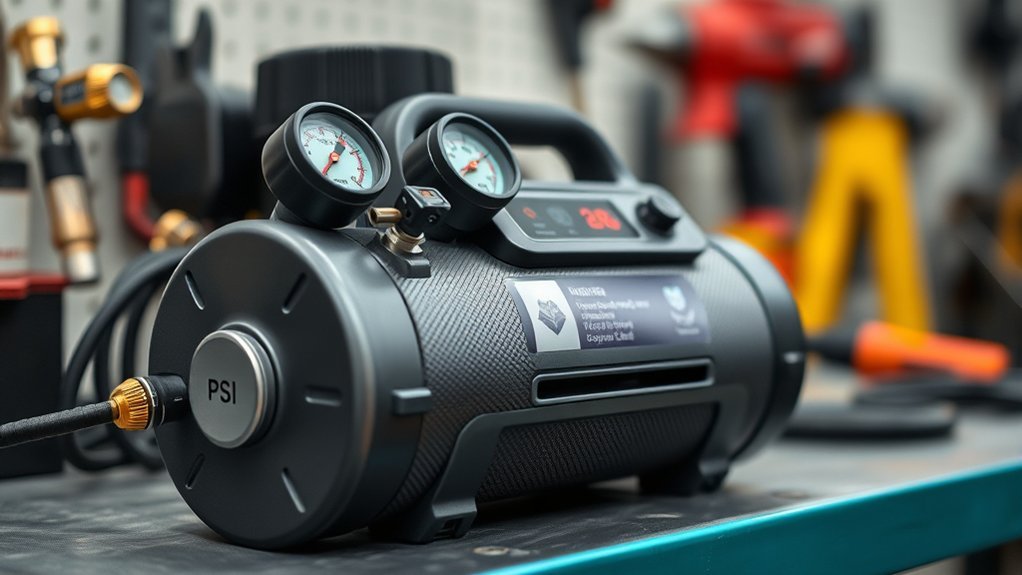
To select the appropriate air compressor, we need to accurately assess the CFM requirements of your tools and applications. Matching the compressor’s PSI output to the operational specifications of your tools guarantees ideal performance. Precise measurement and understanding of these parameters enable a tailored approach to your project needs.
Understanding CFM Requirements
How do we accurately determine the necessary CFM and PSI for our projects? First, we analyze the airflow demands of each tool, guaranteeing the compressor’s CFM exceeds the highest requirement. Second, we consider voltage compatibility to match the compressor’s power supply, avoiding overloads or inefficiencies. Third, noise levels become critical in enclosed or shared spaces; selecting models with appropriate decibel ratings minimizes operational disruption. Additionally, understanding the compressor’s capacity to sustain peak CFM without voltage fluctuations ensures consistent performance. Remember, a compressor with inadequate CFM hampers tool efficiency, while excessive PSI can damage tools or waste energy. Precise assessment of these factors guarantees effective operation, balancing airflow needs, electrical compatibility, and noise considerations for your specific projects.
Matching PSI to Tools
Determining the appropriate PSI for your tools requires a precise understanding of each tool’s operational specifications. Accurate PSI ensures maximum performance while minimizing air compressor noise and reducing environmental impact. Many tools specify a range, typically between 90-120 PSI; exceeding this can lead to unnecessary energy consumption and increased noise levels. To match PSI effectively, consider:
| Tool Type | Recommended PSI | CFM Requirements |
|---|---|---|
| Framing Nailer | 90-105 PSI | 2-4 CFM |
| Spray Gun | 40-70 PSI | 4-6 CFM |
| Impact Wrench | 90-120 PSI | 3-5 CFM |
Proper matching prevents over-pressurization, lowers environmental impact, and maintains a quieter operation.
Which Types of Electric Air Compressors Are Best for Different Tasks
Selecting the appropriate electric air compressor hinges on understanding the specific demands of each task, as different compressor types offer distinct performance characteristics. For tasks requiring high airflow and continuous operation, such as spray painting or powering pneumatic tools, a reciprocating or rotary screw compressor provides reliable, high-volume output with manageable noise levels. Light-duty applications like inflating tires or small tools benefit from portable, oil-free compressors that minimize air compressor noise and reduce environmental impact.
Choose the right compressor based on task demands for optimal performance and noise reduction.
- Reciprocating compressors excel in high-pressure, intermittent tasks but tend to generate more noise.
- Rotary screw compressors are ideal for continuous, industrial use with lower noise levels.
- Oil-free models are preferred for environmentally sensitive environments, offering cleaner operation with reduced emissions.
How to Choose the Right Tank Size for Your Needs
Choosing the appropriate tank size is essential for ensuring your compressor meets operational demands without unnecessary energy consumption or downtime. Tank capacity directly influences the storage options available, affecting how consistently compressed air is supplied during peak usage. Larger tanks provide greater storage options, reducing compressor cycling frequency and maintaining steady pressure during high-demand periods. Conversely, smaller tanks are suitable for applications with intermittent or low-volume airflow, minimizing initial costs and space requirements. When selecting tank size, consider your typical airflow requirements, duty cycle, and potential future expansion. Proper sizing balances capacity and efficiency, preventing over- or under-utilization of the compressor. Ultimately, matching tank capacity to your operational needs optimizes performance, energy use, and system longevity.
What Factors Affect the Price and Long-Term Cost of Ownership
Several factors influence both the initial purchase price and the long-term ownership costs of an air compressor, extending beyond its basic specifications. Key considerations include energy efficiency, which affects operational expenses, and environmental impact, influencing regulatory compliance and disposal costs. Additional factors include:
- Component quality: Higher-quality parts reduce maintenance frequency and extend lifespan, lowering overall costs.
- Energy consumption: More efficient models minimize electricity bills, especially in continuous operation.
- Technological features: Advanced controls and variable speed drives improve performance and reduce waste, but may increase upfront costs.
Understanding these variables helps optimize total cost of ownership, balancing initial investment against ongoing expenses and environmental considerations.
How to Maintain and Troubleshoot Your Electric Air Compressor
How can we guarantee our electric air compressor remains reliable and efficient over time? Establishing rigorous maintenance schedules is essential, including regular checks of filters, oil levels, and pressure gauges. Consistent inspection prevents component wear and detects potential issues early. Troubleshooting techniques involve analyzing operational anomalies such as unusual noises, pressure drops, or overheating, which often indicate underlying problems like leaks or faulty valves. By systematically isolating and diagnosing issues, we can address them promptly, minimizing downtime. Precise record-keeping of maintenance activities ensures timely interventions and extends equipment lifespan. Adhering to these practices optimizes compressor performance, reduces unexpected failures, and maintains energy efficiency. Proper maintenance and troubleshooting are critical for sustaining the compressor’s operational integrity over its service life.
What Safety Tips Should You Follow When Using an Air Compressor?
Operating an air compressor safely requires strict adherence to established guidelines to prevent accidents and equipment damage. Key safety measures include guaranteeing proper electrical safety protocols, such as grounding the unit and inspecting cords for damage before use. Personal protective equipment (PPE) is essential; always wear eye protection, hearing protection, and gloves to mitigate risks. Additionally, follow these safety practices:
- Regularly check for air leaks and pressure relief valve functionality
- Never bypass safety devices or modify the compressor’s controls
- Keep the work area clean, dry, and well-ventilated to prevent electrical hazards
Adhering to these safety tips minimizes risk and ensures efficient, secure operation of your electric air compressor.
How to Compare Brands and Read Customer Reviews for Informed Buying Decisions
When selecting an air compressor, evaluating brands and customer reviews is vital to making an informed purchase. Brand reputation provides insight into product quality, durability, and after-sales support, which are key factors for long-term reliability. Analyzing customer reviews offers real-world feedback on performance, ease of use, and potential issues, enabling us to gauge overall customer satisfaction. We focus on verified reviews to avoid bias and identify recurring themes that highlight strengths or weaknesses of specific brands. Comparing ratings across multiple sources helps us assess consistency in product quality. By systematically analyzing brand reputation and customer satisfaction, we guarantee our decision aligns with technical standards and user experiences, ultimately selecting an air compressor that balances performance, longevity, and value.
Frequently Asked Questions
How Energy-Efficient Are Different Electric Air Compressor Models?
Different electric air compressor models vary in energy efficiency; we analyze their power consumption to identify those offering the most favorable energy savings, ensuring minimal operational costs while maintaining performance, which helps you make informed, cost-effective purchasing decisions.
Can Electric Air Compressors Operate Quietly Enough for Home Use?
Electric air compressors can operate quietly enough for home use, thanks to noise reduction technologies like sound enclosures and vibration dampening, which considerably enhance home quietness without sacrificing performance. This makes them suitable for residential environments.
What Are Common Signs That Indicate I Need a New Compressor?
We notice signs like decreased efficiency, unusual noises, and frequent overheating, indicating the end of our compressor’s lifespan. Regular maintenance tips help extend its life, but these symptoms suggest it’s time for a replacement to guarantee peak performance.
Are There Specific Electric Air Compressors Suitable for Painting Projects?
For painting projects, we recommend compressors with high paint capacity and paint sprayer compatibility; for example, a 20-gallon tank supports continuous spray, ensuring precise application and preventing pressure drops, essential for professional-quality finishes in demanding tasks.
How Do I Properly Store My Electric Air Compressor When Not in Use?
We store our electric air compressors in a dry, temperature-controlled environment, following strict storage tips and a maintenance checklist to prevent corrosion and damage. Regularly draining moisture and disconnecting power guarantees ideal performance and longevity.
Conclusion
Choosing the right electric air compressor is like fine-tuning a precision instrument; each feature must align perfectly with your needs for maximum performance and longevity. By understanding key specifications, evaluating costs, and prioritizing safety and reliability, we can make informed decisions that serve us well over time. Approaching this purchase with a methodical, analytical mindset ensures your investment functions smoothly—delivering the power and efficiency needed to tackle any project with confidence.